


A shelf pin jig lives or dies by accuracy. The wrong holes leave your shelves crooked, your pegs loose, and your weekend project looking amateur. This list sorts the category from dedicated shelf drills to multi-purpose cabinet jigs, so you can match a tool to the kind of cabinet work you actually do.
The Main Contenders

POWERTEC Drawer Front Installation Clamps 2 Pack (71181)

POWERTEC Cabinet Door Mounting Jig for Upper Wall Cabinets (72426)

RUITOOL 11-Hole Aluminum Shelf Pin Jig with Clamp

GOINGMAKE 1/4 Inch Aluminum Alloy Shelf Pin Jig
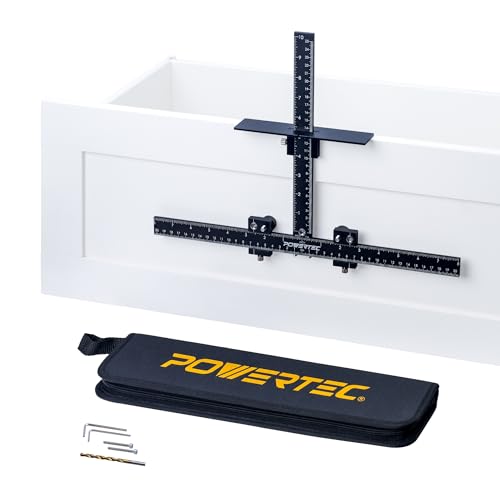
POWERTEC Cabinet Hardware Jig for Knobs & Pulls (72427)

POWERTEC Drawer Slide Jig Set (72349)
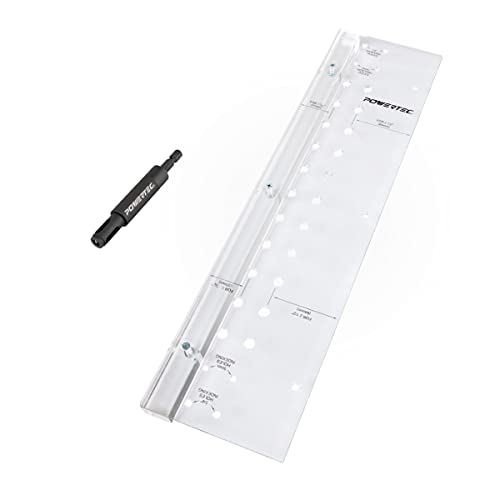
POWERTEC Shelf Pin Jig with 1/4″ Self-Centering Bit (71653)
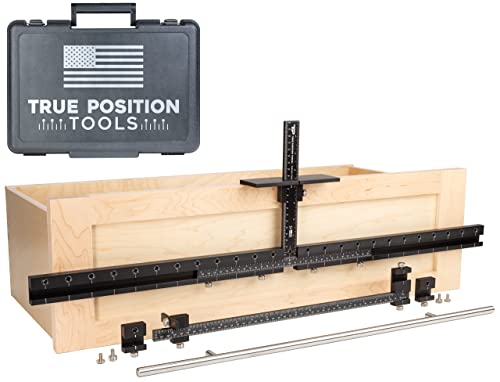
MAX Cabinet Hardware Jig by True Position Tools
Inside Each Recommended Option
Drawer fronts are the most visible part of any cabinet, and getting them perfectly flush usually requires a third hand. The POWERTEC Drawer Front Installation Clamps come as a matched two-pack, sized to grip standard cabinet face frames while you drive screws from the inside. The adjustable heads accommodate different drawer face thicknesses, which matters the moment you switch between a 3/4-inch panel and a thinner overlay.
In a typical kitchen refit, the clamps hold the face in place while you check reveals and fine-tune before committing to fasteners. Compared to the shelf-focused tools later in this list, this one is purely about alignment rather than drilling, so it complements a shelf pin jig rather than replacing one.
Useful Strengths
- Two clamps per order keep both sides of a drawer face registered at once
- Adjustment range covers most common drawer front thicknesses
- Hand-friendly grip reduces fatigue during long cabinet runs
- Lets you check reveal and spacing with the drawer closed
Worth Noting
- Designed only for face-frame setups, so frameless European cabinets need a different approach
- Limited reach on unusually tall or oversized drawer fronts
Feature Snapshot
Who It Suits Best
Shoppers refacing face-frame kitchens who want clean reveals without taping or improvising clamps.
A Better Fit Elsewhere
The POWERTEC Drawer Slide Jig Set (72349) suits someone building full drawer banks rather than just aligning the fronts.
Hanging upper cabinet doors solo is awkward because gravity and hinges fight you at the same time. The POWERTEC Cabinet Door Mounting Jig acts as a temporary prop, holding the door at the right height while you swing hinges into place and start fasteners. The adjustable support works with both face-frame and frameless upper cabinets, which is a wider compatibility range than most door-hanging helpers offer.
You will appreciate the headroom clearance when working above a countertop, where a second pair of hands is rarely available. Unlike the clamp set in the previous review, this tool is about positioning heavy components at height rather than aligning thin drawer panels.
Bright Spots
- Frees both hands for fastening hinges and driving screws
- Adjustable height keeps doors level across a run of cabinets
- Compatible with inset, partial, and full overlay doors
Trade Offs
- Adds setup time on each door, which adds up on a full kitchen
- Best used on flat, level floors; uneven surfaces reduce accuracy
Right Fit For
Solo installers or homeowners tackling a single wall of uppers without a helper on call.
Where Another Pick Suits Better
Reach for the MAX Cabinet Hardware Jig when you also need precise shelf pin holes and long-pull alignment in the same project.
The RUITOOL Shelf Pin Jig is built for volume. Its second-generation design drills 11 evenly spaced pin holes in a single pass, which dramatically reduces the reposition-and-reclamp cycle on tall cabinet sides. The body is aluminum, so it stays light enough to hold overhead while the integrated clamp keeps it from wandering mid-drill.
For closet builds or bookcases where consistency matters more than exotic hole patterns, this jig pays for itself in saved setup time. The 5mm and 1/4-inch bushings give you flexibility for imported European pins and standard domestic hardware alike.
What Earns Its Place
- 11-hole capacity covers most cabinet heights in one setup
- Aluminum body keeps weight manageable during long sessions
- Built-in clamp reduces the need for extra gripping tools
- Includes 5mm and 1/4-inch bushings for pin compatibility
- Comes with a canvas storage bag for organization
Points To Note
- Fixed hole spacing works best with standard cabinet dimensions
- Clamp pressure may mark soft plywood edges
Whose Shelf It Belongs On
Closet builders and remodelers running multiple identical cabinet sides where repetition is the bottleneck.
Swap It Out When
The GOINGMAKE Shelf Pin Jig is the lighter alternative for occasional shelf repairs in a single cabinet.
Small jobs don’t need an 11-hole setup. The GOINGMAKE Shelf Pin Jig is a compact aluminum-alloy tool with seven hardened drill guides, sized for one-off shelf repairs and minor cabinet adjustments. The slim profile slips into a kitchen drawer between uses, which is more storage-friendly than the longer jigs in this category.
You will reach for it when a single shelf has sagged or you want to add a row of pin holes to an existing cabinet. Compared to the RUITOOL reviewed above, the trade-off is fewer holes per pass, but the smaller footprint makes it easier to position in tight corners.
Strong Points
- Hardened guides resist wear on repeated use
- Light alloy construction reduces wrist strain
- Compact body fits cramped cabinet interiors
Small Caveats
- Only seven holes per setup, so tall cabinets require more resets
- No built-in clamp, so you will need a separate hand or clamp to hold it
- Edges can scuff softer cabinet interiors if dragged
Quick Facts
Made For
Homeowners handling one or two shelf upgrades rather than full cabinet runs.
Not Your Match When
You are drilling 30-plus pin holes; the RUITOOL 11-Hole Jig is the faster path on volume work.
Knobs and pulls are where symmetry breaks down, especially when you mix short and long hardware on the same kitchen. The POWERTEC Cabinet Hardware Jig handles both with a centering range from 1 inch to 16 inches, plus metric and imperial scales so you can match any spec sheet without converting in your head. The included 5mm drill bit is sized for most common hardware mounting holes.
Where a shelf pin jig drills vertically, this tool drills horizontally into door and drawer fronts. It pairs well with the clamp set in the first review, since you can align fronts and then drill hardware in one workflow.
Where It Excels
- 16-inch reach covers oversized appliance pulls
- Scales in both measurement systems prevent misreading
- Template approach keeps spacing identical across many doors
- Sturdy body resists flex during drilling
Less Ideal Details
- Requires careful reading of the scale on small pulls
- Larger footprint takes up more bench space than a basic template
Feature Snapshot
Who Should Grab It
Kitchen remodelers swapping out hardware on a full cabinet bank, where repeatability saves hours of measuring.
Look Elsewhere When
The MAX Cabinet Hardware Jig fits pros needing even longer pull reach plus 32mm shelf pin drilling in one tool.
Drawer slides drift out of level the moment you let go of one end to fetch a screw. The POWERTEC Drawer Slide Jig Set holds both sides of a slide at the correct height while you fasten, so you can work without a second person spotting you. The design supports both framed and frameless cabinets, covering most residential and shop builds.
In a dresser or desk project, the jig eliminates the most common source of sticky drawers: slightly mismatched slide heights. Unlike the cabinet door helper in the second review, this one is about repeatable accuracy rather than temporary support.
Notable Gains
- Hands-free positioning prevents slide sag during fastening
- Compatible with framed and frameless cabinet construction
- Speeds up full kitchen or workshop drawer installations
- Reduces the need to re-measure between drawers
Practical Considerations
- Setup takes longer per drawer than improvising with a level
- Bulkier than basic slide-mounting shortcuts, so storage matters
Feature Card
Best Suited To
Woodworkers installing multiple drawers in kitchens, workshops, or built-ins where consistency compounds.
Reach For A Different Pick When
You are only hanging a single drawer box; the POWERTEC Drawer Front Installation Clamps 71181 handle a quick alignment without the larger investment.
First-time shelf builders usually struggle most with bit wander, where the drill walks across the wood before the bit bites in. The POWERTEC Shelf Pin Jig solves that with a self-centering bit that registers in the guide before drilling, which removes the most common error from the equation. It ships as a kit with both the jig and the 1/4-inch self-centering bit, so there is no guessing about compatibility.
For a small bookcase or a closet cubby, this combination delivers clean 3/8-inch holes without requiring a second clamp or template. Compared to the GOINGMAKE jig reviewed earlier, you trade fewer holes per pass for the centering convenience.
Practical Advantages
- Self-centering bit removes guesswork for first-timers
- Compact size works in tight cabinet interiors
- Useful for shelf pegs, log joints, and hinge drilling
Potential Compromises
- Smaller drilling capacity means more resets on tall cabinets
- Bit replacement requires matching the self-centering style
Perfect Match For
New woodworkers building a single bookcase or shelf unit and wanting repeatable holes without advanced setup.
A Better Fit Elsewhere
Seasoned builders running multiple cabinets will get more value from the RUITOOL 11-Hole Jig covered above.
The MAX Cabinet Hardware Jig is a serious shop tool aimed at pros and serious hobbyists. It is hand-calibrated in the USA, and the reach covers drawer fronts up to 42 inches wide with hardware spacing up to 38 inches center to center, which clears even oversized appliance pulls. The shelf pin mode also drills 32mm holes, matching European cabinet standards for those who build with that system.
In a long kitchen run, the MAX replaces a stack of smaller templates by switching between pulls and pin holes in one setup. Compared to the POWERTEC hardware jig reviewed earlier, the trade-off is higher cost and a larger footprint in exchange for the wider reach.
Noteworthy Benefits
- Handles long pulls and standard knobs in a single tool
- 42-inch drawer capacity covers wide cabinet faces
- 32mm shelf pin mode supports European-style cabinetry
- Hand-calibrated build for repeatable precision
Trade-Offs To Consider
- Larger size means more bench space during setup
- Investment is heavier than a basic template, so it pays off on repeated use
Quick Technical Notes
Built With In Mind
Pros, remodelers, and serious hobbyists running multiple kitchens or large cabinet installations where one tool handles every hardware type.
Where A Sibling Pick Shines
The POWERTEC Cabinet Hardware Jig 72427 is a friendlier fit for occasional home projects that don’t need 42-inch reach.
What To Weigh Before Picking a Shelf Pin Jig
Shelf pin jigs vary more than the category name suggests. A tool built for one-off shelf repairs behaves very differently from a template designed for full cabinet runs. Knowing the difference saves you from buying a specialty jig you only use twice.
Hole Capacity and Spacing Standards
Hole capacity determines how often you stop to reposition. A 7-hole jig handles short cabinets in one setup, while an 11-hole model covers taller units without resetting. The standard 32mm spacing (about 1.25 inches between holes) dominates European cabinetry, while 1-inch centers show up in many North American shelf pins. Match the jig’s spacing to your shelf pins before you commit.
Build Material and Clamping
Aluminum-alloy bodies stay light and resist flex, which matters when you are holding the jig against a cabinet side for several minutes. A built-in clamp is a real convenience on softer plywood, where the jig tends to walk during drilling. For harder materials, an external clamp or non-slip base does the same job.
Bit Compatibility
Most jigs accept 1/4-inch and 5mm bits, covering the most common shelf pin diameters. Self-centering bits remove a layer of setup error, but they cost more to replace. If you already own a standard brad-point bit, a simpler jig without a self-centering feature may be all you need.
Common Buying Slips To Sidestep
Pitfalls Shoppers Hit
A frequent error is buying the cheapest 1/4-inch template and assuming it works on any cabinet. Many budget jigs lack hardened bushings, so the guides wear out after a few projects and your holes start drifting. Check that the bushings are described as hardened or replaceable before you commit.
Where Shoppers Go Wrong
Another trap is choosing a drill guide based only on hole count and ignoring the clamping system. A jig that shifts mid-drill ruins the very accuracy you bought it for, especially on vertical cabinet sides. Look for a jig with a built-in clamp, rubberized base, or clear instructions for securing it during use.
Key Considerations Across These Picks
Mistakes Worth Dodging
Buyers sometimes assume any jig will work on frameless European cabinets, only to find the body too wide for a narrow side panel. Measure the narrowest cabinet interior you plan to drill and compare it against the jig’s footprint. The same caution applies to high-end jigs with extended templates: the extra reach can be a liability in tight closets.
When Paying More Pays Off
Premium jigs earn their price through hardened bushings, smoother clamping, and longer reach. For a one-off shelf fix, the extra money rarely returns value, but for a full kitchen remodel or a closet system, the saved time and reduced error compound quickly. Spending up makes sense once your project crosses from a single cabinet into a coordinated build.
Frequently Asked Questions
How accurate do shelf pin holes need to be?
For most cabinets, holes within about 1/32 inch of plumb and spaced within 1/64 inch of spec will keep shelves level. Higher-end jigs deliver tighter tolerances, but the real-world difference only shows up on long, heavy shelves that magnify small errors.
Can a shelf pin jig work on frameless cabinets?
Yes, provided the jig body fits inside the cabinet side panel. Compact jigs like the GOINGMAKE 7-hole model work well in tight frameless interiors, while longer jigs may need adapters or extra clearance to fit.
Do I need a special drill bit for shelf pin jigs?
Standard 1/4-inch or 5mm brad-point bits work for most pins. Self-centering bits simplify setup by registering in the guide automatically, which helps beginners avoid bit wander on the first pass.
What’s the difference between 32mm and 1-inch spacing?
32mm spacing is the European cabinet standard and matches most imported adjustable shelves, while 1-inch centers suit many North American shelf pins. Check the pins you plan to use and match the jig’s spacing to avoid drilling rows your hardware cannot fit.
Are expensive cabinet jigs worth the investment?
For pros and remodelers, the time savings and consistency pay back the cost quickly. For a one-time home project, a mid-range jig usually delivers the accuracy you need without the larger footprint of premium tools.




