


Detailing a car at home means fighting a slow, daily invasion of sand, pet hair, gravel, and snack crumbs. A good shop vac turns that chore into a quick Saturday morning routine, and a poor one makes you dread every cleaning session. The lineup below pairs capable wet/dry shop vacuums with the small tools and cleaners that actually finish the job once the dust is gone.
Your Options, Compared
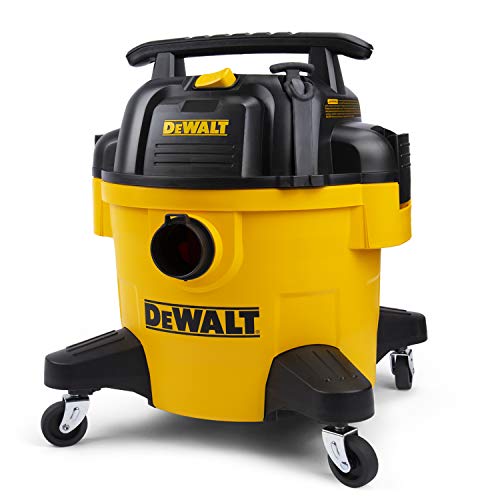
DEWALT 6 Gal 4 HP Poly Wet/Dry Vacuum with Blower

Chemical Guys 17-Piece Car Detailing Kit

Ridgid WD4070 4 Gallon Portable Vacuum

CRAFTSMAN CMXEVBE17595 16 Gallon 6.5 Peak HP Wet/Dry Shop Vacuum

DUSTIX 20000Pa Cordless Handheld Car Vacuum
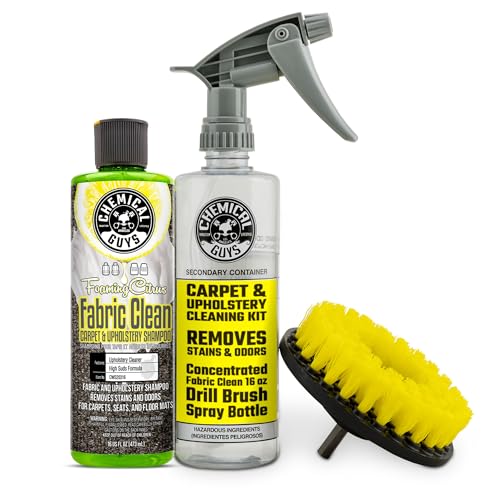
Chemical Guys Citrus Foaming Fabric & Carpet Cleaner 16 oz
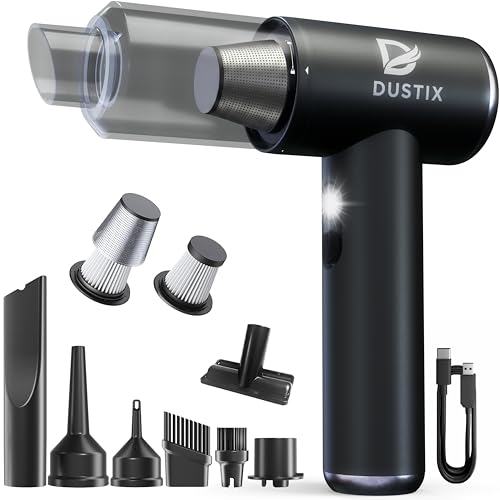
DUSTIX DX-1 Pro Cordless Handheld Car Vacuum
A Deeper Look At The Lineup
The 6-gallon poly tank hits a sweet spot for a single-car garage. It is light enough to roll out to the driveway yet tall enough to handle a wet pickup when the kids track in puddles. Compared with the CRAFTSMAN below, it sacrifices capacity and peak horsepower, but in return you get a body that is far easier to lift onto a workbench.
The integrated blower port is genuinely useful during a detail session. After vacuuming the floor mats, you can swap hoses and chase dust out of seat rails, door jambs, and around the spare tire well. The rubberized casters roll smoothly across concrete and won’t leave scuffs on a sealed garage floor, which matters to anyone who cares about the surface under the car.
Reasons It Performs
- 4 HP motor (horsepower is a unit of motor power output) pulls stubborn sand from carpet fibers without bogging down.
- Poly tank resists dents and rust, so it keeps its looks in a humid garage.
- Blower function extends the tool beyond vacuuming, clearing crevices a hose cannot reach.
- Compact footprint stores upright on a shelf, freeing floor space for jack stands and creepers.
- Wet/dry capability handles spilled coolant or muddy floor mats in the same pass.
Things To Consider
- The 6-gallon tank fills quickly during heavy wet pickups, so you may empty it mid-session on a muddy interior.
- At full output, the motor runs loud, and earplugs are wise during long detailing days.
Feature Snapshot
Made For
Home detailers working on a single daily driver in a standard one-car garage.
Consider Something Else When
You rotate between two or three vehicles each weekend, where the CRAFTSMAN 16-gallon tank reduces trips to the trash.
This 17-piece bundle is less a single product and more a guided introduction to detailing. Inside the box you get wash soap, a heavy-duty bucket with a Dirt Trap insert, a chenille wash mitt, microfiber towels, an interior cleaner, and a protectant. Everything you need for a first proper detail arrives in one shipment, which removes the guesswork of piecing a kit together.
The two-bucket wash method is the core idea here, and the included Dirt Trap insert sits at the bottom of the wash bucket to keep grit away from the mitt. That single feature has more impact on swirl-free paint than the soap itself, and it’s nice to see it bundled. Used alongside a shop vac like the DEWALT for interior work, the kit covers the basics of a full detail.
Everyday Perks
- One bundle replaces a shopping list of ten separate products.
- The Dirt Trap insert teaches a scratch-reducing wash method from day one.
- Microfiber towels, mitt, and brushes cover paint, wheels, and interior trim without cross-contamination if you rinse between uses.
Trade Offs
- The kit ships in a lot of packaging, and you may want a caddy to keep things organized in the garage.
- It does not include a vacuum, so you will still need a shop vac or handheld to clear debris before washing.
Who It Suits Best
First-time detailers who want a complete starter set without researching each item individually.
A Better Fit Elsewhere
Experienced detailers who already own a preferred soap and mitt will find more value in a specialized item like the Chemical Guys foaming carpet cleaner.
At roughly 12 pounds, the Ridgid WD4070 is the lightest full-size shop vac in this lineup. The 4-gallon tank is small, but the trade pays off in pure portability. You can carry it one-handed to the driveway, up apartment stairs, or out to a parking garage without a wheel kit in sight.
The Tug-A-Long locking hose stays attached during transport, which sounds minor until you’ve wrestled a loose hose across a parking lot. Large rear wheels and a top handle make it feel more like a rolling toolbox than a vacuum. For a quick interior pass on a single car, it gets the job done without the bulk of a 16-gallon unit.
Real Benefits
- Sub-13-pound body is easy on the back during repeated carries.
- Locking hose prevents annoying disconnections mid-cleanup.
- Rear wheels handle thresholds and rough shop floors, useful in older buildings.
Minor Gripes
- The 4-gallon capacity fills fast, especially on wet mats, so plan for extra empties.
- It is not designed for shop-wide cleanup, and you’ll outgrow it as a primary garage vacuum.
Right Fit For
Apartment dwellers or anyone without a garage who needs to roll a vacuum out to a street-parked car.
Skip It When
You detail family vehicles weekly and need longer runtime between dumps, where the DEWALT 6-gallon offers more headroom.
Where the DEWALT is a scalpel, the CRAFTSMAN 16-gallon is a broadsword. The 6.5 peak horsepower motor moves serious air, and the large tank swallows two full interior cleanups before you think about emptying. For households with multiple cars, a truck, or a project vehicle in rotation, that capacity removes a real chore.
The included car nozzle, utility nozzle, and wet nozzle cover the basics, though you may want to add a longer crevice tool for deep dashboard vents. The 2-1/2 inch hose diameter is wider than what most compact vacs offer, so clogs from gravel and pet hair are rare. In return, the unit weighs enough that you will roll it more than you lift it, and you will want a dedicated parking spot in the garage.
A Strong Showing
- 6.5 peak HP handles caked-on sawdust and wet carpet without straining.
- 16-gallon tank cuts empty trips during long detailing marathons.
- Wide 2-1/2 inch hose resists clogs from chunky debris.
- Sturdy casters and a long cord let you roam around a full vehicle without unplugging.
Points To Note
- The larger body takes up meaningful floor space, so smaller shops will feel the footprint.
- Replacement filters and dust bags are an ongoing cost to factor in if you vacuum frequently.
Quick Facts
Best Suited To
Multi-vehicle households and serious hobbyists who treat detailing as a recurring weekend project.
Look Elsewhere When
You live in a small apartment and only vacuum one compact car, where the Ridgid WD4070 stays out of the way better.
Suction is measured in pascals (Pa), a unit of air pressure, and 20,000 Pa on tap is more than most cordless handhelds offer. Three modes let you dial down to 8,000 Pa for a quick once-over of the center console, or crank up to 20,000 Pa for pet hair embedded in floor mats. The runtime scales accordingly: about 30 minutes on low, around 20 minutes on high.
The 7,800 mAh battery also powers a built-in inflator and deflator, which is a quietly useful add for inflating pool toys at the lake or airing down tires before a trail. In practice, this turns the device into a three-in-one tool rather than just a vacuum. Storage in a door pocket or trunk is realistic thanks to the compact body.
Positive Takeaways
- Three suction modes match the job, saving battery on light pickups.
- Inflator/deflator adds real utility for road trips and outdoor gear.
- Cordless design reaches the trunk and rear footwells without dragging a hose.
Worth Noting
- High mode drains the battery in roughly 20 minutes, so large interiors need a recharge mid-session.
- The small dustbin means frequent emptying during heavy cleanups.
Feature Card
Who Will Love This
Daily drivers who want a grab-and-go tool for crumbs, sand, and pet hair between full details.
Another Choice May Suit
If you prefer Type-C charging and a brushless motor (a motor with no carbon brushes, which typically lasts longer), the DUSTIX DX-1 Pro below is a direct upgrade.
This is the product to reach for after the shop vac has done the dry work. The foaming action lifts stains out of carpet and upholstery, and the citrus scent leaves the cabin smelling fresh rather than chemical. The included drill brush attaches to any standard drill, turning the cleaner into a foaming scrubber without extra elbow grease.
It targets exactly the messes a shop vac cannot fix: coffee, soda, food drips, and pet accidents. Owners commonly report that pre-vacuuming the area first, then agitating with the brush, then extracting the foam gives the best results. The 16-ounce bottle covers several seats or a full set of floor mats, depending on stain severity.
What It Does Well
- Foaming action reaches deep into carpet fibers where sprays sit on the surface.
- Drill brush attachment cuts scrubbing time noticeably.
- Citrus scent neutralizes odors instead of just masking them.
Soft Spots
- It needs a wet/dry vac or extractor to pull the foam out, so it pairs best with a shop vac like the DEWALT or CRAFTSMAN.
- Old or set-in stains may need a second pass.
Perfect Match For
Pet owners, parents, and rideshare drivers who deal with recurring interior stains.
Swap It Out When
You only need a vacuum and nothing else, where the Ridgid WD4070 is a more focused tool.
The DX-1 Pro steps up from the earlier DUSTIX handheld with a brushless motor, which generally runs cooler, quieter, and lasts longer than a brushed equivalent. Suction still peaks at 20,000 Pa across three modes, and Type-C charging means the same cable that charges your phone can top up the vacuum on a road trip.
It feels like a slightly more refined take on the same recipe. The crevice tool is more useful for seat rails and around the gear selector, and the inflator function is handy for bicycle tires during weekend rides. In a rideshare or rental context, the cordless build is the real story, since you can clean between passengers without hunting for an outlet.
Where It Helps
- Brushless motor supports longer service life and quieter operation.
- Type-C charging simplifies travel and reduces cable clutter.
- Three power modes balance runtime against pickup strength.
Honest Caveats
- Premium motor and Type-C port push the cost above basic handhelds.
- Like most cordless units, full-power runtime is short, so quick passes work better than marathon detailing.
Key Product Details
Whose Shelf It Belongs On
Rideshare drivers, road-trippers, and detailers who want a long-lasting handheld for daily touch-ups.
Reach For A Different Pick When
You mostly detail at home and want maximum cordless runtime at a lower cost, where the standard DUSTIX 20000Pa handheld still pulls its weight.
What To Weigh Before Choosing A Shop Vac For Detailing
Tank size drives the rhythm of a session. Smaller tanks around 4 to 6 gallons empty quickly but store anywhere, while 16-gallon units power through two-car Saturdays but demand floor space. For most home detailers, a 6-gallon poly tank is the practical middle ground.
Horsepower ratings on shop vacs refer to peak motor power, not sustained draw, so a 4 HP unit typically delivers steady suction similar to a 6.5 HP unit on a competitor’s label. What matters more is whether the vacuum stays at a useful airflow level as the bin fills, which is where larger tanks quietly help by holding their airflow longer.
Wet/dry capability matters more than it sounds. Spilled coolant, snow melt, and muddy mats all show up during a detail, and a vacuum that cannot handle liquids limits your options. The DEWALT and CRAFTSMAN both cover wet and dry pickup, while the handhelds are dry-only by design.
Corded versus cordless changes the workflow. A corded shop vac delivers unlimited runtime and stronger sustained suction, ideal for a stationary garage setup. Cordless handhelds trade runtime for portability, which is why pairing a corded shop vac with a handheld covers both bases.
Attachments make or break interior detailing. Crevice tools reach between seat rails, brush heads lift pet hair, and soft nozzles protect delicate leather. The CRAFTSMAN bundles a car-specific nozzle, while most other picks rely on standard utility nozzles, so factor in a small accessory budget if your interior has tight spots.
Key Considerations Across These Picks
Where Shoppers Go Wrong
The most common mistake is buying for raw horsepower instead of tank size. A 6.5 peak HP motor sounds impressive, but a 4-gallon tank on a competitor’s unit will fill long before the motor shows any strain. Match the tank to the volume of debris you expect, and the suction will take care of itself.
Another trap is skipping the filtration story. Fine dust recirculates through a poor filter and settles back onto the dashboard. Look for a vacuum with a quality cartridge or HEPA-style filter if anyone in the household has allergies, and plan to replace filters on a regular schedule.
Where The Extra Money Goes
Higher-tier models earn their price with stronger seals, longer warranties, and more durable casters. The CRAFTSMAN 16-gallon costs more than the DEWALT 6-gallon for a reason: it tolerates daily use for years rather than monthly weekend sessions. Paying up makes sense when the vacuum is the centerpiece of your detailing routine, and it makes less sense if it lives in a closet between occasional uses.
Brushless motors in cordless handhelds, like the DUSTIX DX-1 Pro, justify a small premium through longer service life and quieter operation. For occasional grab-and-go use, a brushed motor still works fine and saves real money.
Frequently Asked Questions
Can a regular shop vac be used for car detailing?
Yes, most wet/dry shop vacs handle interior vacuuming as long as you have the right attachments. A crevice tool reaches seat rails, and a soft brush protects leather and plastic. Smaller handhelds work for spot cleanups between details.
What size shop vac is best for a single car?
A 4 to 6 gallon tank is plenty for one vehicle. You will empty it once or twice per session, and the smaller body stores easily in a closet or on a shelf. Larger tanks only earn their size with multiple vehicles or frequent use.
Do cordless car vacuums have enough suction?
Modern cordless handhelds reach 20,000 Pa or more, which handles crumbs, sand, and pet hair. They run 20 to 30 minutes per charge, so they fit quick cleanups rather than full interior details.
Should I vacuum the car interior before or after washing the exterior?
Vacuum first. Loose debris in the cabin can smear onto a damp seat or wet floor mat during washing, and the interior doors often swing open and closed during the exterior routine. A dry interior also accepts the foaming carpet cleaner more evenly.
How often should the shop vac filter be replaced?
Filters typically last several months with regular use, but pet hair and fine dust clog them faster. A drop in suction is the clearest signal to swap or clean the filter, and keeping a spare on hand avoids downtime mid-detail.




