A loud compressor can turn a quick job into a headache, whether you’re in a tight apartment, a finished basement workshop, or just trying to top off a tire without waking the neighbors. The picks below cut noise at the source: oil-free pumps, slower-RPM motors, and insulated housings that keep decibel levels in the conversational range.
You don’t need to sacrifice airflow for quiet operation, either. Several options here still move enough air to run nail guns, inflate truck tires, or power pneumatic tools, all without the chest-rattling hum older compressors are known for. Choose based on whether you need a grab-and-go tire inflator or a stationary shop tank.
The Choices Worth Comparing

ETENWOLF VORTEX S6 Tire Inflator Portable Air Compressor

ETENWOLF VORTEX S7 Tire Inflator for Heavy-duty Vehicle

Makita MAC2400 Big Bore Air Compressor

ETENWOLF S6SE Tire Inflator Portable Air Compressor
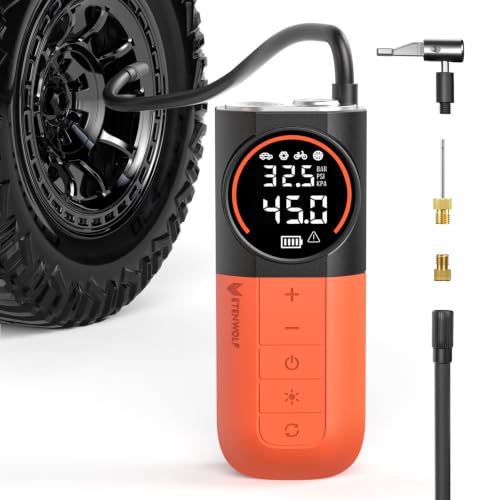
ETENWOLF S1 Tire Inflator Portable Air Compressor 160PSI

PORTER-CABLE Pancake Oil-Free Air Compressor 6-Gallon

Makita MAC210Q Quiet Series Oil-Free Air Compressor
Why These Options Stand Out
The VORTEX S6 is a cordless inflator aimed at drivers who want garage-level speed without dragging a hose across the driveway. Where the pancake compressors later in this list stay parked in one spot, this one rides in a trunk or under a truck seat, ready for a low-tire surprise at the trailhead or the commuter lot.
For commuters, weekend road-trippers, and anyone who has been stranded on a dark shoulder, the appeal is the lack of setup. There’s no outlet hunt, no extension cord, no walking back to the garage. You grab it, set your target pressure, and let the gauge handle the rest.
What Earns Its Place
- Runs on a built-in battery, so the unit is genuinely cordless for roadside top-offs
- Reaches pressures that handle most passenger tires and light truck applications
- Compact form factor stores easily behind a seat or in a small trunk well
- Digital gauge simplifies targeting an exact PSI without second-guessing
Things To Consider
- Battery life drops noticeably on larger truck tires, so heavy-duty drivers may need a second unit like the VORTEX S7
- Not designed to drive pneumatic nailers or sanders; this stays in the inflator lane
Right Fit For
Sedan and crossover owners who want a maintenance-grade tool that lives in the vehicle, not on a workbench.
Reach For A Different Pick When
Pickup and overland drivers running 33-inch or larger tires should look at the ETENWOLF VORTEX S7 instead, since it’s tuned for higher-volume fills.
Step up to a heavy-duty truck or a wrapped off-road rig and a 160 PSI cordless inflator starts to feel undersized. The VORTEX S7 is ETENWOLF’s response to that gap: a beefed-up battery pack, dual-motor airflow, and a chassis built for the kind of tires that take forever to seat on a small pump.
Overlanders, contractors with work trucks, and anyone running 35-inch tires at low PSI for sand or rock crawling get the most out of this one. Compared with the S6 earlier, the difference shows up in how quickly a big tire reaches the gauge number you set, not in a longer list of buttons.
Notable Gains
- Dual-motor design delivers the higher airflow needed to fill oversized tires in reasonable time
- Larger integrated battery supports multiple full fills between charges
- Sturdier housing shrugs off the typical tailgate and truck-bed bumps
- Higher pressure ceiling covers bead-seating tasks for off-road tires
Worth Noting
- Heavier than a passenger-car inflator, so you’ll feel it in a small daypack
- Priced above smaller cordless units, which only makes sense for serious tire sizes
Feature Snapshot
Made For
Off-roaders, overlanders, and work-truck drivers who need cordless fills on tires too large for a commuter-grade pump.
Swap It Out When
Daily drivers in the sedan segment will find the ETENWOLF S1 more manageable and easier to stash in a glove box or trunk cubby.
Now we leave the cordless inflator lane and step into a stationary shop tool. The Makita MAC2400 is a 2.5 HP, oil-lubricated (a design that uses oil inside the pump to reduce wear and heat), big-bore unit with a roll-cage frame that takes the kind of abuse a job site throws at gear.
Framers, finish carpenters, and serious hobbyists who run framing nailers, roofing guns, or impact wrenches need recovery speed, and that’s where the bigger cylinder earns its keep. The trade-off is noise and weight, but for shop duty that rarely matters.
What Pays Off
- Larger cylinder recovers tank pressure quickly between tool bursts
- Cast-iron pump is built for long service life under frequent use
- Roll-cage frame protects the motor and gauges from drops and bumps
- Lower amp draw at startup reduces tripped-breaker headaches on shared circuits
Trade Offs
- Loud compared with the oil-free quiet series units later in this list
- Heavier than pancake-style compressors, so relocating it takes planning
- Oil-lubricated design needs periodic oil checks, a small but real maintenance step
Best Suited To
Contractors and advanced DIYers who already know the compressor will live in a garage or shop and need real airflow.
Consider Something Else When
Garage hobbyists who prize low noise and minimal upkeep should look at the PORTER-CABLE C2002, which trades some recovery speed for a quieter, oil-free experience.
The S6SE is the “SE” trim of the VORTEX S6: same overall form factor, but a dual-cylinder pump design that moves more air per minute. For most owners, that means a 31-inch tire climbs from 0 to 35 PSI in roughly the time it takes to walk around the truck and check the second axle.
You reach for this one when the regular S6 starts to feel a little leisurely on cold mornings or after a day of airing down for the trail. It’s the kind of upgrade you don’t think you need until you’ve used one.
Practical Advantages
- Dual-cylinder design shaves time off larger tire fills compared with single-pump units
- Same cordless convenience as the rest of the ETENWOLF lineup, no outlet required
- Pressure accuracy holds within a tight tolerance on the digital readout
- Battery capacity supports multiple fills per charge in normal use
Points To Note
- Marginal gain over the S6 for small passenger tires, so casual users may not notice the difference
- Still a dedicated inflator rather than a pneumatic tool driver
Quick Facts
Who It Suits Best
Drivers who already trust the S6 platform but want noticeably faster fills on larger tire sizes.
Look Elsewhere When
Shed-based workshops that need tool-running airflow should consider the Makita MAC2400 instead, since the S6SE still won’t power framing nailers.
The S1 is the smallest, lightest ETENWOLF in the lineup, and the one most daily drivers should actually buy. It handles cars, SUVs, motorcycles, bicycles, and sports balls without making you haul a brick in your trunk.
It is the kind of tool you forget about until the tire-pressure light comes on, and then it earns its keep in about three minutes. Compared with the S6, you give up some speed and the very high pressure headroom, but the trade feels fair for the size and weight.
Standout Benefits
- Compact, lightweight body stores in a glove box or underseat compartment
- Cordless operation removes the need for an inverter or outlet in the car
- Reaches 160 PSI, enough for almost any standard passenger tire
- Useful for bicycles and sports balls, expanding the tool’s value
Honest Caveats
- Not the right tool for very large truck tires, which is where the S7 earns its price
- Battery is smaller than on the bigger VORTEX models, so plan on a recharge between heavy sessions
Feature Snapshot
Perfect Match For
Sedan, hatchback, and small-SUV owners who want a “set it and forget it” tool in the car for routine pressure checks.
Skip It When
Drivers running light-truck or off-road tires should reach for the ETENWOLF VORTEX S6 instead, which moves more air per minute.
The PORTER-CABLE C2002 is a long-running favorite in home workshops, and the reason is simple: a six-gallon pancake tank, an oil-free pump (no oil reservoir to monitor), and a price that doesn’t punish casual users for owning a compressor.
Trim carpenters, hobbyist woodworkers, and homeowners who want to run brad nailers, finish nailers, and inflation accessories without committing to a 60-gallon shop tank get exactly what they need here. The pancake shape is wide and low, which makes it stable on a shop floor and easy to slide under a workbench.
Where It Helps
- Six-gallon pancake tank gives a usable reserve for short finish-nailer bursts
- Oil-free pump removes the routine oil-check step from ownership
- Wide, low stance stays planted without rocking when the motor kicks in
- Built-in drain valve makes end-of-day tank moisture release quick
Softer Spots
- Recovery time lags behind the Makita big-bore units earlier in the list
- Not the quietest option in this roundup, so indoor placement still warrants a brief heads-up to anyone else at home
Key Attributes
Whose Shelf It Belongs On
Homeowners and weekend woodworkers who want a maintenance-light compressor for finish carpentry and tire duty without overspending.
Consider Something Else When
Framers running long roofing nailer sessions will be happier with the Makita MAC2400, which recovers pressure faster between continuous bursts.
Quiet compressors often mean “quiet for a compressor,” which is still loud. The Makita MAC210Q is the rare exception, rated at a noise level comparable to a normal conversation, which opens up indoor use in finished spaces, apartments, and shared work areas.
Crown molders, cabinet installers, and anyone who needs to run a nailer inside a customer’s home without a complaint will appreciate this. The 2-gallon tank keeps it small, so think of it as a finish-work specialist rather than a framing workhorse.
Where It Delivers
- Lower noise output makes indoor and after-hours use realistic
- Oil-free pump removes routine oil maintenance from the ownership picture
- Compact 2-gallon form factor fits on a bench, shelf, or small cart
- Lightweight enough to move between rooms or job sites without a dolly
Points To Keep In Mind
- Smaller tank means more frequent motor cycles during sustained tool use
- Not the right tool for heavy framing or roofing nailers, which demand more airflow than a 1 HP motor can sustain
Technical Highlights
Who Will Love This
Finish carpenters, cabinetmakers, and homeowners who need to run trim nailers indoors without the noise complaints that come with louder units.
Another Choice May Suit
Anyone running framing or roofing nailers for long sessions will find the Makita MAC2400 a better match, since it delivers the higher airflow heavy tools demand.
What Matters Most When Choosing Silent Air Compressors
Match Noise Rating To The Workspace
Decibel ratings tell you roughly how loud a compressor will be at a normal working distance. A unit that runs at around 60 dBA (decibels, a logarithmic unit of sound loudness) is about as loud as a quiet conversation and is reasonable for shared indoor spaces. Anything in the 70 to 80 dBA range sounds like a busy restaurant and works best in a detached shop or garage. Cordless inflators like the ETENWOLF lineup sit in a different category: they run briefly rather than continuously, so the noise is more of a short burst than a sustained drone.
Choose Tank Style For The Workload
Pancake tanks are wide and low, which keeps the unit stable and the price approachable. Hot-dog or twin-stack tanks hold more air in a taller footprint, which means longer runtimes between motor cycles. For finish carpentry and trim work, a small pancake often does the job. For tire inflation, a cordless inflator is usually a better fit than a stationary tank. Pick the form factor that matches how you actually work.
Look At CFM, Not Just PSI
PSI (pounds per square inch) measures how hard the compressor can push air; CFM (cubic feet per minute) measures how much air it actually delivers. Tools like framing nailers and impact wrenches need both, and most pneumatic tools list a minimum CFM requirement at a specific PSI. A compressor that advertises a high max PSI but low CFM will feel weak on real jobs. Always compare the CFM at 90 PSI to your tool’s spec sheet.
Plan For Maintenance Before You Buy
Oil-free pumps cost less to own because you skip oil checks and changes, at the price of a slightly shorter service life under heavy use. Oil-lubricated pumps last longer but need periodic oil monitoring and a quiet place to vent. Cordless inflators need a charging routine, and the battery will eventually wear out like any rechargeable cell. Knowing how much upkeep you will actually do narrows the field fast.
Key Considerations Across These Picks
Pitfalls Shoppers Hit
The most common error is chasing max PSI on the spec sheet and ignoring CFM, which leaves a compressor unable to keep up with a framing nailer. Another trap is buying a stationary pancake compressor for tire duty and dragging it across the driveway every time pressure drops. Match the form factor to the actual task, not to the most flattering spec number.
The Upgrade Payoff
Stepping up to a higher-tier model usually buys quieter operation, faster recovery, and a longer pump life under heavy cycles. For occasional finish work, a budget pancake does the job without strain. For daily shop use or running pneumatic tools at high duty cycles, the extra cost pays back in saved time and fewer motor-on wait states. Decide how often the compressor will actually run, then spend accordingly.
Frequently Asked Questions
How quiet is “quiet” for a home compressor?
A unit rated around 60 dBA is comparable to a normal conversation and is generally acceptable for indoor use. Anything closer to 70 dBA sounds like background restaurant noise and is better suited to a garage or detached shop. The Makita MAC210Q specifically targets that lower-noise band, which is why it shows up so often in finish-carpentry settings.
Can a cordless tire inflator replace a real compressor?
For tire inflation, sports equipment, and small inflatables, a quality cordless inflator like the ETENWOLF S1 or VORTEX S6 covers nearly every household need. The moment you want to run a nailer, an impact wrench, or a spray gun, a stationary compressor becomes the right tool. Think of the cordless inflator as the maintenance tool and the tank compressor as the work tool.
How often should I drain the tank?
Most manufacturers recommend draining the tank after each use, especially in humid environments where moisture condenses inside. The PORTER-CABLE C2002 includes a dedicated drain valve for exactly this reason, and the practice extends pump life by reducing internal corrosion.
Do oil-free pumps last as long as oil-lubricated ones?
Oil-free pumps trade some service life for lower maintenance, which works well for homeowners and weekend users. Under heavy daily use in a contractor setting, an oil-lubricated pump like the one in the Makita MAC2400 generally outlasts an oil-free equivalent, which is why most pro-grade shop compressors still use oil.
Is a higher PSI always better?
Not really. Higher max PSI means the compressor can reach a wider range of pressures, but most pneumatic tools operate between 90 and 120 PSI. CFM at working pressure matters more for keeping tools running smoothly. A compressor that delivers plenty of CFM at 90 PSI will outperform a higher-PSI unit with weak airflow on most real jobs.