A small band saw changes what fits in a one-car garage or basement corner. You can resaw thin stock, scroll curves, slice dowels to length, and trim notches without dragging a full-size floor saw into the room. The catch is that “small” covers a wide spread, from benchtop woodcutters to aftermarket tires and shields that retrofit a compact setup. This list pulls together six useful pieces across that range, from full machines down to the rubber tires and guards that make a small saw actually work well.
An Overview Of The Picks

JOMRTS Bandsaw for Small Workshops, 800W Motor

Pokin Urethane Band Saw Tires 9″ x 1/2″ x .095
ATS VB-ES0 Vertical Band Saw Guard, 5″ Lexan Shield

Pokin Urethane Band Saw Tires 14″ x 1″ x .095″

ATS LG-TR2 Lathe Guard for Hardinge HLV

MERXENG 8-Inch Benchtop Bandsaw, 1800 FPM
The Picks, Examined More Closely
The JOMRTS unit leans into the small-workshop concept with a vertical body that takes up about as much bench space as a sewing machine. Its 800W copper motor pushes a blade through roughly 70mm of stock, which covers most hobby furniture builds and scrollwork. The throat depth lands near 90mm, so you can swing medium panels and bowls without butting against the frame.
What makes this one worth a look is the accessory-friendly spindle. The head accepts drill chucks, grinding wheels, and flex shafts, so it pulls double duty as a sander, polisher, or rotary tool. For a one-person shop with limited drawer space, that consolidation matters more than a spec sheet suggests.
Noteworthy Benefits
- 800W copper motor handles typical hobby cuts without bogging down
- 70mm cutting height covers most board stock and trim pieces
- Tilting workbench from 0 to 45° opens up bevel and angled work
- Accepts third-party chucks and flex shafts for grinding and polishing
- Compact 8.5kg frame is easy to move between benches or job sites
Trade-Offs To Consider
- 90mm throat limits wide resaw cuts, so panel work stays modest
- Multi-function versatility means setup swaps take longer than a dedicated saw
Key Product Details
Who Will Love This
Hobby woodworkers and home DIYers with limited space who want one machine that bends into multiple roles.
Another Choice May Suit
Shoppers who mainly cut wide panels should look at the MERXENG 8-Inch Benchtop Bandsaw, which offers a broader cutting width for straight rip work.
Tires don’t look exciting, but they’re the part that keeps a 9″ bench saw honest. Pokin’s 9″ urethane pair stretches over the wheels of common Delta, Craftsman, Grizzly, Ryobi, Shopfox, and WEN 9″ benchtop saws, replacing rubber that has cracked or glazed over. A dry tire is the usual suspect when a blade starts skating, wandering, or refusing to track, so a fresh pair fixes a long list of mysterious cutting problems.
Urethane also resists the dry rot that plagues old rubber tires, so the upgrade tends to outlast the original. For a 9″ saw, the swap is a one-afternoon project, no adhesive needed in most installs.
A Few Strong Suits
- Fits a long list of common 9″ benchtop saws from Delta, Craftsman, Grizzly, and more
- Urethane resists cracking and dry rot better than old rubber
- Restores blade traction, which often solves tracking issues
Honest Caveats
- You must confirm your saw’s exact tire dimensions before ordering, since 9″ wheels come in different widths
- Stretching urethane over a wheel rim takes a firm, steady hand and a second pair of thumbs helps
Right Fit For
Anyone restoring a 9″ benchtop saw whose blade keeps drifting off the wheels.
Look Elsewhere When
Owners of 14″ floor saws should grab the Pokin Urethane Band Saw Tires 14″ x 1″ x .095″ instead, which match their larger wheels.
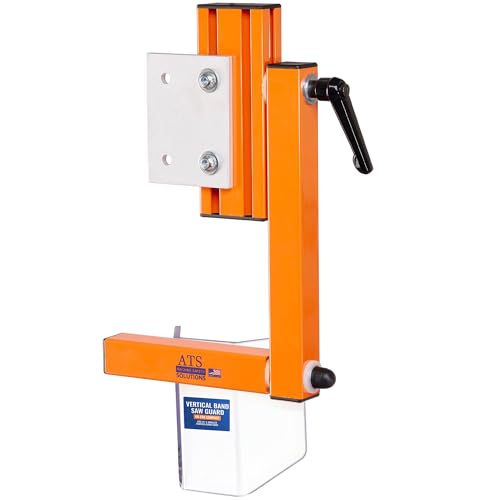
The ATS VB-ES0 is the kind of add-on that small-shop owners tend to skip until they get tagged by a chip or a wandering blade. Built for vertical band saws up to 14″, it uses a 5″ Lexan (clear polycarbonate) shield that sits between the operator and the cutting zone. The kit includes two mounting options, so it can hang off the saw door or clamp directly to the upper housing, depending on the machine’s layout.
The compact profile is the real story. Many off-the-shelf guards overhang the work area and force you to constantly slide material around them. This one stays out of the way while still blocking direct blade contact and flying debris, which matters in a shared space where apprentices or guests occasionally lean in.
Standout Benefits
- OSHA- and ANSI-compliant shielding for common 14″ and under vertical saws
- Compact Lexan panel keeps the work area clear
- Two mounting styles cover most door and housing configurations
- Polycarbonate shield blocks chips and incidental contact
Where It May Fall Short
- Limited to saws with a 14″ wheel or smaller
- Some drilling and tapping may be required to fit the bracket to specific housings
Perfect Match For
Small-shop owners running a vertical 14″ or smaller band saw who want compliant guarding without blocking their cuts.
Skip It When
Those working primarily on horizontal resaw or metalcutting setups should look elsewhere, since this guard is sized for vertical configurations.
The 14″ version of Pokin’s urethane tire fits the next size up: floor-standing saws like the Jet JWBS-14CS, Grizzly G0555, and Powermatic PWBS-14. Like the 9″ pair, the swap is adhesive-free, which makes a big difference in install time. A consistent urethane thickness across the width also keeps the blade tracking true, which is what most people notice first after the swap.
Replacing tires is the kind of job nobody puts on a wish list, but a saw that cuts straight again tends to feel new. Urethane also shrugs off the coolant and oil mist that tends to break down rubber in shop environments, so the upgrade pays off in metal shops too.
Key Advantages
- Fits Jet, Grizzly, Powermatic, and Delta 14″ saws
- Adhesive-free install keeps the job to one afternoon
- Uniform thickness improves blade tracking and traction
- Holds up against coolant and oil exposure better than rubber
Less Ideal Details
- Wheels must measure exactly 14″ x 1″ with a .095″ thickness, so measure first
Best Suited To
Owners of 14″ floor band saws chasing quieter cuts and better tracking without replacing the whole machine.
Reach For A Different Pick When
9″ bench saw owners should choose the Pokin 9″ Urethane Band Saw Tires, since 14″ tires won’t stretch to fit their smaller wheels.
The LG-TR2 sits in a different category from the rest of this list, and that’s the point. It’s a hinged chuck shield built for Hardinge HLV and HLV-H toolroom lathes, plus a long list of clones and related models including the HC chucker, DSM-59, DV-59, and Cyclematic or Sharp imports. Industrial aluminum extrusion gives the frame its stiffness, and a gas strut holds the panel up and out of the way during setup.
This guard is the version without an interlock switch, which is worth noting. Shops running 3-phase machinery often need to wire a safety switch into the motor control, and the 2-amp rating on aftermarket switches means a contactor or relay typically sits between the guard and the motor starter.
Real Benefits
- Engineered specifically for the Hardinge HLV headstock, including clones and related models
- Industrial aluminum frame holds up under daily shop use
- Gas strut keeps the guard open during setup, which speeds up tool changes
- Side Lexan encloses the chuck and spindle area to block reach-in
Points To Keep In Mind
- Trim-to-fit installation requires measuring and cutting at the bench
- Interlock version is a separate SKU, so plan wiring before ordering
Whose Shelf It Belongs On
Hardinge HLV owners and machinists restoring older toolroom lathes who need compliant chuck guarding.
A Better Fit Elsewhere
Anyone running a modern mini-lathe or hobby mill should skip this guard entirely, since it is purpose-built for a specific headstock profile.
The MERXENG 8″ lands at the most common entry point for a small band saw, the benchtop wood cutter. Its 3-amp pure copper motor turns the blade at 1800 feet per minute (FPM), a band speed that handles softwoods, hardwoods, and plywood without complaint. The fence and miter gauge come in the box, which is one less shopping trip than many competitors require.
The cutting envelope is 80mm tall at 90° and 50mm tall at 45°, with an 8″ maximum width for rip cuts. That covers most trim work, scroll cuts, and small furniture parts. The removable safety key adds a layer of protection in shared shops where curious hands sometimes reach for switches.
Useful Strengths
- 1800 FPM blade speed handles common softwoods and hardwoods smoothly
- 80mm cutting height at 90° covers most trim and furniture stock
- Tilting table from 0 to 45° for bevel work
- Rip fence and miter gauge included in the box
- Removable safety key helps prevent accidental starts in shared spaces
Worth Bearing In Mind
- Cutting height drops to 50mm when tilted to 45°, so plan angled cuts accordingly
- Like most benchtop saws, blade changes take a few minutes of setup
Key Product Details
Who Should Grab It
Garage and basement woodworkers who need a ready-to-run benchtop saw with the basic fence and gauge already in the box.
Swap It Out When
Anyone wanting a multi-function machine for grinding and polishing alongside cutting should look at the JOMRTS 800W Bandsaw, which accepts flex-shaft accessories.
Choosing The Right Small Band Saw Setup
Picking a small band saw comes down to how much room you have and what you’ll actually cut most. Benchtop 8″ and 9″ saws fit a folding workbench or a corner of a garage, while 14″ floor models want a dedicated spot. Throat depth, the distance from the blade to the saw’s vertical frame, sets the widest curve or panel you can swing through, so match that number to your largest common workpiece before anything else.
Cutting height determines how thick a board you can resaw in a single pass. Most hobby saws land between 70mm and 80mm at 90°, which covers trim, small furniture, and dowel stock. Tilt range matters for angled work, and a 0 to 45° table covers most beveled joints without needing a jig.
Motor Power and Blade Speed
A copper-wound motor tends to run cooler and last longer than aluminum equivalents, especially in a saw that sees weekly use. Blade speed, measured in feet per minute (FPM), needs to suit the material. Around 1800 FPM works for wood, while slower speeds and bi-metal blades suit metal cutting. A pure copper motor at 3 amps is a sensible hobby baseline.
Tires, Guards, and Long-Term Upkeep
Stock rubber tires glaze over and crack after a few years, which throws off tracking. Urethane replacements install without adhesive and keep the blade true. For shop safety, a Lexan (polycarbonate) blade guard brings older 14″ saws closer to current OSHA expectations without crowding the work area.
What To Look For In The Box
A rip fence and miter gauge are basic, but not every entry-level saw includes both. Quick-release blade tension, a dust port, and a removable safety key all add everyday value. A tilting table is a must if you plan to cut bevels, and a sturdy metal work surface holds up better than a thin pressed plate under repeated cuts.
Key Considerations Across These Picks
Where Shoppers Go Wrong
The most common slip is buying a saw on raw cutting height alone, without checking throat depth. A 100mm throat may sound generous until a 150mm bowl blank shows up. Tire size catches shoppers next, since 9″ and 14″ wheels look similar but use completely different parts. Always measure wheel width and tire thickness before ordering replacements.
What The Higher Tier Buys
A higher-end small band saw usually means a stiffer frame, a stronger fence, and a more accurate blade-tracking system. Those features show up as cleaner cuts, less drift on long rip work, and fewer blade changes over a year. For weekend hobbyists, a mid-tier saw is plenty. For daily users, the upgrade pays for itself in reduced blade waste and better finish quality.
Frequently Asked Questions
What Is The Best Size Band Saw For A Small Workshop?
Most small shops do well with an 8″ or 9″ benchtop saw. That size handles trim, dowels, scrollwork, and small furniture parts without monopolizing bench space. Bigger 14″ floor saws are worth the footprint only when you regularly resaw wide boards or cut large curves.
How Often Should Band Saw Tires Be Replaced?
Rubber tires tend to last 3 to 5 years in a typical home shop, though coolant, oil, and dry air shorten that window. Cracks, glazing, and slipping blades are the usual warning signs. Urethane replacements generally outlast rubber, especially in shops with temperature swings.
Can A Small Band Saw Cut Metal?
Some small band saws handle thin metal with a bi-metal blade, but the lower-end wood-focused models often run too fast for clean metalwork. A dedicated metal-cutting saw or a variable-speed model is the safer bet for steel, aluminum, and copper. Always check the manufacturer’s guidance before switching blade types.
Are Band Saw Guards Worth Installing?
Guards block flying chips and prevent accidental blade contact, which adds up over years of use. For home shops, a polycarbonate shield is enough to deflect debris and discourage reach-ins. Commercial and training environments usually need a guard with an interlock that stops the blade when the panel lifts.
How Tight Should A Band Saw Blade Be?
Most small band saws use a tension knob or lever that clicks or stops at the correct setting. A good rule is to seat the blade on the wheels, then add just enough tension to keep it from slipping under load. Overtensioning shortens blade life, while loose tension causes drift and crooked cuts.