


Desktop fabrication used to mean a garage full of steel and a dedicated outlet. Now a small CNC can live on a workbench, in a spare corner of a craft room, or beside a 3D printer without dominating the space. The seven machines below cover everything from a first engraving to a precision shop tool, and each one earns its place for a clear reason.
How The Shortlist Stacks Up
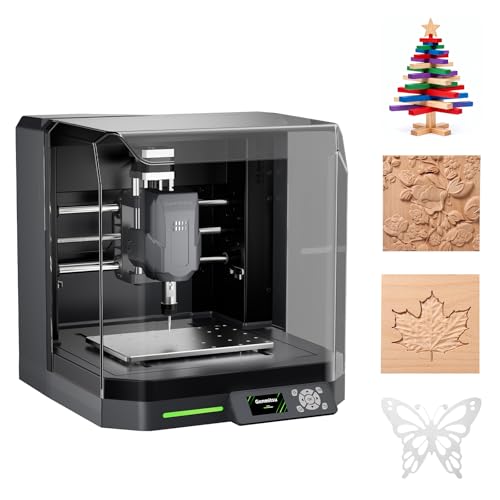
Genmitsu Cubiko Desktop CNC Router with Enclosure
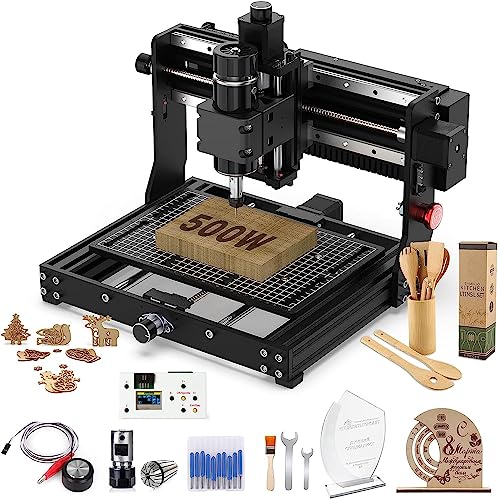
Titoe 3020Plus 500W CNC Router Kit

FoxAlien Masuter Pro MAX Desktop CNC Router

FoxAlien Masuter 3S CNC Router 400W Spindle

RATTMMOTOR HRV60 Mini Punch Grinder

FoxAlien Masuter Pro 3-Axis CNC Router
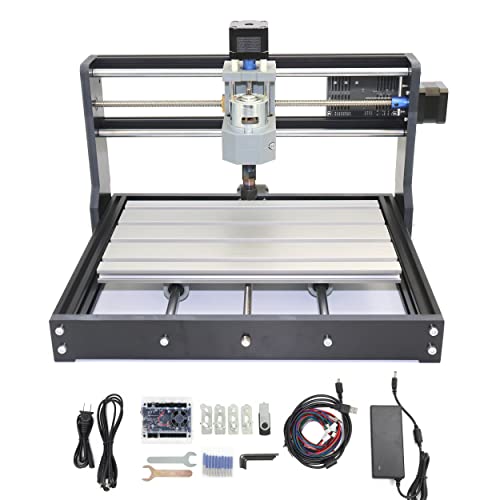
RATTMMOTOR 3 Axis Hobby CNC GRBL Router
A Breakdown Of The Leading Choices
The Genmitsu Cubiko arrives pre-assembled, which is the single biggest reason a nervous first-time owner reaches for it. Most kits in this category spend the first evening on a parts diagram; this one skips straight to the calibration step. The integrated enclosure contains chips and dust while softening the operating noise, a real bonus in a shared apartment or a classroom corner where loud routers are not welcome.
For anyone buying their first small CNC, the Cubiko removes the two biggest early frustrations: assembly confusion and mess control. A weekend maker can run a first engraving in soft wood, acrylic, or PCB stock without learning an entire ecosystem first.
Benefits That Matter
- Pre-built chassis cuts setup time to a single afternoon for a first-timer.
- Enclosed work area keeps stray chips off your desk and out of your eyes.
- Quieter operation than open-frame routers, friendlier in shared spaces.
- Compact footprint fits a kitchen-table workbench during a learning phase.
Things To Consider
- Enclosed body limits the size of stock you can clamp compared to open-frame siblings.
- Owners commonly report cleaning the enclosure walls after each long run to prevent dust buildup on the viewing panel.
Key Specs
Who It Suits Best
Beginners who want to engrave and carve on day one without wrestling a parts list.
Consider Something Else When
The Titoe 3020Plus 500W CNC Router Kit suits hobbyists who need a larger work envelope and a true offline controller for PCB work.
The Titoe 3020Plus is a classic hobby-shop 3-axis router, the kind that sits next to a soldering station and a small parts bin. The 500W spindle and ER11 collet (a standardized tool-holding chuck that accepts a wide range of shank sizes) make it genuinely useful for cutting PCB substrate, soft aluminum, hardwood, and PVC without a fight. GRBL control, the open-source firmware that drives many small CNCs, keeps the software path familiar to anyone who has used another budget machine.
The offline controller is a quiet luxury: you can load a G-code file (the text instructions that tell a CNC where to move) and run a job without keeping a laptop tethered. For a maker building a small production batch of boards or signs, that hands-off operation is a real workflow win.
Everyday Advantages
- 500W spindle handles hardwood, soft metal, and PCB blanks without bogging down.
- Offline controller frees your laptop for design work while the machine runs.
- ER11 collet accepts standard 1/8-inch shank bits widely available from tool suppliers.
- Open-frame layout gives you more usable Z height than enclosed beginner picks.
Worth Noting
- Open frame throws chips freely, so plan for a vacuum or downdraft table in a finished room.
- Setup, leveling, and squaring the gantry (the horizontal beam that rides across the frame) take patience for first-time users.
Right Fit For
Workshop hobbyists running PCB jobs, sign blanks, and small wood or aluminum parts who already enjoy tuning mechanical hardware.
Look Elsewhere When
The Genmitsu Cubiko Desktop CNC Router with Enclosure fits a first-timer who would rather skip the gantry calibration entirely.
Where the previous machines in this list ask for patience, the Masuter Pro MAX asks for time on the spindle. The 500W brushless motor (a motor with no physical brushes, meaning longer life and less heat) is built for the long cuts: thick hardwood slabs, dense acrylic sheets, and production runs where you do not want to stop halfway through. A massive 600x600mm work area, one of the larger footprints in this category, leaves room for full sheet stock.
Compared to the Titoe 3020Plus reviewed earlier, the Pro MAX trades a little hand-tool charm for sheer stamina. It feels closer to a small production tool than a hobbyist toy, which is exactly what some makers want as their skills grow.
Everyday Wins
- Brushless 500W spindle runs cool during long jobs, extending tool and motor life.
- Generous 600x600mm work area fits oversized signs and full wood blanks.
- Quieter than brushed motors of similar power, a real upgrade for home shops.
- Strong enough for soft metals alongside standard wood and plastic work.
Honest Caveats
- Large footprint demands a dedicated workbench, not a folding card table.
- Setup still requires squaring and tensioning, tasks that reward a patient first session.
- Dust collection is essential, as the open frame and power level push a lot of chips into the air.
Best Suited To
Intermediate to advanced hobbyists with a permanent shop space who run multi-hour carving sessions.
Skip It When
The RATTMMOTOR 3 Axis Hobby CNC Router GRBL suits someone working on a small desk and lighter project loads.
The Masuter 3S leans into precision rather than raw wattage. Its NEMA 23 closed-loop stepper motors, a class of stepper motor that confirms its position and corrects missed steps in real time, deliver around 2.2 Nm of torque and rapid traverse speeds up to 10,000mm/min. In plain terms, the machine keeps its position even when the cutter meets a tough knot in the wood, which is the kind of detail that shows up in every finished edge.
Built-in support for a 4th axis (a rotary attachment that lets the spindle spin the workpiece instead of itself) opens the door to cylindrical carving: rolling a pen, turning a small chess piece, or engraving a tumbler. Compared to the Pro MAX reviewed above, this one feels more like a craft tool than a sheet-good workhorse.
Where It Delivers
- Closed-loop motors correct missed steps, protecting long jobs from silent failure.
- Optional 4th-axis compatibility adds 360° cylindrical carving for pens, glasses, and dowels.
- High rapid traverse speed shortens non-cutting travel time on multi-part jobs.
Trade Offs
- 4th-axis add-on is sold separately, so the all-in cost climbs once you start rotating workpieces.
- 400W spindle asks for thoughtful feed rates (how fast you push the cutter into the material) in dense hardwood to avoid stalling.
Feature Snapshot
Who Will Love This
Makers chasing precision and 3D carving who want a stepper system that watches its own work.
Another Choice May Suit
The FoxAlien Masuter Pro MAX Desktop CNC Router fits a shop that wants bigger stock capacity and longer runtime over rotary carving.
The HRV60 is the odd one out, and on purpose. It is a punch grinder, a tool that sharpens the small steel punches used in metal stamping, not a carving router. The hardened SKS3 rollers (a tough tool-steel grade known for wear resistance), the double-roller design, and a stated 3μm concentricity (how perfectly round the rotating part spins, measured in millionths of a meter) put it firmly in toolroom territory.
Owners typically use it to resharpen worn punches and restore concentricity on small tooling, which is something a hobby CNC simply cannot do. The trade-off is scope: this is a specialty machine, and you will not cut a sign blank with it.
Positive Points
- 3μm concentricity specification delivers near-laboratory precision for small punches.
- Hardened SKS3 rollers stand up to repeated grinding without losing shape.
- Accepts punch diameters from 0.5 to 10mm, a useful range for most toolroom work.
- Compact bench footprint makes it easy to park beside a surface grinder.
Small Caveats
- Strictly a punch sharpener, not a general CNC, so the audience is narrow.
- Calibrating the rollers to hit 3μm accuracy takes practice and a careful hand.
The Right Fit
Small toolrooms, jewelry and stamping shops, and machinists who grind their own punches instead of replacing them.
Where A Sibling Pick Shines
The FoxAlien Masuter Pro 3-Axis CNC Router covers actual carving, cutting, and engraving work that the HRV60 will never touch.
The Masuter Pro is the all-metal workhorse in FoxAlien’s mid-range line. An aluminum frame, a linear-rail Z-axis (a carriage that rides on a rigid bar instead of round rods, reducing wobble), and a dust-resistant controller box give it the feel of a small bench tool rather than a kit-built toy. Engraving and light cutting in wood, acrylic, MDF, and nylon all sit comfortably in its lane.
For someone graduating from the Genmitsu Cubiko reviewed above, this is the natural step up. The learning curve is steeper, but the upgrade in rigidity shows up immediately in the finish of the cuts.
Practical Pluses
- All-metal frame resists flex, which improves surface finish on detailed cuts.
- Linear-rail Z-axis adds vertical rigidity over round-rail designs at similar cost.
- Dust-resistant controller box survives a real workshop, not just a clean desk.
- Accessible emergency stop and control layout for quick operator response.
Points To Keep In Mind
- All-metal construction adds weight, so a sturdy bench matters more than with plastic-framed kits.
- Owners commonly report spending the first afternoon squaring the gantry for the best results.
Quick Facts
Perfect Match For
Hobbyists ready to move past beginner kits and invest in a more rigid machine for daily use.
Reach For A Different Pick When
The Genmitsu Cubiko Desktop CNC Router with Enclosure fits a first-timer who values enclosure and noise reduction over all-metal rigidity.
The RATTMMOTOR hobby router is the smallest, lightest machine in this shortlist, and that is the entire pitch. Its 42x35x27cm frame and modest work area sit comfortably on a corner of a craft desk, and the GRBL firmware keeps the software side familiar for anyone coming from another budget CNC. The 775 spindle and 42 stepper motor cover light engraving and PCB isolation cuts without dominating a room.
It is the kind of machine you buy to learn the workflow first, then graduate from once you know whether you really want a larger work envelope. For a hobbyist on a strict budget, the value equation is hard to beat.
Useful Strengths
- Tiny footprint fits beside a laptop and a 3D printer on a single desk.
- Aluminum frame keeps the weight and price low while staying reasonably rigid.
- GRBL compatibility means free, well-documented software works out of the box.
Points To Note
- Small work area caps project size at small signs, PCB blanks, and light craft work.
- Lower-power spindle means hardwood cuts demand patience and shallow passes.
- Lightweight frame is sensitive to clamping pressure, so fixturing matters more than on heavier machines.
At A Glance
Whose Shelf It Belongs On
Curious learners and craft hobbyists who want a real CNC experience at a low commitment of money and space.
Swap It Out When
The FoxAlien Masuter Pro 3-Axis CNC Router fits a hobbyist ready to step up to a more rigid machine and larger stock.
What Matters Most Before Choosing Small Cncs
Workspace And Footprint
The single biggest constraint is the room you actually have. A bench-friendly desktop machine like the RATTMMOTOR hobby router lives happily next to a 3D printer, while a 600x600mm workhorse like the Masuter Pro MAX wants its own table. Measure the depth and height of your intended spot, then add a few inches for cable routing and chip clearance before you commit.
Frame Rigidity And Axis Design
Open-frame machines flex more, which shows up as chatter (a vibration that leaves a wavy finish) on hardwood edges. All-metal frames with linear rails resist that flex better, and enclosed frames add the bonus of noise and chip control. The trade-off is weight: a rigid machine is a heavy machine, and heavy machines need a sturdy bench.
Spindle Power And Tooling
Spindle wattage sets the ceiling for what you can cut. A 400W spindle handles wood, plastics, and the occasional soft-metal job, while a 500W brushless unit gives longer runtimes and cooler operation. Match the collet standard to the bits you plan to buy, since ER11 (a common precision collet system) and 1/8-inch shanks dominate the hobby market.
Control Electronics And Software
GRBL firmware is the lingua franca of small CNCs, and it works with a long list of free senders. Closed-loop stepper systems like the one in the Masuter 3S add real-time position correction, which protects long jobs from silent errors. Offline controllers, which let you load a job and walk away from the laptop, are a quiet luxury that matters more once you start running batch work.
Key Considerations Across These Picks
Traps First Timers Fall Into
The most common mistake is buying the biggest work envelope you can afford without considering the bench and dust collection around it. A 600x600mm frame in a carpeted bedroom is a recipe for chips in the carpet and overheating stepper motors. Equally common is skipping gantry squaring and then blaming the machine for poor cuts that calibration would have fixed. Run a test cut file on a scrap board before trusting a new machine with your finished stock.
Where The Extra Money Goes
The jump from a basic hobby router to a mid-range machine buys rigidity, a stronger spindle, and better electronics. You feel it in cleaner edges, fewer lost steps, and quieter operation. For casual weekend carving, the basic tier is plenty. For daily shop use, a rigid all-metal frame and a brushless spindle pay for themselves in saved time and replaced bits.
Frequently Asked Questions
How loud is a small CNC in a shared living space?
Open-frame routers run noticeably loud because the spindle cuts air as well as material. Enclosed machines like the Genmitsu Cubiko dampen that sound significantly, making them more apartment-friendly.
What materials can a hobby CNC actually cut?
Wood, MDF, plywood, soft plastics, and acrylic are the easy wins. With sharp bits and patient feeds, soft aluminum and PCB blanks are also within reach for mid-range machines like the Titoe 3020Plus.
Do these machines need a dedicated computer to run?
Most run on any laptop with a USB port and free GRBL sender software. The Titoe 3020Plus adds an offline controller so you can run jobs without a tethered computer at all.
How much maintenance should owners expect?
Owners commonly report cleaning chips after each session, checking belt tension, and re-squaring the gantry every few weeks. Lubricating linear rails occasionally keeps the motion smooth and extends the machine’s life.
Is assembly difficult for first-time owners?
The Genmitsu Cubiko ships pre-assembled, which removes the steepest part of the learning curve. Most other picks in this list require a few hours of careful assembly, squaring, and calibration.




