


Small milling machines bring real workshop capability into a garage, a spare bedroom, or a corner of a makerspace. You get the chance to cut PCB prototypes, carve hardwood signs, shape soft metals, and mill small aluminum parts without parking a 600-pound bridgeport where your car used to sleep. The category splits cleanly into desktop CNC routers, benchtop mill accessories, micro-grinding tools, and small grain mills for the homestead, and each solves a different kind of problem.
Hobbyists who want to graduate from a 3D printer pick up a CNC router first. Woodworkers tackling angled cuts and circular engravings reach for a rotary table. Farm owners and small-batch food makers, meanwhile, want a rice and grain mill that handles daily volume. This list walks through nine tools that hit those specific needs, with the trade-offs honestly laid out so you can match a machine to your actual workload, not a marketing pitch.
The Leading Options At A Glance
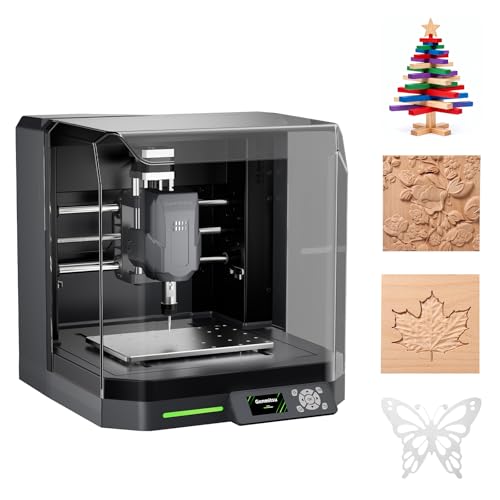
Genmitsu Cubiko Desktop CNC Router Machine with Enclosure
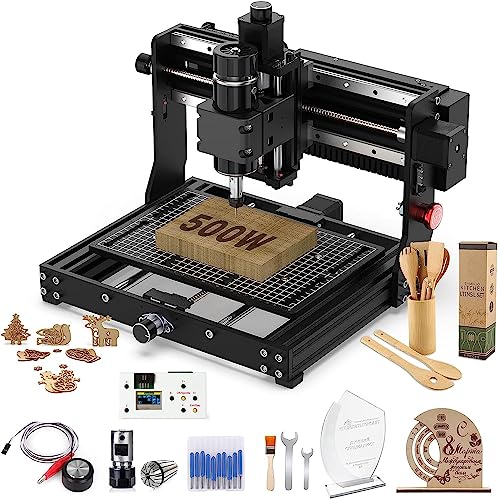
Titoe CNC 3020Plus 500W Engraving Machine

FoxAlien Masuter 3S CNC Router with NEMA 23

ADI 4-Inch Horizontal Vertical Tilting Rotary Table

FoxAlien Masuter Pro MAX 500W CNC Router

RATTMMOTOR HRV60 Mini Punch Grinder (3μ Accuracy)

FoxAlien Masuter Pro 3-Axis All-Metal CNC Router

Banfluxion 220V Rice and Corn Milling Machine 1.8KW
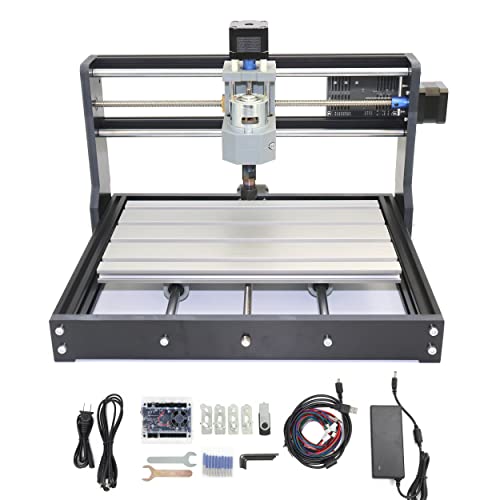
RATTMMOTOR 3 Axis Hobby CNC Router GRBL Control
More Details On Our Top Picks
The Genmitsu Cubiko lands squarely for the person opening a CNC for the very first time. The big pitch is that it ships pre-assembled, which is unusual in a category where most hobby machines arrive as a box of extruded aluminum and a bag of screws. Setup is mostly software install, fixture squaring, and your first g-code file. You skip the entire “is this carriage supposed to be loose” phase that scares off half of newcomers.
The integrated enclosure is the practical feature that sets it apart. Compared to open-frame machines like the RATTMMOTOR hobby pick later in this list, the Cubiko contains chips and dust inside the work area and noticeably dampens the cutting noise. The trade-off is a smaller working envelope, so don’t expect full sheet goods; this is built for small signs, PCB isolation routing, and balsa or basswood models.
Advantages To Know
- Pre-assembled delivery removes the steepest part of the CNC learning curve, so you can cut a first workpiece the same day you unbox it.
- Enclosed work area keeps chips off your desk and lets the machine live in a bedroom or shared makerspace without dominating the room’s noise.
- Compact desktop footprint fits a small workbench, leaving room for a laptop, a vise, and a parts tray in the same square footage.
- Beginner-tuned software and community resources shorten the path from “what is a feed rate” to running reliable jobs.
Points To Keep In Mind
- Working area is modest, so anything bigger than small plaques, PCB panels, or model parts will not fit.
- Owners commonly report that the enclosure needs periodic cleaning because fine dust settles on the rails.
Who It Suits Best
Newcomers who want a forgiving entry point and a machine that lives happily on a small apartment workbench.
Consider Something Else When
Skilled hobbyists cutting full sheets of plywood should look at the FoxAlien Masuter Pro MAX, which pairs a larger work area with a more capable spindle.
The Titoe 3020Plus is the kind of machine that quietly does its job in a basement electronics workshop. The 500W spindle and 3-axis GRBL platform target PCB isolation milling, PVC signage, and small hardwood lettering. It’s not a fashion piece; it’s a workhorse, and that attitude extends to the ER11 collet system, which accepts the same wide range of shank sizes used in the rest of this list.
Where it earns its value is the offline controller. You load a g-code file onto an SD card, walk the file over, and run the job without tethering a laptop to the bench. For repeatable batch work, that’s a quiet productivity gain. The compromise is a less polished enclosure and software experience compared to the Genmitsu Cubiko, so expect more time tuning feed rates by ear.
Reasons It Performs
- 500W spindle cuts deeper per pass than a typical 300W starter, so you spend less time on multiple shallow passes through plywood and hardwood.
- Offline controller streamlines batch jobs, since you do not need a computer tethered to the bench for every program.
- ER11 collet compatibility covers most shank diameters in the hobby tooling ecosystem.
Trade Offs
- Documentation is thinner than larger brands, so first-time CNC users may spend more time on community forums learning workarounds.
- Frame rigidity is decent but not on par with heavier all-metal options, and owners commonly report that aggressive cuts in dense hardwood can cause chatter.
- Limited factory enclosure means dust management is largely your responsibility.
Feature Snapshot
Made For
Electronics hobbyists milling PCB prototypes and sign makers cutting PVC on a budget.
Look Elsewhere When
First-time users who want a fully enclosed, ready-to-cut experience should pick the Genmitsu Cubiko instead.
The FoxAlien Masuter 3S is the first pick in this list that genuinely wants to mill aluminum. The NEMA 23 closed-loop stepper motors deliver around 2.2 Nm of torque, and the closed-loop design catches positional errors that an open-loop stepper would simply miss. The result is the kind of motion control that survives a real cutting load without skipping steps and ruining a workpiece.
Rapid traverse speeds up to roughly 10,000 mm/min keep the workflow feeling quick between cuts. Compared to the Titoe 3020Plus, the Masuter 3S is a clear step up in rigidity and motor sophistication, and that translates to confidence when you push harder materials like acrylic sheet and softer aluminum plate. You do pay in assembly complexity, since this arrives as a kit rather than a turnkey machine.
Real-World Strengths
- Closed-loop stepper motors detect stalls and recover position, which protects long jobs from silent failures.
- High torque output supports deeper cuts in hardwood and light aluminum, so you can run jobs the Titoe 3020Plus would struggle with.
- Fast rapid traverse reduces non-cutting cycle time on multi-operation jobs.
- 4th-axis rotary compatibility opens up cylindrical carving on bottle shapes, drum bodies, and columns.
Minor Gripes
- Kit assembly takes a few hours and demands careful attention to squaring the gantry for repeatable accuracy.
- The 400W spindle is a step behind the FoxAlien Masuter Pro MAX, so heavy aluminum will still take patience.
Best Suited To
Intermediate to advanced hobbyists who want real cutting performance and are comfortable building and tuning a machine.
A Better Fit Elsewhere
Total beginners who want a cleaner out-of-box experience will be happier with the Genmitsu Cubiko.
The ADI rotary table is not a CNC at all, and that’s the point. This is a precision accessory that bolts onto a milling machine, drill press, or surface grinder, and it adds a fourth axis of precise, continuous rotation. For a small workshop, it opens the door to circular flanges, indexing patterns, and small cylindrical parts that would otherwise require hand-dividing on a manual mill.
The 4-inch (100 mm) table tilts from horizontal to vertical and rotates 360 degrees with 5-degree graduations on the body. The worm and gear drive feels solid under hand, and the central ball bearing keeps motion smooth. You pair this with a separate mill head, so the rotary table suits owners who already have a milling platform and want to expand what it can do.
The Value In It
- Tilting 0 to 90 degrees lets you clamp flat stock, vertical cylinders, or angled workpieces on the same fixture.
- Worm gear drive provides precise, repeatable indexing without slipping under load.
- Compact 4-inch footprint fits a small benchtop mill and stores easily on a shelf when not in use.
- Graduated 360-degree rotation simplifies manual indexing and setup math.
Worth Noting
- This is an accessory, not a complete mill, so budget separately for a mill head, tooling, and a workholding approach.
- For very small workshops, a separate small CNC may be a more productive step than adding manual accessories.
Who Should Grab It
Small-shop machinists who already run a benchtop mill and need a reliable rotary axis without buying a full 4-axis CNC.
Skip It When
Hobbyists starting from scratch will get more from the FoxAlien Masuter 3S, which adds rotary support digitally without a manual fixture.
The Masuter Pro MAX is FoxAlien’s flagship in the desktop CNC category, and the spec sheet reads like a small production tool. The 500W brushless spindle is the headline feature: a brushless design means fewer wear parts, less heat, and quieter operation than a brushed motor of the same wattage. For marathon cutting sessions, that difference shows up in spindle life and in your ears.
Working area expands to roughly 600x600mm, which is a substantial step up from the Genmitsu Cubiko’s compact enclosure. You can cut full sheet goods, large signs, and multi-piece batch layouts on a single setup. The trade-off, of course, is footprint and price tier. This is the pick for someone treating CNC as a serious part-time production tool rather than a weekend experiment.
Features That Help
- Brushless spindle runs cooler and quieter, which matters during long engraving sessions in a shared space.
- Expanded 600x600mm work area supports full sheet layouts and larger signs without tiling.
- Heavy-duty frame reduces chatter at high feed rates, so cuts come out cleaner on the first pass.
Some Limits To Know
- Larger footprint requires a dedicated workbench or floor space, and storage is not realistic when not in use.
- Kit assembly takes longer than a turnkey machine, so plan a full afternoon for setup and squaring.
Feature Card
Perfect Match For
Serious hobbyists and small-shop operators running long, repetitive jobs in wood, plastic, and soft metals.
Not Your Match When
Casual users cutting the occasional small sign will find the Genmitsu Cubiko easier to live with.
The RATTMMOTOR HRV60 lives in a different corner of the milling world. This is a precision punch grinder, not a CNC router. It’s used to restore concentricity and edge quality on small punches and pins, with a claimed concentricity around 3 micrometers and a roller clamping range from 0.5 to 10mm in diameter. For toolrooms and stamping shops, that kind of accuracy keeps a worn punch back in service instead of in the scrap bin.
The body accuracy spec of around 0.002mm and the hardened SKS3 rollers suggest a tool built for repeated precision work rather than one-off adjustments. In a small machine shop, that translates to less scrap and more consistent part quality. The catch is that this is a specialized tool, so it makes sense only if punch grinding is a real part of your workflow.
The Good Stuff
- Sub-micron concentricity restores worn punches to usable tolerance, extending tool life and reducing scrap.
- Hardened SKS3 rollers hold up under repeated use without deforming.
- Wide clamping range from 0.5 to 10mm covers most small punch and pin diameters.
Honest Caveats
- Specialty tool with a narrow audience, so general machinists may not recover the cost.
- Requires a steady learning curve to dial in grinding angles and pressure consistently.
Whose Shelf It Belongs On
Toolroom machinists and stamping operators who regularly resharpen small punches and want repeatable concentricity.
Reach For A Different Pick When
General hobbyists without a punch-grinding workload should look at the ADI rotary table, which is a more versatile workshop accessory.
The original FoxAlien Masuter Pro is the workhorse that put the brand on hobbyist benches, and the all-metal frame is the central reason. Where many entry CNCs lean on plastic and partial metal construction, the Masuter Pro uses aluminum across the body and a linear rail Z-axis, which keeps motion consistent over the life of the machine. For owners running repeated wood, acrylic, MDF, and nylon jobs, that rigidity pays back in cut quality.
The dust-proof controller box is a small touch that has real long-term value, since shop dust kills electronics quietly over time. Compared to the smaller RATTMMOTOR hobby router at the end of this list, the Masuter Pro offers a more grown-up build and easier upgrades, though it still requires assembly and a proper tune before serious work.
Notable Gains
- All-metal frame and linear rail Z-axis keep cuts consistent over years of use, reducing the drift you see in lighter machines.
- Dust-resistant controller extends electronics life, especially in a garage or basement workshop with sawdust in the air.
- Generous community and spare parts ecosystem make repairs and upgrades approachable.
Trade-Offs To Consider
- Assembly and initial squaring still demand patience; you trade the Cubiko’s pre-built convenience for a sturdier final machine.
- Working area is mid-sized, so it does not replace a full sheet-good machine for sign shops.
Quick Technical Notes
The Right Fit
Hobbyists who want a sturdier long-term CNC than entry-level machines and are willing to assemble it themselves.
Swap It Out When
Outright beginners should start with the Genmitsu Cubiko before graduating to this tier.
The Banfluxion mill is a different kind of milling machine, one that turns whole grain into finished food. The 1.8KW motor drives throughput of roughly 130 to 170 kilograms per hour, which puts it in small commercial territory. For a homestead, a market garden, or a small rice retail operation, that throughput turns a daily chore into a manageable routine.
The adjustable flow regulator and feed plate are the practical controls that make the machine worth buying. Slowing the feed rate improves milling quality at the cost of speed, and the adjustable plate controls how much grain enters at once. You can tune the output to your specific rice, millet, or corn without guesswork.
Everyday Advantages
- Adjustable feed plate controls how much grain enters, which prevents overfeeding and keeps the mill from bogging down.
- Flow regulator lets you trade throughput for finish quality depending on the crop.
- 220V commercial power supports sustained daily use in farm and small business settings.
Practical Considerations
- Heavier and louder than a kitchen mill, so it earns its place in a barn, garage, or dedicated utility space.
- Requires a 220V outlet, so plan electrical work if your shed is currently wired for 110V only.
Who Will Love This
Small farm operators, market growers, and homesteaders processing grain for home use or local sale.
Where Another Pick Suits Better
Anyone cutting wood, plastic, or metal should be looking at the FoxAlien Masuter Pro, which is built for subtractive material work.
The RATTMMOTOR 3 Axis hobby router is the entry point for anyone who wants to learn CNC without spending serious money. The frame is around 42x35x27cm and the working area sits at roughly 18x10x4.5cm, so this is genuinely a desktop toy rather than a production tool. For learning g-code, testing toolpaths, and engraving small plaques or nameplates, that is exactly enough.
The 775 spindle motor runs on 12 to 24V and reaches around 10,000 RPM at 24V, which handles soft woods, plastics, and PCB isolation. The 42 stepper motors are modest, with 0.25 Nm of torque, so you keep cuts light. The honest read is that this is a learning platform, and the right move is to plan a real upgrade once you outgrow the work envelope.
What Pays Off
- Low price makes it a low-risk way to learn g-code, CAD workflow, and CNC terminology.
- GRBL control is widely supported, so you can use free software like Candle and Universal Gcode Sender.
- Tiny footprint fits on a small desk or shelf, even in a dorm or apartment workshop.
Where It Is Less Suited
- Working area is small enough that any meaningful production work simply will not fit.
- Modest stepper torque limits you to soft materials and shallow passes in anything dense.
- Owners commonly report that setup and firmware flashing take patience on the first afternoon.
Key Product Details
Built With In Mind
First-time learners who want to explore g-code and CNC concepts on a strict budget.
Not Your Match When
Hobbyists ready to cut larger workpieces should jump to the FoxAlien Masuter Pro for a sturdier, roomier platform.
Choosing The Right Small Milling Machine For Your Workshop
Small milling machines split into four working categories, and the right choice depends on which problem you’re actually solving. Desktop CNC routers handle the bulk of hobby woodworking, sign making, and PCB prototyping. Rotary tables expand what an existing manual mill can do. Specialty grinders like the RATTMMOTOR HRV60 service specific toolroom tasks. Grain mills address a completely different food-prep workflow, so keep that distinction clear before you start comparing spindles and collet systems.
For CNC routers, the first real decision is working area. A 200x200mm footprint like the RATTMMOTOR hobby machine handles PCB and small plaques, while a 600x600mm platform like the FoxAlien Masuter Pro MAX supports full sheet goods. Match the work envelope to your largest typical project plus a small buffer, because a machine that’s just barely big enough always feels cramped in practice.
Spindle power matters more than frame size for material range. A 300W brushed spindle handles basswood and soft plastic, but hardwood and acrylic push the motor. A 500W brushless spindle like the one in the Masuter Pro MAX holds up under longer cuts and softer metals. Closed-loop stepper motors, found in the FoxAlien Masuter 3S, are the upgrade that protects against missed steps and ruined workpieces.
Rigid frame construction is the feature that quietly determines cut quality. All-metal frames with linear rails hold tolerance better than plastic-bodied machines, and they survive years of vibration without loosening. For anyone planning more than occasional hobby use, an all-metal frame is worth the extra cost over a plastic-and-aluminum hybrid.
Software ecosystem is the underestimated filter. GRBL-based machines like the RATTMMOTOR hobby router and the Titoe 3020Plus pair with free, well-documented senders, which keeps the learning curve gentle. Closed-source controllers can offer more features but tend to lock you into specific workflows. Newcomers usually benefit from choosing the more open option.
Assembly expectations vary widely, and that’s worth respecting. The Genmitsu Cubiko ships ready to use, which removes hours of squaring and wiring. Other machines in this list arrive as kits, which trade convenience for a sturdier, more serviceable end result. Be honest about how many hours you want to spend on setup before you pick a machine.
Dust and noise management are practical ownership issues that don’t show up in spec sheets. Enclosed machines like the Cubiko contain chips and dampen sound, while open-frame routers need a vacuum and ear protection. If your shop shares space with a living area, that enclosure question becomes a daily comfort issue rather than a minor detail.
Key Considerations Across These Picks
Common Buying Mistakes
The most common error in this category is choosing a working area that’s just barely large enough. A small buffer pays for itself the first time you need to rotate a workpiece or fixture a slightly larger blank. Another frequent slip is overlooking spindle power, since a 300W motor feels fine in soft wood until you try to cut hardwood or aluminum.
A third pitfall is ignoring assembly expectations. A pre-assembled machine like the Genmitsu Cubiko is genuinely easier than a kit, and a kit is genuinely sturdier when finished. Misjudging your own patience for setup leads to either an unused machine or a poorly squared one. Plan honestly for the time you have, and the right tier becomes obvious.
What The Higher Tier Buys
Higher-tier machines in this category buy you brushless spindles, closed-loop stepper motors, and all-metal frames. Each of those upgrades reduces the maintenance burden and improves cut quality on the first pass. The FoxAlien Masuter Pro MAX is the clearest example, where the 500W brushless spindle and 600x600mm work area move a desktop machine into small-production territory.
The honest case for paying up is that the upgrade pays for itself in saved material and reduced rework. A closed-loop stepper catches errors that would otherwise ruin an expensive blank. A brushless spindle runs quieter and lasts longer. For hobbyists who expect to use a machine weekly rather than monthly, the upgrade math tends to favor stepping up to the heavy duty tier.
Frequently Asked Questions
What is the best small milling machine for beginners? The Genmitsu Cubiko is a strong starting point because it ships pre-assembled and includes an integrated enclosure, so you can move from unboxing to a finished first part without spending a weekend on mechanical setup.
How much workspace do I need for a desktop CNC? Plan for the machine footprint plus at least 12 inches of clearance on every side for chip evacuation, bit changes, and loading stock. A machine like the FoxAlien Masuter Pro MAX needs a dedicated bench, while the Genmitsu Cubiko fits on a smaller writing desk.
Can small milling machines cut aluminum? Some can, but only with the right spindle and feed setup. Machines with closed-loop steppers and at least a 400W spindle, like the FoxAlien Masuter 3S, handle soft aluminum with care, while lighter machines like the RATTMMOTOR hobby router are limited to soft wood, plastic, and PCB.
What is a rotary table used for? A rotary table like the ADI 4-inch model adds a precise rotating axis to a manual mill, supporting circular flanges, indexing patterns, and small cylindrical parts that would otherwise require complex hand-dividing setups.
Is a brushless spindle worth the upgrade? A brushless spindle, as found in the FoxAlien Masuter Pro MAX, runs quieter, cooler, and typically lasts longer than a brushed motor of equivalent wattage, so for users who run long sessions or treat CNC as more than a weekend hobby, the upgrade tends to pay back in spindle life and noise comfort.




