


Tight spaces are a daily headache for anyone working under dashboards, behind appliances, or inside engine bays. A standard ratchet simply will not swing in a confined spot, so you end up stripping fasteners, pinching fingers, or giving up entirely. The right setup combines a compact ratchet body, slim sockets, and the occasional offset or universal joint to bend around obstructions. These eight picks cover the common access problems, from shallow fastener depths to deeply recessed bolts, with options for weekend projects, pros, and everyone in between.
How The Shortlist Stacks Up

TEKTON 1/4 Inch Drive 6-Point Socket and Ratchet Set 34-Piece

GEARWRENCH 3/8″ Drive 6 Pt. Deep Socket 1″ SAE

SK Tools USA 1/2″ Drive Flex Handle Breaker Bar 16″

Williams JHW30012 1/4″ Square and Hex Ratchet 5″

BASIKER 1/2″ Offset Extension Wrench with 6 Socket Adapters

GEARWRENCH 20 Pc 1/4″, 3/8″, 1/2″ Drive Ext U-Joint/Adapter Set
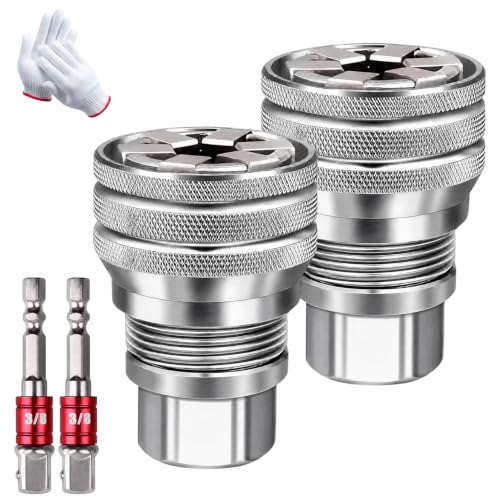
UWYJK Multi-Function Universal Socket Wrench Tool (2 Sets)

UWYJK Multi-Function Universal Socket Wrench Tool (3 Sets)
What Each Pick Brings To The Table
The 1/4-inch drive format is the natural starting point for confined work, and this TEKTON set covers every metric step from 4 mm to 15 mm without gaps. A 6-point socket, sometimes called a hex socket, grips the flat sides of a bolt rather than the corners, which dramatically lowers the chance of rounding off a stubborn fastener. For someone working on electronics, bicycle components, or compact machinery, the small drive square leaves room for the ratchet head to swing where larger 3/8-inch tools simply will not fit.
Compared with the single-purpose picks lower in this list, the TEKTON set delivers range as well as size, with deep and shallow versions of common sizes included. The case keeps everything in its marked slot, so you spend less time hunting for a missing 8 mm in the bottom of a drawer.
Useful Touches
- Continuous metric coverage from 4 mm through 15 mm removes the need to guess on size
- 6-point contact preserves worn fasteners, helpful on older household fittings
- Includes universal joint and two extensions for reaching around obstructions
- Marked storage case speeds up cleanup after a job
Worth Noting
- 1/4-inch drive cannot deliver the torque a stuck half-inch fastener demands
- Smaller sockets are easy to misplace on cluttered workbenches
Quick Facts
Who It Suits Best
Weekend mechanics, bike owners, and electronics tinkerers who want a ready-made metric lineup for small fasteners.
Where Another Pick Suits Better
The SK Tools USA 1/2″ Drive Flex Handle Breaker Bar is the better match when you need raw torque on a rusted half-inch bolt.
A standard socket bottoms out on a long threaded stud, leaving the nut trapped halfway down. The 1-inch deep profile on this GEARWRENCH socket reaches past the stud and the washer stack, so you can spin a nut all the way off without removing the surrounding bracket. Its chamfered opening acts like a funnel, guiding the fastener into the socket even when visibility is poor in a dim engine bay.
Where the TEKTON set is a full toolbox in a case, this single socket targets one recurring pain point. It slips into any 3/8-inch ratchet, extension, or breaker bar you already own, which makes it an easy add-on for shops that already standardized on 3/8-inch drive.
Well-Handled Touches
- 1-inch depth clears long studs, which shorter sockets cannot
- Chamfered entry speeds up alignment on awkward angles
- Internal serration depth matches fastener length to keep the bolt centered
Trade Offs
- Single-size format means you buy more sockets to cover a full range
- Deep walls slightly reduce clearance in the tightest pockets
Feature Snapshot
Right Fit For
Mechanics and hobbyists who already own a 3/8-inch ratchet and need to reach deeply recessed nuts on suspension or engine hardware.
Skip It When
The Williams JHW30012 1/4″ Square and Hex Ratchet is a better choice when clearance around the ratchet head is the real problem rather than socket depth.
When a bolt refuses to move, leverage and angle matter more than clever socket design. This 16-inch flex-head breaker bar from SK Tools pivots at the head, letting you swing the handle around obstacles like frame rails and exhaust shields. A half-inch drive delivers the muscle needed to break rusted fasteners loose without rounding the flats, and the longer handle multiplies the torque you can apply by hand.
It is a different tool from the others in this lineup, more a problem-solver than a daily driver. Where the TEKTON set covers small fasteners, this breaker bar covers the big ones that have already won their first fight.
Features That Help
- Pivoting flex head reaches fasteners that point straight at the wall
- 16-inch handle provides strong mechanical advantage for stuck bolts
- 1/2-inch drive accepts common impact and chrome sockets
- Knurled grip sleeves give a positive hold even with greasy hands
Honest Caveats
- Length makes it awkward to maneuver in very tight underbody areas
- Single-purpose tool, so you still need a ratchet and socket set nearby
Best Suited To
Home mechanics and small-shop technicians dealing with seized suspension, axle, or exhaust fasteners on cars and light trucks.
Reach For A Different Pick When
The Williams JHW30012 1/4″ Square and Hex Ratchet is more practical for frequent small electronics work where a 16-inch breaker is overkill.
When the ratchet head itself is the obstacle, length is your enemy. At just 5 inches overall, this Williams ratchet slides into spots a standard handle cannot, like inside an appliance cabinet, under a dashboard, or behind a sink trap. It accepts both 1/4-inch drive sockets and 1/4-inch hex bits, so you can switch between nut-driving and screw-driving without reaching for another tool.
For someone who already owns full-size ratchets, this stubby version fills a specific gap. The tradeoff is leverage, since a short handle means more effort on tight fasteners, which is a fair exchange when access is the main problem.
Useful Highlights
- Compact 5-inch body reaches where full-size ratchets cannot swing
- Dual square-and-hex drive accepts sockets and bits interchangeably
- Light enough to carry in a pocket or tool roll between jobs
Soft Spots
- Short handle limits leverage on stuck fasteners
- Pocketable size makes it easier to lose on a busy bench
At A Glance
Whose Shelf It Belongs On
Anyone doing appliance repair, electronics, or HVAC work where the fastener is reachable but the swing arc is not.
Consider Something Else When
The TEKTON 1/4 Inch Drive 6-Point Socket and Ratchet Set covers you better when you need a full metric range rather than a single compact ratchet.
The BASIKER kit solves two problems at once: a fixed 1/2-inch offset extension that shifts the ratchet away from the work, plus six socket adapters that step between 1/4, 3/8, and 1/2-inch drives. That combination is genuinely useful for anyone who has accumulated sockets in three drive sizes over the years and wants them to play together.
You may find this kit handy when working on vehicles that mix metric and imperial fasteners, or on equipment that crosses between tool systems. The included impact adapter also means the same stack works with an impact driver, not just a hand ratchet.
A Strong Showing
- Offset extension adds side clearance around obstructions
- Six adapters cover 1/4, 3/8, and 1/2-inch drive cross-conversions
- Works with hand ratchets and impact drivers alike
- Multiple adapters can stack to reach very deep fasteners
Points To Note
- Adding extensions reduces overall rigidity and torque transfer
- Stacking too many adapters increases the chance of misalignment
Who Will Love This
DIYers and small-shop techs who need to bridge mixed-drive sockets without buying three separate ratchets.
Look Elsewhere When
The GEARWRENCH 20 Pc 1/4″, 3/8″, 1/2″ Drive Ext U-Joint/Adapter Set is the better fit when you need angle-flex rather than offset reach.
A universal joint, the pivoting connector that lets a socket sit at an angle to the ratchet, is the most common answer to angled fasteners. GEARWRENCH bundles 20 pieces covering all three drive sizes, so you can angle any socket in your existing collection. Knurled sections on the extensions help finger control when hand-tightening, and the ball detent at each joint keeps sockets from popping loose mid-turn.
Unlike the BASIKER offset kit, this set is built around angle access rather than reach. That distinction matters in dashboards, engine valleys, and cabinet backs where a straight extension would still hit a wall.
What Stands Out
- Twenty pieces cover 1/4, 3/8, and 1/2-inch drives in one set
- Ball detents keep sockets attached under load
- Knurled extensions improve fingertip grip during hand work
- Full-polish chrome finish wipes clean after greasy jobs
Less Ideal Details
- Universal joints reduce torque efficiency under heavy load
- Larger size count means more pieces to keep track of in storage
Feature Card
Perfect Match For
Working technicians who already own a range of sockets and want a single add-on kit to handle angle access in every drive size.
A Better Fit Elsewhere
The BASIKER 1/2″ Offset Extension Wrench is a smarter pick when you need straight reach past an obstruction more than pivoting angle.
Standard sockets fail on rounded, painted, or oddly shaped fasteners, and that is where the UWYJK universal tool comes in. Spring-loaded pins inside the head adjust to grip square, hex, and uneven fasteners from roughly 3/8 inch to 3/4 inch. The 2-set bundle gives you a backup or lets you keep one in the shop and one in a vehicle, depending on your routine.
It connects to a 3/8-inch ratchet, torque wrench, or drill via the included adapter, so you can use it as a powered or hand-driven solution. The trade-off is precision: a universal grip is gentler on damaged hardware, but it cannot deliver the same torque as a tight-fitting 6-point socket on a clean bolt.
Useful Strengths
- Adjustable head removes the need to match exact fastener size
- Multi-pin design conforms to worn, rounded, and irregular shapes
- Works with hand ratchet, torque wrench, or power drill
- Two-pack offers flexibility for multiple workstations or vehicles
Possible Compromises
- Looser fit transfers less torque than a true 6-point socket
- Pin mechanism may collect debris and need occasional cleaning
Who Should Grab It
Homeowners and hobbyists facing stripped nuts, eye bolts, and one-off fasteners where a matching socket does not exist.
Swap It Out When
The TEKTON 1/4 Inch Drive 6-Point Socket and Ratchet Set is the right call for precise, repeated metric work on fasteners in good condition.
The 3-set version of the UWYJK universal tool adds one more socket to the bundle, which suits shared workshops, families, or anyone who keeps a tool kit in the garage and another in the car. The core mechanism is the same: spring-loaded pins that conform to fasteners from about 3/8 inch through 3/4 inch, including rounded, square, and odd shapes that defeat standard sockets.
Versus the 2-set earlier in this list, the extra piece is mostly a convenience play rather than a functional upgrade. For households that frequently swap between projects, having a third universal head on hand cuts down on tool hunting.
Everyday Perks
- Three sockets cover multiple users or locations without sharing
- Universal pin grip handles stripped, painted, and irregular fasteners
- Alloy-steel body supports repeated use across projects
- Quick-change adapter fits ratchet, torque wrench, or drill
Things To Weigh
- Universal design sacrifices the precision of dedicated 6-point sockets
- Three units take up more drawer space than a single socket
Built With In Mind
Multi-user households, shared garage spaces, and small shops where one universal socket is never in the right place when needed.
Not Your Match When
The GEARWRENCH 3/8″ Drive 6 Pt. Deep Socket is the better pick for high-torque work where a precision fit matters more than flexibility.
What To Look For In Socket Wrenches For Tight Spaces
Drive Size And Swing Clearance
The first decision is drive size, which is the small square nub on the ratchet that the socket snaps onto. A 1/4-inch drive is the smallest common size, and it leaves the least metal around the bolt, but it also limits the torque you can apply. A 3/8-inch drive is the everyday compromise, and 1/2-inch is reserved for heavy fasteners. In the tightest spots, swing clearance, meaning the empty arc the ratchet head needs to move, matters more than drive size, so a stubby 5-inch ratchet like the Williams JHW30012 often beats a longer tool with a smaller drive.
Socket Depth And Profile
Standard sockets are short and easy to maneuver, but they bottom out on long studs. Deep sockets add an inch or more of reach, and a chamfered entry guides the fastener into place, which is helpful when you cannot see the bolt head. The GEARWRENCH deep socket earlier in this list is a textbook example of a deep-profile tool worth adding to a kit.
Angles, Joints, And Offset Reach
When a straight extension hits a wall, you have two options. A universal joint lets the socket pivot relative to the ratchet, which is the GEARWRENCH 20-pc set’s main trick. An offset extension shifts the entire tool sideways, which is what the BASIKER kit does. Each approach shines in a different geometry, so serious tight-space work usually benefits from owning one of each.
Grip Style And Adaptability
For fasteners in good shape, a 6-point socket gives the most secure contact. For rounded, painted, or oddly shaped hardware, a multi-pin universal tool like the UWYJK picks accepts what a normal socket cannot. Matching the grip style to the fastener condition is what separates a quick job from a stripped-head disaster.
Key Considerations Across These Picks
Common Shopping Slip Ups
Shoppers often grab a full-size ratchet and expect it to work everywhere, only to discover the head itself is the obstacle. A second common mistake is buying deep sockets in a single size and assuming the rest of the metric range will follow, which leaves gaps in the toolbox. A third is overlooking the universal joint or offset extension category entirely, which forces the rest of the kit to compensate for geometry problems no socket can solve.
When Paying More Pays Off
Higher-tier kits in this category typically add harder chrome finishes, tighter manufacturing tolerances, and better ball-detent retention on the drive tang, the small square protrusion that locks into the ratchet. For occasional DIY use, a mid-range set is plenty. For daily shop work, the smoother action, longer-lasting finish, and consistent fit of premium tools earn their keep over years of repeated use.
Frequently Asked Questions
What drive size works best in the tightest spots?
A 1/4-inch drive ratchet has the smallest head and fits where larger drives cannot swing. For fastener access, smaller is usually better, but torque capacity drops as drive size shrinks.
Are universal sockets reliable on rounded bolts?
A multi-pin universal socket grips worn fasteners by conforming around them rather than gripping flat sides. It removes the need to match an exact size, though it transfers less torque than a precision-fit 6-point socket.
When does a deep socket make sense?
Deep sockets shine on long threaded studs, stacked washers, or recessed fasteners where a standard socket bottoms out. The extra length lets the nut travel all the way off the thread.
Is a breaker bar the same as a ratchet?
A breaker bar is a non-ratcheting handle designed for leverage rather than speed. It pairs with sockets the same way a ratchet does, but it cannot turn fasteners in confined arcs, so it is best for breaking stuck bolts loose before finishing with a ratchet.
How do universal joints affect torque?
A universal joint adds a pivot between the ratchet and socket, which is great for angle access but siphons off some of the turning force. For high-torque work, prefer a straight extension and reserve universal joints for alignment, not leverage.




