


A quality socket set quietly becomes the most-used tool in the drawer, and a specialty socket can save a Saturday afternoon stuck under a truck. Whether you’re swapping blades on a lawn mower, cracking a stubborn oil filter, or building a kit from scratch, the right tool removes guesswork. This roundup walks through full sets, deep-well impact sockets, and a few specialized pieces for Toyota/Lexus owners and diesel work.
The Leading Options At A Glance

TEKTON 3/8 Inch Drive 6-Point Socket and Ratchet Set, 73-Piece
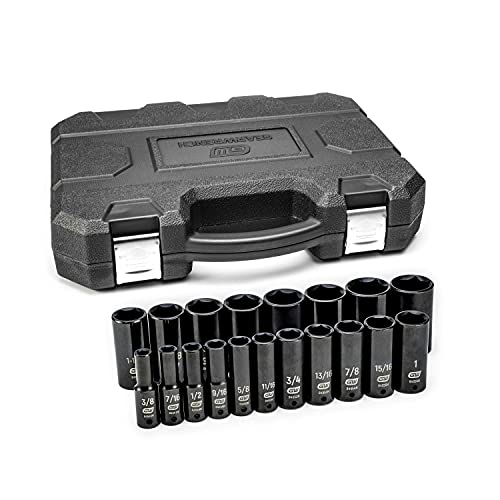
GEARWRENCH 19 Piece 1/2 Inch Drive 6 Point Impact Socket Set, Deep, SAE
Felisbieti Oil Filter Wrench 64mm for Toyota & Lexus

Felisbieti Tire Thumper Pressure Check Tool

Felisbieti 64mm Oil Filter Socket for Toyota & Lexus

GEARWRENCH 11 Pc. 3/8″ Drive 6 Pt. Mid-Length Socket Set, SAE

DPTOOL 14pcs Diesel Injector Fuel Line Socket 8-22mm
Why These Options Stand Out
Starting a home shop from scratch usually means buying sockets in sad, mismatched batches. TEKTON’s 73-piece 3/8-inch drive set solves that with a broad spread that covers both inch (1/4 to 1 inch) and metric (6 to 24 mm) fasteners in one organized case. The included ratchet and extension bars let you work on a bicycle one minute and a riding mower the next.
The 6-point design grips the flats of a hex fastener rather than the corners, which reduces the chance of rounding off older bolts. Owners commonly appreciate the clearly stamped size markings on every socket. Compared to the heavier GEARWRENCH impact set below, this one is geared for hand-ratchet and light electric-driver use rather than repeated high-torque impacts.
Features That Help
- Wide size range in inch and metric reduces trips to the hardware store mid-project.
- 6-point contact design protects fastener corners from rounding on stubborn hardware.
- Large, legible size stamps help you grab the right socket quickly under a workbench lamp.
- Chrome-plated exterior wipes clean of grease and resists light rust in damp garages.
- Includes ratchet and extensions, so the kit is usable straight out of the case.
Trade Offs
- Not built for high-torque impact wrenches, so a separate impact set may still be needed for lug nuts.
- Carrying case organization is basic, so the sockets may shift around in the drawer over time.
Made For
Home mechanics and DIYers who want a single, ready-to-go set for cars, bikes, and small engine repair.
A Better Fit Elsewhere
For routine lug-nut work and high-torque impact driving, the GEARWRENCH 19 Piece 1/2 Inch Drive 6 Point Impact Socket Set offers tougher construction.
Impact wrenches punish regular chrome sockets. The GEARWRENCH 84934N set is built for that punishment with chrome-molybdenum alloy steel (a tough alloy often used in professional impact tools) and a manganese phosphate coating (a dark, wear-resistant finish) that shrugs off corrosion. The deep-well design reaches down over long studs and bolts, which makes axle, suspension, and brake jobs far less frustrating.
You’ll notice the off-corner loading pattern right away: instead of forcing a fastener to seat on a hard edge, the socket’s interior walls gently guide the bolt head into the flats. The laser-etched size markings are easy to read, even with greasy gloves. Where the TEKTON above leans toward general maintenance, this one leans hard into the bay and the shop floor.
Benefits That Matter
- Chrome-molybdenum alloy handles repeated impact-wrench use without splitting.
- Deep well clears long studs, wheel spacers, and threaded bolts.
- Off-corner loading reduces rounding on rounded or corroded fasteners.
- Manganese phosphate finish resists rust in humid shop environments.
Worth Noting
- SAE-only coverage, so metric work will require a separate set.
- Heavier and bulkier than a standard chrome set, which matters if you’re carrying tools up a ladder.
Key Specs
Right Fit For
Working technicians and serious home mechanics who run a 1/2-inch impact wrench for suspension, brake, and axle jobs.
Reach For A Different Pick When
If most of your work is small fasteners inside a tight engine bay, the GEARWRENCH 11 Pc. 3/8″ Drive 6 Pt. Mid-Length Socket Set is a friendlier fit.
Toyota and Lexus cartridge-style oil filters live inside a plastic cap that requires a 64.3mm, 14-flute socket to remove properly. This Felisbieti cup-style wrench drops over that cap, mates with a 3/8-inch drive ratchet, and gives you the leverage to break the cap free without chewing up the plastic. The 14-flute pattern (the number of teeth inside the cup) matches the OEM cap exactly, so there’s no slipping or stripped corners on the first try.
It works across the popular models most people already own, including Camry, Tundra, Tacoma, 4Runner, RAV4, Corolla, Highlander, and Prius. Compared to the broader TEKTON set above, this is a single-purpose tool, but it’s the single-purpose tool you’ll reach for every oil change. Owners commonly keep it tucked in a drawer with their drain pan setup.
Useful Strengths
- 64.3mm, 14-flute geometry matches Toyota and Lexus cartridge caps precisely.
- Low-profile cup slips into tight engine bays where a strap wrench would struggle.
- Works with a standard 3/8-inch drive ratchet, no specialty handle needed.
- Reusable design handles repeated oil-change cycles over the life of the vehicle.
Honest Caveats
- Only fits the 64.3mm, 14-flute pattern, so older cannister-style filters on classic Toyotas won’t accept it.
- Specialty tool, so the cost-per-use only makes sense if you change your own oil regularly.
Whose Shelf It Belongs On
DIY Toyota and Lexus owners who service their own oil and want a clean, repeatable cap removal every time.
Skip It When
For an everyday shop set covering cars, bikes, and small engines, the TEKTON 73-Piece set covers far more ground.
A tire thumper is the tool truckers have used for decades to spot low pressure by ear and by feel. Felisbieti’s version is 16.5 inches long, weighs around 7.5 ounces, and packs a solid 1.26-inch striking head. You whack each tire, listen for a firm ringing thump rather than a dull thud, and feel the rebound through the handle. It’s not a precision gauge, but for drive tires on a big rig, an RV, or a tow vehicle, it works fast.
The appeal is obvious on a pre-trip walkaround. No battery, no calibration, no waiting for a digital readout. The trade-off is that “thump-and-listen” is a learned skill, and newcomers may find it less decisive than a dial gauge until they get used to the baseline sound of properly inflated rubber.
Positive Takeaways
- Gauge-free design means no batteries, calibration, or fragile electronics to worry about.
- 16.5-inch reach keeps you upright while checking dually tires and trailer wheels.
- Lightweight build reduces fatigue during long walkarounds at truck stops.
Small Caveats
- Pressure readings are subjective, so beginners may need practice to read it confidently.
- Not a replacement for a calibrated gauge when you need a specific PSI number.
Best Suited To
Long-haul drivers, RV owners, and fleet pre-trip inspectors who want a quick, no-fuss pressure sanity check.
Look Elsewhere When
For any fastener or general socket work, the TEKTON 73-Piece set covers a far broader range of jobs.
This second Felisbieti oil-filter socket targets the same 64.3mm, 14-flute Toyota and Lexus cartridge caps as the cup above, but in a low-profile, 14-flute aluminum-alloy form. Aluminum keeps the weight down in a drawer bag and resists the rust concerns of bare steel. The lower profile can sneak into tighter engine bays where taller cups won’t fit.
For DIYers on a tighter budget who don’t need a heavy-duty steel tool, this one delivers the same essential fit at a smaller entry cost. The trade-off is durability: aluminum is softer than the steel used in competing cups, so it can deform under a cheater bar or an impact wrench.
Good Reasons To Consider
- Aluminum-alloy body keeps the price accessible for first-time DIYers.
- Compact profile reaches into tight engine bays where taller cups bind.
- Matches the same 14-flute Toyota and Lexus cartridge pattern.
Points To Note
- Aluminum is softer than steel, so heavy leverage may round the inside teeth over time.
- Not rated for impact wrenches, so plan on hand ratcheting only.
Quick Facts
Who Should Grab It
Casual Toyota and Lexus owners who want a low-cost filter tool and don’t plan to use a breaker bar on it.
Not Your Match When
For heavier repeated shop use, the steel Felisbieti 64mm cup above is a tougher long-term investment.
Mid-length sockets live in that sweet spot between shallow and deep. The GEARWRENCH 80555S 11-piece set gives you enough reach for small engine work, motorcycle maintenance, and trim-panel fasteners without the bulk of full-deep sets. The 3/8-inch drive pairs well with most common ratchets and electric drivers.
Knurled markings on the side of each socket make it easy to grab the right one with oily fingers, and the angled entry guides funnel the socket onto fasteners at slight angles. Compared to the larger TEKTON set above, this is a more focused add-on for tight-space work. For most home mechanics, you’ll find this becomes the daily grab for interior and trim tasks.
Everyday Advantages
- Mid-length design reaches recessed fasteners without overhanging into tight spaces.
- 3/8-inch drive pairs with the most common ratchet and electric driver sizes.
- Knurled exterior grips well with greasy hands.
Practical Considerations
- SAE-only, so metric fasteners will need a separate set.
- Not built for impact-wrench use, so keep it for hand ratcheting and light driver work.
Perfect Match For
Garage tinkerers and motorcycle owners who want a focused mid-length set for trim, brackets, and small fasteners.
Swap It Out When
For a complete workshop foundation across inch and metric sizes, the TEKTON 73-Piece set is a broader starting point.
Diesel fuel lines and injector lines use flare-nut fittings, which a standard 6-point or 12-point socket can easily round. The DPTOOL set is purpose-built for that work: 14 flare-nut sockets across 8 to 22mm, split between 3/8-inch and 1/2-inch drives, all built with the open-flank geometry (a cut-away side that wraps around a fitting without crushing it) that protects soft brass and steel flare nuts.
The 1/2-inch drive line covers 8 through 16mm in 1mm increments, and the 3/8-inch drive line picks up 17 through 22mm. That span lines up neatly with common Power Stroke, Duramax, and Cummins injector applications. Unlike the broad TEKTON set above, this is a focused diesel kit, but the flare-nut design is the difference between a clean fitting and a seized one.
The Good Stuff
- Flare-nut geometry protects soft brass and steel line fittings from rounding.
- 14 sizes cover common diesel fuel and injector line applications from 8 to 22mm.
- Mixed 3/8-inch and 1/2-inch drives match a wide range of ratchets and breaker bars.
Trade-Offs To Consider
- Specialty flare-nut design is wasted on standard hex fasteners, so it lives alongside a regular set.
- Metric-only coverage, so older domestic diesels with SAE lines won’t use most pieces.
Feature Snapshot
Who Will Love This
Diesel technicians and serious Power Stroke, Duramax, or Cummins owners doing their own injector and fuel-line service.
Where Another Pick Suits Better
For general maintenance across cars and small engines, the TEKTON 73-Piece set is the broader everyday foundation.
What Matters Most Before Choosing Socket Wrenches
Drive Size and Fastener Reach
Drive size refers to the square tang on the ratchet that the socket locks onto, and 1/4, 3/8, and 1/2 inch are the three you will see most. A 1/4-inch drive handles small fasteners like interior trim and electronics. A 3/8-inch drive covers most automotive and appliance work, which is why sets like the GEARWRENCH 80555S sit there. A 1/2-inch drive, as in the GEARWRENCH 84934N, is built for suspension, axle, and lug-nut work where high torque matters.
Reach matters alongside drive size. Shallow sockets grab fasteners that sit flush. Deep-well sockets slide over long studs and bolts, which is exactly what you need on a wheel hub or an exhaust manifold. Mid-length options split the difference for cramped engine bays.
Tooth Count and 6-Point vs 12-Point
The number of internal teeth in a socket determines how closely it fits a hex fastener. A 6-point socket grips the flat sides of the bolt head, which reduces rounding on older or corroded hardware. A 12-point socket offers more positions for quick placement but rides closer to the corners, which can chew up a stubborn bolt. For a starter set, 6-point coverage like the TEKTON SKT15311 is the safer call.
Specialty Geometry for Specialty Jobs
Standard sockets won’t touch a flare-nut fitting, a cartridge oil-filter cap, or a tamper-proof lug nut without damage. That is where purpose-built sockets earn their keep. A 14-flute cup like the Felisbieti oil-filter wrench mates to a Toyota cap exactly, and flare-nut sockets like the DPTOOL 14-piece set protect soft brass diesel lines.
Materials and Coatings
Chrome-vanadium steel handles general hand-tool use. Chrome-molybdenum alloy is tougher and tolerates impact-wrench forces, which is why the GEARWRENCH 84934N relies on it. Coatings like manganese phosphate add corrosion resistance for damp shops. Aluminum saves weight on single-purpose tools, but it is softer, so it suits low-torque applications.
Key Considerations Across These Picks
Pitfalls Shoppers Hit
The most common mistake is buying a large set without checking whether the most-used sizes are actually present. Many budget kits skip the awkward mid-sizes, like 13, 17, and 19mm, which show up constantly on European and Japanese vehicles. Another trap is pairing a chrome hand-tool socket with an impact wrench. The walls can crack under the hammering action, sending shrapnel toward your knuckles. Reserve impact-rated sockets for impact drivers. Finally, mixing SAE and metric without labeling your drawers leads to a stripped fastener, and almost every set in this roundup is one or the other.
Where The Extra Money Goes
Paying more for a tool typically gets you tighter dimensional tolerances, which translates to a socket that grips fasteners more securely. Higher-tier sets also tend to use better steel alloys, more durable coatings, and clearer markings. For a daily-use socket that you will grab hundreds of times, that upgrade pays off in fewer rounded bolts and longer service life. For an occasional-use specialty piece, a budget option is usually fine.
Frequently Asked Questions
What drive size should I start with for a home tool kit?
A 3/8-inch drive covers the widest range of automotive and small-engine fasteners, making it the most flexible starting point. Most home mechanics add a 1/2-inch drive later for high-torque work.
How do I tell SAE and metric sockets apart without reading the number?
Manufacturers often stamp sizes in inches on SAE sockets and millimeters on metric ones, and some brands add a knurled ring to metric pieces. A quick caliper measurement of the bolt head is the most reliable method.
Can I use chrome sockets on an impact wrench?
No. Chrome sockets are designed for hand ratcheting and can shatter under impact-wrench forces. Use impact-rated sockets, like the GEARWRENCH 84934N set, for any impact tool.
Why do flare-nut sockets exist if regular sockets fit hex bolts?
Flare-nut sockets wrap around a fitting with an open side, which grips the flats without crushing soft brass or aluminum lines. Standard 6-point sockets can round flare nuts quickly, leading to leaks.
How often should I clean and inspect my socket set?
Wiping sockets after each use and inspecting for cracks or rounded teeth every few months keeps the set reliable. Damaged sockets should be retired, since a slipped socket can round a fastener or skin your knuckles.




