


Soldering produces fumes you don’t want hanging around your bench, your lungs, or your roommate’s living room. Anyone who spends real time with an iron, a laser engraver, or a small 3D printer knows the value of pulling that smoke away the moment it forms. The right solder smoke absorbers clear the air close to the source, run quietly enough to forget, and swap filters without a fight. This lineup covers hobby desks, repair shops, nail stations, and laser setups, so the right fit comes down to how heavy your workload runs and how much bench space you have to spare.
A Closer Look At The Lineup

YIHUA 948DQ-I Solder Fume Extractor with 8 Extra Filters

WEP 948DQ-II 2-in-1 Fume Extractor and Soldering Station

Hakko FA400-04 Bench-Top Smoke Absorber
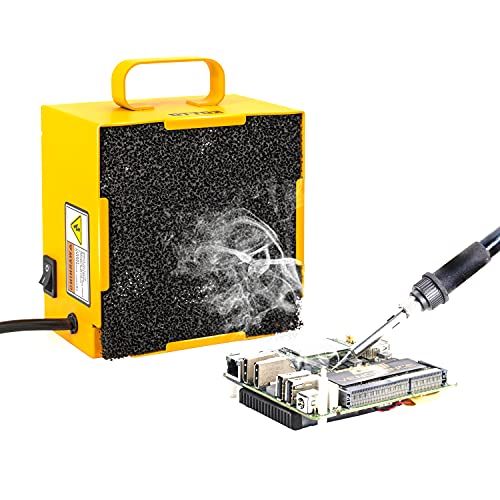
KOTTO Solder Smoke Absorber with Activated Carbon Filter

KINGSOM 100W Solder Fume Extractor with H13 HEPA Filter

KINGSOM K-SOON 3 Pre-Filter and H13 HEPA Replacement Set
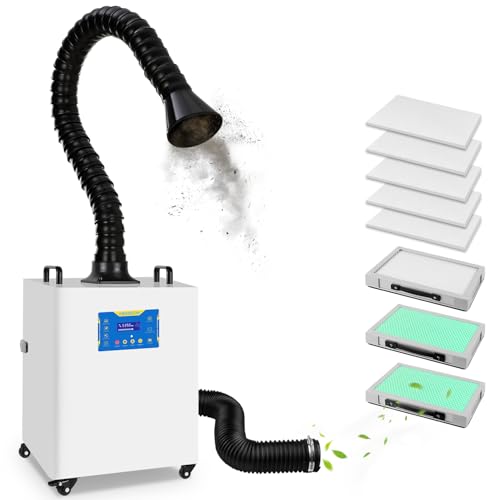
KINGSOM 310m³/h Laser Fume Extractor for Sub-60W Lasers

KINGSOM Desktop Solder Fume Extractor with 2-in-1 HEPA
Why These Options Stand Out
The YIHUA 948DQ-I is the kind of first absorber that quietly earns its keep on a new bench. A small fan pulls fumes through a set of carbon filters while the body tilts to follow the angle of your work, so the intake can sit a few inches above the joint instead of off to the side.
Eight spare filters ship in the box, which is a small detail that pays off the moment the first one clogs. Wood burning and small electronics projects both fall inside its comfort zone, and the unit draws power from a simple wall adapter rather than a heavy brick. For someone just unboxing their first iron, that ease matters more than raw airflow.
Notable Upsides
- Tiltable head aims the intake at the work zone, useful on a raised or angled board
- Eight replacement carbon filters come in the box, extending the time before refills
- Light enough to reposition on a crowded desk without rearranging everything
- Simple power setup with no separate transformer to hide behind the bench
Things To Consider
- Carbon filters need regular swaps in heavy use, and replacements are a recurring cost
- Best suited to a single small project at a time, not a busy multi-board workflow
Who It Suits Best
New hobbyists and first-time soldering setups looking for a forgiving, low-fuss absorber.
Skip It When
The WEP 948DQ-II makes more sense if you want the absorber and the soldering station to share a single footprint.
Where the YIHUA only filters air, the WEP 948DQ-II folds a PID-controlled soldering station into the same chassis as the absorber. A small soldering iron, a stand, a tip cleaner, and a spool of solder all arrive together, so the first session can start without a separate shopping trip.
The unit moves between Celsius and Fahrenheit readouts, drops into a sleep mode when the iron sits idle, and routes fumes through a double-filter path. For a hobbyist building a complete starter bench, the consolidation saves space and cuts cable clutter. You may find the bundled station a touch limited for production work, but for learning and repair jobs it lands in a useful middle ground.
A Favorable Mix
- Two-in-one design cuts the number of boxes competing for desk space
- PID control (a temperature regulation loop that keeps the tip steady) helps the iron hold heat through heavier joints
- Sleep mode protects the tip and quiets the fan during pauses
- Three tips and a solder roll included for an immediate first project
Worth Noting
- Tied to the bundled station, so it loses appeal if you already own a higher-end iron
- Filter access sits on the back, which can be awkward against a wall
- Replacement tips may be less common than those for major soldering brands
Key Specs
Made For
First-time bench builders who want the iron, the absorber, and the accessories in a single purchase.
Consider Something Else When
Stick with the YIHUA 948DQ-I if you already own a soldering station and only need the absorber side.
The Hakko FA400-04 shows up in repair shops for a reason, and that reason is longevity. The housing flips between an upright stand and a low-profile position, and laying it flat is widely reported to multiply airflow by a noticeable margin, which helps when the joint sits close to the bench.
There is no LED screen, no PID station, and no settings menu, which is part of the appeal. You press the switch, it pulls smoke, and you replace the carbon filter when the airflow drops. For an electronics bench that runs daily, the simpler the path from power to clean air, the better.
The Helpful Details
- Two-position body adapts to tall joints and flat boards without moving the work
- Hakko’s reputation for durable bench tools carries through to the absorber
- Compact footprint fits beside a microscope or magnifier without crowding
Points To Note
- No speed control, so quiet moments share the same fan output as heavy joints
- Replacement filters are specific to the FA400, which can limit sourcing options
- Single-fan design lacks the staged filtration some newer units offer
Right Fit For
Repair technicians and serious hobbyists who value a long-running, low-fuss absorber over extra features.
Look Elsewhere When
The KINGSOM 100W Solder Fume Extractor is a better fit if you want variable speed and a HEPA filter for finer particles.
The KOTTO Solder Smoke Absorber is a budget entry that handles light bench sessions without taking up much room. A 0.4-inch-thick activated carbon filter sits in front of a fan that runs at roughly 3000 RPM, and the whole unit weighs just enough to stay planted thanks to non-slip feet.
Best-case placement is five to six inches above the joint, so you angle the absorber rather than chase fumes across the bench. Carbon filters do the heavy lifting on odor and particulates, which is what most hobby work actually needs. Compared to the YIHUA 948DQ-I’s tiltable design, the KOTTO trades flexibility for a smaller price tag.
What Makes Sense
- Thick carbon filter catches a meaningful share of flux fumes and odor
- Quiet enough at low speed to keep on the bench during long sessions
- Lightweight body makes repositioning painless
Trade Offs
- No HEPA stage, so very fine particles pass through the filter media
- Single fan speed limits control over airflow during long jobs
- Small base footprint can tip if the cable pulls from the wrong angle
Best Suited To
Occasional hobbyists and learners who solder a few times a month rather than daily.
Reach For A Different Pick When
Move up to the KINGSOM 100W Solder Fume Extractor if your work includes laser engraving or 3D printing alongside soldering.
The KINGSOM 100W steps beyond a single-purpose bench fan and into a small shop workhorse. Airflow tops out at around 210 cubic meters per hour, and a three-stage carbon and H13 HEPA setup (HEPA is a high-efficiency particulate filter rated to trap very small airborne particles) tackles everything from solder flux to laser vapor.
Three speed settings, an LED status display, and responsive button controls make the unit feel closer to a piece of light industrial gear than a hobby accessory. Whether the project is a soldering iron, a small laser engraver, a 3D printer, or a nail station, the same body covers the job. You trade compact size for versatility, so this is not the absorber for a crowded nightstand.
A Few Highlights
- Three speed settings match airflow to the project without overworking the fan
- H13 HEPA layer captures finer particles than standard carbon-only filters
- LED status display gives a quick read on filter health and current speed
- Wide use-case fit for soldering, laser, and 3D printing on one bench
Honest Caveats
- Larger footprint than the KOTTO or YIHUA, so plan desk space accordingly
- Higher airflow at top speed adds noticeable fan noise in quiet rooms
Feature Snapshot
Who Will Love This
Makers who split time between soldering, laser engraving, and 3D printing on the same bench.
A Better Fit Elsewhere
The KINGSOM 310m³/h Laser Fume Extractor pulls harder if the laser cutter is the main workload.
This is not an absorber, it is a refill kit, and that is exactly the point. The K-SOON 3 replacement set ships five pre-filters and one H13 HEPA advanced filter in a metal frame, sized to fit the matching K-SOON 3 unit.
Owners of that extractor already know the rhythm: pre-filter every few weeks, HEPA a few times a year. Buying a multi-pack turns that routine into a single order rather than a recurring errand. For anyone running a sub-60W laser engraver with the K-SOON 3, this is the kind of kit that lives in a drawer next to the unit.
Where It Helps
- Five pre-filters cover months of routine swaps in one purchase
- Metal-framed HEPA filter seats securely and resists warping during changes
- Packaging matches the K-SOON 3 model exactly, so sizing questions are off the table
Practical Considerations
- Only fits the K-SOON 3, with no fallback use on other absorbers
- Buying a HEPA ahead of time means storing a sealed filter until needed
Perfect Match For
Existing K-SOON 3 owners who want to stock replacement media before a heavy project cycle.
Swap It Out When
Skip this kit and grab the KINGSOM 310m³/h Laser Fume Extractor if you do not yet own a unit to maintain.
The KINGSOM 310m³/h pulls air hard enough to keep up with a sub-60W laser cutter. A 0.7-millimeter pre-filter stops dust and larger particles before they reach a three-layer high-performance filter below, and the result is a four-stage path that pushes filtration efficiency close to full at the 0.1-micrometer range.
Activated carbon in a double-layer metal frame handles the volatile organic compounds that come off cut plastics and coated wood. Five extra pre-filters arrive in the box, and replacement HEPA cartridges can be staged ahead of big cutting runs. Compared to the 100W KINGSOM model, this one is louder and beefier, but the airflow matches a much harsher workload.
What Helps Most
- 310 m³/h airflow handles sub-60W laser vapor without bogging down
- Four-stage filter path (pre-filter, three-layer core, activated carbon) targets small particles and odor
- Five extra pre-filters ship in the box, extending service intervals
- Metal-framed HEPA resists warping during hot laser sessions
Where It May Fall Short
- Top-speed noise level is high enough to need hearing awareness during long jobs
- Bulkier than soldering-focused units, so the bench footprint grows
- Filter replacements are specific to this model line
Quick Facts
Whose Shelf It Belongs On
Laser engraver and cutter operators running sub-60W machines on coated materials or plywood.
Where A Sibling Pick Shines
Choose the KINGSOM 100W Solder Fume Extractor instead if the workload is mostly soldering with the occasional 3D print.
The KINGSOM Desktop model is built for the small desk where every centimeter counts. Up to 180 m³/h of airflow pulls smoke through a 2-in-1 HEPA core, and the filter is rated to capture 0.3-micrometer particles with an efficiency in the high nineties.
Five pre-filters sit in the box, so routine swaps do not require an immediate reorder. Compared to the 100W KINGSOM, this one stays quieter and narrower, which is exactly the point for hobbyists who solder on a writing desk or a kitchen table. Air capture is fast enough to clear most single-iron sessions before the smoke drifts past the lamp.
Advantages To Know
- Compact body fits next to a laptop or a stack of project bins
- 2-in-1 HEPA core combines pre-filter and fine filtration in a single cartridge
- Five pre-filters included, easing the cost of routine maintenance
- Quieter operation than larger multi-stage extractors
Factors To Consider
- Lower airflow than the 310m³/h unit, so it is not a match for laser cutting
- Single-suction design is best with a stationary workpiece rather than a moving iron
Key Attributes
Built With In Mind
Hobbyists with a small desk who solder electronics or repair small appliances in short sessions.
Not Your Match When
Pick the KINGSOM 310m³/h Laser Fume Extractor for cutting sessions where airflow matters more than footprint.
Picking The Right Solder Smoke Absorber For Your Bench
Choosing a solder smoke absorber comes down to three honest questions: how much air the bench actually moves, how close the intake can sit to the work, and how much maintenance the filter routine adds to the week. A small fan works fine for a single repair job, while a laser cutter needs airflow strong enough to chase vapor across a much larger working area. The right answer depends on the projects in front of you, not the biggest spec sheet.
Airflow And Filter Stage
Airflow, measured in cubic meters per hour, tells you how quickly the absorber clears smoke from a fixed space. A higher number pulls vapor away faster, which matters when the project is a laser cutter or a long production run. For a single soldering iron, 100 to 200 m³/h is generally enough to keep the air comfortable around the work area.
Filter stage is the second half of the story. Carbon handles odor and the larger flux particles, while HEPA filtration reaches the smaller sub-micron range that carbon misses. Two-stage setups last longer per filter, while single-stage units are simpler to swap. Pick by what your bench generates: solder and flux lean carbon, laser vapor and resin printing lean HEPA.
Form Factor And Bench Space
A small hobbyist absorber can sit beside a screwdriver set without complaint, while a multi-stage unit claims real estate. Measure the available space before chasing airflow numbers, since a unit parked awkwardly gets moved and forgotten. Tiltable heads and vertical orientation help fit absorbers into tighter spots, and low-profile units like the Hakko FA400-04 slide under a microscope or magnifier.
Maintenance And Filter Cost
Every absorber asks for filter swaps, and the cost adds up across years. Check the price and availability of replacement cartridges before buying, and weigh the value of bundled spares. A unit that ships with five pre-filters and a HEPA cartridge in the box often costs less to own over two years than a cheaper unit with no extras.
Use Case Fit
Match the absorber to the work. A KOTTO or YIHUA model handles light electronics and occasional soldering. The KINGSOM 100W and WEP 948DQ-II cover heavier bench sessions and a mix of soldering plus small laser work. The KINGSOM 310m³/h unit is purpose-built for sub-60W laser cutters, and the desktop KINGSOM 2-in-1 HEPA fits small hobby desks. Buying past the workload wastes money, and buying under it fills the room with smoke.
Key Considerations Across These Picks
Pitfalls Shoppers Hit
Buyers often grab the cheapest unit and assume any fan will do, then learn that a single-stage carbon filter clogs fast under regular use. Pick by the workload, not the price tag alone, and check that replacement filters are easy to find. Another common miss is placing the absorber too far from the joint, so most of the smoke escapes before the fan can grab it.
What The Higher Tier Buys
The upgrade from a budget unit to a multi-stage absorber buys longer filter life, quieter fans, and a HEPA stage that catches the fine particulates carbon alone misses. Variable speed and LED status displays sound small until you live with them across months of bench work. The honest read is that higher-tier models earn their cost through less maintenance and cleaner air over years, not through a single dramatic upgrade moment.
Frequently Asked Questions
How close should a solder smoke absorber sit to the joint?
For most bench setups, two to six inches above the joint gives the fan enough draw to capture smoke before it drifts. Move closer for fine-pitch soldering and slightly further for boards with tall components.
How often do solder smoke absorber filters need changing?
Carbon pre-filters typically need swapping every few weeks under regular hobby use, while HEPA cartridges can last several months. Heavy users running daily sessions will see filter life drop noticeably, and a drop in airflow is the most common signal.
Can one absorber cover both soldering and laser engraving?
Some multi-stage units handle both, though a dedicated laser extractor is built for higher airflow and finer particulates. For mixed benches, a versatile mid-tier unit like the KINGSOM 100W works as a shared tool, while a dedicated laser unit makes sense for daily cutting work.
Are activated carbon filters enough for safe soldering?
Carbon handles odor and the bulk of flux fumes, which covers most hobby soldering. For finer particulates and longer sessions, a HEPA stage adds a meaningful margin, especially in a small or poorly ventilated room.
Do solder smoke absorbers help with laser cutter fumes too?
Multi-stage units with HEPA and activated carbon can pull laser vapor effectively, though airflow has to match the workload. Dedicated laser extractors move more air at the cost of size and noise, so the right pick depends on how often the laser runs.




