


A good soldering iron station changes how every electronics project feels, from swapping a phone charging port to wiring up a hobby PCB. The wrong setup overheats the board, burns through tips, or fights you on basic temperature control. This roundup looks at nine stations and bench accessories that cover the most common repair and prototyping scenarios, so you can match a tool to the work you actually do.
A Snapshot Of The Selections

Delcast R1K Solder Dispenser Reel

SainSmart Magnetic Helping Hands Station with LED Magnifier
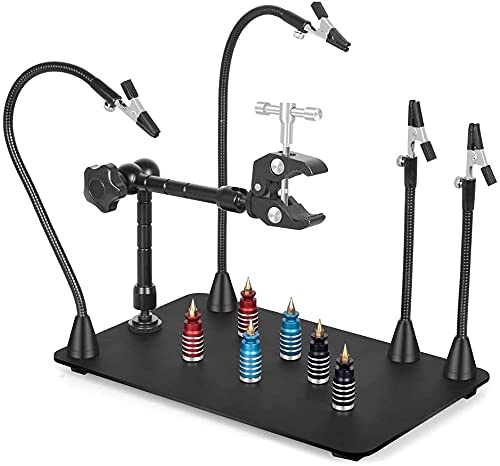
NOEVSBIG Magnetic Helping Hands Station with Heavy Base
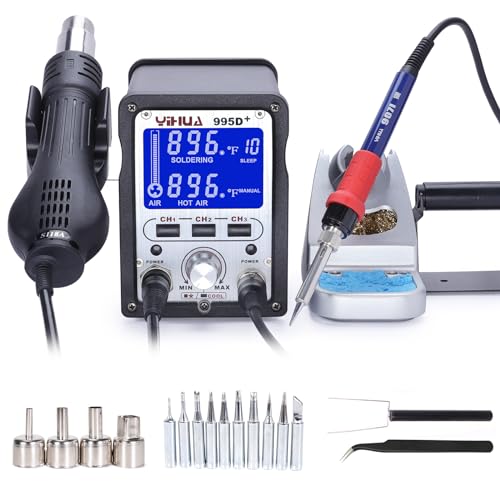
YIHUA 995D+ 2-in-1 Hot Air and Soldering Station
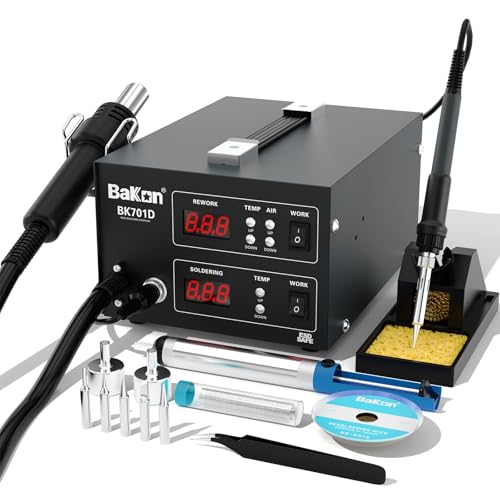
BAKON BK701D 2-in-1 700W Soldering Station

YIHUA 8786D I 2-in-1 Hot Air and Soldering Station
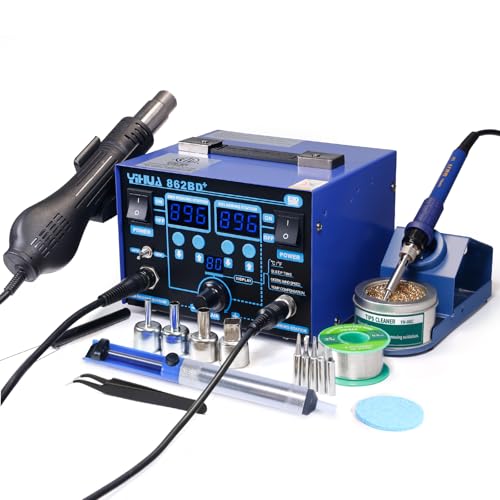
YIHUA 862BD+ SMD 2-in-1 Soldering and Hot Air Station

BAKON BK602S 2-in-1 Compact Soldering Station
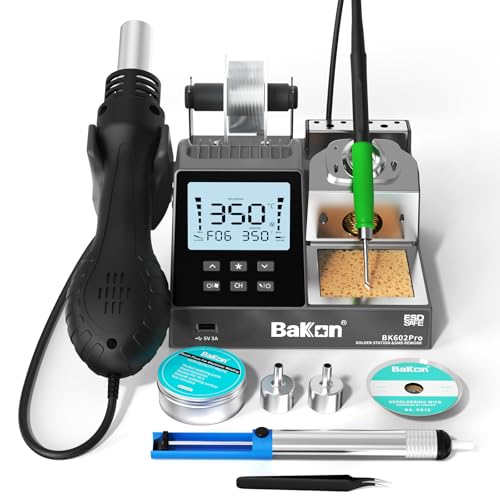
BAKON BK602Pro C210 Soldering and Hot Air Station
A Deeper Look At The Lineup
The Delcast R1K isn’t a soldering station in the traditional sense, but it solves a problem that lives right next to one. It holds a full 1 kg spool of solder upright and feeds it through an adjustable arm, so the wire pays out cleanly instead of rolling off the bench. For anyone tired of solder spool tangles and snags, the reel is a small piece of infrastructure that makes every other station easier to use.
It earns a place in this lineup because the best stations in the world still get tangled in loose wire. Pair the R1K with any of the hot air or iron stations later in this roundup and the bench stays organized.
Practical Advantages
- Upright 1 kg spool capacity, enough wire for months of hobby repair sessions
- Adjustable dispenser arm keeps the solder path straight and tangle-free
- Lightweight frame, easy to relocate on a crowded workbench
- Lowers clutter by getting the spool off the work surface entirely
Worth Noting
- It’s an accessory, not a heat source, so it works alongside a separate iron station
- Larger spools may need a wider base footprint than the standard setup provides
Who It Suits Best
Anyone who burns through solder quickly and wants a cleaner feed path, from phone repair techs to PCB hobbyists.
Swap It Out When
Choose the NOEVSBIG Magnetic Helping Hands Station if you also need board-holding support, since it addresses a different bench problem.
The SainSmart station brings lighting, magnification, and a stable base to small electronics work. The 11.1 by 7.1 inch platform gives you real room to spread out a board, and the four magnetic gooseneck arms snap anywhere on the metal surface. Built into the lamp is a 5X magnifier, which is genuinely useful when you’re working under 0402-sized passives.
Compared to the Delcast reel covered earlier, this is a holding tool rather than a feeding tool. It does the same job a “third hand” would, only with more reach and a brighter view of the joint.
The Practical Payoff
- Wide metal base fits larger PCBs and multiple parts at once
- 5X LED magnifier takes the strain off your eyes during long sessions
- Four magnetic arms reposition in seconds without tools
- Works with any standalone iron or hot air station on the market
Small Caveats
- Magnifier position is fixed, so very large boards may sit outside its focal range
- Gooseneck arms can drift a bit when fully extended with heavy clamps
Key Specs
Made For
Hobbyists and repair techs working on small to mid-size boards who want magnification built into the same platform.
Consider Something Else When
Pick the NOEVSBIG Magnetic Helping Hands Station if you need a heavier base for larger clamps or jewelry-style projects.
The NOEVSBIG station is built around stability. Its powder-coated steel base weighs more than 3.3 pounds, and the rubber feet keep it from sliding even when you lean hard into a clamp. That’s the kind of foundation that matters when you solder jewelry findings, heavier repair assemblies, or anything that would normally tip a lighter helping hand over.
The trade-off is footprint. The 11.4 by 7.1 inch base eats more desk space than the SainSmart platform above, but you get the 2.16 inch jaw opening and a noticeably planted feel in return.
What Works In Its Favor
- Powder-coated steel base resists scuffs and stays put during heavy work
- 2.16 inch jaw opening clamps thicker assemblies than typical helping hands
- Four magnetic arms plus four PCB pillars handle awkward board geometries
- Strong magnetic bases on each arm hold position without slipping
Honest Caveats
- Heavier base makes the station less portable between benches
- No built-in lighting, so you may need a separate desk lamp for fine detail work
- Owners commonly report minor scuffing on the coating over time if dragged without lifting
Best Suited To
Jewelers, electronics techs, and hobbyists working with chunkier parts who need a base that doesn’t move under pressure.
Not Your Match When
Pick the SainSmart Magnetic Helping Hands Station if integrated LED magnification matters more than base weight.
The YIHUA 995D+ combines a soldering iron and a hot air rework handle in one unit with a large LCD for both readings. Three temperature memories let you store presets for lead-free solder, leaded solder, and a hot air profile, then flip between them with a single button press. For shops that run the same jobs repeatedly, that single feature is a quiet time-saver.
The PID temperature control (a feedback loop that constantly checks and adjusts the heater output) and cool/hot air conversion round out a station that behaves more like a mid-tier bench tool than an entry-level combo.
Real Benefits
- Three preset temperature slots cut setup time between recurring jobs
- Independent iron and hot air controls let you run one or both at once
- Sleep mode for the iron helps extend tip life between sessions
- Large LCD makes both temperature readings readable from a standing position
Trade Offs
- Hot air and iron cannot be calibrated separately in the field without opening the case
- Large footprint demands a dedicated spot on the workbench
Quick Facts
Who Should Grab It
Repair techs who repeat the same SMD jobs daily and want one station that handles both disciplines cleanly.
A Better Fit Elsewhere
Choose the YIHUA 862BD+ if you’d rather have a broader tip and nozzle bundle out of the box for varied project types.
The BAKON BK701D pushes 700 watts of combined power, which is meaningful when you spend your day lifting stubborn ground planes on phone motherboards. The 2-in-1 design lets the iron and hot air gun run independently, so you can preheat a board from the gun side while dragging solder with the iron. ESD-safe circuitry (designed to safely dissipate static charges that could damage sensitive components) helps protect the components you’re working on.
It is heavier and more industrial than the YIHUA 995D+ covered just above. The honest read is that you pay for power and durability, not for a compact desk footprint.
The Helpful Details
- 700W combined power supports demanding rework tasks like BGA (ball grid array) and QFP (quad flat package) work
- Independent control of iron and hot air functions
- ESD-safe design reduces static damage risk on sensitive parts
- Suited to mobile phone and laptop board repair in busy shops
Points To Note
- Larger chassis than typical 2-in-1 stations, plan your bench space accordingly
- Higher power draw means a dedicated outlet is wise in older shops
Built With In Mind
Phone and laptop repair techs running repeated motherboard jobs where thermal headroom matters more than footprint.
Look Elsewhere When
Pick the BAKON BK602Pro if you want live readouts and a more refined interface, since the BK701D is built more for raw power.
The 8786D I ships with a generous kit, including ten soldering iron tips and four hot air nozzles, so you can tackle a wide range of projects without buying extras on day one. The dual display and dual power switch layout is straightforward, and the unit meets UL standard safety requirements, which matters for any station you leave plugged in for long sessions.
It sits between the higher-watt BAKON BK701D and the more compact BAKON BK602S that appears later. For mixed-format SMD work, the bundled tip variety tends to win out.
A Favorable Mix
- Ten iron tips cover everything from small SMD to through-hole pads
- Four hot air nozzles suit SOIC, QFP, PLCC, and BGA packages
- Dual display shows iron and hot air temperatures simultaneously
- ESD-safe design protects static-sensitive components
Things To Consider
- Cool/hot air conversion requires a button press you might forget mid-project
- Included tip variety is broad but not deep, so specialist shapes still need separate purchases
Feature Snapshot
Whose Shelf It Belongs On
Anyone who wants a balanced 2-in-1 station with enough tip variety to start tackling mixed projects right away.
Reach For A Different Pick When
Choose the YIHUA 862BD+ if you prefer an even more complete out-of-box kit that includes solder, tweezers, and a desoldering pump.
The 862BD+ leans into “everything you need in the box.” Beyond the station itself, you get a roll of lead-free solder, five SGS-certified soldering tips (tips verified for material composition by an independent testing body), four hot air nozzles, ESD-safe tweezers, a desoldering pump, an iron holder, brass wool, a cleaning sponge, and an IC popper. For someone setting up a rework bench from scratch, that bundle is genuinely useful.
It uses the same PID control logic as the 8786D I covered above, but the wider accessory kit makes it friendlier to first-time owners.
Benefits That Matter
- Includes a full accessory kit so you can start soldering immediately
- Five SGS-certified tips cover common through-hole and SMD pad sizes
- ESD-safe tweezers and iron holder reduce static and tip damage
- Multiple functions cover lead-free work, desoldering, and IC removal
Practical Considerations
- Brass wool and sponge need periodic cleaning to stay effective
- No dedicated preset memory slots, so recurring jobs require manual temperature dialing
- ETL-certified safety listed; verify regional plug compatibility for your country
Right Fit For
First-time rework station shoppers who want a single box that includes tips, solder, and the cleaning tools to maintain the iron.
Where A Sibling Pick Shines
Pick the YIHUA 995D+ if preset temperature memory matters more than the included accessories for your workflow.
The BAKON BK602S is the small-footprint answer in this roundup. It crams a soldering iron and a hot air rework station into one compact body, which is a real win on a crowded desk. Auto sleep extends iron life when you walk away mid-project, and the dual-switch design keeps the two functions independent.
It won’t match the heavy-duty thermal headroom of the BAKON BK701D, but for a home workbench or a small repair shop, the size advantage is hard to overstate.
Positive Takeaways
- Compact 2-in-1 body fits smaller workbenches and shared desks
- Rapid heat-up reduces waiting before each soldering session
- Auto sleep helps preserve tip life during breaks
- Independent switches for iron and hot air improve safety
Less-Strong Areas
- Lower thermal headroom than full-size 700W units on long rework sessions
- Display and controls are smaller, so reading at arm’s length is harder
At A Glance
Perfect Match For
Apartment or shared-space hobbyists who need a real rework station without dedicating a full workbench to it.
Skip It When
Pick the BAKON BK701D if your daily work involves larger ground planes that need sustained high heat for extended periods.
The BK602Pro is the polished version of the BAKON compact line. The C210 all-in-one heater core delivers fast thermal recovery for precision soldering, and the large LCD shows real-time power, set and actual temperatures for both the iron and the hot air, airflow levels, and temperature presets. That kind of feedback is genuinely useful when fine-tuning a profile for a specific board.
Compared to the BK602S above, the BK602Pro trades the smaller display and fewer presets for a more transparent workflow.
What Helps Most
- C210 heater core supports precision soldering with quick thermal recovery
- Large LCD shows iron power, set/actual temperature, and airflow together
- Temperature presets speed up job changes without manual dialing
- Auto sleep function preserves tip life during idle periods
Factors To Consider
- Premium positioning means a higher cost than the BK602S
- More settings on the LCD mean a slight learning curve for first-time users
Who Will Love This
Working technicians and serious hobbyists who want detailed feedback on what the iron and hot air are doing in real time.
Another Choice May Suit
Choose the BAKON BK602S for a lighter, lower-priced compact option if you don’t need preset slots and live readouts.
What To Weigh Before Choosing A Soldering Iron Station
Match The Station To Your Workload
A 60W pencil iron handles small through-hole work fine, but anything involving multi-layer boards or large ground planes benefits from a higher-wattage station with thermal headroom to spare. The difference between a struggling iron and a confident one is rarely the tip. It’s whether the heater can recover between joints. For SMD work, hot air rework is almost always part of the conversation, so a 2-in-1 station like the YIHUA 995D+ or the BAKON BK701D earns its bench space.
Consider The Extras You’ll Lean On
Temperature memory, PID control, and sleep modes are not luxury features. They extend tip life, hold tighter setpoints, and reduce fire risk when you walk away mid-job. Bundled tip kits also matter more than people expect, since the right tip turns a frustrating joint into a clean one. The YIHUA 862BD+ ships with a generous bundle that covers most beginners out of the box.
Think About Bench Footprint And Stability
A heavy base, like the one on the NOEVSBIG helping hands station, keeps the board still when you lean into a clamp. A compact 2-in-1 like the BAKON BK602S saves room but may trade away some thermal performance. Measure your actual bench space before you buy. A station that doesn’t fit gets shoved in a closet and never used.
Plan For The Holding Tools Around The Station
A helping hands platform, magnifier, and solder reel are not optional for most repair work. Pairing a capable iron with the SainSmart or NOEVSBIG helping hands, plus the Delcast R1K for clean solder feed, builds a complete bench that supports the work instead of fighting it.
Key Considerations Across These Picks
Common Slip Ups When Buying
A frequent trap is buying a basic pencil iron and assuming it will handle SMD. For surface-mount components, a station with hot air or a very fine tip with thermal recovery is closer to a real solution. Another common mistake is ignoring ESD safety, which matters for any board with MOSFETs or sensitive ICs. Skipping the helping hands platform is a third, since holding a board steady with one hand and soldering with the other rarely ends well.
When A Higher Tier Earns Its Place
Spending up generally buys three things: faster thermal recovery, better build quality on the handles, and features like preset memory or larger displays. For occasional hobby use, the lower tier handles 90% of jobs. For a working repair bench, the upgrade pays back fast in time saved and tips preserved. Stations like the BAKON BK602Pro or the YIHUA 995D+ target exactly that working-tech profile.
Frequently Asked Questions
What Wattage Soldering Iron Station Do I Need For General Electronics?
A 60W station is a reasonable starting point for hobby electronics and small repairs, while 70W and up gives more comfortable headroom for larger joints. For SMD rework, look at combined wattage across the iron and hot air since the heat gun draws heavily when in use.
Do I Really Need Hot Air For SMD Work?
For through-hole components, a soldering iron alone is enough. For SMD parts, especially QFP, SOIC, or BGA packages, hot air makes removing and reflowing components far easier and reduces pad damage. A 2-in-1 station covers both disciplines without buying two separate units.
How Important Is ESD Safety?
ESD safety (protection against electrostatic discharge that can silently damage components) matters whenever you work on boards with MOSFETs, ICs, or any component labeled as static-sensitive. Most rework stations in this roundup include ESD-safe circuitry, which is a meaningful safeguard for modern electronics.
What Is PID Temperature Control?
PID (proportional-integral-derivative) control is a feedback loop that constantly checks the actual tip temperature and adjusts power to keep it close to your setpoint. The result is a station that recovers quickly after each joint, holds temperature under load, and reduces the risk of cold solder joints.
Can A Helping Hands Station Replace A Third-Hand Tool?
A helping hands platform with magnetic arms and PCB holders effectively replaces a basic third-hand tool while adding clamping flexibility and a stable base. Models like the SainSmart and NOEVSBIG stations go further, adding magnification, LED lighting, or heavier bases for more demanding work.




