


Working on printed circuit boards calls for steady hands, controlled heat, and a setup that holds still when things get fiddly. The gear below covers the full range: dedicated stations, third-hand clamps, magnifiers, and a dispenser that keeps solder from unraveling mid-job. Whether you’re a hobbyist rebuilding a vintage radio or a technician chasing tiny components all day, the right match makes the work feel less like a fight.
The Shortlist At A Glance

Delcast R1K Solder Dispenser Reel
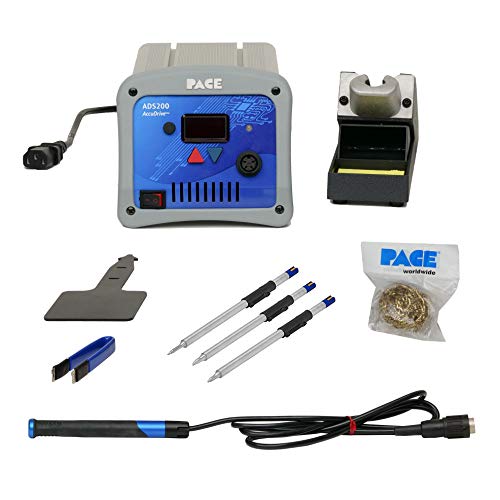
PACE ADS200 Professional Soldering Station with 3 Tip Bundle

SainSmart Magnetic Helping Hands Soldering Station with LED Magnifier
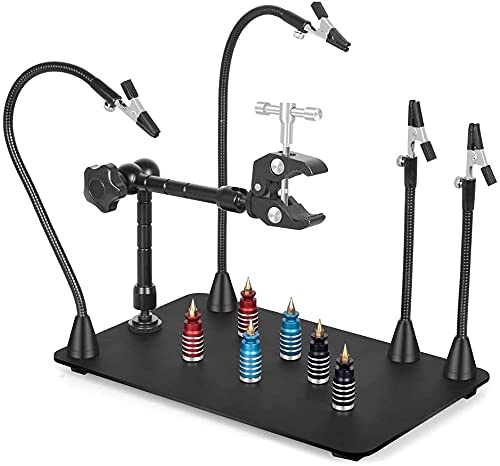
NOEVSBIG Magnetic Helping Hands Soldering Station with Heavy Duty Base

NOEVSBIG Helping Hands Soldering Station with 5X Magnifying Lamp

Hakko C1390C OMNIVISE PCB Holder Stand

QuadHands Workbench Helping Hands Soldering Station

EOOKU Helping Hands Soldering Station with 10+ Magnetic Accessories
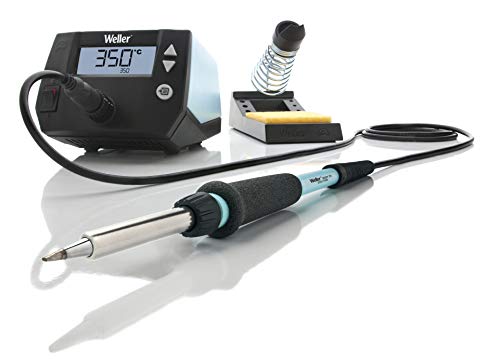
Weller 70 Watt Digital Soldering Station WE1010NA
A Deeper Look At The Lineup
A loose spool of solder rolling around the bench is a small but constant annoyance. The Delcast R1K Solder Dispenser Reel solves it by holding up to 1 kg of solder in an upright position, with an adjustable arm that guides wire out smoothly as you work. The reel keeps things tidy and lets you pull solder with one hand while holding a component with the other.
For hobbyists running through multiple projects a month, that single feature earns its space on the bench. The dispenser pairs well with nearly any station on this list, and the upright format means you can see at a glance when the spool is running low.
Practical Advantages
- 1 kg capacity handles long stretches of work without spool swaps.
- Adjustable arm lets you tune tension for different wire gauges.
- Upright format takes up less linear space than a flat-laying spool.
Worth Noting
- Does not include solder; bring your own spool to fill it.
Best Suited To
Regular hobbyists who burn through several meters of solder each session and want a clean, repeatable feed.
Reach For A Different Pick When
Pick the NOEVSBIG Helping Hands Soldering Station with 5X Magnifying Lamp if you also need a third-hand fixture to hold boards while feeding wire.
The PACE ADS200 is built for throughput. Its AccuDrive control technology monitors thermal load and pushes more power to the tip on demand, so large ground planes and thick multilayer boards reflow without that frustrating wait. The station runs on 120VAC and ships with three AccuDrive-compatible tips to cover the most common PCB jobs right out of the box.
For service technicians who can’t afford cold joints on a power-supply rework, the on-demand wattage matters. Unlike the Weller WE1010NA further down this list, the ADS200 doesn’t need cartridge swaps for different tip styles; the included bundle handles most situations, and the station tracks temperature accurately across its range.
Why It Works Well
- Up to 120W available on demand, ideal for high-mass joints.
- Three tips included, so you can solder fine through-hole and heavier connectors from day one.
- AccuDrive calibration eliminates the routine recalibration cycles some older stations demand.
Trade Offs
- Higher up-front cost than entry-level stations.
- Tip ecosystem is brand-specific, limiting third-party replacements.
Key Specs
Who It Suits Best
Production-line technicians and serious rework specialists who solder large boards daily and value thermal recovery over budget.
Look Elsewhere When
Pick the Weller WE1010NA if you want a lower-cost 70W digital station that still handles most vocational tasks without the Pro price tag.
The SainSmart Helping Hands station combines a wide 11.1 by 7.1 inch base with four flexible magnetic arms and four PCB pillars, giving you room to lay out a board, a solder spool, and a few loose components without things sliding off the edge. The 5X LED magnifying lamp mounts independently and casts clear light across the working area, which matters when you’re chasing 0402-size resistors under a tired desk lamp.
Compared to the QuadHands Workbench further down, this setup ships with more arms and a brighter integrated magnifier. The base accommodates larger projects, and the magnetic feet let you reposition arms quickly mid-job.
A Favorable Mix
- Four magnetic arms plus four PCB holders hold a board in nearly any orientation.
- 5X LED magnifier provides shadow-free illumination on the work zone.
- Spacious base fits motherboards, soldering mats, and small parts trays side by side.
Honest Caveats
- Magnifier requires its own power source and adds cable clutter.
- Magnets may interfere with sensitive components stored on the base during work.
Made For
Builders assembling larger PCBs, drones, or keyboard kits who need multiple holding points and a clear view of fine-pitch components.
Swap It Out When
Pick the EOOKU Helping Hands Soldering Station if you want a 16.5 by 10 inch base and a 10X/5X dual-magnifier combination for even more detail work.
Anyone who has watched a third-hand fixture slide across the bench mid-solder knows the value of weight. The NOEVSBIG Helping Hands station uses a powder-coated steel base that weighs over 3.3 pounds and measures 11.4 by 7.1 inches, so it stays planted even when you lean into a stubborn desoldering braid. The 2.16-inch jaw opening on the main clamp accepts wider components than most competing arms.
Where the SainSmart model trades a little stability for magnifier brightness, this one leans into raw sturdiness. The four flexible magnetic arms reposition quickly, and the rubber feet keep the base from scuffing your worktop.
Advantages To Know
- Powder-coated steel base resists scratches and chemical spills.
- Wide 2.16-inch jaw opening clamps unusual shapes like battery holders.
- Rubber feet protect the work surface and dampen vibration.
Points To Keep In Mind
- Heavier to relocate; not ideal for mobile repair calls.
- No built-in magnifier; you may need a separate loupe or lamp.
Right Fit For
Workshop benches where aggressive rework, desoldering, and heavier connectors are the daily bread, and stability outweighs portability.
A Better Fit Elsewhere
Pick the QuadHands Workbench if a lighter steel plate with two arms is enough for your smaller projects and you want an easier station to pack away.
The 5X optical-glass magnifier is the headline here, and for good reason. Real optical glass distorts less than the plastic lenses you’ll find on cheaper helping hands, which makes tracing tiny traces under magnification far less fatiguing. The 360-degree rotating clamp on the main arm lets you angle a board to match your wrist rather than the other way around, and the extra-large base keeps everything anchored.
For SMD work where a missed joint means a scrapped board, that glass lens earns its keep. The four PCB holders and four flexible arms round out a setup that handles almost any hobby repair you can throw at it.
Features That Help
- Optical-glass 5X magnifier delivers cleaner detail than plastic equivalents.
- 360-degree rotating clamp frees your wrist to hold the iron naturally.
- Four PCB holders handle a board plus sub-boards during a swap.
Small Caveats
- Magnifier arm adds height; low ceilings under shelves can block it.
Feature Snapshot
Who Will Love This
SMD-focused hobbyists and jewelry-scale soldering work where precise magnification is the difference between a clean joint and a bridge.
Skip It When
Pick the SainSmart Helping Hands station if you want LED illumination built into the magnifier for shadow-free detail work.
The Hakko OMNIVISE is the kind of tool that quietly disappears into the workflow. The 360-degree grip rotates a board to any angle, padded jaws prevent marring on finished surfaces, and four height settings let you set the working plane at a comfortable level. The opening adjusts from 0 to roughly 0.8 inches (20 mm), which covers everything from thin sensor boards to chunky power modules.
Compared to the magnetic-arm stations on this list, the OMNIVISE is more focused: it holds one board, very securely, and gets out of the way. For technicians already using a quality station like the PACE ADS200, this is the missing piece that lets both hands do their real jobs.
What It Does Well
- Padded jaws protect finished boards from clamp marks.
- Four height levels reduce shoulder strain on long sessions.
- Solid grip holds boards steady during heavy desoldering.
Worth Bearing In Mind
- Single-board design; no built-in magnifier or extra arms.
- Works best in pairs for very large boards, adding to the cost.
Perfect Match For
Technicians and serious hobbyists who already own a quality station and want a dedicated PCB holder that won’t drift mid-rework.
Consider Something Else When
Pick the NOEVSBIG Heavy Duty station if you need magnifier, multiple arms, and a holder integrated onto a single base.
The QuadHands Workbench keeps things small and sensible. The steel base plate hosts two 12-inch magnetic gooseneck arms with 360-degree rotating alligator clamps, so you can position a board at almost any angle without much fuss. Locking grips hold the arms where you set them, and the compact footprint suits a kitchen-table repair session as well as a permanent bench.
This is the entry-level friend on the list. Where the NOEVSBIG Heavy Duty gives you four arms and a powder-coated fortress, the QuadHands gives you two arms and a clean plate, which is plenty for occasional soldering, jewelry repair, and drone work.
Notable Gains
- Compact steel base fits in small workspaces and packs away easily.
- Two 12-inch arms offer generous reach despite the small footprint.
- Alligator clamps rotate a full 360 degrees for flexible board orientation.
Some Limits To Know
- Only two arms limit hold-down points on larger boards.
- No integrated magnifier or lamp.
Who Should Grab It
Beginners and casual hobbyists who want a solid, no-frills third hand for small projects and occasional repairs.
Where A Sibling Pick Shines
Pick the SainSmart Helping Hands station if you need four arms and a 5X LED magnifier for more demanding work.
The EOOKU Helping Hands station is the largest on this list, with a 16.5 by 10 inch base and a non-slip silicone pad that doubles as a heat-resistant soldering mat. The 10X/5X dual magnifier, the magnetic accessory kit, and the multiple component grooves add up to a station that wants to be the only fixture on your bench.
For a workshop juggling PCBs, jewelry, and modeling all in one week, that versatility pays off. The extra surface area fits a full ATX board, a parts tray, and a flux pen without crowding.
The Practical Payoff
- Largest base on the list at 16.5 by 10 inches.
- 10X/5X dual magnifier covers both trace inspection and small-component soldering.
- 10+ magnetic accessories adapt the station to non-electronics work.
- Non-slip silicone pad adds a soldering-mat surface for hot components.
Practical Considerations
- Largest footprint demands dedicated bench space.
- Many accessories mean more pieces to organize and store between uses.
Quick Facts
Built With In Mind
Multi-discipline makers who split time between PCBs, jewelry, and modeling and want one station that adapts to all three.
Not Your Match When
Pick the QuadHands Workbench if bench space is tight and you only need two arms for occasional small jobs.
The Weller WE1010NA is the station that finds its way into vocational programs and small repair shops for good reason. The 70W iron provides a noticeable bump over the older models Weller replaced, and the heat-resistant handle keeps the grip comfortable during longer sessions. A digital display shows set temperature, and the station is ready to solder shortly after power-on.
For a hobbyist moving up from a basic plug-in iron, the WE1010NA is the natural next step. It costs more than entry stations but less than the PACE ADS200, and it covers the full range of through-hole and basic SMD work without drama.
What Helps Most
- 70W output handles most PCB work without temperature sag.
- Digital temperature readout makes repeat jobs easy to standardize.
- Established Weller tip ecosystem for long-term replacement parts.
Where It Is Less Suited
- Lower wattage than the PACE ADS200, slower on heavy ground planes.
- Iron and stand take up more desk space than a compact helping-hands station.
- Tip heating response is slower than cartridge-style systems.
Feature Card
Whose Shelf It Belongs On
Vocational students, repair-shop technicians, and serious hobbyists who want a dependable, name-brand station for daily work.
Where Another Pick Suits Better
Pick the PACE ADS200 if your work involves large ground planes and you need higher on-demand wattage for faster reflow.
Matching The Right Tool To The Work
Choosing soldering irons for PCB work isn’t about finding the most expensive option. It’s about matching wattage, tip ecosystem, and ergonomics to the kind of boards you actually work on. The gear above covers a wide spread, from a single solder dispenser through dedicated rework stations and full third-hand fixtures.
Wattage And Thermal Recovery
Wattage is the headline number on any station, but thermal recovery matters more in practice. A 70W station like the Weller WE1010NA handles most through-hole work, while a 120W on-demand system like the PACE ADS200 keeps temperature steady when you hit a thick ground plane. For hobbyists, 60 to 80 watts is plenty; for production rework, the higher number pays for itself in fewer cold joints.
Third Hand And Magnification
Most PCB work is two-handed: one hand feeds solder, the other holds the iron. Anything you can do to anchor the board makes life easier. Magnetic arms, PCB holders, and weighted bases all qualify. Magnification enters the picture once you move to SMD work, where 5X and up keeps trace inspection and component placement honest.
Tip Compatibility And Long-Term Cost
Stations ship with one or two tips, but the tip ecosystem determines what you can actually do over years. Weller’s broad compatibility means easier sourcing. Brand-locked systems like the PACE ADS200 are more restricted but deliver consistent thermal performance. Factor replacement tips into the long-term budget before you commit to a platform.
Station Size And Bench Footprint
A full rework station with an iron, stand, helping hands, and magnifier consumes a lot of desk space. The QuadHands and NOEVSBIG Heavy Duty stations fit on smaller benches; the EOOKU Helping Hands demands a dedicated table. Decide how much bench you can spare before you fall for a feature list.
Things Worth Knowing Before You Commit
Where Shoppers Go Wrong
The most common slip is buying a station based on wattage alone, without checking tip availability in your region. A 100W station with hard-to-source tips becomes a paperweight once the original tip wears. A second pitfall is skipping a helping-hands fixture, then trying to solder with one hand while balancing a board on the desk. Owners commonly find that a $40 fixture saves more frustration than a $200 station upgrade.
When Paying More Pays Off
The jump from a basic plug-in iron to a digital station pays off the moment you do a second identical joint. Temperature repeatability means you stop guessing and start dialing in profiles for specific boards. Spending up to the PACE ADS200 tier only makes sense once your work involves large thermal masses or daily production; below that threshold, the Weller WE1010NA covers the same ground for less.
Frequently Asked Questions
What wattage soldering iron do most PCB projects need?
Most hobby PCB work falls between 40 and 70 watts. For surface-mount components and small through-hole joints, 60W is a comfortable baseline. Larger boards with thick copper pours benefit from 80W or more, which is where on-demand systems like the PACE ADS200 start to earn their cost.
Do I need a helping-hands fixture if I already have a station?
A helping-hands fixture anchors the board so both hands can do real work. Soldering a multi-pin connector one-handed while the board slides around is a fast path to bridges and missed joints. Even a basic two-arm unit like the QuadHands Workbench makes a noticeable difference for small projects.
Are optical-glass magnifiers worth the extra cost over plastic?
For long sessions under magnification, optical glass reduces distortion and eye fatigue compared to plastic lenses. The 5X magnifier on the NOEVSBIG Helping Hands station is glass, and the difference shows up after an hour of SMD work. Plastic magnifiers are fine for quick checks but tire the eyes faster.
Can a solder dispenser reel fit any spool size?
Most dispensers accept standard 1 kg spools, but check the inner diameter before you buy. The Delcast R1K holds up to 1 kg, which covers most common wire gauges. Smaller half-pound spools fit as well, though they may need a spacer to keep tension consistent on the dispenser arm.
Should I match my station brand to my holder brand?
Not necessarily. Stations and holders are independent tools, and most setups mix brands without issue. A Weller WE1010NA paired with a Hakko OMNIVISE works fine, and a PACE ADS200 pairs naturally with a NOEVSBIG Heavy Duty base. Match the tool to the job, not the logo.




