


Soldering a circuit board well comes down to picking wire that behaves the way your iron does. Lead-based alloys (mixtures of tin and lead) flow at lower temperatures and wet (spread across) pads quickly, while lead-free blends run hotter but keep your workshop fume-free. The right diameter matters too: thin wire controls solder on dense boards, thicker wire feeds faster on through-hole joints. This roundup walks you through nine solders for circuit boards, from classic rosin-core workhorses to lead-free options and a tip set for portable pens, so you can match the spool to the work in front of you.
A Quick View Of The Lineup

Kester 24-6040-0027 Wire Solder 0.031 inch Spool
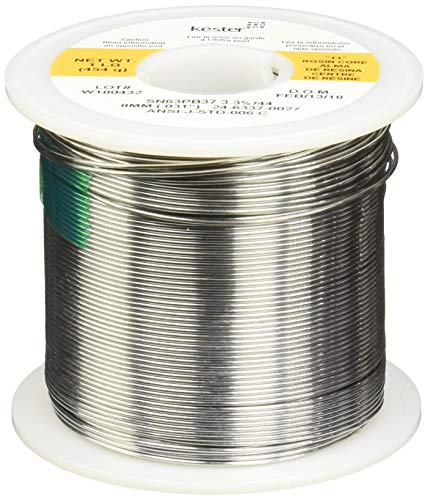
Kester 24-6337-0027 Solder Roll Core 66 0.031 inch

Kester 24-6337-0010 44 Rosin Core Solder 63/37 .020 Spool

Kester 24-6040-0053 Solder Roll Core 66 0.050 inch

Kester 44 Rosin Core #66/44 .8mm 1 lb Spool

VIRALLOY 0.3mm Lead Free Solder Wire Sn97/Ag0.3/Cu0.7 50g

VIRALLOY 0.8mm Lead Free Solder Wire Sn97/Ag0.3/Cu0.7 50g

VIRALLOY 0.5mm Lead Free Solder Wire Sn97/Ag0.3/Cu0.7 50g

FEITA Mini Pencil Soldering Iron Tips for Pinecil PTS200/TS100 (4-Pack)
Inside Each Recommended Option
A 60/40 tin-lead blend on a one-pound spool is the kind of solder that quietly anchors a hobby bench. The 0.031 inch diameter feeds smoothly through a standard pencil iron and lays down a clean, bright fillet on through-hole pads. It melts at a temperature most home stations reach comfortably, so the learning curve stays gentle.
For hobbyists and repair tinkerers who rebuild a guitar pedal or swap a capacitor every few weekends, this spool covers a lot of ground without ceremony. Owners commonly report the rosin flux (a chemical cleaning agent inside the wire that helps solder bond to metal) keeps the tip wet long enough to drag across several pads before a wipe.
The Case For It
- 0.031 inch wire suits both small PCB joints and modest wire tinning.
- 60/40 tin-lead alloy flows at a beginner-friendly temperature.
- One-pound spool outlasts most casual project cycles.
- Rosin core cleans lightly oxidized pads without extra flux in many cases.
- Works with the same station you already own, no special tip required.
Things To Consider
- Contains lead, so workshop ventilation and hand-washing matter.
- Spool has no labeled flux percentage, so verifying exact rosin content requires checking the spool wrap.
Key Specs
Who It Suits Best
Beginners and intermediate hobbyists who want one reliable spool for everyday through-hole and small pad work on circuit boards.
Where Another Pick Suits Better
Lead-free workshops should reach for the VIRALLOY 0.5mm Lead Free Solder Wire Sn97/Ag0.3/Cu0.7 50g, which removes lead from the equation without changing your routine much.
Step up to a 63/37 eutectic alloy (a blend that melts and solidifies at one exact temperature instead of a range) and the joint behavior changes in your favor. This Kester roll goes from liquid to solid almost instantly, which means less time in the mushy phase where a bumped pad can form a cold joint. The 0.031 inch diameter is identical to the first pick, but the metallurgy rewards careful iron control.
For builders assembling SMD prototypes, or anyone reworking fine-pitch parts, the snap-set behavior of 63/37 helps a lot. Compared to the 60/40 spool above, this one feels more like an instrument than a commodity.
Useful Touches
- 63/37 eutectic blend solidifies fast, reducing cold-joint risk.
- Core 66 rosin flux (3.3% rosin content) is a long-established Kester benchmark.
- Same comfortable 0.031 inch diameter for general bench use.
- Bright, clean fillets that photograph well for documentation.
Points To Keep In Mind
- Still a leaded alloy, so fume extraction and cleanup habits matter.
- Slightly less working time than 60/40, which can frustrate first-timers.
Right Fit For
Intermediate to advanced builders who want predictable, repeatable joints on prototype boards and SMD rework.
Look Elsewhere When
Hobbyists just starting out will find the Kester 24-6040-0027 Wire Solder 0.031 inch Spool more forgiving while they build heat-control habits.
When a board hands you 0.5 mm pitch QFPs (tiny quad flat-pack chips with very close pin spacing) or drag-soldering work under a magnifier, the wire itself has to shrink. The 0.020 inch diameter here delivers a fraction of the metal per inch, so a stray touch deposits a controllable amount instead of a blob. Pair it with a fine conical tip and the job stops fighting you.
Repair techs chasing shorts on mobile boards tend to keep a spool like this on a secondary dispenser. The 63/37 alloy keeps that quick-set behavior, so dragging across rows of pins still leaves crisp individual joints.
A Favorable Mix
- 0.020 inch wire reduces bridging on fine-pitch pads.
- Kester 44 rosin flux has decades of production-line trust.
- 63/37 eutectic behavior still applies for fast, clean sets.
Honest Caveats
- Flows so little per inch that large through-hole jobs feel slow.
- Leaded alloy, same ventilation responsibilities as the prior Kesters.
Best Suited To
Electronics repair techs and SMD-focused hobbyists who mostly work under magnification on dense boards.
Skip It When
General bench work on through-hole projects is faster with the Kester 24-6040-0027 Wire Solder 0.031 inch Spool, which feeds more metal per inch.
Thick solder has a place on every workbench, even a circuit-board-focused one. The 0.050 inch diameter here means each inch carries a generous slug of metal, so filling a chassis ground lug, tinning a battery strap, or bridging a beefy pad goes quickly. It still uses the same 60/40 tin-lead recipe and rosin flux as the thinner Kester above, so the joint chemistry stays familiar.
For auto-electrical repair, audio amp rebuilds, and power-supply work, the heavier gauge saves the kind of time that matters on long harnesses. Reach for it alongside your fine wire, not in place of it.
A Strong Showing
- 0.050 inch wire fills large joints and lugs fast.
- Same Core 66 rosin flux as the other Kester 60/40 spools.
- Pairs well with a higher-wattage iron for power work.
- One-pound spool handles long harness runs without reloading.
Less Ideal Details
- Too thick for fine SMD pads; bridges pins easily.
- Leaded alloy, so cleanup and hand-washing remain part of the routine.
Whose Shelf It Belongs On
Shops and hobbyists who mix circuit board work with power wiring, ground straps, and chassis repairs.
Reach For A Different Pick When
SMD-only projects are better served by the Kester 24-6337-0010 44 Rosin Core Solder 63/37 .020 Spool, which keeps the metal where you want it on tiny pads.
Kester 44 rosin flux has a long reputation in production soldering lines, and this spool puts the same chemistry on a hobby bench. The 0.8 mm diameter (close to 0.031 inch) gives you the same middle-ground wire size as several other picks, but the 44 flux formula is the difference. Owners commonly describe its wetting as quick and forgiving, which helps when a pad has been sitting around for a season.
For bench work that mixes restoration and new builds, the 44 core offers a sense of predictability that generic fluxes don’t always deliver.
The Upside
- Established Kester 44 rosin core with strong wetting behavior.
- 0.8 mm diameter is comfortable for both PCB pads and modest wire joints.
- One-pound spool fits standard dispensers without a fight.
Small Caveats
- Leaded 60/40 alloy, so fume discipline still applies.
- 44 flux leaves a mild residue that some prefer to clean for cosmetic boards.
Perfect Match For
Hobbyists restoring vintage gear and building mixed prototype boards who value a known flux formula.
Swap It Out When
Lead-free studios should pick the VIRALLOY 0.8mm Lead Free Solder Wire Sn97/Ag0.3/Cu0.7 50g, which offers a similar wire diameter without the lead content.
Lead-free solders ask more from your iron, but they keep your bench and lungs a little cleaner. The 0.3 mm wire here is one of the thinnest in this roundup, and the tin-silver-copper alloy (commonly abbreviated Sn97/Ag0.3/Cu0.7) is a workhorse lead-free formula. You will need a station that holds a higher setpoint, and you may find the working window shorter than leaded wire, but the joint is bright and durable when you dial it in.
This size shines on tiny SMD passives, headphone boards, and watch-scale repair where every fraction of a millimeter matters. Compared to the 0.5 mm lead-free pick below, the 0.3 mm trades speed for precision.
Real-World Strengths
- 0.3 mm wire is excellent for micro soldering under magnification.
- Sn97/Ag0.3/Cu0.7 alloy avoids lead for safer home and classroom use.
- Rosin core aids wetting on pads that have sat in storage.
Where It Is Less Suited
- 50 g spool runs out faster on any project larger than a phone board.
- Lead-free alloy demands more iron heat, so basic pencil stations may struggle.
Feature Snapshot
Made For
Repair techs and serious hobbyists who work on phones, drones, and other micro-soldered circuit boards.
Consider Something Else When
General lead-free work goes faster with the VIRALLOY 0.5mm Lead Free Solder Wire Sn97/Ag0.3/Cu0.7 50g, which feeds more metal per inch.
On the opposite end of the lead-free spectrum sits this 0.8 mm VIRALLOY spool. The thicker wire handles through-hole joints, wire-to-PCB connections, and general electrical repair without forcing you to feed inch after inch. The same Sn97/Ag0.3/Cu0.7 alloy runs a bit hotter than the leaded Kesters above, so a station with adjustable temperature keeps the joint clean.
For lead-free shops doing a mix of board work and bench wiring, this gauge is the comfortable default. You may find it slightly coarse for fine-pitch SMD, but for almost everything else, it just works.
Strong Points
- 0.8 mm wire fills through-hole pads and wire joints quickly.
- Lead-free alloy suits fume-sensitive workshops and classrooms.
- Rosin core supports smooth flow on common PCB finishes.
Worth Noting
- Too thick for fine SMD work without trimming feed length.
- 50 g is light for high-volume shops; expect to reorder often.
Who Should Grab It
Lead-free workshops and repair benches that handle a mix of PCB and electrical wiring every week.
A Better Fit Elsewhere
Mobile repair and micro-soldering jobs belong with the VIRALLOY 0.3mm Lead Free Solder Wire Sn97/Ag0.3/Cu0.7 50g, which targets tiny pads without flooding them.
Somewhere between the micro 0.3 mm and the workshop 0.8 mm sits this 0.5 mm lead-free spool. The middle diameter gives you enough control for moderately dense SMD work without the slow feed of ultra-fine wire. The tin-silver-copper alloy keeps your routine lead-free, and the rosin core keeps tip wetting honest on mildly oxidized pads.
For makers, students, and small repair shops standardizing on lead-free, this is often the one spool that covers the most project types.
Notable Gains
- 0.5 mm wire balances precision and feed speed.
- Lead-free alloy for fume-conscious and classroom environments.
- Rosin core supports even wetting on typical PCB finishes.
Some Limits To Know
- 50 g spool needs replacing sooner on big builds than a 1 lb Kester.
- Lead-free alloy still wants more iron heat than leaded wire, so budget time for warm-up.
Feature Snapshot
Built With In Mind
Lead-free makers and repair shops looking for one spool to cover everyday circuit board and light wiring work.
Not Your Match When
Heavy through-hole production calls for the Kester 24-6040-0053 Solder Roll Core 66 0.050 inch, which moves more metal per inch.
This entry isn’t a spool of solder, but it earns its spot because a good tip shape is half of a clean circuit board joint. The FEITA set ships four tip geometries (ST-I, BC2, KU, J02) compatible with Pinecil, PTS200, and TS100 portable irons. A small chisel, a fine point, a knife, and a micro horseshoe give you options for drag soldering, SMD cleanup, and through-hole rework without swapping tools mid-job.
For anyone running a portable USB-C iron on the road or at a shared lab bench, having a tip variety pack stashed in the bag turns one iron into a small kit.
Bright Spots
- Four tip shapes cover most PCB soldering scenarios.
- Compatibility with Pinecil, PTS200, and TS100 portable irons.
- Compact set fits a small tool roll or field-repair bag.
Trade Offs
- Not solder itself, so you still need a wire from the picks above.
- Tip longevity depends heavily on the iron’s idle temperature habits.
The Right Fit
Owners of Pinecil, PTS200, or TS100 portable irons who want a versatile tip kit for mobile circuit board work.
Where Another Pick Suits Better
Stationary bench users who need only solder should start with the Kester 24-6040-0027 Wire Solder 0.031 inch Spool for everyday circuit board work.
What Separates A Good Solder Choice From A Frustrating One
Choosing solder for circuit boards really comes down to three questions: what alloy suits your workshop, what diameter matches the pads you touch most, and how much flux you want inside the wire. Lead-based 60/40 and 63/37 blends melt lower and flow easier, which keeps things comfortable on basic pencil irons. Lead-free Sn97/Ag0.3/Cu0.7 alloys run hotter but let you work in classrooms, kitchens, and fume-sensitive spaces. Wire diameter is the next filter: 0.020 to 0.031 inch (about 0.5 to 0.8 mm) covers most PCB work, while 0.050 inch feels more like a power-wiring tool. Finally, rosin-core wire is the standard because it carries its own flux, so you skip a step in most joints.
Match Diameter To Pad Density
Through-hole joints, larger SMD pads, and modest wire tinning all accept 0.031 inch wire without complaint. Dense SMD work, especially under magnification, benefits from thinner 0.020 or 0.3 mm wire, which limits bridges between pins. The thicker 0.050 inch gauge is a power-wiring tool that only occasionally belongs on a circuit board.
Know Your Alloy’s Working Window
60/40 tin-lead has a plastic range (a temperature band where the alloy stays soft and pasty before fully solidifying) that gives you extra seconds to position a joint. 63/37 eutectic alloy skips that range, so it solidifies fast and cleanly. Lead-free Sn-Ag-Cu blends sit at higher melting points entirely, which means a temperature-controlled station is less of a luxury and more of a requirement.
Don’t Skip Tip Shape
Even the best solder fights you on the wrong tip. A fine conical or micro chisel suits small SMD pads, while a wider chisel handles through-hole and wire joints without overheating the work. Portable iron users often keep a tip variety pack handy so the same iron can tackle several pad sizes.
Storage Habits That Keep Solder Working
Rosin-core solder slowly oxidizes once exposed to humid air, and the flux inside loses punch over time. A sealed bag or a drawer with a small desiccant pouch (a moisture-absorbing packet) helps a spool last years instead of months. Spools that have sat open on a bench for a season may wet reluctantly and benefit from a light cleaning of the pads before soldering.
Common Slip Ups And Where The Extra Money Goes
Common Shopping Slip Ups
A frequent mistake is buying the thinnest wire available and expecting it to do power-wiring duty, then watching the iron sit on the joint far too long waiting for enough metal to flow. The opposite happens with thick wire on tiny SMD pads, where a single touch floods the area. Match gauge to job, and your tip and iron will both last longer. Another miss is ignoring iron temperature when switching from leaded to lead-free wire; the same setting that flows 60/40 cleanly may only smear lead-free paste.
Where The Extra Money Goes
Premium solder spools like Kester 44 or eutectic 63/37 blends cost more because the alloy is tightly controlled and the flux core is engineered for predictable wetting. Lead-free spools add cost through the silver and copper content in the alloy. The payoff is reliable joint chemistry and less rework, which matters most in production settings or builds where a cold joint could fail in the field.
Frequently Asked Questions
What diameter solder is best for circuit boards?
Most circuit board work uses wire between 0.020 and 0.031 inch (0.5 to 0.8 mm), with 0.031 inch being the most versatile default. Thinner wire is helpful for dense SMD pads under magnification, while thicker wire is generally reserved for power wiring.
Is lead-free solder harder to use than leaded solder?
Lead-free solder runs hotter and has a narrower working window, so it can feel less forgiving on basic pencil irons. A temperature-controlled station, a clean tip, and a little extra patience usually close the gap quickly.
What is rosin-core solder?
Rosin-core solder has a flux core (a small channel of rosin) running through the wire, which cleans the pad and helps the molten metal wet the surface. It removes the need to apply separate flux for most routine PCB joints.
Can I mix leaded and lead-free solder on the same board?
Mixing is possible, but the resulting joint has unpredictable mechanical properties, and lead contamination defeats the purpose of going lead-free. Stick with one alloy for any single board when you can.
How should I store solder spools?
Keep spools in a sealed bag or a dry drawer, ideally with a small desiccant pouch, since flux cores slowly lose activity in humid air. A spool stored this way stays workable for years rather than months.




