


Curved edges and rounded corners can make or break a woodworking project, and hand-sanding them is the kind of tedium that eats your weekend. A benchtop or handheld oscillating spindle sander (a tool that spins a sandpaper-wrapped drum while moving it up and down to prevent burning the wood) takes that chore and makes it nearly automatic, whether you build furniture, turn bowls, or just refinish trim around the house. This list rounds up seven solid options across price tiers and shop sizes, so you can match the machine to your real workload rather than overspending on features you’ll never touch.
An Overview Of The Picks

WEN 6524 Oscillating Belt and Spindle Sander Bundle
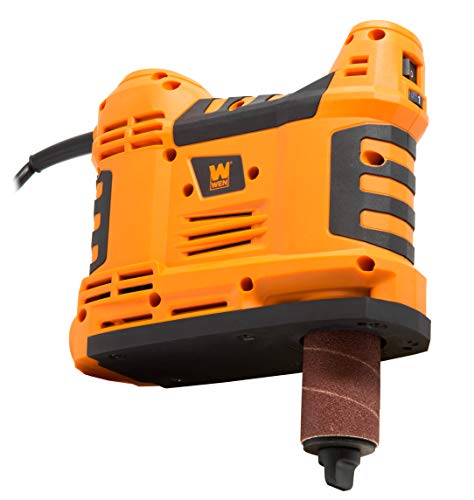
WEN HA5932 5-Amp Variable Speed Portable Spindle Sander

Scheppach OSM100 Oscillating Sander 450W
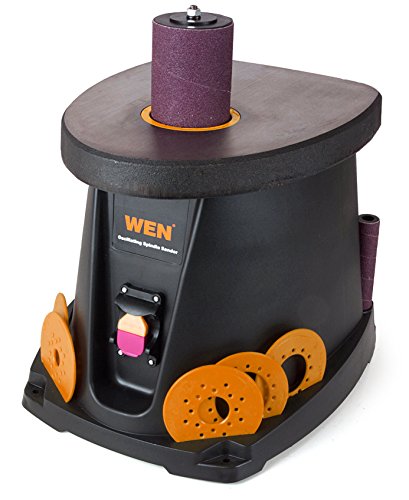
WEN 6510T 3.5 Amp Oscillating Spindle Sander

Shop Fox W1831 1/2 HP Oscillating Spindle Sander
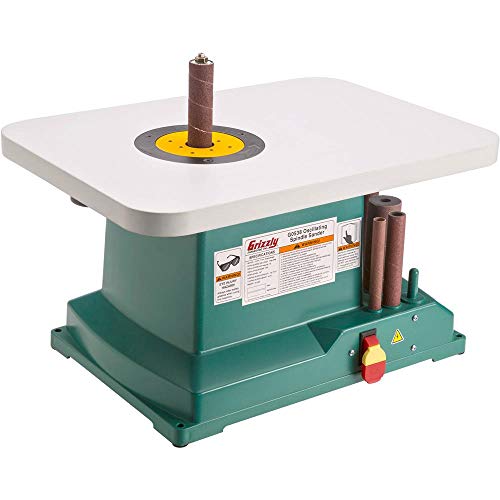
Grizzly Industrial G0538 1/3 HP Spindle Sander
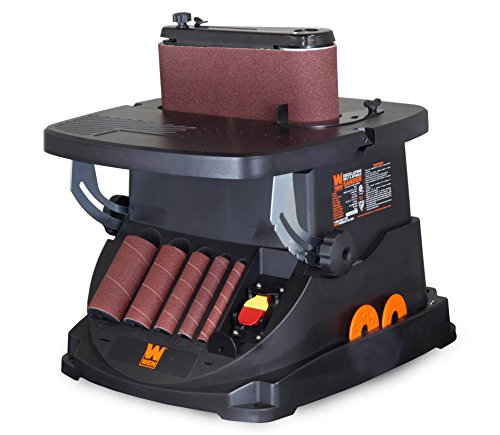
WEN 6524 Oscillating Belt and Spindle Sander
Meet The Standout Selections
The WEN bundle pairs a dual-function benchtop sander with a rubber cleaning stick that extends abrasive life. Where the standalone WEN 6524 covered later in this roundup gives you the bare machine, this version throws in the POWERTEC 71002 abrasive cleaner, so you can keep drums and belts unclogged from the first project onward.
Five spindle sleeves from a half inch up to two inches, plus a four-by-24-inch belt, cover nearly every curve, end-grain edge, and small face you can throw at a home shop. The 58-oscillations-per-minute action with a five-eighths-inch stroke spreads wear across the sleeve instead of burning a single line into the wood. For DIYers who want one benchtop tool that handles both inside curves and outside edges, this is a strong all-around starting point.
Where It Helps
- Spindle and belt functions in one footprint free up bench space for a garage shop.
- Five drum sizes handle everything from tight scrollwork to wider chair arms.
- Onboard storage keeps sleeves and sandpaper organized so jobs don’t stall mid-cut.
- The included cleaning stick pulls pitch and dust out of belts before they glaze over.
Worth Noting
- The dust port works best with a shop vac attached, which is sold separately.
- Belt changes are quick but require a wrench that isn’t always within reach on a cluttered bench.
Key Specs
Right Fit For
Home woodworkers who want a single benchtop station that handles both curves and flat edges without buying a separate belt sander.
Reach For A Different Pick When
You mainly sand inside tight scrollwork and want the handheld freedom of the WEN HA5932 instead of a stationary machine.
The WEN HA5932 breaks from the benchtop mold entirely. It is a handheld oscillating spindle sander you grip and guide like a router, which makes it the right tool when the workpiece refuses to come to the bench. Furniture restoration, in-place trim, and large assembled pieces all become workable when you can bring the tool to the wood.
Variable spindle speed lets you dial back aggression on soft pine and crank it up for dense oak, while the oscillating action still keeps dust and heat down. You may find it slower than a stationary drum on long, straight runs, but for a craftsperson who fights odd angles and tight corners all day, the maneuverability is hard to beat.
Bright Spots
- Handheld form factor reaches inside cabinets, drawers, and assembled frames.
- Variable speed control adapts to softwoods and hardwoods without swapping tools.
- Lightweight enough to use overhead on small projects like chair rungs.
Trade Offs
- Requires a steady hand for consistent results, so beginners may get wavy edges until they build muscle memory.
- Sleeve changes are less intuitive than on a benchtop machine, and you may need to consult the manual the first few times.
- Less effective on large flat surfaces where a belt sander would finish faster.
Made For
Refinishers and furniture restorers who work on pieces too large or awkward to carry to a bench.
Look Elsewhere When
You mostly sand small, repeatable parts and want the stability and dust collection of the Shop Fox W1831 benchtop instead.
The Scheppach OSM100 leans European in design, with a compact body and a 450-watt motor that punches above its weight. It targets hobbyists and model makers who don’t need a full benchtop footprint but still want real oscillation, not just a spinning drum.
Six abrasive sleeves ship in the box, so you can start sanding the moment it lands. The 2000 RPM spindle speed and 16mm stroke move the drum enough to keep finishes clean, though on heavy stock removal you’ll want to take lighter passes. For a small flat workshop, an apartment garage, or a dedicated craft room, this sits in a sweet spot the bulkier American machines don’t always reach.
Advantages To Know
- Compact frame fits on a corner shelf or fold-out workbench.
- Six included sleeves cover most hobby-scale projects from day one.
- Light enough to relocate around the shop without dragging an extension cord behind it.
Points To Note
- Smaller table surface offers less support for oversized workpieces.
- Availability of replacement sleeves outside the included grit range can be inconsistent depending on your region.
Who It Suits Best
European-tool fans and small-shop hobbyists who need a capable oscillating sander that won’t dominate the workbench.
Skip It When
You sand large furniture-scale curves and want the wider drum range and heavier table of the Shop Fox W1831.
The WEN 6510T is the entry-level benchtop sander that gets a new woodworker from “I should round this over” to a smooth, splinter-free edge in an afternoon. The 3.5 amp motor delivers 58 oscillations per minute and 2000 RPM, which is enough muscle for softwoods, plywood, and most hobby hardwoods without overwhelming a beginner.
Six sanding sleeves cover the most common edge profiles you’ll cut with a jigsaw or band saw, and the onboard storage compartment keeps everything in one place instead of rolling around in a drawer. The dust port accepts a standard shop vac hose, which is the single biggest upgrade you can make to keep your shop air clean during longer sessions.
Positive Points
- Lower price makes it approachable for a first-time sander owner.
- Onboard storage means sleeves and inserts stay with the machine.
- Standard dust port hooks up to most shop vacs without adapters.
Honest Caveats
- Motor can stall on dense hardwoods if you press too aggressively.
- Table size is modest, so larger panels need extra support off the bench edge.
Feature Snapshot
Who Should Grab It
New woodworkers and weekend DIYers who want a reliable oscillating spindle sander without paying for pro-tier features.
A Better Fit Elsewhere
Shop owners running daily production need the heavier table and larger drum range of the Grizzly Industrial G0538.
The Shop Fox W1831 steps things up with a 1/2 HP permanent magnet motor and a 30-pound footprint that stays planted under pressure. Where lighter benchtop sanders can walk across the bench when you push a hard curve, this one holds position.
Sanding drum diameters run from 3/4 inch up to 3 inches, plus six matching sleeves, so it covers everything from small jewelry-box curves to wide tabletop aprons. The 11-1/2 by 15-inch table gives you a real reference surface for square workpieces, and the larger 3-inch drum option is a feature most comparably priced machines simply don’t offer.
What Pays Off
- Drum diameters up to 3 inches handle large convex curves that smaller sanders can’t reach.
- Heavier base reduces walking and improves finish consistency on long passes.
- Wide table supports big panels without a separate roller stand.
Potential Drawbacks
- 30-pound weight makes it harder to move around a small shop or store on a shelf.
- Takes up more bench real estate than the WEN 6510T or Scheppach OSM100.
Best Suited To
Intermediate to advanced woodworkers who sand larger projects and need drum sizes beyond the typical half-to-two-inch range.
Swap It Out When
You work mostly on small craft projects and would rather save space with the more compact Scheppach OSM100.
The Grizzly Industrial G0538 has earned a long track record in small professional shops, and the design shows its age in the best way: simple, rugged, and easy to maintain. The 1/3 HP motor is modest on paper, but paired with the right feed rate it produces the kind of consistent finish cabinetmakers look for.
Six different sanding drum diameters stow neatly under the table, so swapping between profiles is a quick change instead of a hunt through a parts bin. The large table surface gives plenty of reference for square stock, and the benchtop footprint still fits a one-car garage shop. For hobbyists who want a tool that outlasts the next decade of projects, this is the dependable option.
What Works In Its Favor
- Six drum sizes stored under the table keep changes fast during a long workflow.
- Proven design with replacement parts widely available through industrial channels.
- Generous table surface for squaring up panels and frames.
Smaller Limitations
- Lower motor power means slower stock removal on thick hardwoods.
- Older design lacks some of the dust collection refinements of newer competitors.
Whose Shelf It Belongs On
Long-term hobbyists and small-shop pros who value reliability and easy maintenance over the latest refinements.
Not Your Match When
You want a modern dust port and bundled accessories right out of the box, in which case the WEN 6524 bundle is the better entry point.
The standalone WEN 6524 strips away the cleaning stick that comes with the bundle version and gives you just the benchtop machine at a lower entry cost. For woodworkers who already own abrasive cleaners or prefer to manage consumables separately, that trade is a fair one.
Five spindle sleeves from 1/2 inch to 2 inches handle the bulk of curved work, and the 4-by-24-inch belt converts the same platform into an edge and face sander when needed. The 58-oscillations-per-minute action and 5/8-inch stroke mirror the bundle’s specs, so the actual sanding performance is identical. It is a sensible pick when the cleaning stick isn’t worth the extra spend.
A Few Strong Suits
- Spindle plus belt in one chassis saves bench space versus owning two separate tools.
- Onboard storage keeps sleeves and accessories from disappearing in a busy shop.
- Same oscillation specs as the bundle version, so sanding results match the pricier option.
Factors To Consider
- No cleaning stick included, so expect to manage sleeve clogging manually.
- Dust collection still requires a shop vac you supply separately.
Feature Rundown
Who Will Love This
Shop owners who want belt and spindle capability on one machine and already have their own dust collection and abrasive maintenance routine.
Consider Something Else When
You’d rather have the cleaning stick and faster start-up, in which case the WEN 6524 bundle earlier in this list is the smarter buy.
Picking The Right Spindle Sander For Your Shop
Motor Power And Workload
Spindle sanders in this class range from roughly 1/3 HP up to 1/2 HP, and that gap matters more than the numbers suggest. Hobbyists cutting thin plywood and softwood projects rarely push past 1/3 HP, so machines like the Grizzly Industrial G0538 keep up without strain. Furniture builders working with thick hardwoods, though, benefit from the extra torque of the Shop Fox W1831 or the 5-amp WEN HA5932. Match the motor to your typical stock thickness rather than buying the biggest number on the spec sheet.
Drum Range And Sleeve Availability
The whole point of a spindle sander is the drum, and the right drum size makes curves either smooth or wobbly. Look for sets that include at least five diameters from 1/2 inch to 2 inches, which covers scrollwork, chair arms, and table aprons. If you work with larger pieces, the Shop Fox W1831’s 3-inch option is genuinely useful. Always confirm replacement sleeves are easy to source in your region before committing; the Scheppach OSM100 illustrates why, since some sleeve sizes can be harder to find outside Europe.
Benchtop, Handheld, Or Combination
Form factor changes how you work. Benchtop machines like the WEN 6510T and Grizzly G0538 anchor to your workstation and deliver the most consistent results on small parts. Handheld models like the WEN HA5932 free you to sand assembled pieces in place. Combination units such as the WEN 6524 trade a little of each specialty for versatility, which suits hobbyists with varied projects better than specialists with one job type.
Dust Collection And Maintenance
Spindle sanding produces fine dust that settles into every crevice of your shop, so a real dust port matters more than it might seem. Most picks here include a standard port that accepts a shop vac hose, but the WEN 6510T makes a point of mentioning dust extractor compatibility in its design. Owners commonly report that a dedicated shop vac is the single biggest quality-of-life upgrade for any spindle sander, and it keeps the abrasive sleeves from glazing over as quickly.
Key Considerations Across These Picks
Pitfalls Shoppers Hit
Chasing the largest drum set is a common trap, but the wrong sleeve size produces more wobble than smoothness. New spindle sander owners also underestimate dust, skipping a shop vac and finding their shop unworkable after one project. Finally, treating an oscillating spindle sander like a thickness planer (running heavy passes) stalls the motor and burns the wood, so light passes win every time.
When Paying More Pays Off
Higher-tier models earn their keep through wider drum ranges, heavier tables, and stronger motors that resist stalling on dense stock. For someone running a small production shop, the Shop Fox W1831 or Grizzly G0538 pays for itself in time saved and sleeves that last longer. Casual hobbyists, though, often find the WEN 6510T or Scheppach OSM100 already covers their needs without the extra cost.
Frequently Asked Questions
What Is An Oscillating Spindle Sander Used For?
An oscillating spindle sander sands curved edges, contours, and rounded corners on wood that would be tedious to finish by hand. The oscillating motion (the drum moving up and down while spinning) prevents the sandpaper from wearing a single groove into the workpiece and keeps the wood cooler during longer passes.
Can A Spindle Sander Replace A Belt Sander?
A spindle sander handles inside curves and rounded edges far better than a belt sander, but belt sanders still win on flat faces and long outside edges. Combination machines like the WEN 6524 attempt to bridge both jobs in one footprint, though dedicated users may still prefer owning each tool separately.
What Drum Sizes Should I Look For First?
Start with a set that includes 1/2 inch, 3/4 inch, 1 inch, 1-1/2 inch, and 2 inch sleeves, which covers the vast majority of hobby furniture work. Add larger sizes like 3 inches only once you find yourself sanding broad convex curves on chair arms or table aprons.
How Important Is Dust Collection On A Spindle Sander?
Dust collection is more important than many first-time owners expect, because fine wood particles load up abrasive sleeves quickly and create a respiratory hazard. A shop vac connected to the dust port extends sleeve life, keeps the work area visible, and protects your lungs over years of regular use.
Are Handheld Spindle Sanders Worth Considering?
Handheld oscillating spindle sanders, such as the WEN HA5932, are worth it for restoration work, large assembled pieces, and tight spaces where a benchtop machine cannot reach. They require more technique than a stationary drum, so beginners may want to start with a benchtop unit and add a handheld later.




