


A split beam torque wrench is the kind of tool you reach for when fastener precision actually matters, from mounting a scope on a rifle to torquing a cylinder head in the driveway. The split beam design resists wear from heavy shop use better than traditional micrometer wrenches, and most models don’t need a “break-in” cycle before their first accurate reading. Picking the wrong one, though, means a click that comes too early or a flex head that flops when you need control. This guide covers nine solid options across automotive, firearms, bicycle, and HVAC work, so you can match the tool to the job instead of buying a one-size-fits-all compromise.
A Fast Comparison Of The Options

DEWALT Torque Wrench Micro Adjust 1/2″ 50-250 FT-LB
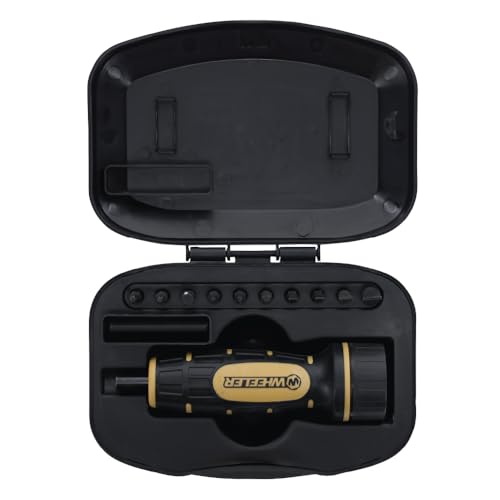
Wheeler Manual Firearms Accurizing Torque Wrench
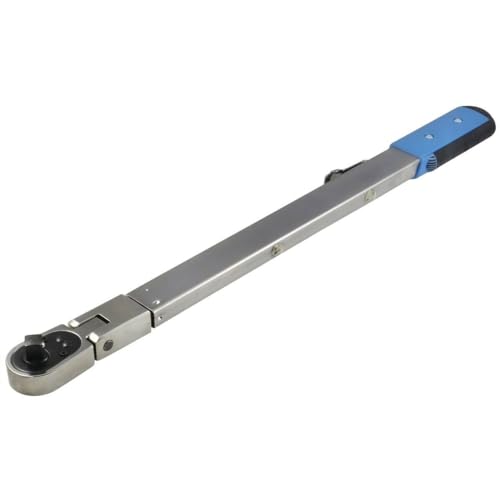
Precision Instruments PREC3FR250F Split Beam 1/2″ Flex

Precision Instruments PRED2F600HM Dial Torque 3/8″

HAZET 5121-3CT Torque Wrench 20-120Nm 1/2″
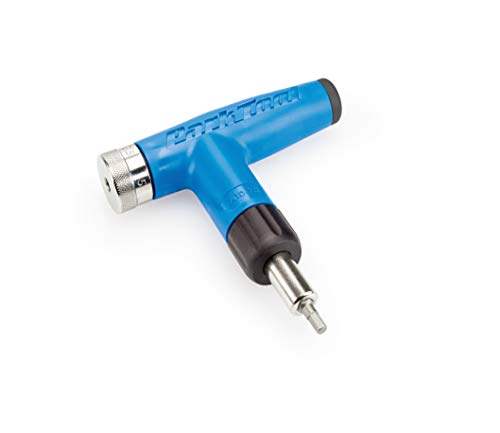
Park Tool ATD-1.2 Adjustable Torque Driver

Precision Instruments PREC2FR100F 3/8″ Split Beam

Precision Instruments PRED2F150HM Dial Torque 3/8″

Yellow Jacket 60648 Digital Adjustable Torque Wrench
A Deeper Look At The Lineup
The DEWALT Torque Wrench Micro Adjust 1/2″ 50-250 FT-LB lives in that middle ground between a weekend driveway tool and something a working tech would reach for. Its 1/2″ drive and 50 to 250 ft-lb span covers most automotive applications, from lug torque to suspension work, without forcing you to swap tools mid-job. The micro-adjust collar is easy to dial in increments fine enough for spec-sensitive fasteners, and the quick-release button on the head keeps socket changes fast on a busy bench.
Compared to the Wheeler you might use for scope rings, this is a much heavier, much higher-torque animal, so the trade-off in feel is real. Owners of pickup trucks and SUVs doing their own brake jobs or axle work will find the range forgiving and the lock straightforward.
Well-Handled Touches
- Locking collar holds the setting so vibration won’t drift your torque mid-job
- Forward and reverse operation, useful for torque audits after a fastener is set
- Carrying case included, which actually matters when the tool lives in a truck
- 50 to 250 ft-lb window handles nearly every 1/2″ drive automotive task
Worth Noting
- Heavier than the Wheeler or Park Tool, so it can tire your wrist on long bolt-pattern jobs
- Calibration should be checked after heavy use, since drop impact is the most common accuracy killer
- Storage case is a tight fit for the wrench plus a handful of sockets, so plan your kit
Key Specs
Made For
Home mechanics and DIYers handling their own truck or SUV service work, especially jobs that demand a sturdy 1/2″ drive in the 50 to 250 ft-lb range.
Skip It When
You need a compact wrench for scope rings or small fasteners, where the Wheeler Manual Firearms Accurizing Torque Wrench fits the bill better.
The Wheeler Manual Firearms Accurizing Torque Wrench is purpose-built for the small inch-pound work that decides whether a scope holds zero, including scope rings, guard screws, and base bolts. Its inch-pound scale reads in the range most firearms manufacturers actually spec, and the bit set that ships in the case covers the common screw heads you run into on a modern rifle or shotgun. For anyone chasing repeatable accuracy, that combination removes most of the guesswork.
It’s a very different tool from the DEWALT Micro Adjust you just read about: no flex head, no 1/2″ drive, no brute-force range. That’s the point. Where the DEWALT punishes over-torqued lug nuts, the Wheeler protects the screws that actually control point of impact.
What Works In Its Favor
- Inch-pound scale aligns with how scope and action screws are spec’d in manuals
- Storage case with bit inserts keeps everything organized at the bench or range
- Compatibility with Wheeler’s deluxe bit sets if you need specialty heads later
- Repeatable settings help shooters dial in the same torque across multiple rifles
Honest Caveats
- No flex head, so reaching recessed action screws can require careful socket orientation
- Not suited for anything beyond small fasteners, so you can’t pull double duty on a car or motorcycle
- Calibration drift over years of use is a commonly reported issue, so periodic checks help
Whose Shelf It Belongs On
Hunters, competitive shooters, and home gunsmiths who need consistent inch-pound torque on scope rings, action screws, and similar small fasteners.
Reach For A Different Pick When
You’re working on bicycles or carboy-level fasteners, where the Park Tool ATD-1.2 Adjustable Torque Driver offers similar low-torque precision in a bike-friendly form factor.
The Precision Instruments PREC3FR250F Split Beam 1/2″ Flex is the kind of torque wrench that earns its keep on a busy technician’s bench. The split beam mechanism (which uses a single elastic beam that deflects and snaps back at the set torque) is well-suited to harsh shop environments because it doesn’t rely on a clock-style internal spring. That means fewer re-calibrations after drops, and a longer working life when the tool lives in a roll cab rather than a foam-lined drawer.
The flex head on this 1/2″ drive model makes a real difference in tight engine bays, where a straight wrench can’t get a square pull on a bolt. Set the torque with fingertip force, swing the head where you need it, and let the click do the rest.
The Good Stuff
- Split beam design shrugs off the drops and abuse a shop wrench sees daily
- Flex head reaches fasteners that would be near-impossible with a fixed wrench
- No break-in or “work-in” cycle needed, so it’s accurate right out of the case
- Made in the USA, which often correlates with tighter quality control on torque tools
Points To Keep In Mind
- Longer body than the HAZET 5121-3CT, so storage in shallow drawers can be tight
- Premium positioning often means a higher price point than basic micrometer wrenches
- Flex head adds a small amount of wobble at full lock, which some users notice on critical fasteners
Best Suited To
Professional automotive technicians and serious home mechanics who need a reliable, high-range 1/2″ drive split beam wrench that survives daily shop life.
A Better Fit Elsewhere
Owners working mostly in the 20 to 100 ft-lb range should consider the Precision Instruments PREC2FR100F 3/8″ Split Beam, which trades 1/2″ drive heft for a smaller, easier-to-handle profile.
The Precision Instruments PRED2F600HM Dial Torque 3/8″ is a different animal from the click-style split beam wrenches earlier in this list. The dial indicator (a needle-and-face readout) shows real-time torque as you pull, and the memory pointer holds the peak reading so you can verify what was actually applied. That makes it especially attractive for engine builders, aerospace techs, and QA-minded pros who need proof of torque, not just a click.
Because dial-type wrenches aren’t sensitive to where you hold the handle, hand position doesn’t throw off the reading. The 3/8″ drive and 600 lb-in range suit engine accessory work, motorcycle chassis, and small fastener clusters.
What Pays Off
- Memory pointer captures peak torque for documentation or audit trails
- Patented torsion bar design keeps accuracy stable across the full range
- Hand position doesn’t affect the reading, so any grip style works
- Clockwise and counterclockwise accuracy rated within 2% of the reading
Trade-Offs
- More delicate than a click wrench, so the dial can be vulnerable to impact
- 3/8″ drive limits the largest sockets compared to the DEWALT Micro Adjust’s 1/2″
- Memory pointer must be reset before each use, which is a small but easy step to forget
Right Fit For
Engine builders, motorcycle technicians, and inspectors who want a clear visual record of applied torque and need a 3/8″ drive profile.
Consider Something Else When
You need a compact wrench for scope and action screws, where the Wheeler Manual Firearms Accurizing Torque Wrench is built specifically for that scale.
The HAZET 5121-3CT Torque Wrench 20-120Nm 1/2″ comes from a German toolmaker with a long reputation in professional garages, and it shows in the small details. The 32-tooth ratchet gives an 11.25° operating angle (the arc the handle has to swing between clicks), which matters in tight bays where you can’t get a full sweep on a bolt. The reversible head handles both tightening and loosening, and the 20 to 120 Nm range covers most European car and bicycle work in a single tool.
Tolerance is specified at 3% of the scale value, which is a tighter spec than many entry-level click wrenches can claim. If you service German cars or work on bikes with high-end carbon components, the resolution and feel line up well with manufacturer specs.
Where It Helps
- 11.25° ratchet stroke fits where larger-swing wrenches can’t operate
- 3% scale-value tolerance suits spec-sensitive automotive fasteners
- Reversible ratchet for both tightening and loosening without flipping sockets
- Compact 16.57″ length stores in a typical tool cabinet drawer without issue
Softer Spots
- 20 Nm lower limit rules out sub-20 work like stem bolts or carbon seatpost clamps
- Nm-only scale requires a conversion step for anyone working in ft-lb
- Less common in US shops, so replacement parts and accessories can take longer to source
Quick Facts
Perfect Match For
Shops that work on European cars, dual-sport motorcycles, and higher-end bicycles where metric torque specs and tight swing angles are the daily reality.
Not Your Match When
You mostly need low-torque precision on carbon bike parts, where the Park Tool ATD-1.2 Adjustable Torque Driver covers the 4 to 6 Nm range more naturally.
The Park Tool ATD-1.2 Adjustable Torque Driver looks more like a precision screwdriver than a wrench, and that’s the whole point. It adjusts to common bicycle torque settings of 4, 4.5, 5, 5.5, and 6 Nm, which is exactly where the most over-torqued and under-loved bolts on a modern bike live. Steerer stems, seatpost clamps, carbon handlebars, brake lever clamps: all small, all easily damaged, all benefit from a controlled click.
Park Tool builds this with all-metal internals, so the long-term durability is a step up from plastic-gear click-type drivers. It’s a different tool from anything else on this list, including the Wheeler, which is inch-pound-based for firearms work.
What Helps Most
- Factory preset to the Nm values most bike manufacturers actually publish
- All-metal internal construction extends working life over plastic drivers
- Click action prevents over-tightening on carbon fiber components
- Compact size fits in a saddle bag, so trail-side repairs are realistic
Some Limits To Know
- Limited to five preset values, which won’t cover every spec on every bike
- Not interchangeable with sockets, so it complements rather than replaces a standard wrench
- Drivers need to be reset to the lowest setting before storage to preserve spring life
Who Should Grab It
Road cyclists, mountain bikers, and home bike mechanics who want to protect carbon parts and lightweight components from over-tightening on routine adjustments.
Look Elsewhere When
You want a single torque tool for engine and chassis work, where the HAZET 5121-3CT or Precision Instruments PREC3FR250F serves a much broader range.
The Precision Instruments PREC2FR100F 3/8″ Split Beam lives in the sweet spot for motorcycle, small-engine, and lighter automotive work. Its 20 to 100 ft-lb range catches most fasteners below suspension and lug work, and the 3/8″ drive is a better match for the smaller fastener clusters on bikes, ATVs, and compact engine accessories. The flex head gives you the same access advantage the larger PREC3FR250F offers, just in a more manageable size.
Compared to the 1/2″ drive DEWALT Micro Adjust, this is noticeably lighter in the hand. For a tech working a counter all day, that weight difference shows up at the end of a shift.
Noteworthy Benefits
- Calibration compliance certificate ships with the tool, useful for shop documentation
- Flex head reaches recessed fasteners without forcing a socket change
- 20 to 100 ft-lb range suits motorcycle chassis, ATV work, and engine accessories
- Made in the USA, with consistent QA reported by long-time shop users
Worth Bearing In Mind
- 3/8″ drive caps the upper end, so you can’t run large 1/2″ sockets directly
- Storage case is sturdy but adds bulk if you pack light in a service van
- Same flex-head wobble concern as the larger PREC3FR250F at extreme angles
Feature Snapshot
Who Will Love This
Motorcycle mechanics, ATV and small-engine techs, and home enthusiasts who want a manageable 3/8″ drive split beam wrench with flex head access.
Where Another Pick Suits Better
You regularly work on large-format fasteners above 100 ft-lb, where the Precision Instruments PREC3FR250F gives you 1/2″ drive and double the upper range.
The Precision Instruments PRED2F150HM Dial Torque 3/8″ shares the same dial-indicator design as its larger sibling, but its 150 lb-in range targets finer work. That’s the world of small fasteners where a single pound-inch can mean the difference between a reliable joint and a stripped thread. The memory pointer captures peak torque, and the large shock-resistant dial is easier to read at a glance than the 600 lb-in version’s finer scale.
For a 3/8″ drive dial wrench in the inch-pound range, the use cases line up with instrument assembly, detail motorcycle work, and applications where the operator wants visual proof of torque rather than a click.
Everyday Wins
- Large, easy-to-read dial reduces squinting during critical work
- Memory pointer holds peak torque for QA and documentation
- 2% accuracy rating in both directions is unusually tight for a dial wrench
- Hand position does not affect accuracy, so any grip style works
Where It Is Less Suited
- Lower torque ceiling than the 600 lb-in PRED2F600HM, so larger fasteners are out of scope
- Dial face is more vulnerable to drops than a click-style beam wrench
- Readings are slower than a click, which matters on repetitive assembly lines
Feature Card
Built With In Mind
Technicians and serious hobbyists who need a clear visual record of low-range torque on instruments, electronics assemblies, and detail mechanical work.
Swap It Out When
You’re working on typical automotive fasteners above 150 lb-in, where a click-style wrench like the DEWALT Micro Adjust serves faster and more ruggedly.
The Yellow Jacket 60648 Digital Adjustable Torque Wrench reads torque in real time on a digital display, and indicator lights ramp up as you approach the set value. For HVAC and refrigeration techs working on refrigerant line flares, valve cores, and service ports, that live feedback reduces the risk of over- or under-tightening a flare that has to hold pressure for years. Nine common preset torque values can be stored for repeat jobs, which speeds up service work considerably.
It’s a fundamentally different interface from the click or dial wrenches earlier in the lineup, and the digital nature means battery life and electronics durability become part of ownership. Field techs should weigh that trade-off against the precision gains.
Why It Works Well
- Live digital readout removes the “did it click” question on every flare
- Indicator lights give a quick visual signal as you approach the target torque
- Nine preset values match common HVAC service torque specs
- Real-time display also helps when training newer techs on torque feel
Where It May Fall Short
- Battery dependence means you need a spare or a charging routine in the truck
- Electronics are more vulnerable to moisture and drops than a sealed click wrench
- Reading the screen in low light or odd angles can be slower than hearing a click
Feature Overview
Made For
HVAC and refrigeration technicians who want live numerical confirmation of torque on refrigerant fittings and service valves where pressure integrity depends on accurate torque.
Another Choice May Suit
You mostly work in a traditional automotive shop, where the DEWALT Micro Adjust or Precision Instruments split beam wrenches offer a more rugged, battery-free experience.
What To Match Before You Commit
Pick the right drive size first. Drive size refers to the square socket attachment on the wrench, and 1/2″, 3/8″, and 1/4″ each serve different worlds. Most home mechanics are served well by a 1/2″ drive for chassis and engine work, while 3/8″ covers the smaller fastener clusters on motorcycles and engines. Anything smaller is mostly for bicycles, gunsmithing, and electronics.
Mind the torque range. A wrench that goes from 20 to 100 ft-lb will leave you stuck if you need to torque a lug nut at 150. A wrench that goes up to 250 ft-lb will be hard to dial in for a 25 ft-lb fastener. Match the published range to the jobs you actually do, and accept a little overlap rather than a one-range-fits-all tool.
Decide between click, dial, and digital. Click-style split beam wrenches are fast, durable, and battery-free. Dial wrenches show real-time torque and hold peak readings, which matters for documentation. Digital wrenches offer presets and live readouts, but introduce batteries and electronics into the equation. Most home and shop users are well served by a click-style split beam, with the others as specialty tools.
Consider the head type. A flex head helps you reach fasteners at an angle, especially in tight engine bays or behind frame rails. A fixed head is sturdier and slightly more accurate, but it forces you to swing the entire wrench. The trade-off depends on how much access you need versus how much rigidity you want.
Plan for calibration and storage. Torque wrenches lose accuracy from drops, over-torque, and time. Owners commonly report that storing a wrench at its lowest setting and bringing it in for periodic calibration extends working life. A protective case, which most of the picks above include, also helps in a busy garage or truck.
Shopping Smart In This Category
Common Shopping Slip Ups
The easiest mistake is buying a wrench whose range barely covers your lowest or highest common fastener, leaving you to guess or buy a second tool within a year. Another is picking the cheapest click wrench on the shelf and expecting it to hold calibration through a drop, when the entry-level internals often can’t. Watch for sellers who don’t include a calibration certificate if you need traceable documentation for shop or warranty work.
What The Higher Tier Buys
Premium split beam wrenches tend to use tighter internal tolerances, better heat treatment on the beam itself, and more reliable flex head mechanisms. The payoff shows up in two places: calibration that holds over years rather than months, and a click that doesn’t feel mushy or early. For professional users who rely on the tool daily, that consistency is usually worth the upgrade. For occasional weekend use, a mid-range wrench with reasonable QA often does the job just as well.




