Splitting wood is one of those chores that goes from annoying to satisfying once you have the right tool in your hand. The wrong axe fights you on every swing, while the right one makes even gnarly oak rounds crack open with a clean, single strike. This roundup focuses on hatchets, mauls, and full-length axes built to do that job well, from weeknight kindling prep to weekend cord-stacking sessions. The picks below cover a range of handle lengths, head weights, and price points, so you can match the tool to your woodpile, your height, and how often you actually split.
A Fast Comparison Of The Options

Fiskars X27 Super Splitting Axe 36-Inch Bundle

Fiskars X27 Super Splitting Axe 36-Inch

Fiskars Pro IsoCore 8 lb Splitting Maul 36″

Fiskars X14 Universal Axe 14-Inch

Fiskars X7 Small Hatchet Axe 14-Inch
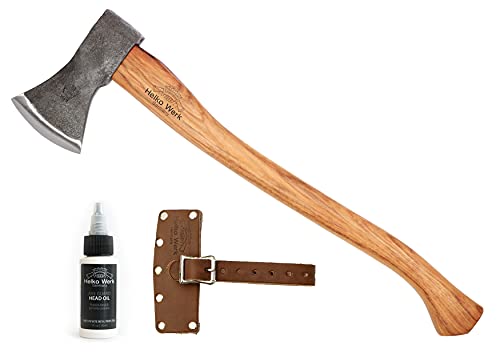
Helko Werk Black Forest Woodworker Axe

Fiskars Pro IsoCore 2.5 lb Splitting Maul 14″
A Breakdown Of The Leading Choices
Long-handled axes can feel awkward for shorter users, but the 36-inch X27 Super Splitting Axe flips that problem. The handle length, paired with a forged hardened steel head, gives the swing enough arc to do most of the work for you, so a mid-sized round typically pops open on the first or second strike. It also comes with a small hatchet and a protective sheath, so you can handle kindling and round splits without grabbing a second tool from the shed.
For most backyards where you split a cord or two each season, this bundle covers both jobs without much fuss. Where it really earns its place is for taller users who have felt short-changed by shorter handles on medium to large logs. A convex bevel design (a blade ground to a slightly curved angle that helps it wedge into wood and release cleanly) keeps the head from binding deep into stubborn grain, and the textured non-slip grip helps you keep control even when you swing hard.
Points In Its Favor
- 36-inch handle delivers strong arc and momentum for medium to large rounds
- Hardened forged steel head, the blade stays sharper through repeated contact with wood
- Shock-absorbing textured grip eases hand fatigue across long splitting sessions
- Bundled hatchet adds quick kindling capability without buying a second tool
- Convex bevel geometry reduces the chance the head sticks mid-split
Worth Noting
- 36-inch length is awkward for users under about 5’8″, who may find the swing hard to control
- Protective sheath covers the main head but you will want a separate guard for the bundled hatchet during storage
- Best for clean, straight-grained wood; twisted knots may still require extra strikes
Who It Suits Best
Taller users splitting medium to large logs who want one bundle that handles both cord wood and kindling without juggling multiple tools.
Where Another Pick Suits Better
Campers and backpackers will get more use from the Fiskars X7 Small Hatchet Axe 14-Inch, which packs light and handles trail-side splitting with far less bulk.
Think of this as the X27 stripped down to the essentials. Same 36-inch handle, same forged steel head geometry, no bundled hatchet in the box. That simplification matters for anyone who already owns a small hatchet or a saw and just wants the long axe to do the heavy lifting on a Sunday afternoon.
The X27’s weight distribution sends momentum down the handle, so even on days when your shoulders feel like they have already been put through a workout, the head still does the work. The convex bevel (a curved grind that helps the blade slice and then release from a log) keeps the axe from trapping itself in dense oak, and the longer handle gives the swing enough arc that you do not have to throw your whole body into every chop. Compared to the bundle above, you trade the bonus hatchet for a leaner, single-purpose tool that lives well in a garage or woodshed.
Well-Handled Touches
- 36-inch shaft gives taller users a natural swing arc
- Forged steel blade with advanced geometry for efficient splits
- Optimized weight distribution reduces how much effort each swing demands
- Built tough enough to take on extra-large rounds without flex
Points To Keep In Mind
- Too long and heavy for users who prefer compact, one-hand tools
- No hatchet in the box, so kindling duty still calls for a second tool
Key Specs
Right Fit For
Tall users who already own a hatchet and want a dedicated long-handle splitter for large logs.
Look Elsewhere When
Shorter users or anyone who needs a portable option will get along better with the Fiskars X14 Universal Axe 14-Inch for one-handed kindling and trail work.
Splitting a maul and splitting an axe are not the same job, and this 8-pound head makes the difference obvious on the first swing. A maul (a heavy, wedge-shaped wood-splitting tool designed to drive through rounds rather than slice them) drives through rounds that bounce lighter axes straight back at you, and the 36-inch handle gives that mass enough room to build real velocity. This is the pick for woodpiles full of gnarly, twisted-grain hardwood.
The IsoCore system uses an internal shock-absorbing component between the head and handle, so the 8-pound swing does not punish your wrists the way a solid-steel maul typically does. Compared to the X27 axe above, you trade slicing precision for raw mass, and you will feel that difference in your shoulders the morning after a big session. For occasional kindling or small rounds, it is overkill. For a cord of stubborn oak waiting in the yard, it is the right tool.
Key Advantages
- 8-pound head drives through tough, knotty rounds that bounce lighter axes
- 36-inch handle suits taller users and gives the head room to accelerate
- IsoCore shock control softens the impact that travels back to your hands
- Forged steel blade geometry tuned for splitting rather than slicing
Trade Offs
- At 8 pounds of head weight, lighter or less conditioned users may find it tiring across a full session
- Too much tool for small kindling rounds; you will want a lighter hatchet for that
Made For
Heavier-duty users with regular access to large, dense, or knotty hardwood rounds who want momentum more than finesse.
Skip It When
You mostly split kindling or small rounds, where the Fiskars Pro IsoCore 2.5 lb Splitting Maul 14″ does the same job without wearing you out.
Most hatchets advertise portability and then feel clumsy once you actually swing them. The X14 sidesteps that with a balanced 14-inch frame that sits naturally in one hand, and a forged steel head that bites into wood instead of just bouncing off. A low-friction coating helps the blade pull out of a fresh cut cleanly, which matters more than you would think when you are on your twentieth kindling stick of the evening.
For campground prep or quick backyard kindling duty, it does what a hatchet should. Compared to the long-handle options earlier, the X14 trades leverage for control, and you will feel that immediately if you try to take on a 14-inch oak round. Stick to kindling and small splits, and it earns its space in the gear bin. The compact head also slips into a pack or a truck side compartment without needing a dedicated rack.
Features That Help
- Compact 14-inch build fits one-handed use and tight storage spaces
- Forged steel blade with refined cutting angle for clean, precise splits
- Low-friction coating reduces sticking in fresh or resinous wood
- Balanced feel keeps the swing smooth even during longer kindling sessions
Some Limits To Know
- Too short to drive through any rounds above a few inches across
- Smaller head means more strikes per split on tougher wood
Feature Snapshot
Best Suited To
Campers, RV owners, and homeowners who mostly prep kindling and want a tool that packs easily.
Consider Something Else When
Your woodpile is full of large rounds, where the Fiskars Pro IsoCore 8 lb Splitting Maul 36″ brings the mass you actually need.
The X7 is what most people picture when they think of a camp hatchet. A short 14-inch handle, a head that feels proportionate rather than oversized, and a low-friction coating that helps it glide through softwood kindling on the first or second strike. It packs flat against the side of a backpack or rides easily in a camp kit without throwing off your balance on a trail.
For backpackers, day hikers, and anyone whose wood duties end at building a small fire ring, the X7 covers the job without forcing you to lug a full axe. Compared to the X14 above, you trade some overall mass and reach for a slightly more packable profile, and most users will not notice a meaningful performance gap at the kindling-size wood this tool is built for. It also pairs well with a folding saw for a complete trail-side wood setup.
Benefits That Matter
- Compact 14-inch build slips into packs and camp kits easily
- Low-friction blade coating keeps each cut from sticking
- Balanced weight distribution supports clean one-handed swings
- Light enough to carry on longer hikes without fatigue
Soft Spots
- Head weight is light, so thicker rounds will need more than one or two strikes
- Coating and edge benefit from occasional cleaning and light oiling to prevent surface rust during long storage
Who Will Love This
Backpackers, day hikers, and casual campers who want a packable hatchet for kindling-sized wood at the campsite.
Another Choice May Suit
Homeowners with a woodpile and a backyard woodshed will find the Fiskars X27 Super Splitting Axe 36-Inch a better match for splitting larger rounds.
The Helko Werk Black Forest Woodworker Axe comes from a different world than the Fiskars lineup. The head is hand-forged in Germany using the Rheinland pattern, a classic European axe shape with a relatively narrow profile and a long cutting edge, and the wood handle carries the kind of grain and finish you do not get from a mass-produced fiberglass shaft. It feels less like a tool and more like an instrument.
For splitting medium rounds and tackling general woodwork around a property, the Rheinland profile cuts cleanly and wedges open dense fiber without much fuss. Compared to the Fiskars X27 above, you trade mass-produced consistency for traditional craftsmanship, which means each head carries slight visual variation. Care is also more hands-on: owners commonly report that the wooden handle benefits from occasional oiling, and the head should be wiped clean and lightly oiled after wet use to keep the finish in good shape.
The Practical Payoff
- Hand-forged Rheinland head delivers classic European cutting geometry
- Compact size makes it versatile for splitting, light felling, and shaping work
- Wood handle offers a traditional feel and a balanced swing
- Refined enough to display, rugged enough to use on a regular woodpile
Practical Considerations
- Wood handle and forged finish need periodic oiling to stay in good shape
- Costs more than most mass-produced axes in this roundup
Quick Facts
Perfect Match For
Traditionalists, woodworkers, and anyone who wants a hand-forged tool that performs as well as it looks on the wall.
Reach For A Different Pick When
You split a full cord each season and want a low-maintenance tool, where the Fiskars Pro IsoCore 8 lb Splitting Maul 36″ needs almost no upkeep.
The 2.5-pound IsoCore maul is a strange little tool, and once you use it, the design starts to make sense. A maul-style head (a heavy, blunt wedge built to drive rounds apart rather than slice them) is typically reserved for full-size logs, but here it is paired with a 14-inch handle to create a one-handed splitter for kindling and small rounds. It sits in a sweet spot between hatchet and full maul, useful at the fire pit, by the woodshed, or at a small campground.
The IsoCore shock system does the same job here that it does on the larger 8-pound maul, soaking up the impact that would otherwise rattle your wrists. Compared to the standard hatchets above, the wedge profile crushes and separates small rounds instead of slicing them, which can feel like overkill on dry pine but works beautifully on dense, twisted kindling. For light backyard or fire pit use, it tends to be the tool you reach for more often than you expected.
What Makes Sense
- 2.5-pound maul head gives real splitting power in a one-handed size
- 14-inch handle keeps swings controlled without sacrificing momentum
- IsoCore system absorbs jarring impact on wrists and forearms
- Forged steel head with low-friction coating for cleaner release
Where It May Fall Short
- Too heavy for pure backpacking compared to a standard hatchet
- Head mass can feel unwieldy for users with smaller hands during longer sessions
Feature Card
Whose Shelf It Belongs On
Fire pit regulars and homeowners who split kindling often and want a single tool that bridges hatchet and full maul.
Swap It Out When
You spend more time on long-distance trails than at the fire pit, where the Fiskars X7 Small Hatchet Axe 14-Inch travels lighter and still handles kindling duty.
Picking The Right Splitting Tool For Your Woodpile
Choosing between these tools comes down to three questions. What size wood are you splitting, how tall are you, and how often are you swinging? Length matters more than most people expect. A 36-inch axe gives you arc and momentum, but it is unwieldy for anyone under roughly 5’8″, and the same tool that feels powerful for one user can feel punishing for another. A 14-inch hatchet trades leverage for portability, and that tradeoff is exactly right for campers and kindling duty but the wrong call for full cord wood.
Head shape and weight matter just as much. Axes with convex bevels and lighter heads are designed to slice and release, while maul heads (thick, blunt wedges meant to drive through rounds rather than cut them) are built to crush and split apart. The IsoCore system pairs especially well with heavier maul heads, since the internal shock absorption softens the impact that would otherwise punish your joints across a long session.
Finally, handle material changes how the tool feels and how it ages. Fiberglass and composite handles resist weather and need almost no maintenance. Wood handles feel traditional and balanced, but they want a little care, a wipe-down and a light oiling now and then, to stay in good shape. Match the tool to your wood, your body, and how much time you want to spend on upkeep, and the rest takes care of itself.
Head Weight And Handle Length
A heavier head delivers more force per swing but tires you out faster and demands a controlled stance. Lighter heads let you split for longer with less recovery time but require more strikes per round. Pair the weight to your wood: dense hardwood rewards mass, while softer pine and poplar split cleanly under a lighter head.
Edge Geometry And Maintenance
A convex bevel (a slightly curved grinding angle on the cutting edge) drives through wood and releases cleanly, while flat-ground edges cut more like a chisel. Either design holds up, but the edge needs occasional honing to stay effective. Owners commonly report that wiping the head dry after wet use and applying a light coat of oil prevents surface rust and keeps the blade ready.
Storage And Safety
A protective sheath, a dry spot, and a wall hook are usually all a splitting tool needs to last for years. Wood-handled tools benefit from a cool, dry storage area to prevent swelling and cracking, while composite handles are far more forgiving. Keep the edge covered whenever it is not in use, especially around kids or pets.
Key Considerations Across These Picks
Common Buying Slip Ups
The easiest mistake is reaching for a 36-inch axe because the head looks powerful, even though the handle is too long for your frame. Long handles need room to swing, and a tool that does not let you stand with your feet planted in a natural stance is a tool that will wear you out fast. The other common slip is buying a dedicated maul for kindling, when a compact maul or hatchet does the same job with far less effort. Match the tool to the size of the wood you actually split, not the size you wish you split.
Where The Extra Money Goes
Higher-tier tools in this category tend to cost more for two reasons: better vibration control, like the IsoCore system, and more refined blade geometry, like the hand-forged Rheinland head on the Helko. The vibration control shows up as less fatigue across a long session, and the refined geometry shows up as cleaner cuts and fewer stuck heads. You pay for comfort and consistency more than raw splitting power, and for frequent users, that difference is real. Occasional users splitting a stack of softwood will not feel the premium the same way.
Frequently Asked Questions
What size splitting tool is best for a beginner?
Most beginners do well starting with a 14-inch hatchet or a short-handle maul. The control and lighter weight build good habits, and the tool is forgiving when your swing is not yet dialed in. Once your confidence grows, adding a longer axe for bigger rounds makes sense.
How often does a splitting tool need sharpening?
That depends on how much you use it. A good rule of thumb is to give the edge a quick honing after every few cords of wood, and a more thorough sharpening once a season. Owners commonly report that lightly touching up the bevel on a fine file keeps the blade working without shortening its life.
Are mauls better than axes for splitting?
Each has a role. Axes slice into wood and release cleanly, which works well on straight-grained softwood. Mauls crush and drive rounds apart, which works better on dense, knotted hardwood. Many woodworkers keep one of each on hand.
Can a 14-inch hatchet handle large rounds?
For occasional use, yes, but it will take more strikes and more effort than a 36-inch axe. The shorter handle simply does not give the head the same arc. If you split large rounds often, a longer tool saves your shoulders.
What maintenance does a wood-handle axe need?
Wipe the head dry after wet use, apply a thin coat of oil to the metal, and rub a little linseed oil into the wood handle now and then. Storage in a dry spot goes a long way toward keeping a traditional axe looking and feeling good for years.