


A factory spot weld holds two sheets of metal together in a way that a regular drill bit simply cannot defeat. Cutting through it without ruining the underlying panel takes a geometry specifically engineered to shear the weld nugget while leaving everything else alone. Body shops, restorers, and home fabricators all reach for the same kind of tool: a thin annular cutter, usually paired with a pilot pin, that bores out the weld rather than tearing it apart.
You will find a lot of options crowding this category. Some are bare replacement blades for an existing arbor, others are full kits with pins, holders, and storage cases, and a couple run on compressed air for production work. The picks below cover each of those approaches, so match the cutter to your drill, your panel thickness, and how many welds you plan to remove in a session.
Your Options, Compared

Tool Aid SG 18025 Replacement Blades 3/8″ Double-Ended

EEEkit 15-Piece Rotary Spot Weld Cutter Set

EONLION 14-Pack Spot Weld Cutter Sets Double Sided
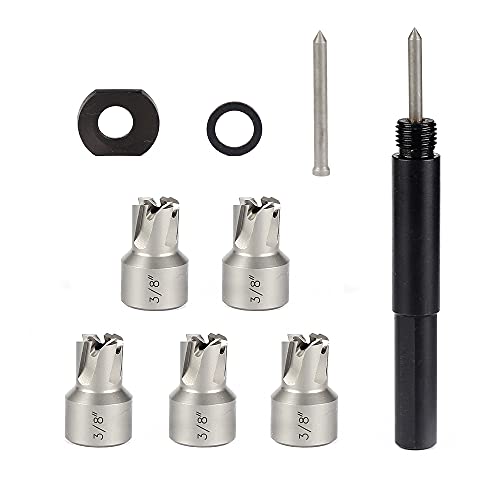
JESTUOUS 5-Pack Spot Weld Cutter Set 3/8″

Handook 14-Pack HSS Spot Weld Cutter 3/8″
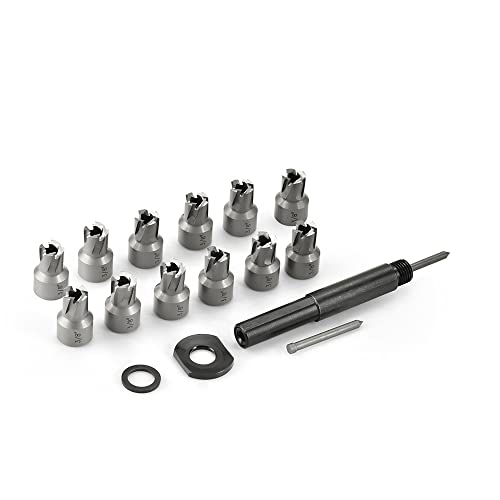
JESTUOUS 12-Pack Spot Weld Cutter Set 3/8″

Eastwood 5/16″ Pneumatic Spotweld Drill Bit

S&F STEAD & FAST Spot Weld Cutter Drill Bit 4-Pack

DDayuanwei 6PCS Spot Weld Drill Bit Set 5/16″
More Details On Our Top Picks
If you already own the matching Tool Aid 3/8″ rotary spot weld cutter, this pack of three replacement blades keeps your workflow moving without ordering a whole new arbor. Each blade is double-ended, so once one cutting edge dulls you flip the part and start fresh on the other side, doubling the working life of every piece in the box.
These are blades only, not a complete cutter assembly, which makes them an easy top-up for restoration shops that burn through edges during heavy weeks. If you have never owned a spot weld cutter before, you will want one of the full kits further down this list instead, since the Tool Aid pack assumes you already have a holder, arbor, and pilot pin ready to go.
The Case For It
- Double-ended design gives two cutting edges per blade, stretching the value of every purchase.
- Standard 3/8″ size fits the common Tool Aid rotary cutter arbor used in many home shops.
- Three-blade pack covers a typical weekend project without leaving you one dull edge short.
- Simple swap-out keeps downtime low when an edge finally gives up mid-panel.
Things To Consider
- Not a complete kit, so beginners will need a separate arbor and center pin before they can use these.
- Hardness is on the basic side, which is fine for thin sheet but may wear quickly on thicker modern steel.
Whose Shelf It Belongs On
Anyone who already runs the Tool Aid 3/8″ rotary cutter and wants a reliable supply of fresh blades on the bench.
Look Elsewhere When
The EEEkit 15-Piece Rotary Spot Weld Cutter Set is the better call for first-time owners since it ships with pins, holders, and a case.
The EEEkit set is the closest thing to a “starter for spot weld cutting” on this list, pairing two complete cutter assemblies with eleven replacement blades, two extra center pins, and a storage case. Open the box and you can go straight to the panel without rummaging for an arbor, hex shank, or pilot point.
For someone buying their first spot weld removal tool, that completeness is the real appeal. HSS (high-speed steel) construction keeps the cutting edges tough enough for thin auto body steel, while the hex shank (a six-sided tang that locks into a standard drill chuck without slipping) drops into any common 1/4″ hand drill. If you only tackle a panel once or twice a year, this set covers you for years.
The Practical Payoff
- Everything in one box means no second trip to order a missing center pin or arbor.
- Eleven spare blades plus two full cutter heads spread the workload across many panels.
- Hex shank fits ordinary 1/4″ chucks, so you do not need a specialty tool to drive it.
- Storage case keeps small parts from disappearing in the bottom of a toolbox drawer.
Worth Noting
- HSS at this grade is serviceable on standard sheet metal, but heavy production shops may burn through blades faster than premium options.
- Two extra pins is plenty for hobby use, though high-volume shops will still want to order more separately.
Key Specs
Who Should Grab It
First-time owners who want a complete out-of-the-box kit and occasional users who only drill a handful of welds a year.
Consider Something Else When
The S&F STEAD & FAST Spot Weld Cutter Drill Bit 4-Pack suits collision repair pros who need thicker, longer-lasting annular cutters.
For shops that go through spot weld cutters like pencils, the EONLION 14-pack trades a little individual blade quality for sheer supply. Each cutter is double-sided HSS with a 3/8″ cutting diameter and a standard 1/4″ hex shank, so you can keep working through dull edges by simply flipping the blade around on its arbor.
Where the EEEkit set ahead focuses on completeness, this bundle focuses on volume. It is the kind of pack a multi-bay collision shop or a vocational classroom can order once and forget about restocking for months. The trade-off is that the steel is competent rather than premium, so very thick modern steel may shorten edge life.
The Good Stuff
- Fourteen cutters mean far fewer reorder interruptions during a busy season.
- Double-sided geometry doubles the working life of every blade in the box.
- Standard 1/4″ hex shank fits the same drill chucks you already use.
- Per-piece cost lands well below most smaller packs on the market.
Small Caveats
- Steel grade is solid for typical sheet metal, but demanding production runs may see faster wear than premium offerings.
- No storage case, so keeping 14 small cutters organized takes a separate bin or drawer plan.
Made For
High-volume shops and instructors who go through spot weld cutters regularly and want a deep spare-parts drawer.
Reach For A Different Pick When
The Handook 14-Pack HSS Spot Weld Cutter offers a similar bulk count with tighter HSS tolerance for shops that want a slightly more controlled cut.
Sometimes you only need a handful of spot weld cutters on hand, and that is exactly the case the JESTUOUS 5-pack is built for. It includes five double-sided 3/8″ blades and a spare center pin, sized for 3/8″ or larger handheld drill chucks. The spring-loaded pilot pin helps guide the cutter onto the weld without wandering.
Compared to the deeper bulk options ahead, this set is easier to justify for occasional hobby work. You get enough blades to handle a small door panel or quarter panel swap without paying for inventory you will not use this year. The trade-off is that production environments will outpace five blades very quickly.
Everyday Wins
- Right-sized for a single weekend project rather than a full shop workload.
- Spring-loaded pin keeps the cutter centered on tough-to-see factory welds.
- Works with common 3/8″ handheld drill chucks already in most home toolboxes.
- Double-sided blade design stretches the life of each cutter.
A Few Limitations
- Only five blades means recurring users will reorder within a few projects.
- No storage case, so the small parts can scatter in a busy drawer.
Best Suited To
Weekend restorers and hobbyists who only drill a small number of spot welds each season.
Skip It When
The EEEkit 15-Piece Rotary Spot Weld Cutter Set gives first-time owners more headroom and a storage case for similar effort.
The Handook 14-pack sits in a similar bulk tier as the EONLION set above, but the steel grade and shank details are worth a closer look. Each blade is double-sided HSS with a 3/8″ cutting diameter, and the 1/4″ arbor has flats machined into the shank to keep it from spinning loose in the chuck during heavy cuts.
That anti-slip detail is small but real, since spot weld cutters live or die by how well they stay centered. If you have ever had a cutter walk sideways on a panel and score the surrounding sheet, the flats here directly address that frustration. For a regular home shop, this 14-pack offers a steadier cut than the cheapest options.
What Stands Out
- Flats on the 1/4″ arbor stop the cutter from spinning in the chuck under load.
- Double-sided HSS edges stretch working life across many welds.
- Bulk 14-pack handles multi-panel projects without a mid-job reorder.
- Standard 3/8″ cutting diameter matches most factory spot welds.
Honest Caveats
- No storage case is included, so organization is on you.
- Production shops with very high daily output may want a thicker annular cutter than this HSS profile offers.
Feature Snapshot
Who Will Love This
Active home restorers and small collision shops that want steady cutting without stepping up to a pneumatic tool.
Where Another Pick Suits Better
The Eastwood 5/16″ Pneumatic Spotweld Drill Bit is the smarter pick for production shops with an air compressor and a need for depth control.
JESTUOUS returns on the list with a deeper 12-pack built for sustained work. The cutting diameter is 3/8″ and the thread shank is also 3/8″, which differs from the hex-shank picks earlier and matters if your drill is set up for threaded arbors rather than quick-change hex systems.
The material list is wide, covering thin stainless steel, iron sheets, aluminum, alloy steel, and carbon steel, so the same pack moves between body panels, fabrication work, and small engine repairs. For a shop that does a little bit of everything, the broad material compatibility is the main draw.
The Upside
- Twelve blades comfortably cover multi-day restoration projects.
- Threaded 3/8″ shank works with drill setups designed for threaded arbors.
- Spring-loaded pilot pin keeps the cut on the weld, not the surrounding panel.
- Material list spans stainless, aluminum, and standard auto body steel.
Points To Note
- Threaded 3/8″ shank does not fit drill chucks expecting a hex or 1/4″ round arbor without an adapter.
- Twelve blades is generous but still below the largest bulk packs on this list.
The Right Fit
Restorers who already run a 3/8″ threaded arbor system and want a deep reserve of replacement cutters.
Swap It Out When
The EONLION 14-Pack Spot Weld Cutter Sets is the better bulk fit for hex-shank users who want even more cutters per box.
The Eastwood is the only air-powered tool on this list, and the moment you pick it up the difference shows. It runs on compressed air at roughly 4 CFM (cubic feet per minute, the volume of air the tool needs to operate), it has a hook-style backing feature that automatically advances the bit as the cut progresses, and a precise cutting depth adjustment so you can drill through the outer panel only without scoring anything underneath.
For shop owners who already have an air compressor plumbed to a bay, this is the cutter that changes the workflow. You set the depth, you pull the trigger, and the hook design advances the bit without you feeding it. In a home garage without an air line, however, it is the wrong tool for the job, since it will not run off a standard cordless drill.
The Value In It
- Hook-style backing automatically advances the bit, so the cut stays even across many welds.
- Precise depth adjustment protects underlying panels from accidental drilling.
- 5/16″ capacity handles both 1/4″ and 5/16″ welds without swapping bits.
- Pneumatic drive delivers consistent torque that hand drills struggle to match.
Things To Weigh
- Requires a shop air compressor and at least 4 CFM at operating pressure, so home users without a compressor are out of luck.
- Single-tool design means you wait on repairs rather than swapping a worn blade in seconds.
Technical Reference
Right Fit For
Professional collision and restoration shops with an air compressor bay and high daily panel throughput.
A Better Fit Elsewhere
The S&F STEAD & FAST Spot Weld Cutter Drill Bit 4-Pack is the better call for home users without an air compressor.
The S&F STEAD & FAST set steps up from the standard HSS blades earlier in the list and into a thicker, harder material. These cutters are made from M2AL high-speed steel (a high-speed steel alloyed with molybdenum for added hot hardness) hardened to HRC 66 (a Rockwell hardness rating on the C scale, where higher numbers mean a harder, more wear-resistant edge) and the wall thickness is greater than typical double-sided cutters. The brand positions them for over 150 welds per bit.
Annular geometry (a ring-shaped cutting edge that slices a circular groove rather than drilling a solid slug) matters here too, since the design is built to clear chips fast and avoid the panel distortion that cheaper cutters cause. If you have ever peeled back a panel only to find the underlying layer scored or warped, the geometry is the detail worth understanding. For demanding collision repair work, the four-pack is more expensive per piece but cheaper per weld.
Features That Help
- M2AL HSS at HRC 66 keeps an edge far longer than standard HSS blades.
- Thick walls resist flex on tough high-strength steel panels.
- Annular cutting geometry pulls chips clear and limits panel distortion.
- 3/8″ shank matches common drill setups for body shops.
Trade-Offs To Consider
- Four pieces per pack costs more per blade than larger HSS bundles, so casual users overpay for capacity they will not use.
- Harder steel is less forgiving on underpowered drills, so a steady hand drill or low-speed pneumatic driver works better than a high-RPM cordless.
Built With In Mind
Active collision repair and restoration specialists who want long edge life and clean cuts on modern high-strength steel.
Not Your Match When
The Handook 14-Pack HSS Spot Weld Cutter is a smarter pick for hobbyists who would rather have 14 affordable blades than 4 premium ones.
Closing the list is the DDayuanwei 6-piece set, the only pack at 5/16″ cutting diameter and the only one to ship with two useful length options. You get three bits at 3.1″ and three bits at 1.8″, so you can choose the shorter version for shallow bodywork and the longer version when the panel sits a few inches back from your drill.
That length flexibility solves a common frustration on inner wheel wells and boxed sections where a long bit will not fit. Compared to the 3/8″ packs above, 5/16″ is a smaller and less common factory weld size, so the set is a specialty addition rather than a primary cutter. If you occasionally run into 5/16″ welds and short-clearance spots, the 1.8″ bits pay for themselves fast.
Noteworthy Benefits
- Two length options solve tight-clearance jobs where a full-length bit will not fit.
- 5/16″ diameter covers less common factory welds that 3/8″ sets overshoot.
- Cobalt-toughened material resists heat build-up during repeated cuts.
- Six pieces balance portability and a usable spare reserve.
Potential Drawbacks
- Specialty 5/16″ size means it does not replace a primary 3/8″ cutter, so it is a second-tool purchase.
- No center pin or storage case is included, which is unusual at this piece count.
Spec Overview
Perfect Match For
DIY bodywork enthusiasts who specifically run into 5/16″ welds and tight inner-panel clearances during restoration.
Where A Sibling Pick Shines
The JESTUOUS 5-Pack Spot Weld Cutter Set is the better primary cutter for the more common 3/8″ weld size.
What To Weigh Before Picking A Spot Weld Cutter
A spot weld cutter is a small tool with a few large consequences. Pick the wrong size and you score the panel you are trying to save. Pick the wrong shank and it will not even fit in your drill. The basics below cover what actually matters when you compare options.
Cutting Diameter And Weld Size
Factory spot welds come in two common diameters: 3/8″ and 5/16″. Most of the picks above use 3/8″, since that is the dominant size on modern auto body panels. The DDayuanwei 5/16″ set is the exception, and it earns its place by solving the cases where a 3/8″ cutter is simply too large. Measure a couple of welds on a scrap panel before ordering, since oversizing the cutter removes more metal than needed and risks the panel flexing during the cut.
Shank Style And Drill Compatibility
There are three shank styles in this category: 1/4″ hex, 1/4″ round, and 3/8″ threaded. Hex shanks (a six-sided tang) slip into any standard drill chuck and resist slipping, which is why the EEEkit and EONLION sets use them. Threaded 3/8″ shanks like the JESTUOUS 12-pack require a matching arbor and tend to show up in body shop drills set up for threaded tooling. Before buying, check what your drill chuck actually accepts and whether you already own a matching arbor for any threaded option.
Material And Edge Life
HSS (high-speed steel) is the baseline and works fine for thin auto body steel. For thicker modern high-strength steel, M2AL or cobalt-toughened alloys last longer. The S&F STEAD & FAST set is the clearest example of a step up in material, and it costs more per piece but handles 150+ welds before dulling. For home users doing one panel a year, HSS is plenty. For shops, the harder alloys pay back the price difference in fewer blade swaps.
Drive Type: Hand Drill Or Pneumatic
Every pick on this list except the Eastwood runs on a standard hand drill or cordless drill. Pneumatic tools, like the Eastwood reviewed above, deliver consistent torque, automatic bit advance, and depth control, but they need a compressor and a shop environment. Home users almost always do better with an electric drill and a blade pack, while production shops benefit from the speed and consistency of a dedicated air tool.
Sharpening Your Decision On These Picks
Common Shopping Slip Ups
The most frequent mistake in this category is buying a blade pack without confirming the shank style. A 1/4″ hex cutter will not lock into a drill set up for 3/8″ threaded arbors, and a 3/8″ threaded bit will not seat in a standard keyless chuck without an adapter. Check your drill before you order.
Another pitfall is choosing the cheapest bulk pack and assuming more blades means better value. If the steel is soft, the blades dull quickly and the per-weld cost climbs back up. For occasional use, that does not matter, but for any project longer than a single weekend, the harder HSS and M2AL alloys hold their edge long enough to justify a slightly higher per-piece price.
What The Higher Tier Buys
Premium cutters like the S&F STEAD & FAST set and the Eastwood pneumatic tool cost more because they solve problems cheaper options do not. The S&F set uses M2AL steel with a thick annular wall, which translates to longer edge life, fewer mid-panel blade swaps, and cleaner cuts on modern high-strength steel. The Eastwood adds automatic bit advance and precise depth control, so the cut stops at the outer panel without scoring anything underneath.
For a hobbyist doing a single quarter panel, the upgrade rarely pays for itself. For a shop doing several panels a week, the saved time on blade swaps and avoided rework on damaged panels returns the price difference within a few projects. Match the tier to the volume of work, not to a brand or finish.
Frequently Asked Questions
What size spot weld cutter do most people need?
The 3/8″ cutting diameter covers the majority of factory spot welds on domestic and import vehicles, which is why most kits on this list use that size. If you specifically work on older or European panels with 5/16″ welds, the DDayuanwei 5/16″ set is a useful secondary tool rather than a primary one.
Can a regular drill drive a spot weld cutter?
Yes, a standard cordless or corded drill with a 1/4″ or 3/8″ chuck handles the hex and round shank cutters in this category. Use a moderate speed and steady pressure rather than running the drill at full RPM, since high speed generates heat and shortens blade life. The Eastwood pneumatic model is the only pick on this list that requires an air compressor.
How long does a spot weld cutter blade last?
A standard HSS blade in thin auto body steel usually handles a few dozen welds before dulling, and flipping the blade doubles that. Premium alloys like the M2AL in the S&F STEAD & FAST set push past 100 welds per bit, and the cobalt-toughened DDayuanwei bits land somewhere in between. Storage, drill speed, and panel hardness all shift those numbers in practice.
Do I need a pilot pin with a spot weld cutter?
A pilot pin (sometimes called a center pin or spring-loaded needle) guides the cutter onto the weld so the cut does not wander. Most of the kits above include at least one. The Handook and EONLION bulk packs focus on blades only, so you would need a separate pin or arbor setup to run them.
What is the difference between a spot weld cutter and a regular hole saw?
A regular hole saw cuts through solid material, while a spot weld cutter uses an annular (ring-shaped) blade that only removes a thin circular groove. That geometry is the key, since it lets the cutter shear the weld nugget and stop, rather than drilling all the way through the panel and damaging the second layer of sheet metal underneath.




