


Picking up a paint roller for the third weekend in a row gets old fast. Spray guns cut big painting jobs down to size, whether you’re refreshing kitchen cabinets, sealing a fence, or touching up a project car in the garage. The trick is matching the right tool to the job, because a gravity-feed detail gun and a wide-pattern wall sprayer live in very different worlds. This guide walks through nine solid options across the price and skill spectrum, plus a few accessories that make the actual spraying part less painful.
An Overview Of The Picks

Fuji Spray 2202 Semi-PRO 2 HVLP System

Wagner Control Pro 130 HEA Sprayer

Graco 60-Mesh Spray Gun Filter SG2/SG3

Classic X LVLP Spray Gun Regular Kit

Classic X LVLP Spray Gun Starter Kit
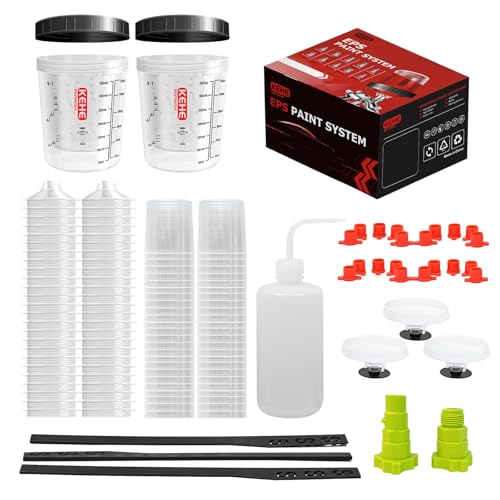
Disposable Paint Cups 12 oz 50-Liner Kit

Fuji Spray 2804-T75G Mini-Mite 4 Platinum

Wagner Control Spray QX2 HVLP Stain Sprayer

Wagner FLEXiO 570 HVLP Sprayer
More Details On Our Top Picks
The Fuji Spray 2202 Semi-PRO 2 sits in a comfortable middle ground for home users who want HVLP results (HVLP stands for High Volume Low Pressure, a spraying method that moves lots of air at low pressure to reduce bounce-back and waste) without renting a commercial rig. The included 1.3mm air cap ships preinstalled, which gets you staining or finishing trim out of the box. A 25-foot hose gives you room to wander around a kitchen island or full bedroom without dragging the turbine behind you.
Compared to the Wagner Control Pro 130 below, this is a finish-quality tool, not a coverage-per-minute tool. Cabinet refishers, door painters, and anyone who cares about a smooth final coat will appreciate the non-bleed gun, the adjustable pattern fan control, and the handy gun holder built into the metal turbine case. For most homeowners running a weekend project, that combination hits the sweet spot.
Benefits That Matter
- Adjustable fan pattern lets you dial a tight pencil line for trim or open up for wide panels.
- Bottom-feed cup keeps the gun light on long overhead sessions like ceiling work.
- Metal turbine case with built-in gun holder reduces bench clutter in a crowded garage.
- Air control valve on the hose cuts down on overspray and bounce-back in tight corners.
Things To Consider
- Turbine systems are louder than airless rigs, so ear protection matters during long runs.
- Not ideal for thick latex wall paint without thinning, unlike the airless Wagner below.
Key Specs
Whose Shelf It Belongs On
Homeowners refinishing cabinets, doors, and furniture who want a turbine-driven HVLP system that feels closer to a pro setup than a DIY box-store special.
Where Another Pick Suits Better
For whole-house exterior repaints, the Wagner Spraytech Control Pro 130 HEA moves more paint in less time and handles unthinned latex straight from the can.
When the project scales up to a full house exterior or a sprawling backyard deck, the Wagner Spraytech Control Pro 130 HEA trades finesse for raw output. HEA stands for High Efficiency Airless, a pump-driven setup that pushes paint at high pressure through a small tip, which is why this rig can spray unthinned latex and stain right out of the can. Setup is intentionally low-stress, so first-time users can get paint on the wall before the coffee gets cold.
Where the Fuji 2202 above focuses on fine finishes, the Control Pro 130 chases coverage. The low-overspray claim holds up in practical terms thanks to the HEA pump technology, meaning less masking tape and drop cloth fuss. For mid-size to large interior rooms and full exterior repaints, the time saved on prep almost justifies the unit on its own.
Key Advantages
- Sprays unthinned paints and stains, which removes a frustrating prep step.
- Low-overspray output cuts down on masking and airborne mist.
- Continuous painting flow suits long fence runs and tall exterior walls.
- Quick setup makes it approachable for homeowners new to airless spraying.
Points To Keep In Mind
- Airless pumps need thorough flushing after each use, and skipped cleaning is the most common cause of clogs.
- Not designed for detailed trim work the way the Fuji 2202 or Classic X LVLP guns are.
Right Fit For
Homeowners tackling a full exterior repaint, a long deck resurface, or a multi-room interior refresh where speed matters more than mirror finishes.
A Better Fit Elsewhere
For cabinet refinishing where atomization quality is king, the Fuji Spray 2202 Semi-PRO 2 delivers a smoother final coat on smaller, detail-heavy surfaces.
Not every spray gun entry has to be a full rig, and the Graco 60-Mesh Spray Gun Filter proves it. This is a replacement filter made for the Graco SG2 and SG3 spray guns, designed to catch debris before it reaches the nozzle. The 60-mesh rating (a measure of how fine the screen weave is: higher numbers mean finer filtration) sits in the sweet spot for latex and enamel coatings, where stray particles are the usual cause of spattery, uneven patterns.
Replacing a filter at the 20% clogged mark is a small habit that pays off in pump life and finish quality. Anyone already running a Graco handheld sprayer should keep a few of these on the bench, because nothing derails a quick touch-up faster than a tip that suddenly starts spitting.
Real-World Strengths
- Traps paint debris before it reaches the tip, which directly improves finish consistency.
- Extends pump life by keeping grit out of moving parts over months of use.
- Drop-in fit for the Graco SG2 and SG3 series avoids any guesswork.
Honest Caveats
- Useless without a compatible Graco gun, so this only matters for current SG2 or SG3 owners.
Who It Suits Best
Existing Graco SG2 or SG3 owners who want to cut down on tip clogs and keep their finish quality consistent across multiple project rounds.
Reach For A Different Pick When
Anyone running a Wagner or Fuji system should skip this and look at brand-matched filters, since the housing geometry is not interchangeable across manufacturers.
The Classic X LVLP Spray Gun (the Regular Kit version) targets the finish-conscious user: think auto touch-ups, furniture refinishing, and small cabinet runs. LVLP stands for Low Volume Low Pressure, a technique that uses a modest compressor to push fine atomization at lower pressures, which gives you decent transfer efficiency without needing a giant turbine. The kit ships with three nozzle sizes (1.3, 1.5, and 1.7mm), so you can swap between clear coats, base coats, and primers without buying extras.
Where the Wagner Control Pro 130 is built for raw coverage, this gun is built for the opposite: atomization quality on smaller, more controlled jobs. It needs a separate air compressor, which is the trade-off most buyers accept in exchange for finish quality. The three-nozzle bundle is the practical win, since matching nozzle size to coating is the single biggest factor in getting a clean, run-free result.
Well-Handled Touches
- Three included nozzles cover primers, base coats, and clear coats without extra purchases.
- LVLP atomization reduces bounce-back in tight indoor spaces like a one-car garage.
- Compact gun body suits detail panels on furniture and small auto sections.
Where It May Fall Short
- Requires a compatible air compressor, which is a separate cost if you don’t already own one.
- Slower than the airless Wagner rigs on broad wall or fence areas.
- Fine atomization rewards careful trigger control, so first sessions can produce runs on vertical panels.
Key Specs
Made For
Garage hobbyists and furniture refinishers who already own or plan to buy a small compressor and want pro-style finish quality on smaller projects.
Skip It When
Homeowners with a big fence or full exterior job ahead will find the Wagner Spraytech FLEXiO 570 far more practical, since it runs without a separate compressor.
The Classic X LVLP Starter Kit offers the same gun platform as the Regular Kit above, but pairs it with the basics a first-time sprayer actually needs. It keeps the learning curve approachable for someone who has never held a finish gun before, and the LVLP design forgives a lot of trigger mistakes that would show up immediately with a higher-pressure HVLP setup. For a small workshop or weekend project car, it punches above what the price tier suggests.
Versus the Regular Kit, the trade-off is accessory depth. You may find yourself buying a few extra items later as your projects grow, but the starter path is the right call for a first LVLP gun. The finish quality ceiling is genuinely high, and atomization stays consistent across base coats and clears when you match the right nozzle.
Useful Highlights
- Forgiving atomization for users still learning trigger and distance control.
- Same gun family as the Regular Kit, so upgrading accessories down the line stays simple.
- Compact form factor fits comfortably in smaller hands during long sessions.
Practical Considerations
- Starter bundle may require additional accessories for specific coatings or larger projects.
- Still needs an external compressor, just like the Regular Kit version above.
Feature Snapshot
Who Should Grab It
First-time sprayers stepping into finish work for furniture, small auto panels, or DIY craft projects who want a forgiving gun without overpaying for extras.
Look Elsewhere When
If you know you’ll be spraying multiple coating types out of the gate, the Regular Kit’s three-nozzle bundle offers more flexibility for a similar entry price.
Disposable paint cups rarely get top billing, but anyone who has spent 20 minutes cleaning a cup between colors knows they earn their keep. This 12-ounce (350ml) kit ships with 50 disposable liners, lids with built-in strainers, hard outer cups, retainer rings, sealing plugs, and adapters. Compatible with both HVLP and LVLP setups, it covers a lot of gun brands without forcing a rebuild of your existing rig.
It pairs naturally with the Classic X LVLP guns above and works with most Wagner handheld cups too. The calibration lines on the cup walls help you mix paint and hardener at common ratios, which is the kind of small detail that prevents costly color-matching errors. If your project involves three or more color changes, this kit earns its cost in saved solvent and time.
Practical Pluses
- Built-in strainers in the lids catch debris that would otherwise clog fine tips.
- Calibration lines simplify mix ratios for two-part coatings like clear and primer.
- Compatible with HVLP and LVLP setups, including the Classic X and most Wagner handhelds.
Some Limits To Know
- Single-use liners create ongoing waste compared to reusable hard cups.
- Adapter fit may require a check against your specific gun model before committing.
Best Suited To
Shoppers running multi-color projects or switching between primer, base, and clear who want faster color changes without the cleanup tax.
Consider Something Else When
If your work is single-color and you only need one or two cups, a reusable gravity-feed cup is more economical long-term.
The Fuji Spray 2804-T75G Mini-Mite 4 Platinum is the step up for users who already know they want a gravity-feed gun and a quieter turbine. The T75G gun (gravity-feed means the cup sits on top of the gun, so paint feeds downward by gravity, improving flow for detail work) includes a side pattern control knob and an ergonomic stay-cool handle, which matters when you’re halfway through a five-hour refinish session. The Platinum turbine features Fuji’s Heat Dissipation Chamber, a design that pulls heat away from the motor to keep the air path cooler for longer.
Compared to the Fuji 2202 above, this rig trades the bottom-feed cup for a gravity gun, which is the preferred setup for fine detail work on smaller panels. The 25-foot hose is the same, and the metal case with gun holder still keeps the bench organized. For users who spray long enough to notice heat creep in cheaper turbines, the Platinum tier earns its keep.
What Earns Its Place
- Heat Dissipation Chamber keeps the air cooler, which helps atomization on long runs.
- Gravity-feed gun reduces wrist fatigue on overhead and vertical detail panels.
- Side-mounted pattern control knob is easier to reach mid-spray than dial-down designs.
Trade Offs
- Premium positioning pushes it above casual DIY budgets.
- Still turbine-based, so the noise floor is higher than a compressed-air setup.
Quick Facts
Perfect Match For
Serious finishers running multi-hour cabinet or furniture sessions who need a cooler-running turbine and the precision of a gravity-feed gun.
Swap It Out When
For weekend DIYers with shorter projects, the Fuji Spray 2202 Semi-PRO 2 covers the same HVLP category at a friendlier entry tier.
The Wagner Spraytech Control Spray QX2 is purpose-built for outdoor staining, where speed and pattern flexibility matter more than mirror finishes. Three spray pattern settings (horizontal, vertical, and narrow round) cover fence pickets, deck boards, and lattice without swapping tips mid-project. The HVLP delivery keeps stain on the wood rather than drifting into the neighbor’s yard, assuming a calm day.
For a first-time homeowner staring down a tired gray deck, this sprayer is a sensible middle step. It runs faster than brushing, holds enough paint for a small project without constant refills, and the cleanup is straightforward. Compared to the larger FLEXiO 570 below, the QX2 leans lighter and simpler, which suits homeowners who only need it a few times a year.
Features That Help
- Three pattern settings cover fence, deck, and detail trim without changing tips.
- HVLP delivery reduces drift on outdoor stain jobs.
- Compact build stores easily in a garage shelf between project seasons.
Worth Bearing In Mind
- Best suited to stains and thinner coatings; thicker latex paints call for a heavier rig.
- Windy outdoor days affect pattern accuracy more than indoor sprayers.
Feature Rundown
Who Will Love This
Homeowners with a fence, deck, or pergola staining day ahead who want faster coverage than brushing without investing in a full airless rig.
Not Your Match When
For whole-house exterior paint jobs with thick latex, the Wagner Spraytech Control Pro 130 handles unthinned paint more efficiently.
The Wagner Spraytech FLEXiO 570 closes the roundup as a do-most-things handheld HVLP. The iSpray nozzle handles broad surfaces like walls, ceilings, and siding without forcing a constant refill, while a detail nozzle swaps in for trim, doors, and smaller craft projects. The turbine lives in a separate base, so the gun itself stays light enough to maneuver in awkward spots like stairwell ceilings or tall closet walls.
Where the QX2 above focuses on outdoor stain, the FLEXiO 570 is comfortable both inside and out. Cleanup is the often-overlooked strength: a few removable parts and a quick flush are usually enough to get back to a clean state. For homeowners who want one tool that covers walls in the morning and a small furniture piece in the afternoon, this is a practical all-rounder.
Notable Gains
- Dual nozzles cover wide surfaces and detail work in a single kit.
- Sprays most unthinned paints, which removes a frustrating prep step.
- Removable parts simplify cleanup compared to fixed-hose designs.
Worth Noting
- Not as fast on very large exteriors as the airless Control Pro 130.
- Pattern settings take a few test passes to dial in on a new coating.
Built With In Mind
DIYers bouncing between interior rooms, ceilings, fences, and small furniture projects who want a single sprayer instead of a garage full of tools.
Another Choice May Suit
For dedicated exterior repaint days, the Wagner Spraytech Control Pro 130 HEA pumps more paint per minute and handles larger jobs in fewer passes.
What To Weigh Before Picking A Home Spray Gun
Match The Sprayer Type To The Job
The single biggest decision is HVLP turbine versus airless pump. HVLP units like the Fuji 2202 and Classic X LVLP guns prioritize atomization quality, which matters on cabinets, doors, and detail finishes. Airless rigs like the Wagner Control Pro 130 chase coverage, pushing unthinned paint across broad walls, siding, and fences. Picking the wrong category usually means either slow finish work on a coverage tool, or rough overspray on a finish tool.
Think About Power Source And Portability
A handheld HVLP like the FLEXiO 570 only needs a wall outlet and rolls easily between rooms. A Classic X LVLP gun needs a separate air compressor, which is a real added cost for new buyers. Airless pumps are the heaviest, and they’re best set up in one spot with a long hose. For apartment dwellers, lighter handhelds usually make more sense than full turbine rigs.
Don’t Forget Cup System And Cleanup
Disposable cup systems like the 50-liner kit cut color changeover time, but they create recurring cost and waste. Reusable hard cups are cheaper long-term but require thorough cleaning. Factor in the cleanup you can commit to, because the best sprayer in the world is frustrating if cleaning takes longer than the project itself.
Where Shoppers Go Wrong And When The Upgrade Pays Off
Common Buying Slip Ups
The most common mistake is buying a coverage tool for a finish job, or a finish tool for a coverage job. Decorative cabinets deserve LVLP or HVLP; whole-house exteriors need airless. Another trap is underestimating prep work: even low-overspray sprayers need masking, drop cloths, and a calm day outdoors. Skipping that prep is what causes the dreaded overspray-on-the-driveway story.
When Paying More Pays Off
Higher-tier models like the Fuji 2804-T75G Mini-Mite 4 Platinum add features that matter on long sessions, including heat-dissipating turbines and ergonomic stay-cool handles. If your project stretches past two or three hours, those upgrades reduce fatigue and keep atomization consistent. For one-off weekend staining, the simpler QX2 or FLEXiO 570 covers the job without the extra cost.
Frequently Asked Questions
What Is The Difference Between HVLP And LVLP Spray Guns?
HVLP (High Volume Low Pressure) uses a turbine or large compressor to move high air volume at lower pressure, reducing overspray. LVLP (Low Volume Low Pressure) uses a smaller compressor and lower air volume, which works well for fine finishes in compact workshops.
Can Home Spray Guns Handle Latex Paint Without Thinning?
Airless sprayers like the Wagner Control Pro 130 push unthinned latex directly from the can. HVLP and LVLP guns usually need thinning, especially for thicker wall paints, to avoid clogs and rough patterns.
How Do I Prevent Tip Clogs During A Project?
Use strainers, clean filters regularly, and flush the gun between color changes. The Graco 60-mesh filter and the disposable cup system with built-in strainers both help catch debris before it reaches the tip.
Are Handheld Spray Guns Powerful Enough For Whole Rooms?
Yes, modern handhelds like the Wagner FLEXiO 570 handle most interior walls and ceilings. They take longer than airless rigs on very large spaces, but the convenience is hard to beat for typical home projects.
What Safety Gear Should I Wear While Spraying?
A respirator rated for organic vapors, safety glasses, and gloves are essential. Spraying in a ventilated area or outdoors further reduces exposure to fine mist and fumes.




