


Rolling paint across a wall works, until the second story, the textured ceiling, or the dozen trim edges start eating your weekend. A handheld spray gun can cut that time down dramatically and lay down a finish that brushes and rollers struggle to match, but only if the tool matches the job. This roundup looks at eight sprayers worth considering for interior projects, from quick touch-ups to whole-room repaints, with a candid look at who each one suits and where it falls short.
A Side-By-Side Look

Fuji Spray 2202 Semi-PRO 2 HVLP Spray System

GRACO TrueAirless 315 Spray Tip & 15″ Extension

Wagner Control Pro 130 HEA Paint & Stain Sprayer
Tilswall 800W HVLP Electric Spray Gun (Blue)
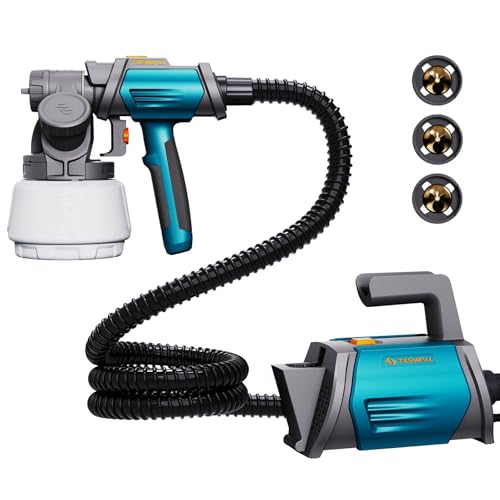
Tilswall Shark800 HVLP 800W Electric Spray Gun

Wagner Control Spray QX2 HVLP Stain Sprayer

Wagner FLEXiO 570 HVLP Paint & Stain Sprayer

CUIOFREE 1000W Electric Spray Paint Gun
Inside Each Recommended Option
The Fuji Spray 2202 sits in a different category from most picks on this list. It uses a separate turbine unit connected by a long hose, which means the gun itself stays light in your hand during long sessions. For interior cabinet work, built-in shelves, or furniture refinishing, that weight difference becomes noticeable after an hour of spraying.
HVLP stands for High Volume, Low Pressure, a method that moves a large amount of air at low speed to carry paint gently onto the surface. The result is a softer spray with finer atomization (the way liquid breaks into tiny droplets), which suits detailed work and reduces the kind of bounce-back you get with higher-pressure systems. You get a 1-quart bottom-feed cup that keeps paint flowing as you tilt the gun, and a 25-foot hose that lets you set the turbine outside the room to cut down on noise and heat.
Standout Benefits
- Adjustable fan pattern lets you shift from a narrow pencil spray to a wide fan without swapping parts
- Metal turbine case with a built-in gun holder keeps the workspace organized
- Included air control valve trims overspray on detailed interior work
- 1.3mm air cap is well matched to thin lacquers, stains, and fine finishes
Things To Consider
- Turbine adds noise and takes up floor space, less convenient for quick one-wall touch-ups
- Thicker interior latex paints may need thinning to flow properly
Key Specs
Who It Suits Best
Homeowners refinishing cabinets, doors, or trim who want finish-shop quality and don’t mind a slightly larger setup.
Consider Something Else When
Anyone repainting a single bedroom wall will find the Wagner Control Pro 130 HEA easier to drag out and put away.
This entry is a bit different from the others. Rather than a full sprayer, the Graco TrueAirless 315 bundle is a tip and extension upgrade for anyone who already owns a compatible Graco Magnum airless sprayer. The 315 tip produces a 6-inch fan pattern with softer edges, useful for narrow walls, hallways, and the kind of tight interior runs where a wider tip wastes paint.
The 15-inch aluminum extension attaches without tools and adds reach for ceilings, tall stairwells, and the upper edge of two-story foyers. The aluminum keeps the extension light, so wrist fatigue stays manageable during overhead work. For interior projects where ladder repositioning eats more time than actual spraying, this combo solves a specific, annoying problem.
The Helpful Details
- 6-inch spray pattern is sized for narrow interior runs
- Tool-free attachment to compatible Graco Magnum sprayers
- Lightweight aluminum keeps the extension easy on the wrist overhead
Points To Keep In Mind
- Only works with specific Graco Magnum airless models, so it is not a stand-alone purchase
- Best suited to medium-viscosity paints and stains rather than thick latex
Best Suited To
Existing Graco Magnum owners tackling high walls, vaulted ceilings, or stairwells who want to skip more ladder work.
Not Your Match When
Shoppers starting from scratch will get more value from the Wagner FLEXiO 570, which is a complete sprayer system.
Wagner’s Control Pro 130 uses High Efficiency Airless (HEA) technology, a system that pressurizes paint at lower PSI than traditional airless sprayers while still pushing it through a small tip. The result is less bounce-back, less fog in the room, and a finish that lands closer to a brushed look without the visible stroke marks. For an open living room or a long hallway wall, that lower overspray means you spend less time masking off the ceiling and trim.
Setup is intentionally straightforward. You pour in unthinned paint from the can, dial in pressure with the onboard control, and start spraying. The unit handles both interior latex and exterior stains, so once the inside is done, you can move straight to a deck or fence without swapping tools. Compared to the entry-level Tilswall models further down this list, the Control Pro 130 is heavier and louder, but it covers ground much faster on a full-room repaint.
What Works In Its Favor
- Sprays unthinned latex straight from the can, no viscosity cup needed
- Reduced overspray keeps masking time shorter and air clearer indoors
- Pressure control dial lets you tune output to the surface and material
- Doubling as a stain sprayer for outdoor projects adds long-term value
Small Caveats
- Airless systems need thorough flushing after each use, especially with latex
- Heavier than handheld HVLP units, more of a stationary floor tool
Feature Snapshot
Right Fit For
DIYers repainting full rooms, multiple bedrooms, or open-plan living areas who want faster coverage with less masking.
Swap It Out When
Cabinet or furniture refinishing calls for the finer atomization of the Fuji Spray 2202 Semi-PRO 2.
The Tilswall 800W is built for someone who has never held a spray gun before. It is handheld, light, and the controls are limited to a flow dial, a pattern adjustment, and a power switch. You can learn the basics on a scrap piece of cardboard and feel ready to point it at a wall within ten minutes.
At 800 watts, it falls into the casual DIY category rather than a contractor tool. Interior projects like a small bedroom, a hallway, or a set of interior doors will fit comfortably within its range. The trade-off is that thicker latex paints often need to be thinned with water or a conditioner to feed smoothly, and most users report that cleaning the nozzle within 15 minutes of finishing helps prevent clogs on the next project.
Practical Pluses
- Lightweight handheld design is easy to maneuver in tight rooms
- Three nozzle sizes cover most household paint and stain viscosities
- Adjustable flow and pattern dial keep settings simple
- Removable parts make cleaning manageable for first-time users
Honest Caveats
- Thick interior latex typically requires thinning before spraying
- Smaller paint container means more refills on multi-room jobs
Who Will Love This
First-time sprayers tackling a single small room, a closet refresh, or a furniture flip who want a forgiving learning curve.
Look Elsewhere When
A whole-house repaint is in the cards, and the Wagner Control Pro 130 HEA will save significant time.
The Shark800 sits right next to its Tilswall sibling on the spec sheet, but the design intent feels tilted more toward smaller, more controlled jobs. The dial cluster is positioned for one-handed adjustment, which is genuinely useful when your other hand is bracing a piece of furniture or steadying a door on sawhorses.
For interior projects like refinishing a side table, painting a small accent wall, or refreshing wooden cabinet doors, the lower flow rate becomes a feature rather than a limitation. You can lay down thin coats that build up gradually instead of soaking the surface. Owners commonly recommend keeping the included viscosity cup (a small graduated container that measures how fast a liquid drains, used to check if paint is thin enough to spray) handy to dial in the right paint consistency before each session.
Points In Its Favor
- One-handed dial control leaves a free hand for bracing workpieces
- Lower flow rate supports thin, buildable coats on furniture
- Compact body fits into tighter workshop storage than floor units
Possible Compromises
- Output is slower than the Wagner Control Pro 130 HEA for whole-room work
- Cleaning within minutes of finishing is needed to avoid dried-paint clogs
Perfect Match For
Crafters and hobbyists refinishing furniture or tackling accent walls where a lighter touch matters more than raw speed.
Another Choice May Suit
Larger wall-to-wall projects will move faster with the Wagner FLEXiO 570, which pairs a similar handheld form with more output options.
Wagner positions the QX2 toward staining work, but the three spray patterns make it just as useful for interior trim, interior doors, and narrow wall sections. The horizontal fan is great for door panels, the vertical fan handles tall runs of baseboard, and the round cone fits corner work and detail edges.
HVLP tech here is the low-pressure, high-volume kind, so paint lands softly on the surface rather than blasting off it. For interior use, that means less drift onto nearby ceilings and floors when you are spraying close to other finished surfaces. It is not designed for full-room coverage the way the Control Pro 130 HEA is, but for the kind of trim and door work that eats up an afternoon with a brush, the QX2 replaces hours with minutes.
The Value In It
- Three spray patterns cover most interior detail scenarios without swapping nozzles
- Low-pressure output reduces drift onto adjacent finished surfaces
- Handheld form factor stores easily in a closet or utility shelf
Worth Noting
- Cup capacity is small, expect more refills on longer runs
- Not built for whole-wall coverage, better paired with a roller for big surfaces
Built With In Mind
Homeowners focused on staining or painting interior trim, doors, and tight detail areas where pattern control matters most.
Where Another Pick Suits Better
Anyone spraying a full accent wall will find the wider output of the CUIOFREE 1000W more efficient.
The FLEXiO 570 is the sprayer for someone whose project list keeps changing. It ships with two nozzles: the iSpray nozzle for broad interior walls and exterior siding, and a detail nozzle for cabinets, furniture, and smaller finish work. Swapping nozzles takes seconds and re-tunes the airflow and pattern width to match the task.
For interior use, the iSpray nozzle handles unthinned latex and the kind of low-overspray output that indoor painting demands. The detail nozzle steps down to a tighter pattern for doors, window trim, and built-in shelving. Owners commonly find that this two-nozzle design replaces the need to own two separate tools, which is the real argument for the FLEXiO line over the single-purpose picks in this roundup.
Notable Upsides
- Two included nozzles cover broad surfaces and fine detail in one kit
- Sprays unthinned latex and most stains straight from the container
- Adjustable flow and air settings let you tune output to the job
- Removable parts make post-project cleanup faster than a brush
Where It May Fall Short
- Blower unit adds some noise compared to smaller handheld sprayers
- Carrying the turbine base between floors takes a bit of effort on multi-level projects
Quick Facts
The Right Fit
Homeowners juggling a mix of interior and exterior projects who want one tool that adapts to both broad surfaces and fine detail.
Skip It When
A dedicated cabinet refinishing project is the priority, and the Fuji Spray 2202 Semi-PRO 2 will deliver a smoother finish.
The CUIOFREE lands at the heavier end of the handheld HVLP category, with a 1000W motor aimed at higher output and faster coverage. For interior walls that need a quick turnaround, the extra power shortens the time the room is out of commission, which matters in homes where the family is still using the space during the project.
The kit ships with multiple nozzle sizes and a viscosity cup, which doubles as a built-in reminder to test paint thickness before each session. That extra step is worth taking. Interior latex straight from the can will be too thick for many HVLP setups, and a quick viscosity check prevents the half-clogged, splattery pattern that ruins an otherwise smooth finish. Owners commonly note that cleaning the gun right after each use keeps the nozzles flowing smoothly on the next project.
Strengths Worth Knowing
- Higher wattage supports faster coverage on larger interior walls
- Multiple nozzle sizes handle a range of paint viscosities and patterns
- Viscosity cup included for verifying paint thickness before spraying
Things To Weigh
- Heavier in the hand than 800W handheld options during long sessions
- Powerful airflow needs more masking on adjacent surfaces than lower-output sprayers
Who Should Grab It
Shoppers with bigger interior projects who want handheld convenience without giving up the speed of a higher-output motor.
Reach For A Different Pick When
Mostly staining and detail work is on the list, and the Wagner Control Spray QX2 will feel more precise.
What To Match Your Project To Before You Buy
Picking a spray gun comes down to a few honest questions about the project in front of you. The right tool for a one-room refresh is rarely the right tool for a furniture flip, and the specs that matter shift depending on whether you are spraying latex, stain, or lacquer.
Sprayer Type And How It Feels In The Hand
HVLP units (high volume, low pressure) use a turbine or built-in fan to push a large volume of air at low pressure, which lays paint down gently with less bounce-back. They are a strong fit for interior work where you cannot afford to fog the entire room. Airless sprayers pressurize paint at much higher PSI, which speeds up coverage on large walls but kicks up more overspray. For interior use, lower overspray almost always wins, which is why most of the picks on this list lean HVLP.
Paint Compatibility And Viscosity
Thick interior latex straight from the can will clog many handheld HVLP units. Some sprayers, like the Wagner Control Pro 130 HEA and the FLEXiO 570, are designed to handle unthinned paint, while others require a viscosity check. A viscosity cup (the small measuring cup included with several picks) tells you how fast paint drains, and that single test prevents most of the clogs and spit-pattern issues beginners run into.
Surface Area And Room Layout
A small bedroom with one accent wall is a different job from an open-plan living space with vaulted ceilings. Larger continuous surfaces reward higher-output units, while tight rooms with lots of trim reward lower-flow, pattern-adjustable tools. Reach matters too: tall ceilings and stairwells eat time on a ladder, and a 15-inch extension tip (like the Graco Magnum bundle above) or a long gun can save real hours.
Cleanup Reality
Every sprayer on this list requires a post-use flush, and the time it takes varies with the design. Removable nozzle and cup parts clean faster than fixed assemblies. Latex paint dries quickly, so cleaning within 15 minutes of finishing keeps the next session painless. Stains and lacquers need solvent-based flushing, which adds a step and some ventilation planning.
Key Considerations Across These Picks
Where Shoppers Go Wrong
The most common slip-up is buying a sprayer designed for exterior staining when the project is an interior wall. Exterior-focused units often push too much volume and too little control for indoor work, leaving a fine mist on the ceiling and any surface you forgot to mask. The second mistake is skipping the viscosity test, which is a 30-second check that prevents most clogs and uneven patterns on a handheld HVLP. Finally, underestimating cleanup time leads to dried paint in the nozzle, which shortens the life of the tool and shows up as poor performance on the next project.
What The Higher Tier Buys
Moving up to a premium pick like the Fuji Spray 2202 Semi-PRO 2 buys finer atomization, the kind that cabinet finishers and furniture restorers rely on for a near-showroom surface. The trade-off is size, cost, and a setup that is more involved than a handheld. For most interior walls, the jump is not worth it. For finish-quality work on wood, the upgrade pays back in fewer coats and a noticeably smoother result.
Frequently Asked Questions
Do I need to thin interior latex paint before spraying?
Most handheld HVLP units require some thinning because the fluid path is narrower than an airless system. Check the included viscosity cup or the sprayer’s manual for the target drain time, and add small amounts of water until the paint flows through the cup within the recommended range.
How do I prevent overspray on nearby surfaces?
Masking is the simplest answer, and it is worth doing thoroughly on interior projects. Lower-pressure HVLP units and airless HEA designs like the Wagner Control Pro 130 HEA also produce less drift, so choosing the right sprayer for the job cuts down on the masking work in the first place.
Can one spray gun handle both paint and stain?
Several picks on this list are rated for both, including the Wagner FLEXiO 570, the Control Spray QX2, and the Tilswall Shark800. The trade-off is that you need to flush the system thoroughly between water-based and oil-based materials to avoid contamination and clogs.
How long does cleanup take after a typical interior session?
For a small to mid-sized room with a handheld HVLP, plan on 10 to 20 minutes of flushing and part-drying once spraying is done. Cleaning the gun promptly, ideally within 15 minutes of finishing, keeps the nozzles clear and shortens the next setup.
Is an HVLP or airless sprayer better for interior walls?
For most interior wall projects, HVLP offers enough speed with much less overspray, which matters when you are working in a lived-in space. Airless HEA systems bridge the gap for larger walls where speed matters more than the gentleness of the spray pattern.




