


You don’t need to be a professional finisher to get clean, even coats at home. The right spray gun turns a weekend deck staining, a kitchen cabinet refresh, or a small auto touch-up into a job you actually finish without brush marks showing through. This roundup covers nine setups worth your attention, from workshop-grade HVLP systems down to small starter kits and the consumables that keep the workflow moving.
HVLP (high volume, low pressure) and LVLP (low volume, low pressure) are the two dominant formats you’ll see here. Both atomize finish into a soft spray with less bounce-back than old-school compressed-air rigs, which is why they dominate home and small-shop use. The trade-off between them comes down to turbine power, transfer efficiency, and how much control you have over the fan pattern once you pull the trigger.
A Snapshot Of The Selections

Fuji Spray 2202 Semi-PRO 2 HVLP Spray System

Fuji Spray 2904-T70 Mini-Mite 4 Platinum T70 HVLP Spray System

Wagner Spraytech Control Pro 130 HEA Paint & Stain Sprayer

Classic X LVLP Spray Gun, Regular Kit, Three Nozzle Sizes

Classic X LVLP Spray Gun Starter Kit
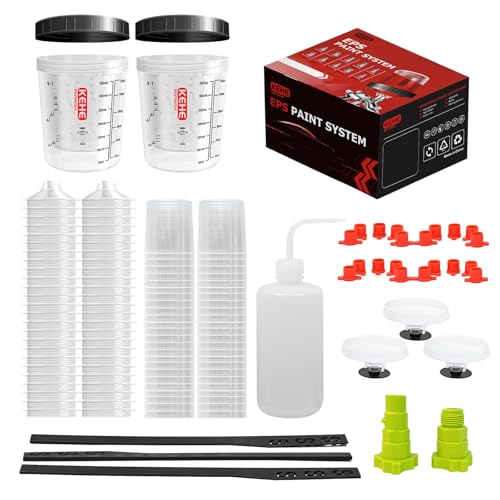
Disposable Paint Cups for Spray Gun, 12 oz, 350ml Kit

Fuji Spray 2804-T75G Mini-Mite 4 Platinum T75G Gravity HVLP Spray System

Wagner Spraytech Control Spray QX2 HVLP Stain Sprayer

Wagner Spraytech FLEXiO 570 HVLP Paint & Stain Sprayer
The Picks, Examined More Closely
The Semi-PRO 2 sits at the heart of Fuji’s home-shop lineup, pairing a non-bleed spray gun with a metal-cased turbine that feels closer to a small commercial rig than a hobbyist tool. The 1.3mm air cap ships installed, which is the right starting point for medium-viscosity finishes like lacquers and enamels. The bottom-feed cup keeps the gun light during long runs, useful when you’re laying down a dozen cabinet doors in one session.
For a small finishing shop or a serious hobbyist, the hose-and-turbine split design means you can park the motor outside the spray area and breathe easier. The integrated gun holder on the case is a small touch, but it stops the gun from getting knocked around between coats. Most owners find the 25-foot hose gives enough reach to walk around a car or a kitchen island without dragging the turbine along.
A Few Highlights
- Metal turbine case holds up to shop dust and accidental drops better than plastic housings.
- Non-bleed gun only sprays when you pull the trigger, which saves finish and reduces unintended overspray.
- Bottom-feed cup layout keeps the gun balanced for overhead work and longer sessions.
- Pattern control fan adjustment lets you dial the spray width without swapping caps.
Things To Consider
- The semi-pro price puts it well above casual DIY budgets, so first-timers may be paying for capacity they won’t use.
- Bottom-feed cup refills require a small pause, and you’ll want spare cups ready for color changes.
- Cleanup of the gun itself takes a few minutes after every session to keep passages clear.
Who It Suits Best
Small-shop finishers and dedicated hobbyists handling furniture, cabinets, and trim who want pro-level atomization without stepping up to a full commercial turbine.
Where Another Pick Suits Better
For homeowners staining a deck on the weekend, the Wagner Spraytech Control Spray QX2 HVLP Stain Sprayer is a lighter, simpler fit that doesn’t need a separate turbine case.
The Mini-Mite 4 Platinum shrinks the Fuji formula into a footprint that tucks onto a basement bench without dominating it. The T70 spray gun carries a side-mounted pattern control knob, so you can tweak the fan width on the fly without breaking grip or stopping mid-coat. The Heat Dissipation Chamber on the turbine is the kind of detail that matters during long summer days in a non-air-conditioned garage.
Compared to the Semi-PRO 2 above, the Mini-Mite trades a bit of raw power for portability, and most users find that’s a fair swap for furniture and small-auto work. The 25-foot hose keeps the turbine parked at a safe distance from fresh finish. Ergonomic Stay-Cool handle grip means longer sessions don’t leave you with a sore hand, which is something anyone who’s sprayed a full dining set will appreciate.
Why It Works Well
- Side pattern control knob is faster to adjust than the twist-collar setup on some older Fuji guns.
- Platinum turbine with heat dissipation chamber runs cooler through multi-hour finishing days.
- Lightweight, non-bleed gun reduces fatigue on vertical surfaces like cabinet face frames.
- Metal turbine case shrugs off workshop bumps that would crack cheaper plastic housings.
Worth Noting
- Bottom-feed configuration means a brief refill pause for larger pieces, similar to the Semi-PRO 2.
- Compact size limits the total finish you can move per pass compared to larger turbine systems.
Made For
Hobby finishers and small-shop woodworkers who want Fuji’s build quality in a package that fits a one-car garage without monopolizing the bench.
Consider Something Else When
For precise automotive clear-coat work where a gravity cup helps, the Fuji Spray 2804-T75G Mini-Mite 4 Platinum T75G Gravity HVLP Spray System is the natural step up in the same Mini-Mite family.
The Control Pro 130 breaks from the HVLP format entirely. It’s an airless sprayer, which means paint gets pushed through the tip at high pressure rather than atomized by a turbine. That makes it the right tool for serious coverage work: house exteriors, big fences, long stretches of siding. The HEA (High Efficiency Airless) tip is designed to cut overspray, which matters when you’re working around landscaping and neighbor’s property lines.
For homeowners repainting a whole exterior or staining a deck the size of a small dance floor, this is the kind of tool that compresses a multi-day brush job into a single afternoon. Setup is closer to “plug in and go” than the Fuji systems above, and the unit can handle unthinned paints, which saves the trial-and-error of getting viscosity right. Most users find the trade-off is a coarser finish that won’t satisfy fine furniture work, but that’s not what this gun is for.
Good Reasons To Consider
- Airless power covers large surfaces in a fraction of the time a handheld HVLP would take.
- Handles unthinned paints and stains, so you skip the strainer-and-stir ritual before each session.
- HEA tip design reduces airborne mist, which helps on breezy exterior days and around cars.
- Standing cart format rolls with you around the project rather than getting hauled.
Points To Note
- Finish quality won’t match HVLP for furniture or cabinet work, so this is the wrong tool for fine finishing.
- Tip cleanup is essential between color changes, and the spray tip is the part most likely to need replacement.
- Larger footprint than handheld units, which matters if storage space is tight.
Right Fit For
Homeowners tackling a full exterior repaint, a large deck, or a long fence run where coverage speed matters more than showroom finish.
Skip It When
For a small nightstand refinish or a single-piece furniture project, the Fuji Spray 2202 Semi-PRO 2 HVLP Spray System delivers finer atomization and wastes less finish in overspray.
The Classic X comes from a different corner of the spray gun world. It’s an LVLP gun, which means it works with a separate air compressor rather than a built-in turbine. In return, you get a lighter, more traditional gun body that feels familiar to anyone who’s spent time in a body shop. The regular kit ships with three nozzle sizes (1.3mm, 1.5mm, 1.7mm), which is the real story: you can match the nozzle to clear coat, base coat, or primer without buying extras.
For automotive touch-ups, motorcycle tanks, and small furniture pieces, the lightweight LVLP format gives you a level of control the heavier turbine guns can’t match. The trade-off, of course, is that you need a compressor capable of sustaining the right CFM (cubic feet per minute) and pressure, which adds to the total cost if you don’t already own one. Most DIYers with a small 6-gallon pancake compressor will get usable results, though a larger unit gives more headroom.
The Good Stuff
- Three included nozzles cover primer through clear coat without separate purchases.
- Lightweight gun body reduces hand fatigue during long detail sessions.
- LVLP format is gentler on overspray than traditional HVLP, which helps in home garages.
- Works with most standard air compressor setups already common in home workshops.
Honest Caveats
- Requires a compatible air compressor, which is a real added cost if you don’t already own one.
- Atomization quality depends heavily on your compressor’s pressure regulation, so inconsistent results are common with underpowered units.
Who Will Love This
Auto enthusiasts and detail-oriented DIY finishers who already have a compressor and want a precision gun for smaller panels and trim work.
Look Elsewhere When
If a compressor isn’t already part of your shop, the Classic X LVLP Spray Gun Starter Kit bundles the accessories that get you spraying faster with less extra shopping.
The Starter Kit is the same Classic X LVLP gun paired with the accessories a first-timer actually needs: the cups, adapters, and connectors that get you from box to spray gun in one session. For someone who’s never used a compressor-driven gun before, that bundle matters more than it sounds. Half the friction of LVLP spraying is figuring out which adapter fits your hose, and this kit removes that guessing game.
Where the regular kit above is the right call for someone who already owns shop gear, the Starter Kit is the cleaner path for someone starting from scratch. The gun body itself performs the same as its sibling, so you aren’t trading capability for convenience. You will still need an air compressor that can sustain the right pressure, but everything between the compressor and the panel comes in the box.
Practical Pluses
- Bundle approach saves the trial-and-error of sourcing adapters and cups separately.
- Lightweight LVLP gun body suits longer sessions and detail work.
- Same proven Classic X atomization as the regular kit version.
- Works with the same range of paints and clears as the broader Classic X line.
Some Limits To Know
- Compressor still required, and a small pancake compressor will limit how long you can spray continuously.
- Starter kit cups are useful but smaller, so larger panels mean more frequent refills.
Best Suited To
First-time LVLP users who want a complete introduction without piecing together a parts list from a forum thread.
Another Choice May Suit
For a self-contained system that doesn’t need a compressor at all, the Fuji Spray 2904-T70 Mini-Mite 4 Platinum T70 HVLP Spray System brings its own turbine.
This is the one entry in the roundup that isn’t a gun at all, and it’s here because disposable cup systems change how the whole workflow feels. The kit ships 50 liners with lids, two hard outer cups, a retainer ring, and the strainers and plugs that let you mix, strain, and seal in the same vessel. Anyone who’s spent 20 minutes cleaning a reusable cup between color changes will understand why this matters.
For project work that involves multiple colors or quick turnarounds, the disposable approach is the closest thing to a free hour you’ll find in a paint shop. You pour leftover finish back into the liner, snap on a lid, and the next session starts where this one stopped. The 12-ounce size suits the small-to-medium panels most home finishers tackle, and the included adapters cover both HVLP and LVLP gun bodies.
The Helpful Details
- 50-pack covers a long stretch of multi-color project work before restocking.
- Lids with built-in strainers cut a separate pouring step out of the prep process.
- Works across both HVLP and LVLP gun formats with included adapters.
- Disposable liners turn cleanup into a “peel and toss” job rather than a solvent bath.
Trade Offs
- Disposable cups add recurring cost, which adds up faster than you’d think on big runs.
- 12-ounce capacity is small for full car panels or large cabinet runs, so plan on more refills.
Whose Shelf It Belongs On
Multi-project finishers and color-changing pros who want to spend their time spraying rather than cleaning reusable cups between sessions.
Reach For A Different Pick When
If you’re spraying a single color across an entire exterior and don’t need to switch finishes, the Wagner Spraytech Control Pro 130 HEA Paint & Stain Sprayer handles long runs with its own integrated reservoir.
The T75G swaps the bottom-feed cup of its Mini-Mite siblings for a gravity cup mounted on top of the gun. That change isn’t cosmetic: gravity feed pulls finish down into the nozzle with less air pressure required, which translates to finer atomization and a softer spray pattern. For clear coats, piano-grade lacquers, and other finish work where orange peel is the enemy, the gravity format is the right answer.
The trade-off is cup size, which is necessarily smaller for a top-mounted design. Most finishers adapt by refilling more often on long runs, but accept that because the atomization quality is noticeably cleaner. The side pattern control knob and Heat Dissipation Chamber are familiar from the rest of the Mini-Mite 4 Platinum family, so the workflow stays consistent if you ever step between this and the T70 model above.
Notable Upsides
- Gravity feed produces a softer, finer atomization that suits clear coats and high-gloss finishes.
- Top-mounted cup shifts the balance point closer to the hand, improving control on detail work.
- Platinum turbine with heat dissipation supports long sessions without thermal throttling.
- Side pattern control knob keeps fan-width adjustment within thumb’s reach.
A Few Limitations
- Smaller cup capacity than bottom-feed models means more frequent refills on long projects.
- Higher cost than the T70 sibling, so the gravity upgrade only pays off if you’re finishing at the higher end.
Built With In Mind
Finishers working on guitars, fine furniture, or any project where the final coat has to look sprayed by a seasoned pro, not a weekend warrior.
Swap It Out When
For larger panel work where cup capacity matters more than atomization finesse, the Fuji Spray 2202 Semi-PRO 2 HVLP Spray System with its bottom-feed cup keeps you spraying longer between refills.
The QX2 is purpose-built for outdoor wood staining, which is a different brief than most of the guns on this list. Three spray patterns cover the usual suspects: a narrow cone for railings and lattice, a wider fan for fence pickets, and a horizontal pattern for decking. That flexibility means you’re not stopping to swap tips every time you move from the deck surface to the balusters.
For a homeowner staring down a deck restoration, the QX2 turns what would be a brush-and-knees weekend into a Saturday-morning job. The handheld format keeps the tool light, and HVLP delivery cuts the airborne mist that sends stain onto your siding and the neighbor’s car. The honest read is that this is a specialist: outside the wood-staining use case, the patterns and power curve feel limiting compared to the FLEXiO 570 below.
Everyday Wins
- Three dedicated spray patterns match the most common outdoor staining surfaces without tip changes.
- Handheld design is comfortable for overhead lattice and ceiling joist work.
- HVLP delivery keeps stain on the wood rather than the surrounding landscaping.
- Quicker than brush application on porous deck boards that soak up finish.
Less Ideal Details
- Less versatile than general-purpose HVLP units if you also plan to spray interior walls or furniture.
- Smaller cup capacity than larger Wagner units, so larger fence runs mean more trips to the fill-up point.
The Right Fit
Homeowners focused on deck, fence, and outdoor furniture staining who want a dedicated tool rather than a general-purpose sprayer.
Not Your Match When
For projects that mix indoor painting with outdoor staining, the Wagner Spraytech FLEXiO 570 HVLP Paint & Stain Sprayer handles both with the iSpray nozzle swap.
The FLEXiO 570 is the “do most things” entry in Wagner’s handheld HVLP lineup. The iSpray nozzle covers broad surfaces like walls, ceilings, and siding, and a detail nozzle handles the trim and corner work that broader patterns miss. For homeowners who want one tool rather than a shelf of specialized units, the FLEXiO makes a strong case.
Compared to the QX2 above, the FLEXiO trades some of that dedicated staining focus for indoor capability, which is the right swap if your project list crosses categories. The unit handles unthinned paints, so you skip the viscosity dance before each session. Setup is genuinely fast: most users report being ready to spray within minutes of unboxing, which matters more than spec sheets suggest for the weekend crowd.
Benefits That Matter
- iSpray nozzle handles broad interior and exterior surfaces in a fraction of brush time.
- Detail nozzle covers trim, corners, and tight profiles the wide pattern can’t reach.
- Handheld format stows in a closet rather than taking up a corner of the garage.
- Handles unthinned paints, cutting the prep ritual before each project.
Where It May Fall Short
- Finish quality won’t satisfy a fine-furniture refinisher, so heavy woodworkers will want a turbine system instead.
- Disposable parts and removable nozzles need regular cleaning to keep the pattern consistent.
Who Should Grab It
Generalist DIYers whose projects cross indoor walls, ceilings, fences, and furniture throughout the year, who want one tool that handles all of it.
Where A Sibling Pick Shines
For a serious deck-staining weekend where pattern control and outdoor focus matter, the Wagner Spraytech Control Spray QX2 HVLP Stain Sprayer is purpose-built for that one job.
What To Weigh Before Choosing a Spray Gun
The first question isn’t which brand, it’s what you’ll spray most often. Interior walls, exterior siding, fine furniture, and automotive panels each reward different formats. Airless systems like the Control Pro 130 cover ground fast on big surfaces, while HVLP and LVLP setups trade speed for finish quality. Picking the wrong format is the most common reason a new spray gun ends up in a closet.
Cup and feed configuration matters more than the marketing suggests. Bottom-feed cups hold more finish and suit long runs, while gravity cups produce finer atomization for clear coats and high-gloss work. If your projects mix both, a disposable cup system like the one reviewed above buys you flexibility without owning multiple guns.
Hose length, turbine noise, and storage footprint are the unglamorous specs that determine whether you actually use the tool. A 25-foot hose lets you walk around a car or kitchen island without dragging the turbine, and a quieter turbine means you can run it indoors without closing every door in the house. For handheld units, the question is whether the unit disassembles quickly enough to clean between sessions without becoming a chore.
Air consumption is the deciding factor for any LVLP gun. A small 6-gallon pancake compressor will get you through a quick panel, but sustained spraying on larger pieces needs a compressor that can keep up. If you don’t already own a compressor, a self-contained HVLP system is the more honest starting point.
Key Considerations Across These Picks
Where Shoppers Go Wrong
The most common mistake is buying the wrong format for the project. Airless sprayers and HVLP turbine systems look similar in photos, but they behave very differently on a wall or a cabinet door. Atomization, overspray, and finish quality all change with the format, and there’s no single gun that does everything well. Match the tool to the dominant project on your list.
The other pitfall is underestimating cleanup. Every spray gun on this list needs a few minutes of solvent and brush work after each session to keep passages clear. Owners who skip that step usually find their gun pattern going uneven within a few months. Disposable cup systems help with the color-change side, but the gun body itself still needs attention.
What Separates Premium From Basic
Higher-tier spray guns earn their cost through atomization consistency and build quality. A metal turbine case, a heat dissipation chamber, and a non-bleed gun with a quality air cap all show up in the finish you see on the panel, not just in the spec sheet. The cheaper units still spray, but the pattern variation and overspray tell you where the cost was cut.
The upgrade also pays off in longevity. Metal-cased turbines and quality seals hold up to years of weekend use, while entry-level units with plastic housings and basic seals tend to develop leaks and pressure inconsistencies sooner. For occasional projects, that gap may not matter. For anyone who finishes furniture or vehicles as a regular habit, the premium tier is the cheaper choice over a five-year window.
Frequently Asked Questions
What is the difference between HVLP and LVLP spray guns?
HVLP stands for high volume, low pressure and uses a turbine to atomize finish with a soft, low-pressure spray. LVLP stands for low volume, low pressure and uses a separate air compressor to drive the gun with even less air consumption. HVLP is self-contained, while LVLP gives finer atomization when paired with a properly sized compressor.
Can a homeowner use an HVLP spray gun for cabinets?
Yes, HVLP systems are well suited to cabinet doors and face frames because they deliver a fine, even finish with minimal orange peel. The Fuji Mini-Mite 4 Platinum T70 and T75G models are both common choices for that work, with the T75G gravity version suited to the final clear coats.
Do I need an airless or HVLP sprayer for a deck?
For a large deck with porous boards, an airless sprayer like the Wagner Control Pro 130 covers ground fast and pushes finish into the wood grain. A handheld HVLP stain sprayer like the QX2 works well for smaller decks and projects where overspray control matters more than raw speed.
How often should I clean a spray gun?
Clean the gun after every spraying session, even a short one. Residual finish in the air cap and passages is the most common cause of pattern problems and reduced atomization quality. A few minutes of solvent and brush work after each use extends the gun’s working life significantly.
Are disposable spray gun cups worth it?
For multi-color project work, disposable cup systems cut significant cleanup time between color changes. For single-color runs on a single project, the recurring cost adds up faster than the time saved. The 50-liner kit reviewed above sits in a useful middle ground for hobbyists who switch finishes often but don’t run production volume.




