


A square sits at the center of almost every woodworking project, and the gap between a stamped import and a precision-machined reference shows up the moment you start cutting joinery. Whether you’re dialing in a table saw, marking out a rafter, or checking that a board is truly square after dimensioning, the right tool turns guesswork into repeatable results. This roundup breaks down nine solid options spanning pocket-sized speed squares, full combination sets, and dedicated machinist references, so you can match the tool to the work instead of the other way around.
The Main Contenders

Woodpeckers Precision Woodworking Square Set 6″ & 8″

Swanson S0101 7 Inch Speed Square, Blue

Swanson SW1201K Value Pack Speed Square Bundle

Matework 3-Piece Combination Square Set

Taytools 2-3/4″ Precision Machinist Squares (Pair)
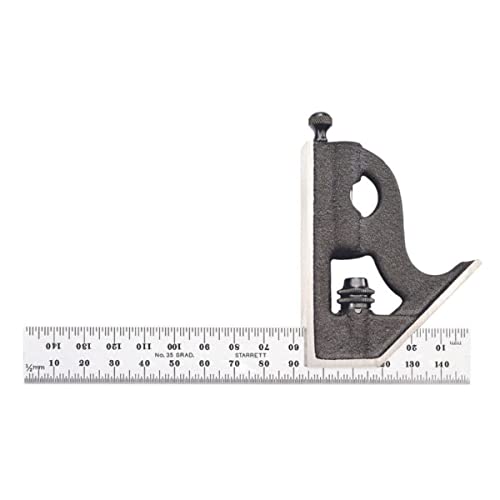
Starrett 150mm Steel Combination Square

AKNgoes Precision Woodworking Reference Square

AKNgoes 6″ Precision Square with Scriber
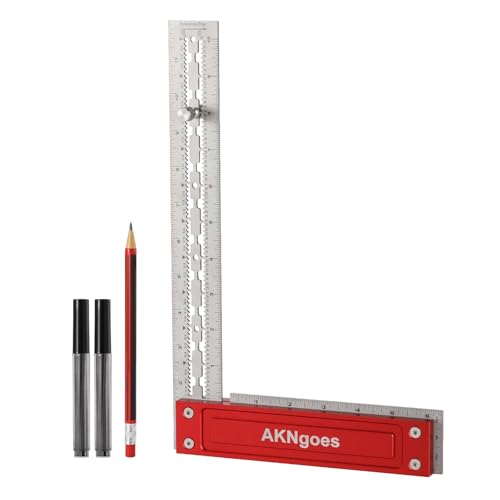
AKNgoes 12″ Precision Square with Scriber
Taking A Closer Look At The Options
The Woodpeckers set arrives as a matched pair, a 6-inch and an 8-inch, both machined from a single piece of cast aluminum tool plate. That one-piece construction matters because there’s no joint between handle and blade to drift over time, so the reference stays true through years of bench work. The shoulder lip along the inside edge lets the square sit flat on a board for edge marking, while the thick base props it upright on a table saw or jointer for blade and fence checks.
Where it really earns its reputation is in machine setup. A square this stable, standing on its own, takes the wobble out of dialing in a blade or fence. Accuracy is held to within 0.001 inch along the full length, which is well past the threshold most woodworkers can actually measure. For furniture makers, cabinet builders, and anyone running a stationary shop, this set feels purpose-built rather than improvised.
Useful Strengths
- One-piece machined aluminum body eliminates the joint drift common in cheaper squares.
- Shoulder lip supports flat edge marking and stops the tool from rocking on stock.
- Self-standing base simplifies table saw blade and jointer fence alignment.
- 0.001 inch accuracy gives you a true reference for tuning machinery.
- Made in the USA with tight tolerances right out of the box.
Worth Noting
- Costs more than entry-level options, so the value shows up mainly if you actually use the standing base.
- Aluminum is light, which makes it friendly on a bench but easy to slide off a stocky workpiece if bumped.
Key Specs
Who It Suits Best
Serious woodworkers running stationary machines who want a true reference square for setup and joinery, and who will use both the 6-inch and 8-inch sizes regularly.
Consider Something Else When
Roofers and framers should reach for the Swanson S0101 7 Inch Speed Square instead, since the triangle format handles rafters and stair layout in one tool.
The Swanson Speed Square is the kind of tool that quietly outlasts everything around it. It’s a single stamped triangle with markings for common, hip, valley, and jack rafters, which means one tool covers layout, saw guide, and basic protractor duty on a framing site. The bright blue finish is easy to spot in a clutter of lumber and falls into the hand naturally for repetitive marking.
For anyone framing walls, cutting rafters, or running a circular saw across sheet goods, this square earns its keep fast. It’s not a precision reference in the Woodpeckers sense, but it doesn’t pretend to be, and the thicker edge works well as a saw guide for a circular or trim saw. Owners tend to leave one挂在 their saw and another in a tool belt, which is about the highest praise a layout tool gets.
Positive Points
- Single-tool replacement for try square, miter square, and basic protractor.
- Rafter gradations let you mark common, hip, valley, and jack cuts without a calculator.
- Stiff body doubles as a saw guide for circular and trim saws.
- Familiar blue finish stands out on a busy bench or jobsite.
Trade Offs
- Stamped construction is durable but not calibrated to the tight tolerances a machinist would want.
- Single 7-inch size limits long layout work; you may find yourself reaching for a longer straightedge on full sheets.
Right Fit For
Framers, roofers, and remodelers who want one rugged square that handles rafter math, basic 90-degree checks, and saw guiding without a stack of specialized tools.
A Better Fit Elsewhere
Stationary shop woodworkers focused on joinery should consider the Woodpeckers Precision Woodworking Square Set for its standing base and tighter accuracy on machine setup.
Swanson’s value pack pairs the classic 7-inch Speed Square with the larger Big 12, giving you two coverage zones from one purchase. The 7-inch handles tight marking and quick rafter work, while the 12-inch squares up sheet goods and longer stock without dragging a straightedge across the bench. Both tools share the same gradation logic, so once you learn the markings on one, the other feels familiar.
This bundle suits anyone working across full sheets of plywood, dimensional lumber, and rafter stock in the same day. The included Blue Book reference guide helps newcomers decode roof pitch without a phone app. The honest read is that you may only reach for the Big 12 a few times a month, but when you need it, no other pocket tool quite substitutes.
Where It Excels
- Two sizes cover both pocket-sized marking and full-sheet layout.
- Matching gradations on both squares cut the learning curve down to one tool.
- Big 12 acts as a reliable saw guide for longer rip and cross cuts.
- Blue Book reference helps with roof pitch math on the fly.
Points To Keep In Mind
- Big 12 adds belt weight and can feel bulky on smaller hands.
- Both pieces are stamped rather than machined, so they serve as workhorses rather than calibration references.
Made For
Roofers, deck builders, and remodelers who need both compact and wide-format layout coverage without buying two separate tools.
Reach For A Different Pick When
Shop woodworkers focused on furniture should consider the Matework 3-Piece Combination Square Set, since it adds a sliding head and protractor function for finer bench work.
Matework’s three-piece set includes a 7-inch rafter square, a 12-inch rafter square, and a 12-inch adjustable combination square with a sliding head. That combination replaces a try square, miter, protractor, saw guide, and depth gauge in one bundle, which is appealing if your tool drawer is light on layout gear. CNC machining on the rafter squares aims for true 90-degree edges rather than the looser tolerances of stamped steel.
The kit works well for hobbyists stepping up from a single basic square, especially those tackling framing, decking, and basic cabinetry. The adjustable head handles depth measurements and repeatable angled cuts, which is something the Swanson speed squares don’t offer. You may find the included components get a workout on small projects and then sit on the shelf for weeks, but when you need them, the variety pays off.
A Few Highlights
- Three tools in one bundle cover try, miter, depth, and protractor functions.
- Sliding head on the 12-inch square allows repeatable depth and angle settings.
- CNC-machined rafter squares target tighter 90-degree accuracy than basic stamped steel.
- Bundle format keeps the entry cost manageable for new shop owners.
Honest Caveats
- Fit and finish of the sliding head won’t match a Starrett or premium brand.
- Three tools mean more pieces to keep track of on a small bench or in a busy jobsite bag.
Best Suited To
Hobbyists and weekend woodworkers who want one kit covering most layout needs without buying each tool separately.
Look Elsewhere When
Anyone running machinery setup should consider the Woodpeckers Precision Woodworking Square Set, since its standing base handles blade and fence checks more confidently than a stamped rafter square.
The Taytools pair is built for the small, detailed work that larger squares can’t reach. Each 2.75-inch square uses a two-piece tool steel construction, with the base and blade riveted together using tapered pins for a joint that holds its geometry. Faces and edges are ground and lapped, which lands squarely in the machinist-grade category, with accuracy rated to 0.001 inch over the full blade length.
These are reference tools, not everyday layout workhorses, so they shine when you’re checking the flatness of a plane sole, setting a jointer, or verifying a small fixture. You may find yourself reaching for them more than expected once you start using them as a calibration check against larger squares. The trade-off is that the small size limits their use as a marking or saw guide.
The Upside
- Machinist-grade accuracy of 0.001 inch makes them reliable as a calibration reference.
- Hardened tool steel construction holds geometry over years of shop use.
- Compact size reaches into tight spots like plane soles and small fixture faces.
- Two-piece pair gives you a redundant reference for spot checks.
Small Caveats
- Small blade length isn’t practical for marking or saw guiding on full-size stock.
- Hardened steel costs more than stamped alternatives, so the value depends on doing detailed setup work.
Who Should Grab It
Detail-oriented woodworkers, woodturners, and anyone tuning hand planes, jointer beds, or small fixtures where larger squares can’t reach.
Swap It Out When
If your work centers on framing and roof cuts, the Swanson S0101 7 Inch Speed Square covers those tasks faster than any small machinist reference.
Starrett’s combination square carries the weight of a brand that’s been synonymous with machinist precision for over a century. The hardened steel ruler and machined square head slide together with the kind of smooth, confident action that cheaper sets can’t quite match. The 150mm blade length works well on smaller bench tasks, while the dual millimeter and half-millimeter graduations on both sides support fine layout without constant conversions.
For woodworkers who split time between wood and metal, this square pulls double duty as a try square, depth gauge, and miter reference. The square head also functions as a layout protractor when you need to mark 45-degree miters. It’s the kind of tool you buy once and then notice on every bench visit for the next twenty years.
What Helps Most
- Hardened steel blade resists flex and holds its markings under regular use.
- Square head slides smoothly and locks firmly for repeatable depth and angle settings.
- Dual mm and half-mm graduations on both sides support precision work.
- Brand reputation backed by decades of machinist-grade quality control.
Factors To Consider
- 150mm blade is short for full sheet-goods layout on a jobsite.
- Premium pricing reflects the brand, so the cost only makes sense if you value the long-term durability.
Feature Snapshot
Perfect Match For
Woodworkers and hybrid makers who want a single long-lasting combination square for joinery, depth measurement, and the occasional metalworking task.
Not Your Match When
Roofers and framers should consider the Swanson SW1201K Value Pack Speed Square Bundle, which adds rafter gradations and a larger 12-inch format for sheet goods.
AKNgoes’ reference square takes a page from the Woodpeckers playbook with a single-piece anodized aluminum body machined to a 6mm thickness. That added weight and rigidity help the tool sit flat on a workpiece without rocking, and the anodized finish shrugs off the kind of bench dings and coolant splash that dull raw aluminum. The result is a square that wants to live near your table saw rather than in a tool drawer.
For shop owners dialing in stationary machines, this square makes a strong case as a dedicated setup tool. The thicker blade and one-piece construction hold a true reference across the cut, so you spend less time chasing the slight twist that plagues thinner stamped tools. It’s less versatile as a saw guide or marking tool, but that’s not really its job.
The Helpful Details
- One-piece anodized aluminum body holds its geometry over years of shop use.
- 6mm blade thickness resists flex on longer reference checks.
- Anodized finish protects against corrosion and bench wear.
- Stable enough for table saw, band saw, and jointer alignment work.
Potential Compromises
- Heavier than thinner stamped squares, so it can leave marks on softer stock if dropped.
- Limited in marking and saw-guide roles compared to a Swanson speed square.
Built With In Mind
Shop owners who want a single, stable reference square dedicated to tuning table saws, jointers, band saws, and other stationary machines.
Where A Sibling Pick Shines
Carpenters needing rafter math and quick marking should consider the AKNgoes 12″ Precision Square with Scriber, which adds scribing notches and a longer reach for bench layout.
AKNgoes’ 6-inch square is a tight, pocket-friendly tool built around a 301 stainless steel blade and a solid handle. The combination keeps the square from flexing on short layout lines, and the stainless surface wipes clean of pencil and ink without staining. Integrated scribing notches at the handle let you mark a parallel line from an edge without grabbing a separate marking gauge, which speeds up repetitive cuts.
This is the kind of square that lives in an apron pocket or shop apron rather than on a bench hook. It’s well suited to marking joinery, checking short cuts, and scribing small offsets on a workpiece. Owners should expect to pair it with a longer reference for machine setup, since the 6-inch reach has obvious limits on full sheets of plywood.
Useful Highlights
- 301 stainless steel blade resists corrosion and wipes clean after marking.
- Integrated scribing notches enable quick parallel lines without a separate gauge.
- Compact 6-inch size slips into an apron pocket or small shop drawer.
- Stiffer than typical stamped tools of the same size.
Where It Is Less Suited
- Short blade length limits use on full sheet goods and longer reference checks.
- Scribing notches are useful but smaller than a dedicated marking gauge for fine furniture work.
Whose Shelf It Belongs On
Hobbyists and small-shop woodworkers who want a portable precision square for joinery marking and quick 90-degree checks at the bench.
Skip It When
Roofers and framers should consider the Swanson S0101 7 Inch Speed Square, which adds rafter gradations and a stronger saw-guide edge for jobsite work.
The 12-inch version of AKNgoes’ precision square stretches the same 301 stainless blade and integrated scribing notches into a longer format for bigger tasks. That extra reach makes it practical for checking the edge of a rafter, marking a longer crosscut, and verifying a jointer fence without dragging a straightedge across the workpiece. The stainless steel wipes clean of layout fluid, ink, and pencil, which is helpful on glue-ups and finish work.
For bench work that splits time between joinery and rafter-scale layout, this square covers a wider range than the 6-inch sibling. The longer blade does make it harder to pocket, so it tends to live on a bench hook or shelf rather than an apron. In most home shops, the 12-inch reach handles the bulk of layout duties without leaning on a separate straightedge.
What Works In Its Favor
- 12-inch reach covers most bench layout and rafter-scale marking in one tool.
- 301 stainless blade stays clean and resists corrosion from shop moisture.
- Scribing notches add parallel-line marking without a separate gauge.
- Solid handle keeps the blade from flexing on longer reference checks.
Details To Watch
- Longer format is less pocketable than the 6-inch version, so storage planning matters.
- For very long rafter cuts and full sheet goods, a Swanson Big 12 or framing square still serves better.
Who Will Love This
Home-shop woodworkers tackling joinery, cabinetry, and small framing projects who want one longer precision square for daily layout duties.
Where Another Pick Suits Better
Anyone focused on rafter and roof math should consider the Swanson SW1201K Value Pack Speed Square Bundle, which adds the dedicated rafter gradations that this square doesn’t carry.
Choosing Squares For Woodworking Without Overbuying
Picking a square starts with honestly asking what you do most. A framer needs rafter gradations and a stiff saw guide, while a furniture maker wants tight tolerances and a standing base for tuning machines. Most woodworkers benefit from owning two tools at different points on the spectrum, since no single square covers every task well.
Blade material matters more than most specs suggest. Cast aluminum resists rust and stays light on the bench, but it dings more easily than hardened steel. Hardened steel holds an edge and a marking under heavier use, though it adds weight. Anodized coatings bridge the gap by adding a tougher surface to aluminum without giving up the lighter feel.
Accuracy claims deserve a clear head. A 0.001 inch rating matters when you’re calibrating a machine or checking a hand plane, but it’s overkill for marking a 2×4 across a sawhorse. Match the tolerance to the work, and don’t pay for precision you’ll never measure. In most home shops, a square that holds true to roughly 0.005 inch is more than enough for daily layout.
Size and format shape daily use. Pocket-sized squares travel well but limit reach, while 12-inch and longer formats handle sheet goods and longer reference checks. Combination squares add depth, protractor, and miter functions at the cost of moving parts that need to stay tight. Speed squares stay simple and rugged, which is exactly why they’ve survived on jobsites for decades.
Key Considerations Across These Picks
Mistakes Worth Dodging
Buying a precision reference square without using the standing base is a common waste, since the premium really pays off in machine setup. A square that’s too small for your typical work also tends to gather dust, so size the tool to the stock you cut most. Cheaper stamped steel can drift quickly under heavy use, so factor in replacement if you push tools hard.
Where The Extra Money Goes
Higher-tier squares invest in tighter machining, single-piece construction, and harder blade materials that hold geometry over time. The Starrett combination square and the Woodpeckers set both reflect that approach, and the cost shows up in long-term accuracy and feel. The upgrade makes sense for anyone running stationary machinery, calibrating hand tools, or building furniture where joinery has to fit cleanly the first time.
Frequently Asked Questions
What size square should a beginner start with? A 7-inch speed square handles most beginner tasks, including rafter math, basic 90-degree checks, and saw guiding, without overwhelming a small tool drawer.
Are precision squares necessary for hobby woodworking? A precision reference square becomes useful once you start tuning machinery or building joinery that needs to fit cleanly, though basic projects can get by with a stamped speed square.
How do you check if a square is actually square? Place it against a known straight edge, flip it, and compare the gap. A light source behind the joint reveals daylight if the square has drifted out of true.
Can one square replace a combination square? Not really, since combination squares add a sliding head for depth and miter work. A simple square handles marking, while a combination square adds measurement functions.
How long do quality woodworking squares last? Hardened steel and anodized aluminum squares tend to hold geometry for years, with periodic cleaning and careful storage. Stamped steel squares may need replacement sooner under heavy jobsite use.




