A staircase that looks off by a quarter inch at the top can ruin an otherwise tidy install. A stair tread template tool absorbs the guesswork by locking onto a tread, holding the exact rise and run, then letting you scribe or transfer that shape straight onto your stock. For weekend renovators fitting a single hallway flight, or trim carpenters dialing in a long curved run, the right jig pays for itself the first time you avoid recutting a board.
A Quick View Of The Lineup

SUNLFPROD Dual Nut Locking Stair Tread Template Tool

SUNLFPROD Adjustable Stair Tread Gauge with Extensions

SUNLFPROD Alloy Anodized Stair Tread Template Tool
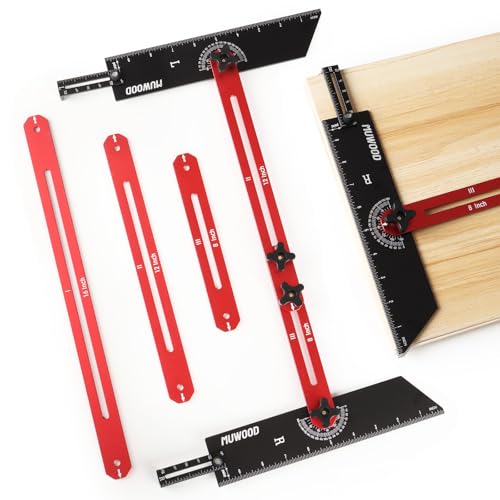
MUWOOD Multi-Angle Stair Gauge Set

PUIOCO Stair Tread Template with Triangular Brace

WONDERFUL.LIGHT Staircases Measuring Jig Set

NAACOO Stair Tread Template Kit with Level and Pencil

ShineUs Zinc-Plated Steel Stair Tread Template Set

SUNLFPROD Ready-to-Use Stair Tread Jig with Clamprix Lock
Meet The Standout Selections
Stair work rewards patience and punishes a tool that drifts. SUNLFPROD’s dual-nut locking jig answers that drift problem head-on, replacing the soft rubber gaskets found on cheaper scribes with a pair of metal lock nuts that squeeze the ruler and template together until nothing shifts mid-mark.
For anyone re-treading a long basement staircase, the lock holds its angle through dozens of transfers without needing a second hand to hold tension. Trim carpenters and remodelers running the same riser height up a flight get cleaner repeats and fewer recuts.
Points In Its Favor
- Double screw nut clamping outlasts rubber gasket designs that compress over time
- Stable on long runs where repeated marking at the same angle matters
- Handy as both a measuring template and a scribing tool for tight fit checks
- Suits flooring, shelving, and stair risers beyond just tread work
Things To Consider
- Owners commonly report the lock holding best after a firm hand-tighten, not a casual twist
Quick Facts
Who It Suits Best
Tradespeople and serious DIYers replacing treads on a full flight of stairs, where consistent angles and a lock that won’t loosen matter more than pocket-friendly weight.
Where Another Pick Suits Better
Homeowners finishing one short landing should look at the ShineUs Zinc-Plated Steel Stair Tread Template Set, which is simpler and easier to stash in a drawer between weekends.
Houses built before modern code often have stair widths that don’t match today’s stock. The SUNLFPROD gauge kit answers that mess with three extension bars (8, 12, and 16 inches) that slide together to cover anything from a narrow closet tread up to a wide landing step.
The modular reach makes the kit pull double duty: a single tool that lays out treads today, then marks shelving or a windowsill tomorrow. Renovation regulars juggling different room sizes appreciate not having to own three separate jigs.
What Makes Sense
- Covers 10.5 to 60.5 inches, so the same kit works on narrow basement stairs and wide front entries
- Pulls double duty on shelving, closet builds, and windowsill returns
- Modular setup means spare parts are easy to swap if a single bar gets bent on the truck
Worth Noting
- More pieces to keep track of in a tool bag than a single-bar jig
- Alignment between the extensions is something to double-check before each transfer
Feature Snapshot
Made For
Homeowners and small-shop carpenters who move between projects of different widths and want one kit that stretches to fit.
Look Elsewhere When
You only need to lay out a single standard-width flight; the NAACOO Stair Tread Template Kit with Level and Pencil gets you started with fewer moving parts.
A bare steel jig in a damp basement can flash rust within a season. SUNLFPROD tackles that headache with an aluminum alloy body finished through CNC anodizing (an electrochemical process that hardens and seals the surface), topped with electroplated markings that stay readable after years of wipe-downs.
The lighter weight and corrosion resistance make this the kind of tool you leave in the truck without worry. Contractors measuring in unconditioned spaces, and homeowners storing gear in a garage, get a jig that ages gracefully rather than spotting up.
Why It Works Well
- Aluminum alloy body sheds moisture rather than rusting through it
- Anodized surface shrugs off scuffs from repeated layout work
- Electroplated scale markings hold clarity longer than printed numbers on cheaper jigs
Trade Offs
- Aluminum body costs more than a basic plated-steel alternative
- Lightweight feel takes a shift in habit if you usually reach for a heavier steel jig
Key Specs
Best Suited To
Tradespeople working in damp basements, coastal homes, or unheated shops where a steel jig would pit and stain.
Skip It When
You’re laying out one set of stairs indoors and would rather save cash; the WONDERFUL.LIGHT Staircases Measuring Jig Set covers the same job at a tighter spend.
Most stair gauges top out near 90 degrees and call it a day. MUWOOD stretches that range from zero to 300 degrees, opening the door to wedge treads, angled returns, and partition walls that would have you scratching your head with a standard jig.
Older homes with non-standard stairs benefit most, since the geometry rarely matches a clean rectangle. For trim carpenters, the wider sweep also means one tool handles stair layout, drywall angle cuts, and shelving scribe jobs in the same afternoon.
Real-World Strengths
- 0 to 300 degree reach captures treads, returns, and unusual wall angles in one tool
- Streamlines jobs that usually need a tape measure and a separate protractor
- Useful for both stair installs and partition work in a remodel
Soft Spots
- Extra adjustment range adds a little weight and bulk over a fixed-angle jig
- Less intuitive for first-timers used to a simple 90-degree scribe
At A Glance
Perfect Match For
Restorers working on century-old staircases, plus remodelers juggling partition walls, closets, and treads in the same visit.
Not Your Match When
You only need a straight stair run and prefer the lighter, simpler feel of the SUNLFPROD Alloy Anodized Stair Tread Template Tool.
Two-bar jigs have a habit of walking on you. PUIOCO fights that drift with a triangular brace linking the pivot ends, plus extra washers where the auxiliary bar meets the pivot, so the whole triangle stays rigid during scribing.
The flip stops at the edge lock the width down in a single second, so the same tool speeds from tread to tread without re-measuring. For finish carpenters racing a deadline, that combination means cleaner marks and a faster pace.
Useful Highlights
- Triangular brace resists the drift that plagues two-bar designs
- Flip stops lock width in roughly a second, cutting repeated adjustment time
- Detachable auxiliary bar makes the tool easier to stow in a kit
Points To Keep In Mind
- Triangular geometry takes a moment to learn compared with a straight two-bar jig
- Detachable auxiliary bar means a small part to keep track of in the bag
Feature Snapshot
Who Should Grab It
Finish carpenters and trim remodelers who need confident, slip-free marks and want the layout to feel snappy on repeat steps.
Another Choice May Suit
First-timers who want the most forgiving learning curve should look at the WONDERFUL.LIGHT Staircases Measuring Jig Set, which stays simple on its own two bars.
Not every stair project needs a kit with ten accessories. WONDERFUL.LIGHT’s set keeps things simple: a basic gauge that adjusts to the right angle, locks, and transfers the measurement straight to the board. It’s the kind of honest, no-frills pick that earns its place by doing the core job without fuss.
First-timers replacing a single short flight appreciate the shorter learning curve. You spend less time reading the tool and more time cutting treads, which is usually the point of buying one in the first place.
Where It Helps
- Adjusts angle, length, and height without a learning curve
- Replaces a tape measure and pencil for quick stair layouts
- Light enough to hand off to a helper without any orientation briefing
Honest Caveats
- Locking hardware is the kind owners commonly report needs a check between each transfer
- No bundled level or pencil, so accessories come from the rest of your kit
Whose Shelf It Belongs On
Homeowners finishing a single short staircase who want a tool that disappears into a drawer when the job is done.
Swap It Out When
You want a complete kit with the level and pencil included, in which case the NAACOO Stair Tread Template Kit with Level and Pencil boxes everything in one set.
A jig alone only gets you halfway. NAACOO bundles the gauge with a small level, a tape measure, and a carpenter pencil, so the kit walks you from blank stair to marked board without rummaging through the rest of your tool box.
The iron body shrugs off dings that would mark up an aluminum jig, and the included accessories let a first-time user attack a project the same afternoon the box arrives. For a one-flight hallway reno, the all-in-one approach saves the second trip to the hardware store.
What Pays Off
- Level, tape, and pencil come in the box, so no extra purchases to start
- Iron build tolerates drops that would dent softer alloys
- Angle and length adjust in seconds to match most standard flights
Points To Note
- Iron body will spot if left wet, so wiping down before storage matters
- Bundled accessories are functional rather than heavy-duty
Feature Snapshot
Built With In Mind
First-time DIYers retreading a short hallway flight, who would rather have one kit than a list of separate items to remember.
Reach For A Different Pick When
You’re laying out a wide or unusually angled staircase; the MUWOOD Multi-Angle Stair Gauge Set handles a wider geometry range.
Thin gauge jigs flex when you press them into a corner. ShineUs builds its template set from zinc-plated steel, which adds the rigidity that aluminum and plastic sometimes lack, and the plating helps shrug off the kind of sweat-and-sawdust environment a working shop puts a tool through.
Anyone who has tried to scribe a tight return on a deeper tread knows the value of a tool that doesn’t bow under thumb pressure. That rigidity is the reason this set survives in pro shops long after the first scratch appears.
Advantages To Know
- Zinc-plated steel body resists surface rust in a humid shop
- Rigidity helps when pressing the jig into a corner for a tight fit
- Adjusts angle and length for tread, riser, and shelving layouts
Where It Is Less Suited
- Heavier than aluminum jigs, so it tires your hand faster on a long layout
- Plating can scratch off at high-wear contact points over years of use
The Right Fit
Workshop carpenters and remodelers who want a stiff, classic steel template that lives on the bench between projects.
Not Your Match When
You’re working in a damp basement where aluminum would outlast steel, in which case the SUNLFPROD Alloy Anodized Stair Tread Template Tool is the smarter pick.
Some jigs ship in five pieces and expect you to figure out the assembly. SUNLFPROD ships this one pre-built and ready to pull from the bag, which removes the most annoying step before a layout can even start. The Clamprix lock then grips the angle tight enough to hold through odd corners and irregular flights.
For a contractor who grabs the tool between site visits, the grab-and-go design is a quiet time-saver. Less assembly also means fewer small parts to lose in a busy truck drawer.
The Upside
- Comes out of the bag already assembled, saving a real chunk of setup time
- Clamprix lock holds firm on tricky angles where cheaper locks would slip
- Lives in its own pouch for tidy storage in a tool drawer or truck box
Potential Drawbacks
- Pre-assembled design limits how flat the jig folds for transport
- Clamprix hardware is the kind owners commonly report wanting a quick check between each transfer
Right Fit For
Busy remodelers and flooring installers who need a tool that comes out of the bag ready to mark, with no fiddling.
Where Another Pick Suits Better
You want a more compact storage profile and are happy to assemble the jig once; the PUIOCO Stair Tread Template with Triangular Brace separates for a tighter drawer fit.
Choosing The Right Stair Tread Template Tool For Your Project
Match The Tool To The Stair Geometry
A standard rectangular flight asks for a basic two-bar jig, while a curved, wedge, or returned tread rewards a tool with a wider angle range. Older homes rarely match modern code, so measuring the actual rise and run before buying a jig saves the frustration of a too-short reach. Stretch the template open to the widest tread on the flight, not the narrowest, since the longest one sets the upper limit of what the tool must span.
Lock Quality Is The Real Story
Cheap locks drift, which forces you to re-measure on every transfer. A double-nut clamp, a triangular brace, or a dedicated locking cam all outperform a plain wing nut when the angle has to hold for a long layout. In a humid basement or unheated shop, plated or anodized finishes protect the metal and keep the markings legible. Wipe the tool down before storage, and a finish that survives a season of work is well within reach.
Materials And Weight Trade Off
Aluminum jigs stay light and resist rust, which is ideal for damp basements and one-handed work. Steel jigs are heavier but stiffer, which helps when you press hard into a tight corner. Iron sits between the two for durability. Pick the weight that matches how long your typical layout session runs, since a heavier jig tires your hand faster on a long day.
Bundles Versus Bare Tools
A bare gauge does the core job, while a kit that adds a level, tape, and pencil saves the second trip to the hardware store. First-timers benefit from the bundled approach because the accessories are matched to the work. Seasoned carpenters often prefer the bare tool, since they already own a level and pencil they trust.
Smart Trade-Offs To Weigh Before You Buy
Where Shoppers Go Wrong
The most common slip is buying on price alone, then watching a soft lock drift mid-layout and cost a board you already cut. Another is picking a tool whose reach tops out below the widest tread on the flight, which forces a two-pass transfer and a hand-drawn line that introduces its own error. Always measure the longest tread first and confirm the jig covers it before you commit.
What The Higher Tier Buys
A premium jig earns its keep through lock quality, finish durability, and a wider adjustment range. For a single hallway flight, the upgrade rarely pays back, but for a long staircase or a working pro’s daily tool bag, the time saved on every layout adds up fast. The honest read is that mid-tier kits cover most home projects, while a top-tier pick makes sense once layout is a daily task rather than a once-a-year job.
Frequently Asked Questions
What Is A Stair Tread Template Tool Used For?
A stair tread template tool locks onto an existing tread to capture its rise and run, then transfers that exact shape onto your replacement board. It replaces a tape measure, pencil, and protractor with a single rig that holds the angle steady.
Can One Tool Work For Both Stairs And Shelving?
Yes, most stair gauges pull double duty on shelving, closets, and windowsills because the same locking bars hold any rectangular angle. The wider the angle range the jig supports, the more layout jobs it can cover beyond the staircase.
How Do I Know What Size Tool I Need?
Measure the widest tread on the flight and check that the jig’s maximum reach exceeds it by a comfortable margin. Narrow closet steps and wide landings both fit comfortably when the tool’s range covers the full spread between them.
Are Aluminum Jigs Better Than Steel Ones?
Aluminum stays light and resists rust, which helps in damp basements, while steel is stiffer and tolerates hard scribing pressure. The right pick depends on where you store the tool and how hard you press during layout.
Do I Need A Level And Pencil Included?
Bundled accessories help first-timers get started without a second purchase, but seasoned carpenters usually have their own level and pencil. The extras are a convenience rather than a requirement, and skipping them is a fair way to keep the kit simple.