


Driving staples through dense fiberglass batts, rigid foam boards, and house wrap is a different kind of work than stapling paper. The right tool turns a backbreaking afternoon into a smooth job, while the wrong one means bent crowns, jammed magazines, and a sore wrist by lunch. This roundup cuts through the noise and surfaces the staple guns that actually earn their place on an insulation crew, whether you’re wrapping a single attic or working the trade full-time.
How The Shortlist Stacks Up

Arrow T50 Heavy-Duty Staple Gun

Arrow JT21CM Professional Light-Duty Staple Gun

Milwaukee 2447-20 M12 3/8″ Crown Stapler

1″ Insulated Cable Staple Mnm1-600 (600-Pack)

Arrow T25 Staple Gun for Low Voltage Wires
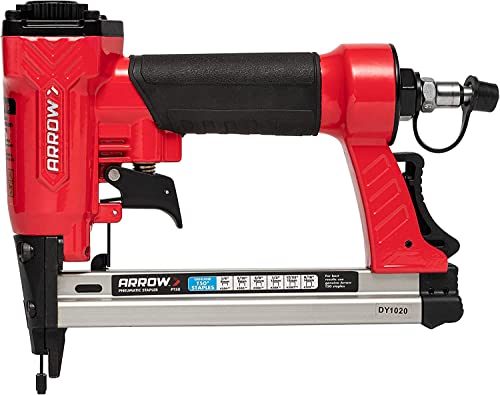
Arrow PT50 Oil-Free Pneumatic Staple Gun

DEWALT Carbon Fiber 2-in-1 Tacker (DWHT80276)

1″ Insulated Cable Staple Mnm1-320 (320-Pack)
More Details On Our Top Picks
The Arrow T50 has been a familiar sight on job sites since the 1950s, and it remains the default hammer-style stapler for general insulation work. Its all-steel body gives it the kind of heft that helps drive T50 staples through kraft-faced batts, house wrap, and asphalt-impregnated felts without fuss. You load from the bottom, slam the head, and the curved blade seats the crown cleanly.
For homeowners tackling a single attic and pros who want a no-nonsense backup, the T50 earns its place. It is heavier than composite-frame tackers, and you’ll feel it after a few hundred shots, but that weight is part of why it works so well. Unlike the JT21CM reviewed next, this one is built for staples that actually bite.
What It Does Well
- Steel construction holds up to decades of seasonal use in a garage or truck
- Bottom-load design refills quickly between batts
- Accepts a wide range of T50 staple leg lengths for different insulation densities
- Proven track record across generations of DIYers and tradespeople
Trade Offs
- Heavier than composite models, which may wear on overhead work
- Manual strike action means more wrist effort than cordless or pneumatic options
- Not precision-guided for delicate wire runs, so leave low-voltage cable to a dedicated tool
Right Fit For
Homeowners insulating a single attic and pros who want a reliable manual backup that rarely fails.
Swap It Out When
Long, repetitive overhead sessions point you toward the DEWALT Carbon Fiber 2-in-1 Tacker (DWHT80276), which weighs considerably less.
The JT21CM takes the same Arrow DNA and shrinks it down for finesse work. Its all-steel chrome-finished body stays compact, and the trigger action feels noticeably lighter than the T50. That makes it a smart pick when you’re tacking thin foil-faced insulation, craft projects, or upholstery that punishes a heavy hand.
Think of it as a precision tool rather than a brute. Compared to the Milwaukee M12 cordless reviewed below, it trades raw speed for control, and it skips the battery and fuel costs entirely. For weekend projects, it is often the only staple gun you actually need.
Well-Handled Touches
- Lightweight chrome-steel frame reduces fatigue during detail work
- Jam-resistant mechanism keeps momentum on craft runs
- Works well on fabric, paper, cardboard, and thin insulation facings
- No batteries or hoses to drag around a small workspace
Honest Caveats
- Not designed for dense fiberglass batts or rigid foam where deeper crowns are required
- Smaller staple capacity means more frequent reloading on big jobs
Feature Snapshot
Best Suited To
DIYers handling thin foil or kraft facings, crafters, and anyone who values a light hand tool over raw power.
Reach For A Different Pick When
Tackling thick batts or full attics points you to the Arrow T50 Heavy-Duty Staple Gun, which drives deeper crowns with authority.
The Milwaukee M12 crown stapler swaps the manual squeeze for a battery-driven firing mechanism that turns a full day of stapling into a one-finger job. It is a 3/8″ flat crown stapler designed to seat staples cleanly through underlayment, insulation, and a range of thin materials. The compact 7.25-inch length and roughly 3-pound weight keep it maneuverable in tight soffits.
Compatibility with the entire Milwaukee M12 battery platform is the real story for existing fans. You already own the batteries and charger, so adding the stapler costs less than a bare tool from another brand. Compare it to the pneumatic PT50 further down, and you trade some raw speed for total freedom from hoses and compressors.
Good Reasons To Consider
- One-trigger firing drastically cuts hand fatigue across long days
- 3/8″ flat crown staples lay flat against house wrap and underlayment
- Compact body fits between studs and joists where bigger tools struggle
- Works with any Milwaukee M12 battery you already own
Factors To Consider
- Bare tool only, so factor in the battery and charger you do not yet own
- Limited to 3/8″ flat crown fasteners, so cable runs need a different tool
- Depth adjustment is preset, and fine-tuning may take a few test shots per material
Feature Card
Who It Suits Best
Trade pros and serious DIYers already invested in the Milwaukee M12 platform who need cordless speed for full-day insulation jobs.
Look Elsewhere When
A strict budget and a one-off attic project point you back to the Arrow T50, which costs far less upfront.
These YETTAT 1″ insulated staples are consumables, not tools, but they are purpose-built for the Milwaukee M12 cable stapler and similar guns. The 600-pack size covers whole-house Romex and low-voltage runs without leaving you short mid-project. The plastic insulation around the crown protects cable jackets from puncture, which matters once your work is behind drywall.
For anyone running new circuits during an insulation upgrade, the fastener is just as important as the gun. Pair this with the Milwaukee 2447-20 or any compatible M12 cable stapler, and the job moves quickly. A smaller 320-count pack is also available if 600 feels like overkill.
Practical Pluses
- 600-pack quantity handles most full-home rewires without restocking
- Insulated crown reduces the risk of pinching cable insulation
- Designed to seat flush against wood studs and joists
- 1″ leg length suits standard framing depths for NM-B cable
Points To Keep In Mind
- Only compatible with the Milwaukee M12 cable stapler and similar guns, so verify fit before ordering
- Bulk packaging is heavier to ship and store than smaller counts
Made For
Electricians and DIYers running new Romex or low-voltage cable during an insulation retrofit who need a reliable bulk supply.
A Better Fit Elsewhere
For a one-room repair, the 320-count Mnm1-320 pack (reviewed below) is the smarter size match.
The Arrow T25 is purpose-built for low-voltage wiring, and the difference shows the moment you load a cable into its guide channel. A specialized wire guide holds the cable in place so the curved blade can seat the staple alongside it without nicking insulation. That mechanism is what separates it from the T50, which simply drives a staple wherever you aim it.
You will find it equally useful on thermostat wire, alarm system runs, and holiday light installs, especially where the cable runs over hard surfaces like fiber cement siding or hardwood trim. The silver finish resists corrosion, which matters for any cable stapler that lives in a damp garage or truck bed.
Real Benefits
- Built-in wire guide protects cables up to 1/4″ diameter from puncture
- Curved blade seats staples flush without crushing conductors
- Handles hard surfaces like fiber cement and hardwood trim
- Chrome finish resists rust in damp storage
Worth Noting
- Limited to low-voltage wire work, so it cannot replace the T50 for general stapling
- Manual operation still requires hand strength over long runs
Perfect Match For
Low-voltage installers, security system techs, and homeowners running thermostat or alarm wire who need a stapler that protects the cable.
Not Your Match When
Insulating a full attic with kraft-faced batts calls for the Arrow T50 instead, which drives deeper staples into the framing.
The PT50 brings air-driven production speed to the insulation site, and it is one of the most popular pneumatic options in the Arrow catalog. A bump-fire mode lets you hold the trigger and tap the nose against the work for rapid staple placement, which is exactly the rhythm an experienced insulator develops. The oil-free design also saves you the daily ritual of oiling the tool before use.
An easy-load magazine, contact safety, and adjustable exhaust cover round out the package. The catch is the obvious one: you need a compressor and hose to run it. For new-construction work where the compressor is already on site, that is a non-issue. For one-off attic jobs, the cordless Milwaukee M12 is the simpler call.
What Earns Its Place
- Bump-fire capability accelerates repetitive stapling on long runs
- Oil-free operation cuts daily maintenance
- Easy-load magazine refills in seconds
- Contact safety reduces accidental firing between placements
Possible Compromises
- Requires a compatible air compressor and hose, which adds setup time
- Heavier than manual or cordless options once the hose is attached
- Overkill for one-room insulation projects
Spec Overview
Whose Shelf It Belongs On
Production insulators and framing crews who already run a compressor and need to staple all day without hand fatigue.
Consider Something Else When
A single-room attic project without a compressor in the garage calls for the Arrow T50, which is simpler and quieter to run.
The DEWALT DWHT80276 swaps the traditional steel housing for a carbon fiber composite, and the weight savings are obvious the moment you pick it up. A reversible belt hook, low-fastener indicator, and bottom-load magazine make it a friendly tool for repetitive work like insulation, roofing underlayment, and carpet padding. The 2-in-1 design also accepts 18-gauge brads, which broadens its usefulness well past stapling.
For overhead work, this is one of the easiest manual staplers to keep aloft. Compare that to the T50, and the difference shows up by the second hour of stapling ceiling batts. You give up some of the T50’s raw driving force, so dense materials may need a heavier tool.
What Helps Most
- Carbon fiber body is noticeably lighter than all-steel models
- 2-in-1 design drives both heavy-duty staples and 18-gauge brads
- Low-fastener indicator prevents surprise run-outs mid-batt
- Reversible belt hook suits left- and right-handed users
Less Ideal Details
- Less driving force than the steel-bodied T50 on dense batts
- Composite housing can scuff if dropped onto concrete
Who Should Grab It
DIYers and pros spending long sessions overhead who want a lighter manual stapler that still handles serious insulation work.
Skip It When
You need the deepest staple penetration into oak framing, where the heavier Arrow T50 is the stronger performer.
The 320-count Mnm1-320 brings the same insulated cable staple down to a smaller pack size for tighter projects. You get the same plastic-shouldered crown that protects NM-B and low-voltage jackets from puncture, just in a quantity that matches a single-room repair or a garage subpanel run. Storage is easier too, since a smaller box fits on a shelf without dominating it.
For anyone not ready to commit to 600 staples, this is the friendlier entry point. The trade-off is per-staple cost, which runs higher in the smaller pack. You may also find the 600-count makes more sense if you discover mid-project that you need more than planned.
Useful Highlights
- Smaller 320-count box stores easily on a shelf or in a truck
- Insulated crown prevents damage to cable jackets
- Compatible with the Milwaukee M12 cable stapler and similar guns
- 1″ leg length suits typical wood-framing depths
Points To Note
- Higher cost per staple than the 600-count Mnm1-600 pack
- May run short on whole-house rewires, requiring a follow-up order
Best Suited To
Homeowners handling a single-room electrical repair or a short low-voltage run who want a manageable pack size.
A Better Fit Elsewhere
Full-home rewires during an insulation upgrade point you to the 600-count Mnm1-600 pack, which lowers the per-staple cost.
Picking A Staple Gun That Suits Your Insulation Job
The right staple gun depends less on spec sheet numbers and more on the material, the volume, and how long the tool will spend in your hand. Manual steel tools like the Arrow T50 deliver the deepest, most reliable drive on dense batts, but they tax your wrist during long overhead sessions. Cordless options like the Milwaukee M12 trade weight and trigger effort for battery cost and platform lock-in. Pneumatic tools like the Arrow PT50 remove hand fatigue almost entirely, yet they require a compressor in the room and a hose trailing behind you.
Match the tool to the substrate before you match it to the budget. Kraft-faced batts, foil-faced batts, rigid foam, and house wrap each respond differently to crown width and leg length, and forcing the wrong fastener through the wrong material is the fastest way to waste a Saturday. Low-voltage wiring adds another layer: staples without insulation guides can nick jackets, which is why purpose-built tools exist for cable runs.
Finally, think about storage and maintenance. Manual tools need almost none, cordless tools need charged batteries, and pneumatic tools need an oil-free or oiled routine. The right tool is the one that fits the workflow you actually have, not the spec sheet you wish you had.
Key Considerations Across These Picks
Traps First Timers Fall Into
Reaching for any stapler in the drawer usually ends with bent crowns on foil-faced batts or shallow drives on dense fiberglass. A more useful starting move is to confirm the staple leg length actually matches the material thickness, since a short staple into a thick batt simply disappears, while an over-long staple in thin foam can punch through the back. Matching the gun to the substrate up front is the single biggest time-saver on the job.
Where The Extra Money Goes
Spending up on a tool typically buys three things: better ergonomics over long sessions, a faster firing mechanism (cordless or pneumatic), and a more durable housing material like carbon fiber. The T50 is still a strong starting point, but if your project runs more than a day, the difference in hand fatigue between a manual and a powered tool is large enough to justify the upgrade cost for many homeowners. Weigh the cost against how many hours the tool will actually be in your hand before deciding.
Frequently Asked Questions
Can a standard staple gun handle insulation?
Yes, but the staple length and crown width need to match the material. Manual tools like the Arrow T50 handle kraft-faced batts and house wrap well, while thinner foams and facings call for a lighter gun like the JT21CM to avoid tearing.
What is the difference between T50 and JT21 staples?
T50 staples are larger and designed for heavy-duty work like insulation and house wrap, while JT21 staples are shorter and meant for lighter materials such as fabric, paper, and thin foils. Using the wrong staple in the wrong gun typically causes jams or weak holds.
Do cordless staple guns have enough power for insulation?
Cordless models like the Milwaukee M12 crown stapler deliver enough force for most underlayment, insulation, and thin material work. For extremely dense materials or continuous production speed, a pneumatic tool still leads.
How long do staples need to be for insulation?
Staple leg length depends on the material thickness and the framing depth. For typical kraft-faced batts over wood studs, 1/2″ to 5/8″ staples are common, while thicker batts or denser substrates may require longer legs to seat securely.
Can one staple gun handle both insulation and low-voltage wiring?
Not safely. Insulation stapling and cable stapling call for different crown shapes and guide mechanisms. The Arrow T25 or any M12-compatible cable stapler with insulated staples is the right tool for wiring, while the T50 or a powered stapler is better for the batt work itself.




