


Welding looks intimidating from the outside, but the right beginner machine changes that fast. A starter MIG welder is a wire-feed welder that uses a continuously fed spool of wire as its electrode, making it the most forgiving process for new welders learning to lay consistent beads on steel. The picks below cover home garage projects, automotive panel repair, and hobby fabrication, with options that run on a standard household outlet and others that tap 220V for thicker material. The goal: real capability, honest trade-offs, and a price bracket that won’t punish you for learning.
A Quick View Of The Lineup
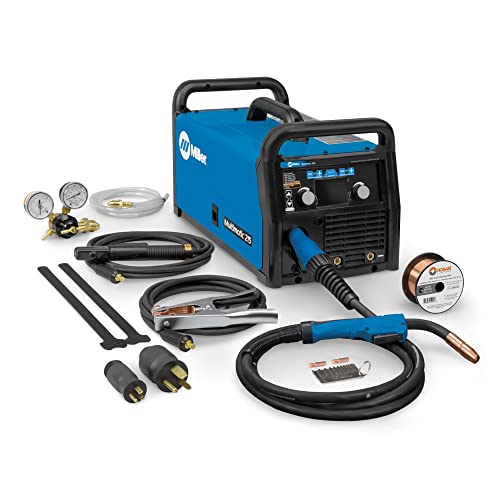
Miller Multimatic 215 Multiprocess Welder, 120V/240V, Portable

Hobart Handler 125 Flux-Core Wire Feed Welder, 25-130A

ARCCAPTAIN 250A MIG Welder 110V 220V 6 in 1 MIG250
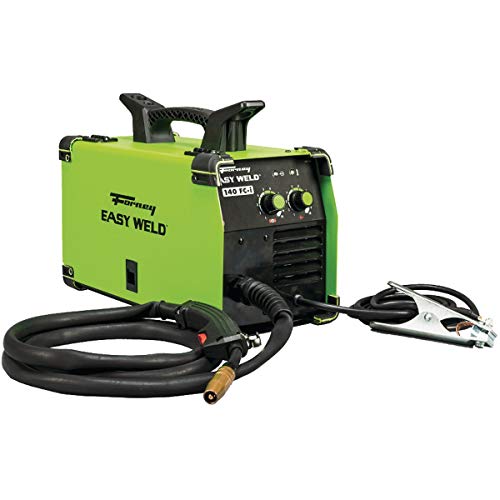
FORNEY Easy Weld 140 Amp 120V Flux-Cored Wire Feed Welder
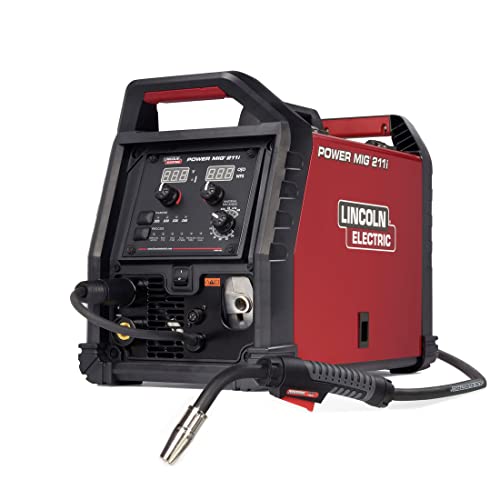
Lincoln Electric Power MIG 211i MIG Welder, Dual-Voltage 120/230V
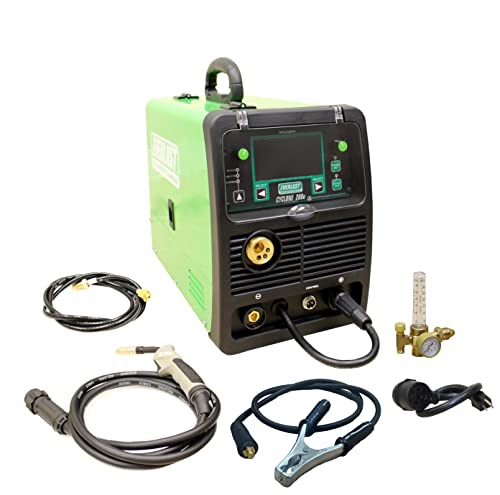
Everlast Cyclone 200ES MIG Welder 180 Amp, Dual Voltage 110/220V

Eastwood 180 Amp MIG Welder Dual Voltage 110V 220V for Steel & Aluminum
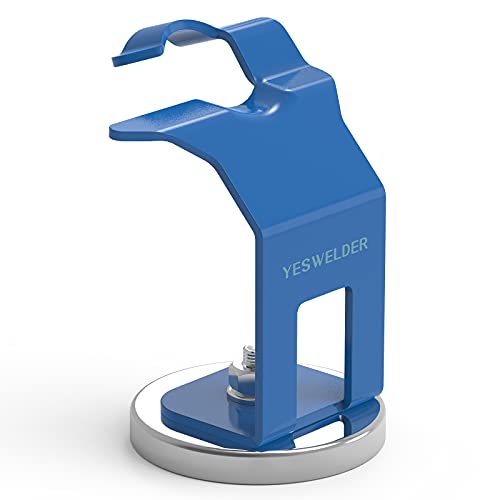
YESWELDER Magnetic MIG Welding Torch Holder Support Stand

BESTMIG 145A 4-in-1 Multi-Process Welder 110V/220V with Helmet & Gloves
More On The Choices That Made The List
The Miller Multimatic 215 is the rare starter-class machine that grows with you. It handles MIG, flux-cored, stick, and DC TIG from a single compact body that runs on 120V or 240V. For a hobbyist who starts on auto body patches and later wants to try aluminum, that flexibility avoids a second purchase.
At roughly 38 pounds it is portable enough to roll out to a driveway project, and Miller’s auto-set feature helps a new welder dial in parameters by material thickness. Compared to the more specialized Forney Easy Weld 140 below, the Multimatic trades simplicity for genuine room to advance.
Positive Takeaways
- Four welding processes in one chassis, so the machine supports stick, TIG, MIG, and flux-cored projects without swapping gear.
- Auto-set parameter guidance helps beginners avoid the worst of the trial-and-error phase on steel.
- Dual-voltage design plugs into a household outlet or a 240V shop circuit when you need extra output.
- 3/8-inch mild steel capacity covers automotive, trailer, and structural work in a single machine.
Things To Consider
- The TIG function is DC only, so it won’t strike an arc on aluminum without complications.
- Lift-TIG performance is workable but does not match a dedicated AC/DC TIG unit for precision work.
Feature Snapshot
Who It Suits Best
First-time welders who want one machine that can carry them from flux-cored autobody work into TIG and stick as their skills grow.
Consider Something Else When
Shoppers on a tight starter budget should look at the Forney Easy Weld 140, which costs noticeably less and handles thinner repair work without the multi-process overhead.
The Hobart Handler 125 is a 120V flux-core wire feed welder that strips the learning curve down to two dials. It ships with a built-in gas valve for shielded MIG work once you add shielding gas, but it runs as a no-gas flux-core unit straight from the box. For a homeowner fixing gates, trailers, and yard equipment, the simpler the controls the faster the progress.
Compared to the more flexible Lincoln Power MIG 211i below, the Handler 125 stays firmly in starter territory: lighter duty cycle, thinner plate capacity, and a single voltage input. The trade-off is a smaller, less intimidating machine that still carries the Hobart nameplate.
What Works In Its Favor
- Single-knob wire feed and voltage control that beginners can master in a single afternoon.
- Compact frame fits on a small bench and stores upright against a shop wall.
- Built-in gas valve means a future switch to solid wire and shielding gas is a tank swap, not a new machine.
Worth Noting
- Limited to 1/8-inch steel in practice, so heavier trailer and structural work falls outside its range.
- Duty cycle on the higher amperage settings is conservative and forces cooldown breaks on longer beads.
At A Glance
Made For
Homeowners and renters who want a low-fuss welder for light fabrication and small repairs, and who value simplicity over heavy plate capacity.
Look Elsewhere When
Welders planning to tackle 3/8-inch trailer frames or aluminum should step up to the Miller Multimatic 215 for the extra voltage range and process support.
The ARCCAPTAIN MIG250 crams six welding modes into a single inverter body: gas MIG, gasless MIG, lift TIG, MMA stick, spot welding, and spool gun support. That range makes it a serious value for hobbyists who want to try different processes without buying a dedicated unit for each.
It runs on 110V or 220V, with a fully digital control panel that lets you tune wire speed and voltage precisely. The catch, and it is a real one, is that the lift TIG and spool gun functions require extra torches sold separately, so factor that into the total spend.
Positive Points
- Six welding modes from a single machine, covering steel, stainless, and aluminum projects.
- Digital MCU control panel allows precise wire feed and voltage tuning for repeatable beads.
- Dual-voltage design adapts to a home outlet or shop power without rewiring.
Trade Offs
- Lift TIG and spool gun accessories are sold separately, so total cost climbs above the headline price.
- The dense control interface can overwhelm a first-time welder who expected simpler presets.
Right Fit For
Curious hobbyists who want to explore multiple welding processes on a single machine and are comfortable with menu-driven controls.
A Better Fit Elsewhere
Shoppers who only need flux-cored garage repair work will find the Forney Easy Weld 140 more approachable and easier on the wallet.
The Forney Easy Weld 140 is the entry-level welder that gets out of your way. At about 19 pounds it is light enough to carry to a yard project with one hand, and the infinite voltage and wire feed controls give a beginner enough range to find a usable setting without menu diving.
It runs flux-cored wire only and tops out at 1/4-inch mild steel, so this is a hobby and repair machine, not a shop workhorse. Compared to the ARCCAPTAIN above, the Forney lacks process versatility but wins on outright simplicity and portability.
Practical Pluses
- Nineteen-pound frame is genuinely portable for fence, trailer, and outdoor repair jobs.
- Infinite voltage and wire feed dials let beginners fine-tune bead shape without preset menus.
- Accepts both 2-pound and 10-pound wire spools, so small batch or larger roll purchases both fit.
Some Limits To Know
- Flux-core only design means no upgrade path to true MIG without swapping to a different machine.
- 140-amp ceiling falls short on heavier plate work, so trailer and structural welding requires patience or a bigger unit.
- Wide puddle on flux-core can demand extra grinding and cleanup on cosmetic welds.
Best Suited To
First-time welders on a tight budget who mainly need to repair gates, brackets, and thin steel around the home.
Skip It When
Welders who already know they want 220V capability and aluminum support should jump straight to the Miller Multimatic 215.
The Lincoln Electric Power MIG 211i is a dual-voltage MIG and flux-cored welder aimed squarely at regular garage and shop work. Auto-sensing input detects whether you are plugged into a 120V outlet or a 230V receptacle, so there is no rewiring when you move between home and a job site.
The seven-segment display and large control knobs keep the interface clear, and at roughly 41 pounds the 211i is still portable for its class. Compared to the more compact Hobart Handler 125, this Lincoln adds genuine 230V muscle for thicker plate and longer duty cycles.
Useful Strengths
- Auto-sensing dual voltage eliminates adapter fuss when switching between home and shop power.
- 211A peak output gives real headroom on 3/8-inch steel and aluminum projects.
- 30 percent duty cycle at 175A means longer continuous welds before the thermal cutout kicks in.
Where It May Fall Short
- The 41-pound frame is heavier than compact entry welders, so it leans more toward a bench setup than grab-and-go.
- Aluminum MIG requires a separately sold spool gun, which adds to the total package price.
Who Will Love This
Regular garage welders and small fabrication shops who want a Lincoln-built daily workhorse with both home and shop outlet compatibility.
Not Your Match When
Welders who only need occasional thin-gauge repair and a lighter carry weight should look at the Forney Easy Weld 140 instead.
The Everlast Cyclone 200ES is a 180-amp IGBT inverter welder that supports both MIG and stick welding on 110V or 220V input. The IGBT inverter design means a compact transformer footprint with a smooth, stable arc that responds well to parameter tweaks.
PowerSet mode is the real beginner-friendly feature here: it simplifies setup by adjusting wire speed and voltage together for a chosen material thickness. Compared to the more familiar Lincoln Power MIG 211i, the Cyclone trades a slightly lower duty cycle for a more flexible process mix.
A Strong Showing
- IGBT inverter platform delivers a stable arc with low spatter for cleaner welds and easier cleanup.
- PowerSet mode streamlines parameter choice for first-time users without burying them in numbers.
- Spool gun compatibility supports aluminum MIG work beyond the basic steel envelope.
Points To Keep In Mind
- 25 percent duty cycle at 180A is lower than some competitors, so long production welds need cooldown breaks.
- Spool gun is sold separately for aluminum, so plan the total cost before checkout.
Quick Facts
Perfect Match For
Welders who want a more responsive inverter arc and dual-voltage flexibility without stepping up to industrial-class price tags.
Swap It Out When
Shoppers who value a more familiar American brand nameplate and an auto-sensing setup should consider the Lincoln Power MIG 211i instead.
The Eastwood MIG 180 is built with the auto restoration hobbyist in mind, marketing itself for sheet metal and panel work. It runs on 110V or 220V and welds mild and stainless steel from 24 gauge up to 5/16 inch, with aluminum support when paired with a spool gun.
At under 26 pounds it is one of the lighter dual-voltage MIG machines in its class, which matters when you are climbing around a frame jig. Compared to the bulkier Lincoln Power MIG 211i, the Eastwood is more grab-and-go, with a narrower plate range.
Notable Gains
- Sub-26-pound frame is easy to carry to a project car or a small restoration shop.
- 30-180A output range covers thin body panel work up to mid-thickness structural repairs.
- IGBT inverter design keeps the welder compact while still delivering smooth wire feed and stable arc.
Honest Caveats
- Aluminum welding requires a separately sold spool gun, which adds to the total spend.
- Maximum 5/16-inch steel on 220V may leave heavy frame work for a larger machine.
- Restoration-oriented marketing means thinner gauges are its comfort zone, not industrial plate.
Feature Card
Who Should Grab It
Auto restoration hobbyists and panel-beating DIYers who need a portable dual-voltage MIG for sheet metal and frame repairs.
Reach For A Different Pick When
Welders focused on general fabrication and thicker steel should look at the Lincoln Power MIG 211i, which has the plate capacity to match.
The YESWELDER Magnetic MIG Torch Holder is the one non-welder on the list, and it earns its place. A 1.7-pound steel cradle with a powerful ferrite magnet base sticks to any ferrous workbench, table, or steel project surface, giving your MIG torch a safe resting spot between passes.
It is the kind of small shop accessory that prevents the classic mistake of laying a hot torch on a wooden bench and walking away. The blue paint finish and electroplated base look tidy in a finished shop.
The Good Stuff
- Strong magnetic base holds firm on steel benches and project surfaces, even with a heavier MIG gun attached.
- Simple steel construction means fewer parts to break or wear out in a busy shop.
- Compact footprint tucks into tight shop corners without crowding the work area.
What To Weigh
- Only sticks to ferrous surfaces, so aluminum or stainless benches need a clamp-style alternative.
- Not a welding machine itself, so this only makes sense as a companion purchase to one of the welders above.
Whose Shelf It Belongs On
Any home shop or garage welder who wants a safer torch rest between passes and a tidier workbench overall.
Not Your Match When
Welders working exclusively on aluminum or stainless tables should look for a clamp-on torch holder instead, since the magnet will not engage.
The BESTMIG 145A is a 4-in-1 welder that pairs gas MIG, gasless MIG, lift TIG, and stick welding into a single 110V/220V unit, and ships with a welding helmet and gloves in the box. For a first-time welder who does not already own PPE, the bundle simplifies the first day on the job.
The synergy IGBT inverter aims to simplify parameter setup, claiming a 30 percent efficiency bump over older transformer designs. Compared to the Forney Easy Weld 140, the BESTMIG adds multi-process range at the cost of a more complex front panel.
The Helpful Details
- Helmet and gloves ship in the box, removing the immediate accessory hunt for first-time welders.
- Four welding processes in one unit covers gas MIG, gasless MIG, lift TIG, and stick.
- Dual-voltage support plugs into either household or shop receptacles.
Possible Compromises
- The included helmet and gloves are basic starter PPE, so serious work calls for an upgrade later.
- Lift TIG performance is functional but limited compared to a dedicated TIG machine for thin aluminum.
Built With In Mind
Brand-new welders who want everything in one box on day one and a machine flexible enough to try different processes as skills grow.
Where A Sibling Pick Shines
Shoppers who already own a helmet and gloves and prefer a more established brand should look at the Hobart Handler 125 for a simpler out-of-the-box experience.
What To Weigh Before Choosing Your First MIG Welder
Voltage And Power Source
Starter welders run on 120V, 220V, or both. A 120V-only machine plugs into any household outlet, which is the most beginner-friendly path. A dual-voltage welder like the Lincoln Power MIG 211i or Eastwood MIG 180 auto-senses the input, so you can move between home and shop without rewiring. If you only have 120V available, plan around a 140A-class machine. If your garage already has a 220V receptacle, that extra amperage unlocks thicker plate and longer duty cycles.
Amperage And Plate Capacity
Amperage is the maximum current the welder can push, and plate capacity is how thick a steel section it can weld cleanly. A 125-140A machine handles up to 1/8 or 1/4 inch steel, which is enough for gates, brackets, and small trailer parts. A 180-211A machine steps up to 3/8 inch mild steel, the right zone for trailer frames, automotive structural sections, and most home shop builds. Match the capacity to your likely projects now, not the ones you might do someday.
Process Range And Future Growth
Flux-cored wire feed is the easiest entry point, but true MIG with shielding gas gives cleaner welds and more control. TIG and stick add future flexibility for aluminum, stainless, and outdoor repairs. The trade-off is control complexity, and a multi-process machine like the ARCCAPTAIN MIG250 or the BESTMIG 145A rewards some menu navigation. A single-process machine like the Forney Easy Weld 140 trades future growth for plain, obvious controls.
Portability And Workspace
Weight matters more than most first-time welders expect. A 19-pound Forney is genuinely grab-and-go, while a 41-pound Lincoln sits more comfortably on a bench. Consider where you will weld: a tight garage corner, a driveway, or a dedicated shop bay. The YESWELDER magnetic torch holder helps in any of them, giving your hot MIG gun a safe parking spot between passes.
Key Considerations Across These Picks
Wrong Turns To Avoid
First-time welders often chase maximum amperage when a 140A machine already covers their real project list, then end up with a heavier unit they rarely push past 80 amps. Another slip is buying a flux-core-only welder and assuming MIG is a software update later, which it is not, since true MIG needs a gas valve and a different wire path. A third trap is skipping PPE to save a few dollars: a basic auto-darkening helmet and proper gloves, like the set included with the BESTMIG 145A, prevent the eye strain and burns that scare beginners off the hobby entirely.
Where The Extra Money Goes
Stepping up from a 140A flux-core unit to a 200A dual-voltage multi-process welder buys you thicker plate capacity, cleaner welds on aluminum via a spool gun, and a longer duty cycle before the thermal cutout kicks in. The Miller Multimatic 215 and the Lincoln Power MIG 211i sit at that higher tier, and the upgrade is worth it for welders who already know they will tackle trailer frames, automotive panels, and aluminum within the first year. For someone only fixing a single gate or a few brackets, the budget tier handles the work and the cost savings stay in the wallet.
Frequently Asked Questions
What Does “Starter MIG Welder” Actually Mean?
A starter MIG welder is a wire-feed welding machine designed for first-time users, typically running on 120V household current with simplified controls and a forgiving arc. Most units in this category support flux-cored wire out of the box and add true MIG capability with an optional shielding gas tank.
Can A Beginner Safely Run A MIG Welder At Home?
Yes, with proper ventilation, a fire-resistant surface, an auto-darkening helmet, and gloves. The Forney Easy Weld 140 and BESTMIG 145A are both approachable entry points with light enough frames for a garage or driveway setup.
Do I Need Shielding Gas To Start MIG Welding?
No. Flux-cored wire produces its own shielding gas as it burns, so machines like the Hobart Handler 125 and Forney Easy Weld 140 work without a tank. Adding shielding gas later for solid wire gives cleaner welds and is the typical upgrade path after a few months of practice.
What Thickness Of Steel Can A Starter Welder Handle?
Most 120V starter machines handle up to 1/4 inch steel in single pass, and dual-voltage 200A-class units reach 3/8 inch mild steel. The Lincoln Power MIG 211i and Miller Multimatic 215 cover that heavier range for trailer and structural work.
Should I Buy A Multi-Process Welder Or A Simple MIG Machine First?
A simple MIG or flux-core machine is easier to learn on, and the Forney Easy Weld 140 or Hobart Handler 125 fit that path. A multi-process unit like the ARCCAPTAIN MIG250 or Miller Multimatic 215 makes more sense if you already know you will move into stick or TIG within a year.




