


Stainless steel punishes dull tooling, and the wrong step bit in your chuck makes that painfully obvious on the second or third hole. Heat builds, chips wander, and suddenly a simple plumbing pass through sheet metal turns into wasted stock and a burned edge. A purpose-built step bit for stainless changes that equation fast, delivering cleaner starts, faster chip clearance, and a longer working life across repetitive cuts.
The picks below cover plumbers punching knockouts, electricians enlarging conduit entries, metalworkers stepping through thin stainless sheet, and DIYers tired of swapping bits every few holes. Each option was evaluated on cobalt versus HSS construction, step count, shank compatibility, and the kind of feedback that matters when you’re leaning into a cordless drill at speed. You’ll find both single-bit workhorses and broader step-range kits here, so you can match the tool to the workload without overspending.
The Lineup, Simplified

Greenlee GSB12 1-3/8″ Step Bit (#12) Metal Cutter
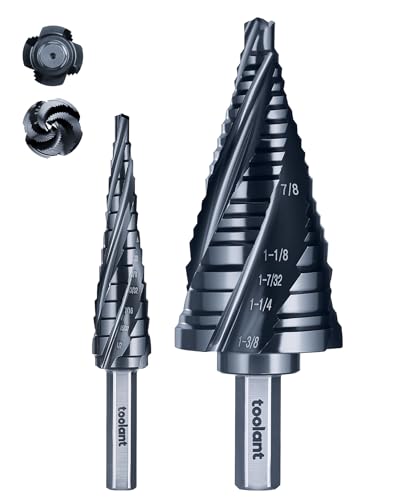
toolant 2PCS Four-Spiral Flute Cobalt Step Drill Bit Set

TEMO M35 Cobalt Spiral Step Drill Unibit Bit

Klein Tools KTSB15 Step Drill Bit #15

KAYGO M35 Cobalt Step Drill Bit, 1/4″ Hex Shank

Unibit Step Drill Bit for Metal, M35 Cobalt, 7/8″-1-3/8″

5-Piece Unibit Step Drill Bit Set, HSS, 1/8″-1-3/8″
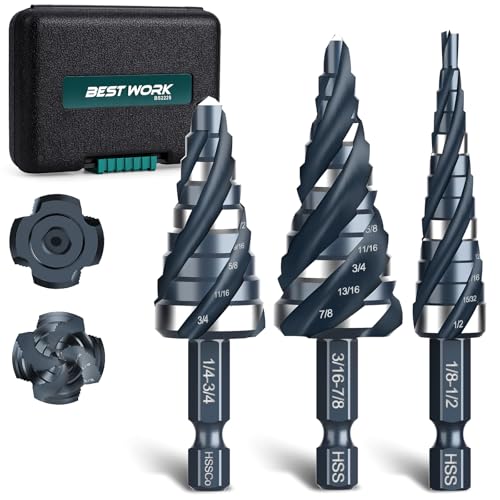
3-Piece Unibit Step Drill Bit Set, HSS, 1/8″-7/8″

Unibit Step Drill Bit Set, HSS, 1/8″-1-3/8″ (5-Piece)
Why These Options Stand Out
The Greenlee GSB12 is the kind of single-purpose bit that earns its place in a plumber’s pouch after one job. Its patented split-step design, where the cutting edge is split into two halves, helps the bit bite into stainless sheet without walking across the surface, and the 1-3/8″ final diameter lands perfectly in standard knockouts. Built for 1/2″ drill chucks, it drops into most corded and cordless drills you’d see on a job site without an adapter.
What separates it from the cobalt sets later in this list is the focused approach: one bit, one job, done with tradesman-grade accuracy. Plumbers and electricians who repeatedly drill the same range of hole sizes in mild steel, aluminum, brass, copper, and stainless will find the bit’s geometry and step transitions tuned for that workflow. It’s a confident, repeatable tool for professionals who don’t need a multi-size kit to do their daily work.
The Helpful Details
- Split-step design helps prevent wandering on startup, a common frustration when pilot-holing stainless.
- The 1-3/8″ final step lands in the sweet spot for plumbing and electrical knockout work.
- Wide material compatibility covers mild steel, aluminum, copper, brass, and stainless sheet.
- The 1/2″ chuck fit removes the need for adapters on most full-size drills.
Honest Caveats
- Single-bit design means you’ll need a second tool to cover smaller hole sizes.
- Performance depends heavily on running the drill at the right speed with cutting fluid, especially in thicker stainless.
Who It Suits Best
Plumbers, electricians, and HVAC installers who repeatedly need 1-3/8″ knockouts in thin stainless or mild steel sheet.
Consider Something Else When
You need to cover a broader size range in one pass: the toolant 2PCS Four-Spiral Flute Cobalt Step Drill Bit Set spans 1/8″ to 1-3/8″ across two bits for varied workloads.
Where the Greenlee trades focus for a single knockout size, the toolant 2PCS Cobalt Step Drill Bit Set trades focus for coverage. Two bits cover the entire 1/8″ to 1-3/8″ range, collapsing what would normally be a bulky five- or six-bit kit into a much more portable package. The four-spiral flute design (four helical channels instead of the standard two) clears chips faster, which matters when you’re stepping into stainless and heat is the enemy.
The six-sided hex shank resists slipping in the chuck, a small detail that pays off in tight quarters or with higher-torque cordless drills. M35 cobalt steel handles heat better than standard HSS, so the bits survive longer drilling sessions in stainless sheet, aluminum, wood, and plastic. It’s a good match for mobile technicians and field service work where the right bit is the one already in the bag.
Features That Help
- Two bits cover 1/8″ to 1-3/8″, which removes the need to swap tools mid-project.
- Four-spiral flute design evacuates chips faster than standard two-flute bits, reducing heat during long cuts.
- Six-sided hex shank reduces slippage in the chuck under high torque.
- M35 cobalt construction tolerates the heat buildup common when drilling stainless.
- Compact two-piece kit is easy to carry in a pouch or drawer.
Small Caveats
- The two-bit design means each bit covers a wide range, so individual steps may feel coarser than dedicated single-purpose bits.
- Cutting fluid or lubrication is still recommended for the cleanest results in stainless.
Made For
Field technicians, fabricators, and DIYers who want a portable two-bit kit that covers nearly every common step-drill size in stainless and other metals.
Where Another Pick Suits Better
Tradesmen drilling the same 1-3/8″ knockout size all day will find the single-purpose Greenlee GSB12 faster to deploy on every cut.
The TEMO M35 Cobalt Spiral Step Drill Unibit targets two of the most common step sizes fabricators need, 7/8″ and 1-1/8″, in a single bit. M35 is a high-speed steel alloyed with cobalt, and that composition helps the cutting edges hold hardness as temperatures climb. For stainless, where heat is the fastest way to ruin a bit, this matters more than people expect.
The double-spiral flutes and stamped size markings make the bit easy to identify mid-job. The 1/4″ hex shank fits most common drill chucks, and a quick-release slot keeps the bit from slipping in keyless chucks under load. It’s a deliberate, narrow-purpose tool, the kind you reach for when those two sizes cover most of your daily work in thin stainless sheet, copper, or aluminum.
What Makes Sense
- M35 cobalt steel resists heat softening during extended drilling in stainless.
- Two-step design (7/8″ and 1-1/8″) covers common electrical conduit and plumbing sizes.
- Stamped size markings on the bit make identification fast on the job.
- Quick-release hex shank reduces slippage in keyless chucks.
Where It May Fall Short
- Limited to two step sizes, so projects outside that range will need an additional bit.
- Best suited for thin materials; pushing too aggressively in thick stock will shorten its life.
Best Suited To
Electricians and metalworkers whose work clusters around 7/8″ and 1-1/8″ holes in thin stainless, aluminum, or copper sheet.
Look Elsewhere When
You need finer size resolution between 7/8″ and 1-3/8″, which the Bestwork M35 Cobalt Step Bit with its 19-step design handles more precisely.
The Klein Tools KTSB15 leans into the brand’s reputation for job-site-ready hand and power tool accessories. This double-fluted step bit covers 7/8″ to 1-3/8″ across three hole sizes, with laser-etched markings at each step for quick visual identification. For electricians and plumbers who already trust the Klein lineup, the bit slots naturally into an existing tool ecosystem.
The 3/8″ hex shank gives a firm, positive grip in larger keyless chucks and helps transfer torque without slipping. An aluminum titanium coating extends tool life compared to standard oxide finishes, which matters in stainless where friction runs high. It’s a premium-tier single bit aimed at professionals who want one reliable tool for a specific range of knockout sizes.
Useful Highlights
- Laser-etched size markings on each step make mid-job identification fast and reduce guesswork.
- Aluminum titanium coating extends working life over standard oxide finishes.
- 3/8″ hex shank provides a positive grip and resists slipping in larger chucks.
- Three-step design (7/8″ to 1-3/8″) covers common electrical and plumbing knockout sizes.
Trade-Offs To Consider
- Coated bits can lose cutting edge performance faster if overheated, so speed control still matters in stainless.
- 3/8″ hex shank may not fit smaller or compact drill chucks without an adapter.
Who Should Grab It
Tradesmen already invested in Klein Tools who want a coated, clearly marked step bit in the 7/8″ to 1-3/8″ knockout range.
A Better Fit Elsewhere
Budget-focused buyers looking for broader size coverage will get more value from the 5-Piece Unibit Step Drill Bit Set spanning 1/8″ to 1-3/8″.
The KAYGO M35 Cobalt Step Drill Bit is a compact, single-purpose option aimed at garage workshops and home improvement projects. M35 high-speed steel with cobalt content gives the cutting edges more heat resistance than standard HSS, which pays off when drilling stainless, aluminum, or mild steel on a hot day in an unventilated shop. The 1/4″ hex shank fits standard cordless drill chucks, so there’s no adapter hunting.
For mechanics, electricians, and home improvement enthusiasts who need a reliable step bit in a common size range, the KAYGO is a sensible, no-fuss choice. It doesn’t offer the breadth of a multi-bit kit, but that’s the point. One bit, one purpose, with the heat tolerance M35 brings to stainless. You may find it more convenient than reaching for a larger set when a single hole size covers the task.
Practical Pluses
- M35 cobalt steel handles heat buildup during stainless drilling better than standard HSS.
- 1/4″ hex shank fits common cordless drill chucks without an adapter.
- Compact size makes it easy to store in a tool drawer or pouch.
- Solid option for both professional and DIY users across steel, aluminum, wood, plastic, and PVC.
Room For Improvement
- Single-bit coverage means separate purchases for hole sizes outside its range.
- May run hot in thicker stainless without consistent cutting fluid application.
Whose Shelf It Belongs On
Garage workshops, home improvement enthusiasts, and trade apprentices who need a reliable M35 step bit for occasional stainless and metalwork.
Swap It Out When
You want a true multi-size set; the TEMO M35 Cobalt Spiral Step Drill Unibit covers two focused sizes, while the 5-Piece HSS Set handles much more.
The Bestwork M35 Cobalt Step Bit with 19 step increments earns its place when hole-size precision matters more than the size of the final diameter. Within the 7/8″ to 1-3/8″ range, this bit offers far more resolution than a typical three- or four-step design, letting you land on uncommon conduit, plumbing, or fabrication sizes without grabbing a second tool. M35 cobalt with a TiAlN coating adds both heat resistance and a hard surface layer to fight wear.
Hardness in the HRC 64 to 66 range puts this bit firmly in the high-performance category, which is what you want when cutting stainless, copper, and aluminum over long sessions. The four-spiral flute design clears chips efficiently, helping the bit stay cool under load. For fabricators who regularly step between custom hole sizes, the density of increments here is a real workflow advantage.
Standout Benefits
- Nineteen step sizes between 7/8″ and 1-3/8″ provide finer size resolution than typical step bits.
- TiAlN coating adds wear resistance beyond standard finishes.
- M35 cobalt with HRC 64 to 66 hardness supports long working life in tough materials.
- Four-spiral flute geometry improves chip evacuation in stainless.
A Few Limitations
- Size range starts at 7/8″, so smaller holes require a separate bit.
- Higher step count makes the bit longer, which can affect clearance in tight spaces.
Perfect Match For
Fabricators and metalworkers who need precise hole sizing within the 7/8″ to 1-3/8″ range in stainless, copper, or aluminum sheet.
Reach For A Different Pick When
You need smaller hole sizes too; the toolant 2PCS Cobalt Step Drill Bit Set covers from 1/8″ upward across two bits.
The 5-Piece Unibit Step Drill Bit Set from Bestwork delivers the broadest size coverage in this roundup without stepping into cobalt pricing territory. Five HSS bits span 1/8″ to 1-3/8″ in overlapping ranges, which means a single kit handles almost any hole size a typical shop encounters in steel, aluminum, copper, wood, and plastic. HSS (high-speed steel) is the standard workhorse material for general-purpose drilling, and at HRC 62 to 65 hardness, these bits hold up well in routine work.
For shops that don’t need cobalt’s extra heat resistance but do need lots of size options, this set is a sensible value. Each bit uses a four-flute design for clean chip evacuation, and the bits share a common hex shank style for quick chuck changes. Whether you’re fabricating brackets, running conduit, or modifying enclosures, the breadth here is hard to beat at the price point.
Reasons It Performs
- Five bits cover the full 1/8″ to 1-3/8″ range, eliminating the need to buy individual bits piecemeal.
- HSS construction with HRC 62 to 65 hardness balances durability and value for general shop use.
- Four-flute geometry on each bit helps clear chips efficiently during longer cuts.
- Wide material compatibility covers steel, aluminum, copper, wood, plastic, and PVC.
Practical Considerations
- Standard HSS will run hotter than M35 cobalt in stainless, so lubrication matters for longer drilling sessions.
- Five bits take up more storage space than a two-piece or single-bit option.
Right Fit For
Home workshops, fabrication shops, and serious DIYers who want broad size coverage across many project types without paying for cobalt.
Where A Sibling Pick Shines
Heavy stainless workloads in the 7/8″ to 1-3/8″ range will benefit from the M35 cobalt build of the Bestwork 19-step bit.
The 3-Piece Unibit Step Drill Bit Set focuses on the lower half of the size range, covering 1/8″ to 7/8″ with three HSS bits. For electricians, hobbyists, and detail work, this is often the most useful part of the spectrum. Smaller holes in junction boxes, control panels, automotive sheet metal, and light-gauge stainless fall right in this range, and a three-bit kit stays light and easy to grab on the way out the door.
At HRC 62 to 65 hardness, the HSS bits handle general shop use across steel, aluminum, copper, wood, and plastic. The four-flute design supports cleaner chip evacuation than two-flute alternatives. It’s a practical middle ground between a single-bit purchase and a full five-piece set, especially if your work rarely calls for holes above 7/8″.
Notable Upsides
- Three bits cover 1/8″ to 7/8″, which fits the majority of electrical and detail hole work.
- HSS construction with HRC 62 to 65 hardness is appropriate for general shop use across multiple materials.
- Four-flute geometry supports cleaner chip evacuation than typical two-flute designs.
- Compact three-piece kit is easier to store and transport than a five-piece set.
Things To Consider
- Stops at 7/8″, so any work above that size needs a separate bit or larger set.
- HSS will run hotter than M35 cobalt in stainless; lighter pressure and cutting fluid extend life.
Who Will Love This
Electricians, hobbyists, and detail workers who frequently drill smaller holes in metal, plastic, and light-gauge stainless.
Skip It When
You regularly need holes above 7/8″, which the 5-Piece Unibit Step Drill Bit Set or the Greenlee GSB12 handle more directly.
The Unibit Step Drill Bit Set from Bestwork rounds out the roundup as a broad-coverage HSS option for fabricators who don’t need cobalt pricing. Five bits span 1/8″ to 1-3/8″ with overlapping ranges, supporting the same wide range of hole sizes as the other 5-piece HSS set earlier, and pairing four cutting edges per bit with a vibration-stable geometry. HSS construction is the practical workhorse choice for general shop and field use.
For sheet metal fabrication, enclosure modifications, automotive work, and general metalwork, this set covers the bases. The HSS bits cut steel, aluminum, copper, and similar metals cleanly, though they will run hotter than M35 cobalt alternatives under heavy stainless use. If you want one kit that handles most step-drilling tasks without specializing, this is a sensible broad-coverage choice.
A Strong Showing
- Five bits cover 1/8″ to 1-3/8″ for full-range versatility in a single purchase.
- Four cutting edges per bit deliver smooth, vibration-stable drilling in steel and aluminum.
- HSS construction fits general shop and field use across multiple materials.
- Sets a sensible baseline option for fabricators who don’t need cobalt heat resistance.
Honest Caveats
- Standard HSS will not match the heat tolerance of M35 cobalt bits in extended stainless drilling.
- Five-piece storage footprint is larger than a two-piece or single-bit option.
Built With In Mind
Sheet metal fabricators, auto enthusiasts, and general metalworkers who want one comprehensive HSS kit for varied step-drilling tasks.
Not Your Match When
You need finer step resolution in the upper range, where the Bestwork M35 19-step bit delivers more incremental sizes between 7/8″ and 1-3/8″.
Factors To Consider When Choosing Step Drill Bits For Stainless Steel
Picking the right step drill bit for stainless really comes down to a few core tradeoffs, and understanding them upfront saves you from burning through bits faster than you’d like. Here’s what to weigh before adding one to your cart.
Material Composition: HSS Versus Cobalt
HSS (high-speed steel) is the workhorse standard for general drilling, affordable, widely available, and good enough for occasional stainless work. M35 cobalt is HSS alloyed with roughly 5% cobalt, which raises the bit’s red hardness (its ability to keep a cutting edge at elevated temperatures). For repetitive stainless drilling, where friction heat builds fast, M35 typically outlasts standard HSS noticeably. The tradeoff is price: cobalt bits cost more per piece. Pick HSS for mixed-material home use and M35 when stainless is the daily workload.
Step Count and Size Range
Step count determines how many hole sizes a single bit can produce, while the size range defines the smallest and largest diameter it covers. A three- or four-step bit handles the most common knockout and conduit sizes, which is plenty for many users. Bits with 15 or more steps in a smaller range give finer size resolution, useful when you need uncommon diameters. Match the count and range to the actual hole sizes you drill, not the theoretical maximum.
Shank Style and Chuck Compatibility
Hex shanks (1/4″ or 3/8″) resist slipping under high torque, especially in keyless chucks, and tend to fit quick-change systems. Round shanks with set screws are more traditional but can spin if the chuck isn’t tight. Always check the shank size against your drill’s chuck capacity: a 3/8″ hex shank needs a chuck that opens that wide, while a 1/4″ hex shank fits almost any standard cordless drill.
Key Considerations Across These Picks
Common Shopping Slip Ups
The most frequent mistake is buying a standard HSS step bit and expecting cobalt-class performance in stainless. HSS works, but the bit will run hotter, and pushing it harder to compensate accelerates wear. Another trap is choosing the wrong size range: a 7/8″ to 1-3/8″ bit is useless if you actually need 1/4″ or 3/8″ holes. Before buying, list the three or four hole sizes you drill most and pick a bit (or set) that covers them without huge gaps in the range.
When Paying More Pays Off
Cobalt and coated bits cost more because they tolerate the heat that destroys standard HSS. If your work involves more than a few stainless holes per session, the upgrade pays back in bit life alone. Coatings like TiAlN add wear resistance and reduce friction, which translates to cleaner cuts and longer tool life. The honest read is that premium picks earn their cost in production environments, while occasional users can stay comfortable in HSS territory.
Frequently Asked Questions
Can step drill bits actually drill through stainless steel?
Yes, when the bit is rated for it. M35 cobalt bits handle stainless well, while standard HSS bits work for thin gauge stainless with light pressure and cutting fluid. The key is keeping heat under control; running too fast or pressing too hard burns the cutting edge fast.
What speed should I run a step drill bit in stainless?
Lower speeds work better than high speeds for stainless. Many users find success in the 200 to 400 RPM range, depending on bit diameter, with steady, moderate feed pressure. Letting the bit do the work without forcing it preserves the cutting edge.
Do I need cutting fluid when drilling stainless with a step bit?
Cutting fluid or lubricant is strongly recommended, especially for deeper cuts or thicker stainless. It reduces friction, extends bit life, and produces cleaner hole edges. Dry drilling stainless works for shallow passes but shortens tool life noticeably.
What’s the difference between a step drill bit and a standard twist bit?
A step drill bit has a conical shape with multiple stepped diameters, letting you drill several hole sizes with one tool. A standard twist bit drills a single diameter per bit. Step bits are ideal for thin materials, sheet metal, and knockout work where you need a clean, burr-free hole.
How long should a step bit last in stainless?
Bit life depends on the material, drilling speed, lubrication, and how often you push the bit past its comfort zone. M35 cobalt bits in stainless can last through dozens of holes with proper technique, while standard HSS bits may dull much faster under the same conditions.




