


A stick welder is one of the most forgiving tools you can keep on a shelf. It tolerates dirty steel, runs off a household outlet, and asks very little in return. Garage tinkerers, weekend fabricators, and farm hands keep coming back to stick for that reason. The challenge is sorting through wall wart inverter units, dual voltage machines, and bare electrode rods, all claiming to be the right starting point. This roundup walks through nine options that cover the realistic spectrum: three electrode picks for the welder who already owns a machine, plus six inverter welders at different amp and voltage tiers. You will see where each one fits and where another pick in this list makes more sense for the work you actually do.
A Closer Look At The Lineup

YESWELDER E7018 1/8″ Welding Rods 10LB
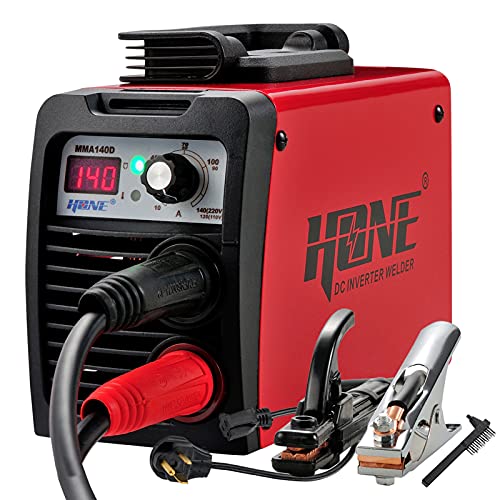
HONE 140Amp ARC Welder 110V/220V

YESWELDER E6013 3/32″ Welding Rods 5LB

YESWELDER E6011 1/8″ Welding Rods 10LB
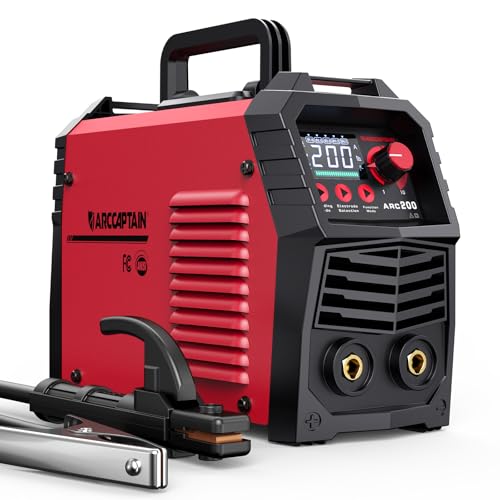
ARCCAPTAIN 200A ARC/Lift TIG 110V/220V

HIZONE 2-in-1 200A ARC/Lift TIG

DEKOPRO 160A MMA Welder 110/220V

TOOLIOM 135A Mini Stick Welder 110V

S7 250A IGBT Inverter ARC Welder
More Details On Our Top Picks
The E7018 is the rod you reach for when a joint actually has to hold. It is a low-hydrogen, iron-powder electrode, which sounds like jargon until you remember what hydrogen does to a weld: it sneaks in and later cracks the bead from the inside. By keeping hydrogen levels low, this rod produces the kind of weld a code inspector or a serious fabricator trusts.
You can run it in any position on AC or DC reverse polarity, which means it works with the entry level HONE inverter covered later and the heavier S7 as well. The 1/8″ diameter and 10 lb pack suits farm equipment repair, trailer hitches, and structural bracket work where a clean, x-ray quality bead matters.
A Few Highlights
- Low-hydrogen formula resists underbead cracking on critical joints
- Runs on both AC and DC reverse polarity, broad machine compatibility
- Iron powder coating supports smoother arc travel and stronger beads
- 10 lb pack is a sensible stock size for shop or farm use
- Performs well in flat, horizontal, vertical, and overhead positions
Things To Consider
- Rod needs to stay dry before use, so storage in a heated rod oven or sealed container is wise
- Less forgiving on rusty steel than the E6011 covered later in this list
Who It Suits Best
Fabricators working on structural joints, trailer frames, or any weld that gets inspected, who already own a compatible inverter.
Where Another Pick Suits Better
For dirty outdoor repair on a barn gate or rusted farm implement, the YESWELDER E6011 1/8″ rods are a more forgiving choice.
The HONE is the unit you hand to someone who has never struck an arc. It runs on either 110V or 220V, so the same machine plugs into a kitchen outlet on Saturday and a garage outlet the next weekend. IGBT inverter technology (a modern power transistor design that keeps the unit small and light) keeps the whole package under twenty pounds, easy to carry to a neighbor’s driveway.
Hot start, arc force, and anti-stick are built in. Hot start briefly boosts current to ignite the rod cleanly, arc force keeps the puddle fluid as you travel, and anti-stick prevents the electrode from welding itself to the plate when your angle drifts. For 1/16″ to 1/8″ rods, it covers most home projects without feeling like a compromise.
The Practical Payoff
- Dual voltage flexibility suits apartments, garages, and small workshops
- Digital LCD display shows current at a glance
- Anti-stick feature saves beginner rods from being wasted on bad strikes
- Light enough to carry one handed to a job site
- Comfortably handles 7018, 6011, and 6013 rods
Worth Noting
- 140 amp ceiling limits thicker plate work and longer duty cycles
- Without a dedicated VRD (voltage reduction device, a safety feature that lowers open-circuit voltage), extra caution is required in damp conditions
Made For
First time welders who want one machine that travels between outlets and projects, learning the craft on mild steel up to roughly 1/4 inch thick.
Skip It When
If you weld thick plate regularly, the S7 250A welder further down this list gives you more headroom for production work.
Where the E7018 demands clean steel and a steady hand, the E6013 forgives. It is a mild steel, general purpose rod with a smooth, stable arc that does not punish a beginner for a slightly wrong angle. The 3/32″ diameter suits thin sheet metal and the smaller amps of machines like the TOOLIOM 135A covered later.
You will find this rod equally happy on a low voltage AC machine as on a DC inverter. The trade-off is shallower penetration, so it is the right pick for body panel patches, light gauge frames, and poor fit up joints, less so for heavy structural work where the E7018 or E6011 belongs.
Well-Handled Touches
- Tolerates dirty or poorly fit steel better than most rods
- Low spatter means less grinding after the bead cools
- Self cleaning slag on vertical down fillets saves time
- 3/32″ diameter suits small inverter welders and thin material
- Works on AC and DC power sources
Points To Note
- Shallow penetration rules it out for thick plate and structural welds
- 5 lb pack is small for shop use but ideal for a hobbyist learning technique
Right Fit For
Beginners running light gauge steel on a household outlet welder, and anyone patching thin sheet metal around the house or shop.
Look Elsewhere When
For deep penetration on dirty outdoor steel, the YESWELDER E6011 1/8″ rods are the more appropriate choice.
The E6011 is the rod you grab when the steel is not ready. Where most electrodes demand a wire brushed surface, the 6011 was designed for dirty, rusty, or even painted mild steel. It runs on AC power, which is the kind of current that older farm and shop transformers put out, though modern inverters like the HONE handle it just as well.
Deep penetration and fast freezing slag make it ideal for out of position work and tight repairs. You may find the arc feel more aggressive than the E7018 covered above, but that bite is exactly what lets it dig through a contaminated surface and still leave a solid weld.
Strong Points
- Deep penetration welds through rust, paint, and mill scale
- All position welding, vertical, overhead, horizontal, flat
- AC compatible for older transformer style machines
- 10 lb pack is a sensible workshop size
- Strong arc force suits first pass root welds on pipe
Honest Caveats
- Produces more spatter than the E7018 or E6013, so cleanup takes longer
- Not the rod to choose for cosmetic, code inspected joints
Best Suited To
Farmers, mobile welders, and anyone repairing dirty steel outdoors where cleanup is impractical.
Another Choice May Suit
For clean shop welds on structural steel, the YESWELDER E7018 1/8″ rods deliver a more refined bead with less post weld grinding.
The ARCCAPTAIN is the welder for someone who wants to graduate beyond stick without buying a second machine. The 200 amp ceiling covers 1/8″ and even 3/32″ rods comfortably, and the same chassis handles lift TIG, which is a basic TIG arc starting mode that touches the tungsten to the workpiece before lifting it to strike an arc, perfect for clean welds on thinner steel and stainless.
The intelligent LED screen is genuinely useful in a dark garage. You can read current without lifting the helmet, which sounds small until you have tried dialing amps by squinting at a knob. Good with 6010, 6011, 6013, and 7018 rods.
What It Does Well
- 200 amp ceiling handles thicker plate and longer beads than 140A units
- LED screen readable without removing the helmet
- Lift TIG mode adds a second process without buying another machine
- Synergic control simplifies parameter setup for newer welders
- Compatible with the common 6010, 6011, 6013, and 7018 rod lineup
Worth Bearing In Mind
- Lift TIG needs a separate torch, not always obvious in the box
- Higher amp draw on 110V may trip a standard 15A household circuit during long welds
Who Should Grab It
Garage fabricators who want one machine for stick now and TIG later, especially those working on cars, brackets, and stainless furniture.
Reach For A Different Pick When
For pure field repair on dirty steel without a clean TIG workflow, the HONE 140A is lighter and simpler to throw in a truck.
The HIZONE stands out in this roundup for a feature that does not get talked about enough: an optional VRD. A voltage reduction device lowers the open circuit voltage (the live voltage at the stinger when you are not actually welding) to a safer level, which matters in damp basements, rainy fence lines, and anywhere a stray current could bite.
Turn VRD off and you get a more aggressive arc start for outdoor stick work. Leave it on and you trade a little arc ease for shock protection. The 200 amp output covers the same rod family as the ARCCAPTAIN, plus cast iron and stainless.
Notable Gains
- Optional VRD adds a real safety margin in damp or outdoor conditions
- 200A output covers 1/8″ rods and most plate thicknesses up to 1/4″
- Compatible with 6010, 6011, 6013, and 7018 electrodes
- Welds carbon steel, medium carbon steel, low carbon steel, stainless, and cast iron
- Dual voltage flexibility for shop and field outlets
Trade Offs
- VRD mode can make arc starting a touch less crisp, so toggling takes getting used to
- Documentation around cast iron settings is thin, so dialing in takes trial beads
Who Will Love This
Farm welders, mobile repair techs, and anyone who works near moisture where open circuit voltage is a real concern.
Swap It Out When
For pure indoor hobby welding without damp conditions, the ARCCAPTAIN is the cleaner pick with a more polished display.
The DEKOPRO is the box you open on day one and start welding. The kit ships with electrode holder, work clamp, input power adapter, and a cleaning brush. For a first time welder, that matters: nothing is more frustrating than realizing your new machine needs a $40 ground clamp you did not budget for.
160 amps covers the practical ceiling for 1/8″ rods on home wiring, and the IGBT inverter keeps weight manageable. Hot start is built in, so striking 7018 rods in a tight corner is less of a chore.
Bright Spots
- Complete kit removes the accessory shopping step for beginners
- 160A output handles 1/8″ rods at a comfortable duty cycle
- IGBT inverter keeps size and weight reasonable for the class
- Hot start feature helps with 7018 strikes
- Compatible with mild steel, weld steel, stainless, and cast iron
Some Limits To Know
- Included accessories are functional, not premium, so upgrading the ground clamp is common
- Cooling fan tends to run often, suggesting a conservative thermal design
Perfect Match For
First time welders who want everything in one box and a machine that grows with them as they move from 6013 practice rods to 7018 fabrication work.
Not Your Match When
For TIG versatility or higher amp headroom, the ARCCAPTAIN 200A is the step up worth making.
The TOOLIOM is the welder for a one car garage, a basement corner, or a balcony workshop where outlet capacity is the real limit. It runs on a 110V household circuit, weighs roughly ten pounds, and tucks into a shelf when you are done. Despite the small size, you still get hot start, arc force, and anti-stick electronics built in.
Lift TIG mode is included, though the torch is sold separately. For 6011 and 6013 rods, this little unit performs at a level that surprises first time users, assuming you are not pushing it past 1/8″ material.
What Makes Sense
- 110V only operation suits any standard household outlet
- Compact size fits a small workbench or shelf
- Built in anti-stick reduces beginner frustration
- Handles 6011 and 6013 rods without complaint
- Optional lift TIG mode for clean welds on thin steel
Factors To Consider
- 135A ceiling restricts plate thickness and long bead runs
- 110V only means no 220V option for heavier home circuits
The Right Fit
DIYers in apartments, hobbyists, and anyone needing a portable welder that can travel to a project and run on a kitchen outlet.
Where A Sibling Pick Shines
For farm work or thicker steel, the S7 250A welder in this roundup delivers the amperage headroom the TOOLIOM cannot.
The S7 is the welder for a workshop that sees real work. 250 amps at 220V is the kind of headroom that lets you lay a 3/16″ rod into 3/8″ plate without cooking the machine. Switch to 110V for lighter tasks and a basic outlet, and the same unit covers both ends of a project list.
Compatibility with E6010, E6011, E6013, and E7018 rods means you can keep the same electrode inventory across this machine and the smaller units reviewed above. It is heavier than the HONE or TOOLIOM, but the tradeoff is honest: more amps, longer duty cycles, fewer thermal cutouts on production days.
Strengths Worth Knowing
- 250A ceiling handles 3/16″ rods and thick plate welding
- Dual voltage flexibility for outlet range at home and the shop
- Broad rod compatibility across 6010, 6011, 6013, and 7018
- Portable relative to transformer welds of similar output
- Stable arc on long beads reduces rework
Potential Drawbacks
- Heavier than smaller inverters, so it stays put on a bench rather than traveling
- Full 250A output requires a dedicated 220V circuit on a higher amperage breaker
Whose Shelf It Belongs On
Workshop welders, farm shops, and small fabrication businesses that need a real workhorse rather than a hobby unit.
A Better Fit Elsewhere
For light household repairs and portability, the TOOLIOM 135A is the more practical everyday companion.
Matching A Stick Welder To The Work You Actually Do
Amperage And Plate Thickness
Amperage is the spec that decides what you can actually weld. For 1/16″ rods on sheet metal, a 90A machine is enough. For 1/8″ rods on 1/4″ plate, you want at least 140A. For 3/16″ rods on thicker steel, look at 200A and up. Match the machine ceiling to the thickest steel you realistically see, not the thinnest.
Voltage And Outlet Reality
110V welders plug into any household circuit, which makes them easy to live with. 220V units draw less current for the same work, so you can push harder without tripping a breaker. Dual voltage machines give you both, at the cost of slightly higher price and weight. Pick based on the outlet you actually have nearby, not the one you wish you had.
Rod Selection And Versatility
A welder that runs 6011, 6013, and 7018 covers the practical rod universe for most home and farm work. If a machine lists only one or two rod types, that limits your future options. Machines that also offer lift TIG open the door to cleaner welds on thinner steel and stainless, useful for furniture and automotive panels.
Duty Cycle And Cooling
Duty cycle is the percentage of a ten minute window the machine can weld before needing to cool. A 40% duty cycle at 140A means roughly four minutes of welding, six minutes of rest, at that output. Lower duty cycles feel fine on light repairs and become a real bottleneck on long beads. Look for machines that publish duty cycle honestly, and oversize your amp choice if you weld for hours at a stretch.
Key Considerations Across These Picks
Where Shoppers Go Wrong
A common slip is matching rod diameter to the wrong machine. Beginners buy 1/8″ rods for a 90A welder and then wonder why the rod sticks and sputters. Match the rod to the amp ceiling before ordering a bulk pack. Another trap is ignoring the outlet situation at the work site. A 220V only machine in a 110V garage means buying a new circuit before the first weld.
What Separates Premium From Basic
Higher tier welders in this category buy you three things: real IGBT inverter boards that hold stable output under load, a meaningful duty cycle at the rated amps, and dual voltage flexibility. For occasional home repair, a basic single voltage unit is enough. For weekly fabrication or farm work, the upgrade pays back in fewer thermal cutouts and longer machine life.
Frequently Asked Questions
What Size Stick Welder Should A Beginner Buy?
A 140 to 160 amp dual voltage inverter covers the realistic first year of stick welding without overbuying. Anything smaller limits rod choice, anything larger adds cost and weight you do not need yet.
Can A Stick Welder Run On A Household Outlet?
Yes, a 110V stick welder like the TOOLIOM 135A runs on a standard 15A household circuit. Higher amp machines may need a 20A or 220V circuit to avoid tripping.
What Is The Easiest Stick Rod To Learn On?
The E6013 is widely regarded as the most forgiving rod for first time welders. It runs on lower amps, tolerates a slightly off angle, and cleans up easily.
Do I Need A TIG Function On A Stick Welder?
Not for stick work, but lift TIG opens cleaner welds on thin steel, stainless, and automotive panels. If your projects trend toward sheet metal or stainless furniture, it is worth having.
How Long Do Stick Electrodes Last Unopened?
Sealed rods in the original packaging stay usable for years. Once opened, store them in a dry container, since moisture ruins low hydrogen rods like the 7018 faster than mild steel rods.




