


A worn gate hinge, a cracked trailer tongue, a piece of sheet metal that just won’t stop flapping in the wind. Stick welding rods solve these small, annoying metal problems without dragging you to a fabrication shop, and the right electrode makes the difference between a clean, controllable bead and a frustrating, spattery mess. This list covers nine common carbon-steel and low-hydrogen stick welding rods suited to hobby welders, farm and ranch repairs, and anyone building or patching mild steel at home. Every pick is matched to a realistic scenario so the rod you actually need is easier to spot.
The Lineup, Simplified
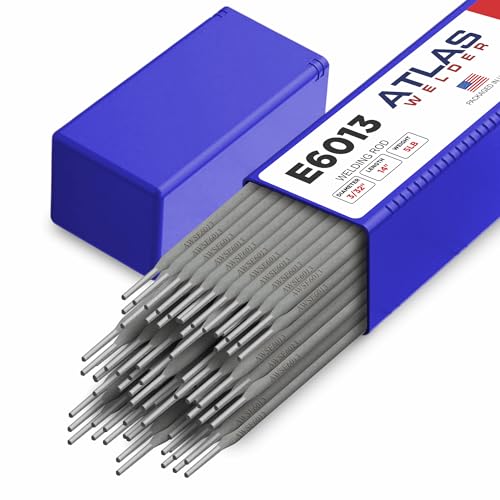
ATLASWELDER E6013 3/32″ 5LB Welding Rods

E6013 3/32″ 1LB Welding Rods

Victory Welding Alloys 6013 3/32″ 5LB Box

YESWELDER E6013 3/32″ 2LB Welding Rods

Forney 30681 E7018 AC Welding Rod 3/32″

Forney 31101 E6011 Welding Rod 3/32″

E6013 1/8″ 2.5LB Welding Rods 14″

E6013 3/32″ 5LB Carbon Steel Stick Rods
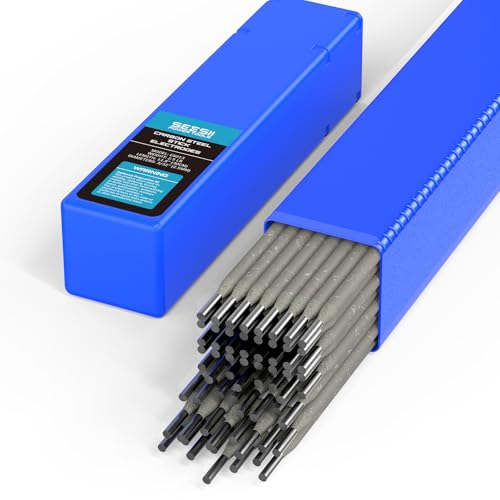
Seesii E6013 2.5LB 3/32″ Welding Rods
The Strengths Of Each Pick
The ATLASWELDER E6013 3/32″ 5LB Welding Rods land at the top of this list because they handle the most common repair situations without asking you to think too hard. E6013 is the general-purpose mild-steel stick electrode, designed to run on both AC (alternating current, which reverses direction many times per second) and DC (direct current, which flows one way) welding machines, and to strike an arc easily even on slightly dirty steel.
You can pivot from patching a thin sheet-metal panel to welding a thicker repair bracket with the same rod box, which makes this 5-pound pack a strong everyday supply for a home shop. The 3/32″ diameter suits light-to-medium material well, and the low-spatter behavior means less time on cleanup after the slag cools.
Good Reasons To Consider
- Smooth arc starts help new welders build confidence without constant restriking.
- All-position capability (flat, horizontal, vertical, overhead) covers almost any home repair angle.
- Easy slag removal reduces chipping time between passes on multi-pass welds.
- 5-pound box gives long runway for ongoing projects without frequent reordering.
- Runs on lower open-circuit-voltage (OCV) machines, which are common in entry-level welders.
Worth Noting
- E6013 is not a low-hydrogen rod, so it’s the wrong choice for critical structural or code work.
- Rod storage matters: keep the box sealed and dry, since humidity can degrade arc stability over time.
Who It Suits Best
DIY welders, hobbyists, and small-shop owners doing general mild-steel fabrication, gate and fence repair, and equipment patching.
Look Elsewhere When
For thicker plate or critical structural welds, the Forney 30681 E7018 AC Welding Rod is a better-matched upgrade.
Compared to the ATLASWELDER pack above, this LIIJII 1-pound option is a smaller, lower-commitment box of the same E6013 classification. The trade is volume for accessibility: you’re not locking in a huge supply, which is a real upside if you’re just learning the difference between striking an arc and dragging the rod.
The 1-pound size is also easier to store properly. E6013 rods are coated in a flux that can absorb moisture over time, so a smaller sealed pack often arrives fresher and stays that way during a beginner’s slower pace of use.
Points In Its Favor
- All-position welding lets you practice overhead and vertical without switching rods.
- Runs cleanly on low-voltage AC machines, which most entry-level stick welders are.
- Slag lifts off easily, so beginners spend more time welding and less time chipping.
Trade Offs
- 1 pound runs out quickly on anything beyond a few small patches.
- Some hobbyists find the arc a touch softer than heavier 5-pound bulk rods, so penetration on thick steel feels mild.
Made For
First-time welders practicing technique on a small AC buzz box or entry-level inverter welder.
Consider Something Else When
For larger ongoing projects, the ATLASWELDER E6013 3/32″ 5LB Welding Rods offer the same classification in a much larger pack.
The Victory Welding Alloys 6013 box leans into the side of E6013 use that beginners often miss: thin sheet metal. Where the 1-pound LIIJII box above is a learning aid, this 5-pound supply is built for people who actually have sheet-metal work waiting in the shop, like automotive patch panels, ducting, or trailer skins.
The classification’s easy slag control shows up clearly at the 3/32″ diameter on lower-voltage AC, which is how most hobby machines are set during fine work. You get a clean bead with minimal spatter, and the slag (the protective coating that hardens over the weld as it cools) typically pops off in pieces rather than fighting you.
Standout Benefits
- Light-gauge performance that suits body panels and thin-wall tubing well.
- Good bead appearance with little post-weld grinding required.
- Stable arc on smaller transformer welders, which some owners report stuttering on competitive rods.
Points To Keep In Mind
- Not designed for thick plate; penetration on material over 1/4″ is shallow.
- Storage habit matters: a sealed rod canister or low-wattage rod oven extends shelf life significantly.
Who Should Grab It
Shop welders handling automotive sheet metal, exhaust components, and thin-wall fabrication work.
Skip It When
For thicker structural steel, the Faiuot E6013 1/8″ 2.5LB Welding Rods are a closer match in diameter and heat input.
Where the Victory box above targets thin sheet metal, the YESWELDER E6013 3/32″ 2LB pack is built for the awkward middle ground. The 2-pound size is a smart middle weight if the Victory’s 5-pound box feels like too much and the LIIJII 1-pound option feels like too little.
What makes this rod stand out in practice is the way it handles vertical-down fillet welds. The flux is described as virtually self-cleaning in that position, so you spend less time on a ladder chipping slag and more time watching the bead lay down cleanly. It’s also a friendly rod on poor-fit joints, which most home repair situations actually are.
Notable Upsides
- Stable vertical-down performance reduces the most common home-repair frustration.
- Low spatter keeps cleanup minimal on visible welds like frames and brackets.
- 2-pound size is easy to rotate through before the coating absorbs workshop humidity.
Small Caveats
- Designed for shallow penetration, so deep-strength repairs need a different classification.
- Not optimized for thick plate over 3/16″; you’ll feel the heat input limits quickly.
Best Suited To
DIYers handling repair welds on poorly fitted joints, lap joints on light steel, and short fillet welds around the home or shop.
Another Choice May Suit
For deep-penetration repair on dirty or outdoor steel, the Forney 31101 E6011 Welding Rod is purpose-built for that scenario.
The Forney 30681 E7018 AC is the first non-E6013 rod on this list, and it represents a different league. E7018 is a low-hydrogen electrode, which means its coating is formulated to keep moisture out of the weld pool. That matters on critical joints, structural welds, and any work where porosity (tiny trapped gas bubbles inside the weld) and cracking are not acceptable.
This particular E7018 is rated for AC welding, which is unusual for the classification; most 7018s require DC+. That makes it more flexible in shops running transformer-based AC welders. The 3/32″ diameter keeps heat input manageable on smaller joints, and the 5-pound box is sized for ongoing work.
What Makes Sense
- Low-hydrogen formulation reduces the risk of weld cracking under stress.
- AC compatibility opens the door for users without a DC-output machine.
- Clean bead contour with light spatter, so the slag often self-cleans.
Things To Weigh
- Storage discipline is non-negotiable: E7018 rods absorb moisture readily and must be kept in a rod oven or heated storage.
- Lower penetration than E6011 or E6010, so fit-up and joint prep matter more.
The Right Fit
Welders taking on structural repairs, trailer frames, agricultural equipment, and other higher-stress joints.
Where A Sibling Pick Shines
For thin sheet metal or simple patch jobs, the YESWELDER E6013 3/32″ 2LB Welding Rods are easier to live with and cheaper to replace.
The Forney 31101 E6011 is a different tool from every E6013 on this list. Where E6013 is the polite, smooth-arc generalist, E6011 is the dig-deep, blow-through-anything workhorse. Its cellulose-based coating creates a forceful arc that pushes through rust, paint, and dirt, which is the situation you usually face in a real field repair.
That penetrating arc also freezes faster, meaning the puddle solidifies more quickly. For overhead and vertical-up welding, where gravity is working against you, that fast freeze is a real asset. The 1-pound size is modest, but E6011 is the rod you want on hand for the dirtiest, hardest jobs, not for everyday use.
Useful Touches
- Deep penetration welds through contaminated steel without extensive surface prep.
- Fast-freezing puddle helps on vertical and overhead joints.
- Compatible with both AC and DC welders, including older transformer machines.
Honest Caveats
- Heavier spatter and more slag than E6013, so cleanup takes longer.
- Not a cosmetic rod; bead appearance is rougher than low-hydrogen or E6013 welds.
- 1-pound size suits occasional use; high-volume operators will repack frequently.
Whose Shelf It Belongs On
Farmers, ranchers, and mobile welders facing rusted, painted, or dirty steel in the field.
Swap It Out When
For clean shop work on lighter material, the Seesii E6013 2.5LB 3/32″ Welding Rods are a calmer, prettier choice.
Up to this point, every rod on the list has been 3/32″ in diameter. The Faiuot E6013 1/8″ rod is a different proposition: a thicker electrode that lays down more weld metal per pass and pushes more heat into the joint. That’s what you want for heavier plate, structural tubing, and farm-style fabrication.
You also need a machine with enough amperage to drive a 1/8″ rod. Smaller 110V hobby welders may struggle. On a 200-amp machine, the 1/8″ E6013 produces a confident arc on material that 3/32″ simply cannot reach into, which is why this rod belongs on the shelf next to thicker repair work.
Advantages To Know
- Higher deposition (more weld metal per pass) reduces total pass count on thicker joints.
- 14″ length is a standard for fabrication shops, fitting common stinger sizes.
- AC/DC compatibility matches most welders in home and pro shops.
Practical Considerations
- Requires a machine with sufficient amperage; underpowered welders produce a sluggish arc.
- Too much heat for thin sheet metal, which warps easily under this diameter.
Perfect Match For
Welders working on gates, fence frames, trailer repairs, and other light structural projects in the 1/8″ to 1/4″ thickness range.
Reach For A Different Pick When
For thin sheet metal, the Victory Welding Alloys 6013 3/32″ 5LB Box keeps heat input under control.
The JustHot E6013 3/32″ 5LB pack is the value side of the same classification covered by the ATLASWELDER 5-pound box above. Both are general-purpose mild-steel rods, both come in 3/32″ diameter and 5-pound volume, and both run on AC or DC. The differences are subtle and show up in coating chemistry and arc feel rather than the headline spec.
The JustHot rods use a titania-calcium coating formulation, which is the standard mix for E6013 and produces the smooth, low-spatter arc the classification is known for. Stable arc restrike (restarting the arc after breaking it) is a small but real practical feature on a rod that breaks contact frequently during vertical-down work.
A Few Strong Suits
- Titania-calcium coating suits vertical-down and fillet welding particularly well.
- 5-pound supply gives long runway for ongoing projects.
- Low-spatter performance keeps post-weld grinding light.
Where It Is Less Suited
- Limited brand recognition means less published technical support than legacy brands.
- Same E6013 moisture caveats apply; storage in a dry environment is essential.
Built With In Mind
Shop welders seeking a value-priced 5-pound E6013 supply for general fabrication, especially vertical-down and fillet work.
A Better Fit Elsewhere
For absolute minimum startup cost on a learning project, the LIIJII E6013 3/32″ 1LB box is the lower-priced entry point.
The Seesii E6013 2.5LB 3/32″ rod rounds out the list as a quiet, all-purpose home-shop staple. The 2.5-pound volume is a less common size that splits the difference between the YESWELDER 2-pound pack and the ATLASWELDER 5-pound bulk box, and the 11″ rod length is a useful detail if you prefer slightly shorter electrodes for tight or awkward joints.
Like every E6013 on this list, it runs on AC or DC and handles all positions, including overhead. The arc is mild, the slag is manageable, and the bead appearance is generally clean. For homeowners who weld occasionally and want one rod to keep in the garage for unexpected repairs, this is a sensible default.
Real Benefits
- All-position capability (overhead included) covers unexpected home repair scenarios.
- 2.5-pound pack is sized to stay fresh in a garage or shop with moderate humidity control.
- Stable performance on low-voltage AC welders typical of home use.
Possible Compromises
- Shallow penetration makes it wrong for thick steel or dirty outdoor metal.
- Shorter 11″ rods mean more frequent electrode changes on long seams.
Who Will Love This
Homeowners keeping a small welding setup for occasional repair work, from fence panels to bike frames to small brackets.
Not Your Match When
For field repairs on rusted farm equipment, the Forney 31101 E6011 Welding Rod handles contaminated steel far more reliably.
Choosing The Right Stick Welding Rods for Your Welder and Project
Match the electrode classification to the base metal
The four-digit AWS (American Welding Society) classification tells you almost everything you need. The first two digits are the tensile strength in thousands of psi (pounds per square inch); the third digit is the position; the fourth is the coating and current type. E6013 means 60,000 psi tensile, all-position, titania-calcium coating, AC/DC. E7018 means 70,000 psi tensile, all-position, low-hydrogen coating. For most home repairs, E6013 is the right default. Reach for E6011 when the steel is dirty or you need deep penetration. Pick E7018 for structural or high-stress work and keep it dry.
Diameter drives the heat requirement
3/32″ rods run on smaller welders and suit thinner material, generally under 3/16″. 1/8″ rods need more amperage and fit heavier plate. Running a 1/8″ rod on an underpowered machine produces a sluggish, stubbing arc. Running 3/32″ on heavy plate produces under-penetrated welds. The match between rod diameter and machine output is the most overlooked practical detail.
Storage habits decide whether the rod actually works
All flux-coated electrodes absorb moisture over time, and E7018 is especially sensitive. A sealed plastic bin, a small rod oven, or even a warm dry cabinet makes the difference between a rod that strikes clean and one that pops and sputters from absorbed humidity. If you weld once a month, smaller sealed packs (1 to 2.5 pounds) stay fresh longer than a bulk 10-pound box left half-used for a year.
Consider the joint, not just the metal
Poor fit-up (where the two pieces of metal don’t align tightly before welding) calls for a rod with deeper penetration or faster freeze, like E6011. Clean, well-fitted joints let you take advantage of an E6013’s smoother cosmetic bead. Field repairs tend to demand the former; shop fabrication usually rewards the latter.
Key Considerations Across These Picks
Common Shopping Slip Ups
The most common mistake is buying by pack size alone. A 5-pound box of E6013 sounds like a deal, but if your welder cannot drive 1/8″ rods and the box is 1/8″, you’ll be stuck. Match the rod diameter to your machine’s output first, then the classification, then the volume.
Another trap is ignoring storage. A bargain-priced bulk box that gets left open in a damp garage becomes unusable within months. Either buy smaller sealed packs you will rotate through, or plan for a rod oven if you go big.
What The Higher Tier Buys
Spending up to a low-hydrogen E7018 buys two things: a stronger, more crack-resistant weld, and the responsibility of proper storage. If your project is critical, structural, or subject to inspection, the upgrade pays for itself. If your project is a backyard repair, the E6013 options on this list are the smarter spend.
Frequently Asked Questions
What does the E6013 classification actually mean?
E6013 is a general-purpose mild-steel stick electrode that runs on AC or DC welding machines, works in all positions, and is known for easy arc starting and smooth slag removal. It is the most beginner-friendly classification for carbon-steel home repair.
Can I use E6013 rods on a small 110V welder?
Yes. E6013 rods in the 3/32″ diameter run well on lower-voltage AC welders, including common 110V inverter models. The lower open-circuit voltage of those machines is actually well-matched to E6013’s arc characteristics.
How do I store welding rods so they stay usable?
Keep them in a sealed container away from humidity, ideally in a low-wattage rod oven or a warm dry cabinet. E7018 rods are especially moisture-sensitive; E6013 and E6011 tolerate a bit more variation but still degrade with prolonged exposure.
Which rod should I use on rusty or painted steel?
Reach for E6011 for dirty, rusty, or painted steel. Its cellulose-based coating and forceful arc cut through contamination. E6013 will still work, but it performs best on cleaned or lightly oxidized metal.
Is a 1-pound rod pack enough for real projects?
For learning and small patches, yes. A 1-pound pack of 3/32″ rods yields roughly 30 to 40 short beads. For anything larger, a 2- to 5-pound box provides better value and reduces the frequency of reordering.




