


A dull pocket knife turns a useful tool into a paperweight. Whether you carry a daily EDC (everyday carry) folder, a fixed-blade camp knife, or a small pen blade on a keychain, the right sharpening stone makes the difference between a working edge and a frustrating one. Pocket knives bring specific challenges: short blades, varied steel types, and the need to touch up an edge in the field. This list focuses on stones and hones sized and shaped for that reality, covering everything from aggressive repair grits to pocket-friendly ceramic files and dual-grit pucks.
The Picks In Brief

Shapton K0709 Glass Sharpening Stone #320

Monbalcon Diamond Sharpening Steel 10″

Monbalcon Honing Rod 10″ High Carbon Steel
Norton Combination Aluminum Oxide Benchstone 6″

Monbalcon Honing Rod 10″ with Steel Handle
DMT DiaSharp 2.5″ Diamond Mini-Hone Kit

King K#-Whet Stone 1200 Grit
Spyderco 400 Grit Square Ceramic File

Gränsfors Bruks Ceramic Grinding Puck
Meet The Standout Selections
The Shapton K0709 sits in a glass-ceramic body, a category known for cutting fast while leaving a clean scratch pattern. At 320 grit, it is firmly in repair territory: the right choice when a pocket knife edge has rolled, chipped, or gone completely dull from months of carry. The included plastic sleeve doubles as a non-slip base during use, which helps on a workshop bench or kitchen counter.
Compared to softer water stones, this Shapton feels almost glassy under the blade, with little muddy residue to rinse away. It can be used with water, dry, or with honing oil depending on preference, giving flexibility for those who already own one type of sharpening fluid. The dimensions are generous enough for full-size chef knives but small enough to live in a drawer.
Bright Spots
- The 320 grit cuts aggressively, saving time on badly neglected edges.
- The hard glass-ceramic surface stays flat far longer than soft water stones.
- The included storage case works as a sharpening base, no extra stand needed.
- Compatible with water or oil, so you can match your existing sharpening routine.
Things To Consider
- 320 grit leaves a scratchy finish that almost always needs a follow-up fine stone for working edges.
- The stone is sold individually, so beginners will need to pair it with a higher-grit companion stone.
Key Specs
Built With In Mind
People restoring neglected or damaged pocket knife edges who already plan to refine on a finer stone afterward.
Where Another Pick Suits Better
First-time sharpeners working with only one stone should consider the King K#-Whet Stone, which offers a higher starting grit in a single package.
A diamond-coated steel rod takes the classic honing steel concept and gives it real bite. At 10 inches long with a 0.4-inch diameter, this Monbalcon rod reaches comfortably along pocket knife blades and small kitchen knives alike. The fine diamond abrasive restores an edge in a handful of strokes, which matters when you are working on a short folder blade that does not have much real estate to grind.
The rod’s hard diamond coating does not wear down the way traditional ceramic or steel hones eventually do, so the sharpening surface stays consistent over years of regular use. For EDC fans, this is the kind of tool that lives next to the knife roll and gets pulled out before every outing.
What Makes Sense
- The 10-inch length handles both short pocket blades and longer kitchen knives without changing grip.
- Diamond abrasive sharpens rather than merely realigning the edge.
- The slim 0.4-inch diameter fits standard knife block slots and drawer organizers.
Points To Note
- Steel rods demand a steady hand and consistent angle, which can feel awkward for first-time users.
- Unlike a flat stone, a rod cannot flatten a chipped or rolled edge, it works best on edges that need a quick refresh.
Right Fit For
Carriers who want a fast, durable hone that can be deployed right before a knife goes into a pocket or pack.
Consider Something Else When
Anyone needing to repair a chipped tip or rebuild a damaged edge should reach for the Shapton K0709 Glass Sharpening Stone instead.
This Monbalcon honing rod is built around German high-carbon steel with a smooth, fine-grit surface designed to realign knife edges rather than grind them. The 10-inch length and 0.5-inch diameter give it a substantial, balanced feel in the hand, while the natural wood handle brings warmth and grip security that synthetic handles sometimes lack.
The included gift box makes this a natural choice for gifting, but the rod itself is the main event. For pocket knife owners, it works well on folding blades, fixed-blade skinners, and smaller kitchen knives that get regular use. The fine-grit surface means it will not remove significant material, so it functions as a maintenance tool between deeper sharpenings.
What Helps Most
- Fine-grit high-carbon steel realigns edges without thinning the blade.
- Natural wood handle offers a confident, warm grip during longer sessions.
- Long 10-inch rod covers full pocket knife blades in just a few strokes.
Room For Improvement
- A honing rod alone cannot fix a dull edge, it is a maintenance tool, not a repair tool.
- Wood handles need a dry storage spot to avoid swelling or warping over time.
Who It Suits Best
People who sharpen weekly and want a traditional-feeling maintenance rod to keep edges aligned between stone sessions.
Look Elsewhere When
If you regularly deal with chips or rolled tips, the DMT DiaSharp Mini-Hone Kit offers a more repair-oriented portable option.
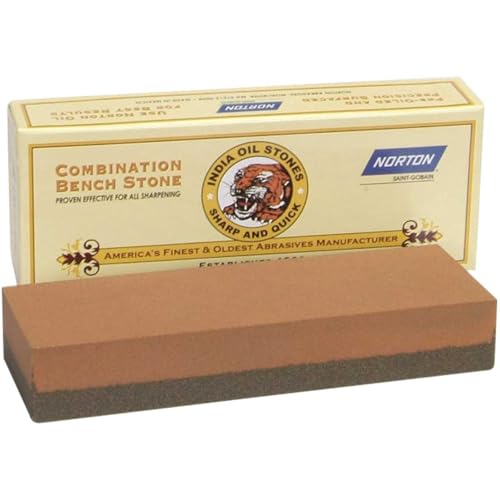
The Norton India combination benchstone is a long-standing workshop classic, pairing a coarse side and a fine side on one block. At 6 inches long, 2 inches wide, and 1 inch thick, it has the heft to sit solidly on a bench without sliding, and the aluminum oxide abrasive cuts cleanly when paired with a light honing oil. For pocket knife owners who also maintain kitchen knives, hunting blades, and shop tools, this is a single stone that covers a lot of ground.
Oil helps the surface stay clean during use, flushing away metal swarf that would otherwise clog the abrasive. The block-style format works best at a fixed workstation, so it is the right choice for a basement shop or a kitchen drawer that doubles as a sharpening station.
What Works In Its Favor
- Two-sided design covers repair and refinement in one stone.
- Aluminum oxide abrasive sharpens a wide range of steels, from soft stainless to harder tool steels.
- The 1-inch thickness resists cracking and warping over years of regular use.
Worth Noting
- Oil stones require ongoing cleaning and re-oiling, which adds a step compared to water stones.
- The 6-inch length is shorter than full-size benchstones, which can feel limiting on longer blades.
Quick Facts
Who Should Grab It
Home sharpeners who want a single benchstone that handles pocket knives, kitchen blades, and shop tools alike.
Skip It When
Travelers and field sharpeners will find the Monbalcon Diamond Sharpening Steel more portable for the same pocket knife use case.
The stainless-handled sibling of the wood-handled Monbalcon, this honing rod is built for environments where moisture is part of daily life. The 10-inch German high-carbon steel rod is identical to the wood version, but the stainless handle shrugs off wet hands, kitchen splashes, and humid shop air without complaint. For pocket knife owners who also maintain a kitchen edge, the handle choice often comes down to grip preference.
At 0.4 inches in diameter, the rod is slightly slimmer than the wood-handle version, which some sharpeners find easier to control during lighter pocket knife work. The fine-grit surface realigns edges quickly and stays consistent, making this a low-maintenance addition to any sharpening kit.
Positive Points
- Stainless steel handle resists moisture, oils, and humidity in working kitchens.
- Fine-grit high-carbon steel rod aligns edges without aggressive material removal.
- 10-inch length covers pocket knife, chef knife, and hunting blade in one tool.
Trade Offs
- The slimmer 0.4-inch diameter gives up a little heft compared to thicker rods.
- Stainless handles can feel slippery when hands are oily or wet during long sessions.
Feature Snapshot
Best Suited To
Shrinkers who split their time between kitchen, camp, and pocket knives and want a handle that can take a beating.
A Better Fit Elsewhere
For a more traditional, warmer grip, the Monbalcon Honing Rod with the wood handle delivers the same rod in a different package.
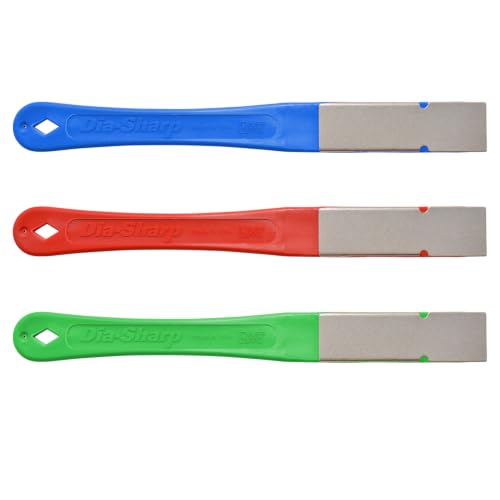
The DMT DiaSharp Mini-Hone kit shrinks a full sharpening system down to a pocketable size. Each 2.5-inch stone features a color-coded diamond surface, three grits that cover a complete sharpening cycle. The 45-micron coarse stone (about 325 mesh) restores neglected edges, the 25-micron fine stone (about 600 mesh) hones a working edge, and the 9-micron extra-fine stone (about 1200 mesh) polishes for a refined finish.
Diamond is one of the hardest abrasives available, so these stones cut fast and stay flat, even after years of pocket carry. They are designed to be used wet for best results, which keeps swarf from clogging the surface. For backpackers, daily carriers, and anyone who sharpens away from a workbench, this is one of the most compact complete systems on the market.
Notable Upsides
- Three grits cover repair, honing, and polishing in a pocketable format.
- Diamond abrasive cuts quickly and resists wear better than most stones.
- Color-coded stones make grit selection quick in low-light field conditions.
- Small enough to live in a backpack, glove box, or kitchen drawer.
Trade Offs
- The 2.5-inch surface is too small for long blades, so it is best for short folders and fixed blades under 4 inches.
- Wet use means carrying a small water bottle or rinsing regularly during field sessions.
Whose Shelf It Belongs On
Backpackers, day hikers, and EDC carriers who need a complete sharpening system that fits in a small pouch.
Reach For A Different Pick When
Those sharpening full-size kitchen or hunting blades will find the Norton Combination Aluminum Oxide Benchstone more practical for long edges.
The King K#-Whet stone is a classic Japanese water stone, known for the smooth, feedback-rich feel that makes it a favorite for learning wet sharpening. At 1200 grit, it sits in the medium range, fine enough to refine a working edge, coarse enough to bring a dull knife back without spending an hour at the bench. For pocket knife owners, it covers the most-used grit level in a single block.
The softer stone matrix releases fresh abrasive during use, which gives a slightly faster cut than harder stones at the same grit rating. It does require flattening over time, since the surface dishes with regular use, but many sharpeners consider that routine maintenance part of the ritual.
Real-World Strengths
- 1200 grit handles the most common sharpening task, refining a dull edge to working sharpness.
- The soft matrix gives clear tactile feedback, helpful for first-time sharpeners learning angle control.
- Water lubrication means no oil cleanup or lingering petroleum smell in the kitchen.
A Few Limitations
- The surface dishes over time and needs periodic flattening on a lapping plate.
- Single-grit format means pairing it with a coarser stone for major repair work.
Feature Card
Made For
Beginners who want a forgiving, feedback-rich stone to learn wet sharpening on pocket knives and kitchen blades.
Swap It Out When
People who already own a coarser repair stone can step up to the Shapton K0709 Glass Sharpening Stone for a more durable flat surface.
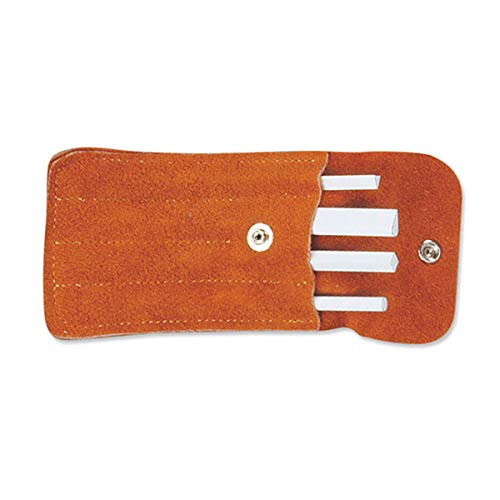
Ceramic files are a different animal from flat stones and rods, designed for the tight spaces and unusual geometries that standard sharpeners cannot reach. This Spyderco 400-grit square file is built for sharpening small detailed tools, but the same shape that suits a jeweler’s graver or a wood-carving gouge also works on the recurved sections and tight inside curves of a pocket knife blade.
Ceramic abrasive stays sharp longer than most stones and can be cleaned with ordinary kitchen cleanser and a plastic scouring pad when it loads up with metal. For pocket knife owners who carry blades with deep bellies, hawkbill shapes, or severe recurves, a square file opens sharpening options a flat stone simply cannot match.
Practical Advantages
- Square cross-section reaches into tight inside curves and recurves on specialty blades.
- 400-grit ceramic cuts quickly enough for repair work on small edges.
- Cleans easily with kitchen cleanser and a scouring pad, no special solvents needed.
- Ceramic abrasive holds its shape far longer than typical aluminum oxide stones.
Honest Caveats
- Not a general-purpose sharpener, a flat stone or rod handles most everyday pocket knife work faster.
- The square profile means it cannot produce a flat bevel, so finishing requires a flat stone.
Perfect Match For
Carriers of hawkbill, recurve, or otherwise unusually shaped pocket knives that standard stones struggle to reach.
Another Choice May Suit
People sharpening standard drop-point or clip-point folders will get more use out of the DMT DiaSharp Mini-Hone Kit for everyday touch-ups.
Gränsfors Bruks is a name most often associated with axes, and this ceramic grinding puck was designed primarily for axes and hatchets. Two grits, 300 and 600, handle the rough work of reshaping a chipped edge and the finer work of refining it, all on a single compact puck. The included rubber case doubles as a handle, keeping fingers away from the abrasive during use.
For pocket knife owners who also carry a bushcraft blade or small hatchet on camping trips, this puck covers both tools with one sharpening solution. Ceramic works dry or with a few drops of water, which matters when you are at a campsite without easy access to a sink. The puck shape is small enough to drop into a pack pocket or attach to a keychain lanyard.
Everyday Advantages
- Two grits on one puck, 300 and 600, cover repair and refinement.
- Rubber case protects the stone and provides a safe grip during use.
- Works dry or with water, ideal for field sharpening without a sink.
- Small enough to fit in a pocket, pack, or kit bag without adding weight.
Possible Compromises
- The puck shape limits edge contact compared to a long flat stone, so each pass covers less blade.
- Ceramic surfaces can crack if dropped on hard rock or frozen ground during cold-weather trips.
Who Will Love This
Campers, bushcrafters, and backpackers who split their sharpening between pocket knives, hatchets, and small fixed blades.
Where A Sibling Pick Shines
For EDC-only users who never touch a hatchet, the Spyderco 400 Square Ceramic File offers more useful geometry for typical pocket knife work.
What Matters When Picking Stones For Pocket Knives
Grit Range and Stone Type
Grit measures how coarse or fine the abrasive surface is. Lower numbers (under 600) remove material quickly and reshape damaged edges, while higher numbers (1000 and up) refine a working edge and polish for sharpness. Pocket knife owners who carry daily typically need at least two grits: a coarser stone for repair and a finer stone for routine touch-ups. Stone material also matters, since diamond cuts fastest, ceramic lasts longest, aluminum oxide offers a middle path, and water stones give the most tactile feedback for learning angle control.
Stone Size and Portability
Pocket knife sharpening happens everywhere, from a kitchen counter to a picnic table. A full-size benchstone covers long blades and stays put on a workbench, while a pocketable hone slips into a pack or glove box. Match the stone size to where you will actually use it. A 6-inch benchstone is overkill for backpacking, and a 2.5-inch mini-hone is too small for chef knife duty.
Handle, Base, and Ergonomics
A stone that slides on a wet counter is more dangerous than a dull knife. Look for stones with integrated bases, rubberized bottoms, or included non-slip cases. Rods should have handles that fit your hand securely, especially when working at speed. Wood handles feel warm but need dry storage, while stainless and synthetic handles shrug off moisture but can feel slick with oily hands.
Maintenance and Long-Term Care
Every stone type has upkeep requirements. Water stones need flattening as they dish over time, oil stones need regular cleaning and re-oiling, and diamond stones need only an occasional wash. Ceramic files clean up with kitchen cleanser. Choosing a stone whose maintenance fits your routine means the stone will actually get used instead of sitting in a drawer.
Smart Considerations Before You Commit
Mistakes Worth Dodging
The most common error is buying a single coarse stone and expecting it to do everything. A 320-grit repair stone can bring a knife back from the dead, but it leaves an edge that feels rough and dull to the touch. Pairing it with a finer stone, even a 1000-grit, makes a real difference in how the knife performs day to day. The other common trap is ignoring stone material. Diamond and ceramic stones cost more up front but outlast softer stones by years, so the long-term cost often favors the harder abrasive for frequent sharpeners.
When Paying More Pays Off
Higher-tier stones earn their price through three main upgrades: harder abrasive matrices that stay flat longer, precision sizing for tighter tolerances, and premium handle materials that hold up under heavy use. For someone who sharpens once a month, a mid-range aluminum oxide benchstone handles the job well. For someone who sharpens weekly, the durability of a diamond or hard ceramic stone saves time and money over years of use, since the stone does not need replacing or flattening as often.
Frequently Asked Questions
What grit stone is best for everyday pocket knife maintenance?
A medium grit stone in the 1000 to 1200 range handles routine touch-ups for most pocket knife steels. It removes enough material to refresh a dull edge without leaving a coarse scratch pattern behind. Coarser stones (under 600) are reserved for repairing chips, rolls, and neglected edges.
Can you sharpen a pocket knife on a kitchen honing rod?
Yes, a honing rod works well on most folding and fixed-blade pocket knives, especially larger models with blades over 2.5 inches. Short pen blades and sub-2-inch folders are harder to hone safely because the handle and pivot can get in the way of the rod, so a small stone or ceramic file is a better fit for those.
Do pocket knife stones need water or oil?
It depends on the stone type. Water stones and ceramic stones typically use water, while aluminum oxide benchstones like the Norton India series work best with a light honing oil. Diamond stones can run dry, wet, or with a few drops of water. The lubricant keeps swarf from clogging the abrasive surface, which extends stone life and improves cutting speed.
How often should a pocket knife be sharpened?
A daily-carry pocket knife usually benefits from a quick touch-up every one to two weeks, depending on the work it sees. A bench session with a stone is only needed when the edge stops responding to a hone, which for most users means a few times per year. Light maintenance in between extends the time between deeper sharpenings.
What is the most portable stone option?
For true pocket carry, the DMT DiaSharp Mini-Hone kit is hard to beat, with three grits in stones small enough to fit on a keychain pouch. The Gränsfors Bruks Ceramic Grinding Puck is similarly compact and works dry, which makes it a strong field option. Both slip into a pack or pocket without adding meaningful weight.




