


Hanging a heavy mirror or a flat-screen TV should not feel like a game of chance. A stud finder turns hollow drywall into a clear target, helping you find solid framing, avoid live wiring, and keep your drill on the right path. This roundup covers seven tools built to do that job, ranging from pocket-sized magnetic helpers to multi-sensor scanners with built-in displays and wire alerts. Whether you tackle weekend DIY projects or remodel professionally, there is something here to match your workflow.
A Closer Look At The Lineup
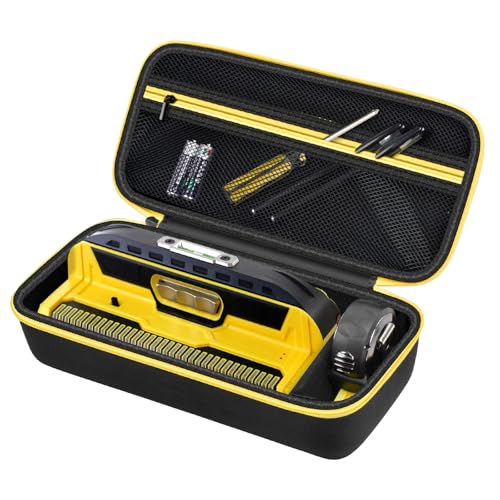
Casmilee Hard Stud Finder Case for Franklin ProSensor

CH Hanson 03040 Magnetic Stud Finder 2-Pack

Franklin ProSensor M150 9-Sensor Stud Finder

Franklin ProSensor M210 13-Sensor Stud Finder

JAXWQ 5-in-1 Stud Finder Wall Scanner (Bark)

JAXWQ 5-in-1 Stud Finder Wall Scanner (Cherry)

JAXWQ 5-in-1 Stud Finder Wall Scanner (Banana)
A Breakdown Of The Leading Choices
A dedicated carry case may not be the first thing on your shopping list, but anyone hauling a Franklin ProSensor between job sites knows how quickly that investment can get scratched. The Casmilee case is shaped specifically for the MAX and M210 family, with an internal cavity around 11.81 by 5.11 by 2.61 inches. A smooth zipper and a top handle keep daily transport simple.
The hard shell shrugs off bumps in the back of a work van, and the dust-resistant lining helps keep grit away from the sensor array. For tradespeople who already own one of the supported ProSensor models, this case slots in as a sensible add-on rather than a standalone tool.
Points In Its Favor
- Custom-fit interior matches several Franklin ProSensor variants, including the MAX, M210, and T13
- Rugged outer shell absorbs everyday knocks and resists scratches
- Carry handle and zipper closure make quick trips between locations easy
- Lining keeps sawdust and debris from settling against the sensor face
Things To Consider
- Only fits a specific set of Franklin models, so it is not a universal case
- Adds bulk compared to tossing the scanner loose in a toolbox
Made For
Contractors and mobile installers who already own a compatible Franklin ProSensor and want better transport protection.
Skip It When
The CH Hanson magnetic finder is a better fit for homeowners who only hang a few pictures a year and do not need a carrying case at all.
Before the era of glowing LCD screens and multi-sensor arrays, a magnet was all you needed. The CH Hanson 03040 takes that old-school approach and refines it. A rare-earth magnet locks onto the screws or nails holding drywall to the stud, and the finder stays put thanks to magnetic attraction, leaving your hands free to mark the wall. It is a refreshingly simple solution for quick tasks.
The soft-touch housing feels comfortable in hand, and the built-in two-way level helps you mark a clean plumb line. No batteries, no calibration, no false readings on textured walls. A two-pack means you can keep one in the kitchen junk drawer and toss the other in the garage.
A Few Highlights
- Always ready to use, with no batteries or power switch to worry about
- Strong rare-earth magnet snaps onto fasteners for hands-free marking
- Built-in bubble level supports accurate layout lines
- Compact frame slips into a shirt pocket or tool belt
- Two-pack value keeps a spare within reach
Worth Noting
- Detects fasteners, not stud edges, so locating the center takes some practice
- Not effective on thicker plaster or lath walls where fasteners sit deeper
Quick Technical Notes
Best Suited To
Renters and casual DIYers handling small hanging jobs on standard drywall.
Look Elsewhere When
The Franklin ProSensor M150 is a better fit when you want wider stud detection and live AC wire alerts on the same scan.
Most entry-level stud finders rely on one or two sensors, and that single point of measurement is where confusion creeps in. The Franklin ProSensor M150 spreads nine sensors across its face, lighting up the entire stud pattern in a single pass. Press it against the wall and the LED bar map shows edges and center at the same time, so you can stop guessing where the wood begins.
Setup is refreshingly brief. Hold the button, slide, and read. No calibration dance, no drifting across the wall to recalibrate. Compared to the CH Hanson magnetic finder, this one reads deeper and warns you about live AC wiring, which matters when drilling near outlets.
Key Advantages
- Nine sensors reveal a wide section of the stud rather than a single point
- No calibration step, so you can start scanning anywhere on the wall
- LED pattern marks both edges and the center of each stud
- Built-in AC wire warning adds a layer of safety around outlets
Trade Offs
- LED readout can be harder to interpret in bright daylight
- Requires batteries, unlike the always-ready CH Hanson magnetic option
Who Will Love This
Homeowners mounting TVs, shelves, or cabinets who want clearer readings than a single-sensor tool offers.
Another Choice May Suit
The Franklin ProSensor M210 is a better fit when you want a deeper scan range and want to pick up more stud detail on dense walls.
The M210 takes the multi-sensor concept that makes the M150 appealing and stretches it further. Thirteen sensors cover a wider swath of wall, which translates to fewer passes and more confidence when you are scanning for multiple studs across a long span. Live wire detection is built in, and the LED array lights up in real time as the device crosses metal or wood.
This is the model many renovators reach for when the job list includes multiple heavy hangings, like a row of cabinets or a long floating shelf. The trade-off is battery use and a higher cost, but for frequent users the time saved on accurate reads tends to balance that out.
Why It Works Well
- Thirteen sensors deliver a wide, detailed view of stud layout
- Live wire detection reduces risk around outlets and switches
- No calibration step simplifies the workflow on textured walls
- Durable housing handles drops from ladder height in busy work zones
Points To Keep In Mind
- Bigger price tag than the M150, which may be hard to justify for occasional use
- Wide sensor footprint can feel bulky when scanning tight corners
Feature Snapshot
Right Fit For
Remodelers, electricians, and serious DIYers who scan multiple studs in a single session and want fewer passes per project.
Reach For A Different Pick When
The Franklin ProSensor M150 is a better fit for lighter weekend use, since the extra sensors may not pay off on small jobs.
Electronic stud finders used to mean guessing at beep patterns. The JAXWQ 5-in-1 changes the experience with a smart micro-sensor chip and a high-definition LCD that spells out what is behind the wall, including edges, center points, and material type. The Bark colorway is a thoughtful touch for anyone who prefers their tools to blend into a workshop rather than glow from the drawer.
Five scan modes cover wood, metal, and live AC wire detection, so this single device replaces a small stack of specialty tools. The trade-off is a learning curve, since the mode-switching and LCD icons take a few scans to memorize. For first-time owners willing to read the manual, that setup time is a fair exchange for clearer readings.
Features That Help
- HD LCD display shows exact stud edges and center markers on screen
- Five scan modes tackle wood, metal, AC wiring, and joists
- Auto-calibration simplifies startup for first-time users
- Compact body fits comfortably in one hand during ceiling scans
Honest Caveats
- LCD readout can wash out in direct sunlight on outdoor projects
- Mode switching between scans interrupts workflow until you build muscle memory
At A Glance
Perfect Match For
First-time owners who want on-screen guidance and are willing to learn the mode icons in exchange for clearer readings.
A Better Fit Elsewhere
The Franklin ProSensor M150 is a simpler choice for someone who prefers LED patterns and wants a more stripped-down scan process.
Same five-mode scanner, different finish. The Cherry version of the JAXWQ leans into a warm, woodsy look that sits comfortably alongside a weekend tool kit. The core scan engine stays identical to the Bark model, so you get the same micro-sensor sensitivity, HD LCD, and wire detection in a slightly different shell.
For a hobbyist who hangs seasonal decor or builds the occasional floating shelf, the multi-mode setup covers most behind-the-wall surprises without dragging out multiple gadgets. Compared to the magnetic CH Hanson finder, the LCD readout removes much of the guesswork on textured walls.
Reasons It Performs
- Five scan modes reduce the need for separate metal or voltage detectors
- HD display provides exact edge and center coordinates
- Lightweight build keeps wrist fatigue low during long projects
- Color-matched housing adds personality to a basic tool kit
Some Limits To Know
- Identical electronics to the Bark variant, so the trade-offs carry over
- Battery cover can loosen with repeated handling
Who Should Grab It
Weekend DIYers who want a friendly LCD interface and a softer aesthetic than typical gray and black tools.
Where A Sibling Pick Shines
The Franklin ProSensor M210 is a better fit for pros who want the wider sensor coverage of a thirteen-sensor bar.
The third colorway of the JAXWQ 5-in-1 makes a practical case for visibility. In a cluttered tool bag, a bright yellow scanner is far easier to find than a black or gray one, which saves real time when a project hits a snag and you need the device in a hurry. Functionally, it shares the same scan modes and HD display as the Bark and Cherry variants.
For shared workspaces, family tool kits, or anyone who has lost a stud finder in a couch cushion more than once, the Banana finish solves an everyday annoyance. The internals deliver the same five-mode depth and wire detection that make the JAXWQ line approachable for first-time owners.
Practical Pluses
- High-visibility color reduces time spent hunting in toolboxes
- Five-mode scanner covers wood, metal, and live AC wire
- HD LCD spells out edge and center positions clearly
- Lightweight shell works well for ceiling and overhead scans
Factors To Consider
- Same electronics as the other JAXWQ variants, so LCD visibility in bright light remains a soft spot
- Bright finish may show scuffs more readily than darker housings
Feature Rundown
Whose Shelf It Belongs On
Families and shared-space users who want a tool that stays visible and easy to locate between projects.
Swap It Out When
The CH Hanson magnetic finder is a better fit for a quick grab-and-go hanging task, since it skips the mode setup entirely.
Choosing The Right Stud Detection Tool
Sensor Count And Detection Depth
A single-sensor scanner can find a stud, but it gives you one narrow data point to interpret. Multi-sensor bars like the Franklin M150 and M210 sample a wider section of wall, which translates to fewer false reads and faster layout. Deeper scans help on plaster, lath, or thick baseboard, so think about the wall types you work with most.
Live AC Wire Alerts
Drilling into a live wire is a costly mistake, and a wire warning turns a guess into a heads-up. If you hang anything near outlets or switches, that single feature is worth more than extra modes you may never use. The Franklin ProSensor M210 and both JAXWQ variants include this layer of safety.
Display Type And Readability
LED bar maps read quickly once you learn them, and they stay visible in dim basements. LCD readouts spell out exact edges and centers, which is helpful on textured walls, but they can wash out in direct sun. Pick the readout that matches where you actually work.
Power Source And Portability
Magnetic finders like the CH Hanson 03040 need no batteries and slip into a pocket, which is a quiet win for quick tasks. Electronic scanners trade that for deeper detection and wire alerts, so plan on fresh batteries or rechargeables if you grab an electronic model. Cases like the Casmilee hard shell become useful once a tool starts traveling between sites.
Key Considerations Across These Picks
Pitfalls Shoppers Hit
A common mistake is buying a tool based on feature count alone. A scanner with five modes is wasted on a closet rod, while a single-sensor unit will frustrate you during a cabinet run. Match the tool to the wall type and the projects you actually tackle, not the spec sheet that looks the most impressive. Another slip-up is forgetting to check for live wires. Even a magnet-only finder can mislead you on a textured wall, and skipping the wire warning step can end in a trip to the breaker box.
Where The Extra Money Goes
Higher-tier electronic scanners add sensor count, deeper detection, and live wire alerts that cheaper models skip. The Franklin ProSensor M210 and the JAXWQ 5-in-1 line both spend that extra budget on a faster processor and a more detailed display, which adds up to fewer rescans per project. For a once-a-year photo hanger, the savings rarely justify the jump, but for a remodeler with multiple heavy hangings, the time saved on each scan quickly repays the difference.
Frequently Asked Questions
How deep can a stud finder detect through drywall?
Most electronic scanners reach around 1.5 inches, which covers standard half-inch drywall over wood studs. Thicker plaster or double-layer walls push the limits, and a model with deeper scan modes handles those better.
Do magnetic stud finders really work on textured walls?
Magnets rely on grabbing the metal fastener, so light orange-peel texture rarely gets in the way. Heavy knockdown texture or plaster can sit far enough from the screw head to weaken the pull, and an electronic scanner becomes the safer call.
Can a stud finder detect live AC wires?
Models with built-in wire detection, like the Franklin ProSensor M210 and the JAXWQ 5-in-1 line, flag energized wiring behind the wall. Magnetic finders cannot, so use extra caution near outlets with that style of tool.
Is a 9-sensor or 13-sensor bar worth the upgrade?
A wider sensor bar shows more of the stud pattern in a single pass, which means fewer slides across the wall. For a single TV mount, the difference is minor, but on long runs of cabinets or shelving, the time savings add up fast.
How often should batteries be replaced in an electronic stud finder?
Battery life depends on how often the scanner is used, but alkaline batteries in a typical electronic stud finder often last through several months of weekend projects. Keep a spare set on hand so a dead battery never derails a job mid-scan.




