


Scanning an exterior wall is a different job than scanning drywall inside. Siding, sheathing, insulation, and the occasional metal layer all conspire to confuse anything less than a focused sensor. The picks below cover the cases, the magnetic locators, and the multi-mode electronic scanners that hold up when the wall in front of you is brick, fiber cement, or thick paneling. Run through them, match the tool to the wall, and skip the trial-and-error drilling.
The Essentials At A Glance
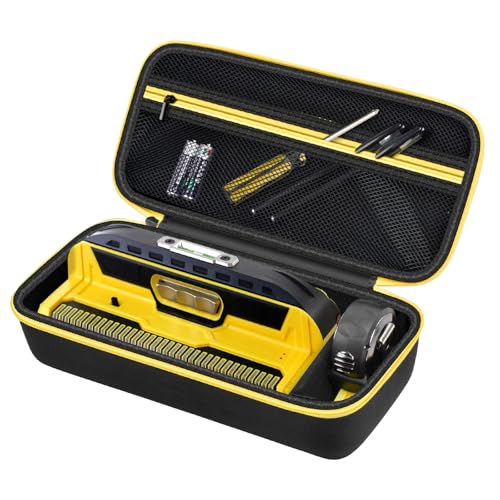
Casmilee Hard Case for Franklin ProSensor MAX/M210

khanka Hard Case for Franklin ProSensor 710/T11/T13

CH Hanson 03040 Magnetic Stud Finder (2 Pack)

GOTMEET Rechargeable Wall Scanner (Adjustable Sensitivity)

HMmagnets Magnetic Stud Finder PRO (3 Neodymium Magnets)

HMmagnets Magnetic Stud Finder PRO 4-Pack

GOTMEET 6-in-1 Rechargeable Stud Finder (Intelligent Chip)

GOTMEET 3-in-1 Electronic Stud Finder With Smart Sensor
The Details Behind The Selections
The Casmilee case is built specifically for the Franklin ProSensor MAX and M210, two of the wider multi-sensor stud finders on the market. The interior dimensions of 11.81 by 5.11 by 2.61 inches line up with those tools, so the body sits snug instead of rattling around in a generic pouch. A smooth zipper and a small carry handle round out the travel-friendly shape.
It is not a stud finder itself. Think of it as the protective shell for the flagship sensor you already trust. For crews who toss tools into a truck bed or carry one scanner between job sites, the dust-resistant exterior and scratch-resistant finish help keep the sensing pads clean. The tradeoff: a tight fit means the case only works with the specific Franklin models it was cut for, so anyone running a different brand will need to look elsewhere.
Well-Handled Touches
- Tailored interior geometry that matches the MAX and M210 body
- Hard-sided exterior that resists scuffs and dust during transport
- Carry handle and zipper that simplify grab-and-go routines
- Helps keep the sensor pads clean between scans on dusty exterior walls
Soft Spots To Weigh
- Brand- and model-specific, so it cannot be repurposed for non-Franklin units
- Adds a layer of bulk to a tool you may prefer to keep pocketable
Whose Shelf It Belongs On
Tradespeople and dedicated DIYers who already own a Franklin ProSensor MAX or M210 and want a dedicated travel case.
Where Another Pick Suits Better
Shoppers running a ProSensor 710 or T-series should consider the khanka case further down the list, since it is cut for those specific bodies.
The khanka case covers a different corner of the Franklin lineup. It is shaped for the ProSensor 710 along with the T11 and T13 models, giving the T-series and the 710 a single home. The hard shell keeps the sensor array protected, and the small footprint slides easily into a tool drawer or a truck-side organizer.
Compared to the Casmilee case above, this one trades a slightly less plush interior for a tighter form factor that suits the slimmer 710 body. It is a sensible add-on if you have already invested in a Franklin T-series scanner and want it to survive drops off a ladder or a back-of-truck ride. The catch is the same as most custom cases: anything outside the listed models will not seat properly.
Useful Highlights
- Custom molded shape for the 710, T11, and T13
- Hard outer shell that absorbs day-to-day knocks
- Compact enough for tool drawers and rolling organizers
- Protects the sensor strip from debris collected on exterior work
Practical Considerations
- Limited to the listed Franklin models, no universal fit
- Interior padding is functional rather than plush
Who It Suits Best
Owners of the Franklin ProSensor 710, T11, or T13 who want a no-fuss protective shell for shop and field use.
A Better Fit Elsewhere
Anyone with the larger ProSensor MAX or M210 will get a cleaner fit from the Casmilee case covered in the first review.
The CH Hanson 03040 is a rare-earth magnetic stud finder in the oldest sense of the term. It locates the screws or nails driven into the stud, so it does not need batteries, calibration, or a power button. A soft-touch sleeve wraps the body, and a built-in two-way level helps mark the layout once a stud is found.
That simplicity makes it a workhorse for exterior sheathing and standard siding, where metal fasteners are still the most reliable tell for stud location. The two-pack format means you can keep one in the garage and toss the other in a work bucket. On dense masonry or stucco, the magnet has a tougher time reaching the fasteners, so this is not the right pick for every exterior wall material.
Positive Takeaways
- Zero batteries, no electronics to fail in cold or wet weather
- Two-way level built into the body for quick layout marks
- Compact enough for a shirt pocket or tool belt
- Two-pack format that covers the truck, shop, and house
- Soft grip that stays comfortable during long scanning sessions
Honest Caveats
- Only locates metal fasteners, so it struggles on plaster or thick stucco
- No audible alert, so the magnetic pull is the only feedback
Key Specs
Right Fit For
DIYers and pros who want a no-fail, no-battery locator for wood-framed exterior walls with standard siding.
Look Elsewhere When
Anyone scanning thick plaster or lath exteriors should reach for the HMmagnets triple-magnet PRO locator below, which digs deeper through denser finishes.
GOTMEET’s rechargeable scanner is an electronic multi-mode unit that detects wood studs, metal, and live AC wiring in a single housing. The headline feature is adjustable sensitivity, which matters most on exterior walls where siding, sheathing, and insulation stack up and confuse fixed-sensitivity tools.
The claimed detection depths reach up to roughly 3.94 inches for magnetic metal, 3.15 inches for non-magnetic metal, 1.97 inches for live wires, and 1.18 inches for wooden studs, which is reasonable for most residential exteriors. The rechargeable battery is a quiet upgrade over disposable cells that tend to die in a glovebox. The honest read: you still need to move slowly and recalibrate when switching modes, so plan for a learning curve.
Where It Helps
- Three scan modes cover studs, metal, and live wiring in one tool
- Tunable sensitivity to handle layered exterior walls
- Rechargeable battery that avoids last-minute disposable swaps
Some Limits To Know
- Mode switching requires recalibration each time
- Performance in deep stucco or masonry can vary, depending on your wall
Made For
Homeowners tackling mixed-material exteriors like siding over sheathing who need a tunable multi-mode scanner.
Skip It When
Anyone wanting a dead-simple, no-calibration workflow should grab the CH Hanson 03040 instead.
HMmagnets takes the classic magnetic stud finder and reinforces it with three neodymium magnets instead of the usual one or two. Neodymium is a rare-earth magnet material known for holding strong, compact magnetic fields, so stacking three widens the detection footprint and pushes the pull deeper through finishes.
Where the CH Hanson 03040 above is a friendly pocket tool, this PRO version leans into depth. It is marketed for drywall but works across layers of paint, thin plaster, tile, and popcorn texture, which makes it relevant for many exterior-adjacent walls like covered porches or attached garage interiors. It is not built for thick plaster, so old-lath exteriors are still off the table. The lack of batteries keeps the unit weather-resilient in ways electronics are not.
Useful Strengths
- Three neodymium magnets increase depth and reduce missed fasteners
- No batteries, so cold or damp storage does not matter
- Penetrates paint, tile, and texture finishes that throw off weaker magnets
- Pocket-friendly for fast scans between layout marks
Possible Compromises
- Not suited for thick plaster or solid masonry exteriors
- No audible indicator, so the magnetic pull is your only signal
Who Should Grab It
DIYers and pros who want extra pull through layered interior walls and covered exterior-adjacent surfaces.
Another Choice May Suit
Anyone scanning a fully electronic multi-mode project should look at the GOTMEET 6-in-1 scanner later in this list for wire and metal detection.
Same triple-magnet design as the single-pack above, but in a four-pack format. For a small remodeling outfit or a household with multiple projects going at once, that means one in the truck, one in the garage, one at the kitchen junk drawer, and a spare when one inevitably walks off to a neighbor’s house.
Buying in multiples like this also means you stop worrying about losing a tool on a ladder. Functionally, the depth and finish-penetration are identical to the single PRO unit, including the same caveat that it is not engineered for thick plaster. You may find the redundancy valuable for crew work and less so if you only need a single locator for occasional home projects.
What Works In Its Favor
- Four units cover truck, shop, house, and a spare
- Same three-magnet pull as the single PRO unit
- Battery-free design that survives long storage
- Useful for handing out to helpers on shared job sites
Trade-Offs To Consider
- More units than most single-shopper projects need
- Still not appropriate for thick plaster or masonry exteriors
Best Suited To
Small crews, contractors, and busy households who want a spare always within reach.
Reach For A Different Pick When
Solo DIYers only need one tool, so the single-pack HMmagnets PRO above is a more reasonable buy.
The other GOTMEET unit in this list is a six-in-one scanner that adds an intelligent processing chip to refine readings across multiple targets. The intended coverage includes edges and centers of metal objects, wood studs, joists, pipes, and live AC wiring behind walls, floors, and ceilings.
It is the more ambitious sibling of the three-mode GOTMEET reviewed earlier. For exteriors with stucco, furring strips, or mixed wiring in attached outdoor kitchens, that broader detection suite is genuinely useful. Owners commonly note that smart-chip scanners like this one reward slow, deliberate sweeps, so a hurried scan is more likely to read false positives. You will also want to keep the unit charged between projects since a flat battery mid-scan is a familiar frustration.
Where It Delivers
- Six detection targets in a single handheld unit
- Intelligent chip aims to reduce false positives on layered walls
- Rechargeable design that avoids disposable battery costs
- Useful across walls, floors, and ceilings in one tool
Worth Noting
- Requires slow, deliberate sweeps to read accurately
- Battery needs topping off between heavy-use days
Feature Snapshot
Perfect Match For
Homeowners and remodelers who need one versatile scanner for complex walls with multiple embedded targets.
Where A Sibling Pick Shines
For a quick single-purpose wall scan, the smaller GOTMEET 3-in-1 model is easier to grab and run.
The 3-in-1 GOTMEET is the entry point in the brand’s electronic lineup, offering stud, metal, and live AC wire detection behind walls, floors, and ceilings. A smart sensor array handles the calibration and signal processing, so the operator mostly chooses a mode and sweeps.
Compared to the six-in-one model above, this one trades a couple of detection modes for a simpler interface that first-timers tend to pick up faster. For someone hanging a planter on a covered patio wall or mounting a mailbox arm, that matters more than feature depth. The trade-off shows up when the wall hides more than one type of target, where the broader unit pulls ahead.
Features That Help
- Three core scan modes cover the most common wall targets
- Smart sensor handles calibration behind the scenes
- Slim body that is easy to grip and control during sweeps
Where It May Fall Short
- Fewer detection targets than the six-in-one GOTMEET sibling
- Electronics can struggle in very cold outdoor storage over winter
Who Will Love This
First-time wall scanner owners and renters who want a straightforward tool for basic exterior-adjacent projects.
Swap It Out When
Anyone running a complex renovation with multiple embedded targets should step up to the GOTMEET 6-in-1 reviewed just above.
What Matters Most Before Choosing Stud Finders For Exterior Walls
Exterior walls are not a single material, so the right tool depends on the layers between you and the stud. Start with the wall itself: wood siding over sheathing, stucco over wire lath, fiber cement panels, or brick veneer each respond differently to magnetic and electronic detection.
Magnetic stud finders work on any wall with metal fasteners, which covers most wood-framed exteriors. They ignore wiring entirely, which is a feature if you do not need to find wires, and a limitation if you do. Triple-magnet designs like the HMmagnets PRO push deeper through layered finishes, but thick plaster is the common failure point to plan around.
Electronic multi-mode scanners handle the wiring and metal question at the cost of needing calibration and steady hands. For walls that hide both studs and live AC, the trade is worth it. For a basic exterior hang, a magnetic locator stays simpler and tougher. The honest read: matching the tool to the wall material matters more than chasing the most feature-heavy option on the shelf.
Key Considerations Across These Picks
Where Shoppers Go Wrong
The most common mistake is buying a basic magnetic stud finder for a plaster exterior and wondering why it never finds a stud. Magnetic detection is built around metal fasteners, so on older plaster and lath walls, the answer is often an electronic multi-mode scanner instead.
Another trap is ignoring battery state. Rechargeable units are convenient but can leave you mid-project, so keep the charging cable accessible. A backup magnetic tool costs little and covers the gap when electronics quit.
When Paying More Pays Off
A higher-tier electronic scanner earns its keep when the wall hides multiple targets, like joists, wiring, and metal pipes at once. The extra processing helps separate those signals so you are not guessing which line you are about to hit with the drill. For a one-room project, a magnetic locator delivers most of what you actually need at a fraction of the cost.
Frequently Asked Questions
Do stud finders actually work through exterior siding?
Yes, but depth and material matter. Magnetic units push through paint, thin siding, and most sheathing, while dense stucco or masonry usually requires an electronic multi-mode scanner with adjustable sensitivity.
Can one stud finder find live wires outside?
Most multi-mode electronic units can detect live AC wiring, though depth ratings drop for that mode. For outdoor-rated outlets or lighting runs, a dedicated wire tracer is still the safer choice.
Are magnetic stud finders better than electronic ones?
Each has its lane. Magnets are simple, battery-free, and reliable on wood-framed walls with metal fasteners. Electronic models add wiring and metal detection at the cost of complexity and battery dependence.
What is the deepest a stud finder can scan?
Depth depends on the tool and the target. Magnetic stud finders reach as far as the embedded fastener allows, while electronic units typically range from about an inch for wood studs to roughly four inches for ferrous metal in consumer-grade models.
How do I avoid false readings on exterior walls?
Calibrate on a clean section of the wall before each scan, move the tool slowly, and switch modes when results look inconsistent. Walls with foil-backed insulation or metal lath are common sources of false positives, so flag those before drilling.




