


Hanging a shelf, mounting a TV, or anchoring a heavy mirror all come down to the same question: where’s the stud behind the drywall? A reliable stud finder turns a guess-and-drill session into a confident, centered hit. This list rounds up seven tools that handle the job across different budgets and use cases, from simple magnetic pucks to multi-mode electronic scanners. Each pick is judged on real-world usability, the materials it can sense, and how it feels in your hand during a long afternoon of projects.
A Side-By-Side Look
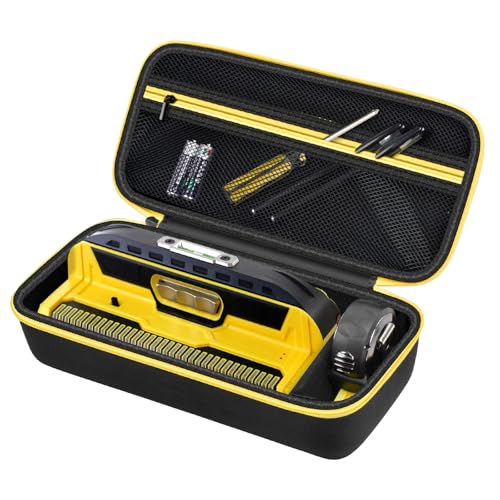
Casmilee Hard Stud Finder Case for Franklin ProSensor

CH Hanson 03040 Magnetic Stud Finder 2 Pack

SNUNGPHIR CH Hanson 03040 Magnetic Stud Finder

Rack-A-Tiers Stud Ball Magnetic Stud Finder 52300

JAXWQ 5-in-1 Stud Finder Wall Scanner (Bark)

JAXWQ 5-in-1 Stud Finder Wall Scanner (Cherry)

JAXWQ 5-in-1 Stud Finder Wall Scanner (Banana)
A Breakdown Of The Leading Choices
This one sits in a different lane from the rest of the list. Instead of a scanner, you’re looking at a custom-fit hard case built specifically for Franklin ProSensor models, including the MAX, M210, 710, 710+, T13, T11, X2100, and X1100. The internal cavity measures roughly 11.81 by 5.11 by 2.61 inches, which lines up with those rectangular multi-sensor units.
For tradespeople who toss a ProSensor into a truck bin or a contractor bag, that snug fit is the real value. A smooth zipper keeps the shell closed, and a top handle makes grab-and-go painless between job sites.
Advantages To Know
- Form-fitting shell prevents the scanner from rattling against other tools.
- Zipper closure keeps dust and grit away from the sensor face.
- Carrying handle simplifies transport up ladders or across a job site.
Points To Keep In Mind
- It only fits certain Franklin ProSensor models, so verify your unit against the listed dimensions before ordering.
- You still need a separate scanner, since the case offers zero detection capability on its own.
Made For
Contractors and remodelers who already own a Franklin ProSensor and want a dedicated travel case that survives the back of a work van.
Where Another Pick Suits Better
Shoppers without a Franklin ProSensor get more value from the CH Hanson 03040 Magnetic Stud Finder 2 Pack, which actually finds studs out of the box.
The CH Hanson 03040 leans on something most modern electronics have forgotten: a rare-earth magnet. Powerful enough to pinpoint the screws or nails anchoring drywall to a stud, the magnet snaps to the fastener and stays put, which frees your second hand for marking the spot.
Because there are no batteries, no calibration, and no LCD to interpret, this tool stays friendly for anyone who has never used a stud finder before. The soft-grip body keeps the unit from slipping on a sweaty palm during a long afternoon of mounting, and the two-way level built into the frame lets you mark a clean horizontal line once you find a stud. Getting two units in the pack also means you can stage one in the kitchen drawer and another in the garage, depending on the project.
What Helps Most
- Rare-earth magnet locates metal fasteners without power, so the tool never dies mid-project.
- Hands-free stick once the magnet locks onto a nail or screw.
- Two-way level simplifies marking the stud location with a pencil.
Trade Offs
- It only locates metal fasteners, not the wooden stud itself, so a hollow-sounding spot can still fool you if the drywall was glued or screwed off-center.
Key Product Details
Right Fit For
Homeowners tackling the occasional shelf, curtain rod, or picture-hanging project who want a no-fuss tool that lives in a junk drawer.
Reach For A Different Pick When
Anyone hunting studs through ceramic tile or thicker wall assemblies should consider the Rack-A-Tiers Stud Ball Magnetic Stud Finder 52300 instead, since its rare-earth magnet is rated for denser materials.
This single-pack version of the CH Hanson 03040 gives you the same magnetic detection in a more compact form factor. The pocket-friendly footprint makes it the kind of tool that lives on a belt clip or in a kitchen drawer for years, waiting for the next anchor job.
Because the design relies on a strong rare-earth magnet rather than electronics, the learning curve is essentially zero. Drag it across the wall until you feel it snap onto a hidden screw or nail, then mark the spot and drill. The soft-grip body keeps the unit from chewing up your fingers during a long hunt, and the absence of batteries means it works in the cold garage, the damp basement, or anywhere a powered scanner might balk.
The Practical Payoff
- Pocket-sized body stows easily in a tool belt or apron pocket.
- Magnetic detection requires no calibration or setup before each use.
- Soft grip prevents finger fatigue during longer scanning sessions.
Honest Caveats
- The single-pack lacks the second-unit value of the CH Hanson 03040 Magnetic Stud Finder 2 Pack, so you may want the duo if you work in multiple rooms.
- Like all magnetic finders, it senses metal fasteners rather than the stud itself, which can produce a false hit on plumbing or conduit.
Who Should Grab It
First-time homeowners and apartment dwellers who want a single, no-fuss stud finder for the occasional hanging project.
A Better Fit Elsewhere
Anyone planning larger renovations with multiple scanning needs gets more flexibility from the JAXWQ 5-in-1 Stud Finder Wall Scanner (Bark), which detects wood, metal, and live AC wiring.
The Rack-A-Tiers Stud Ball is the muscle car of magnetic stud finders. A rare-earth magnet with a 27-pound pull force sits inside a soft protective shell, giving you the strength to push through heavier wall assemblies where a standard magnetic stud finder might skate right past the target.
That pulling power matters in real homes, where tile, plywood paneling, and thicker drywall layers can mask a smaller magnet’s signal. The Stud Ball is rated to sense metal through 1/2-inch and 5/8-inch drywall, ceramic tile, and plywood paneling up to about 3/4-inch thick. Drop it on the wall, drag it slowly, and it locks onto nails, screws, or other ferrous targets with a satisfying snap. The whole unit stays pocket-portable despite the beefier magnet, so it works just as well on a renovation site as in a finished living room.
Everyday Wins
- 27-pound rare-earth magnet penetrates tile, plywood, and standard drywall.
- Compact shell fits in a pocket or tool pouch between uses.
- No batteries or calibration routines to slow you down.
Less Ideal Details
- Heavier pull force means the ball can cling to metal studs, conduit, or plumbing, so you may need to verify findings with a second pass.
Feature Snapshot
Best Suited To
Renovators working in tiled bathrooms, wood-paneled dens, or any space where a standard magnetic finder loses grip.
Not Your Match When
Shoppers who want visual confirmation and AC-wire alerts should look at the JAXWQ 5-in-1 Stud Finder Wall Scanner (Cherry) instead, which adds an LCD readout and dedicated wire detection mode.
The Bark finish version of the JAXWQ 5-in-1 scanner brings serious capability to a non-pro price. An intelligent micro-sensor chip drives five detection modes, covering wood studs, metal studs, joists, pipes, and live AC wiring, so you’re not just hunting for a vertical 2×4 but for the other surprises hiding in the wall cavity.
Edge and center readings help you mark the precise middle of a stud, which matters when you’re driving a heavy lag screw or mounting a TV bracket. The HD LCD screen shows mode, signal strength, and a directional arrow that points you toward the nearest target, so even first-timers can chase a moving signal across the wall without losing it.
What Earns Its Place
- Five detection modes in one unit cover wood, metal, joists, pipes, and live wire.
- HD LCD display makes signal direction and strength easy to read in dim basements.
- Edge and center detection reduces guesswork when marking drilling points.
Where It May Fall Short
- Like most electronic scanners, it needs battery power and a brief calibration against the wall before each scan.
Whose Shelf It Belongs On
Renters and homeowners mounting TVs, mirrors, or floating shelves who want a single scanner that handles multiple wall types.
Swap It Out When
Anyone who prefers a zero-power, fail-simple tool will be happier with the SNUNGPHIR CH Hanson 03040 Magnetic Stud Finder, which never needs batteries or calibration.
The Cherry finish version of the JAXWQ 5-in-1 packs the same five-mode detection hardware as its sibling in Bark, but trades the muted tone for a brighter look that stands out on a workbench. Functionally, you’re getting the same intelligent micro-sensor chip and HD LCD readout that scans for wood, metal, joists, pipes, and live AC wiring.
For workshop settings where tools tend to migrate into a dark corner or get buried under a stack of lumber, the brighter shell is easier to spot when you reach for it. The color difference is purely cosmetic, so the real decision is whether you want a unit that matches a more visible tool kit or one that blends in.
A Favorable Mix
- Five-mode detection covers every common hidden-wall hazard in one scan.
- High-visibility Cherry shell is easy to find on a cluttered workbench.
- HD LCD readout gives clear direction and signal strength feedback.
Practical Considerations
- The Cherry finish shows scuffs and drywall dust more readily than darker housings.
Feature Card
Perfect Match For
Garage and workshop owners who want a multi-mode scanner with a finish that won’t disappear into a pile of sawdust and lumber.
Look Elsewhere When
Anyone working primarily in finished living spaces may prefer the JAXWQ 5-in-1 Stud Finder Wall Scanner (Banana) for its own distinctive look, or the Bark version for a finish that hides scuffs.
The Banana finish rounds out the JAXWQ 5-in-1 family with a bright, cheerful shell that stands out in a dorm room drawer or a shared apartment toolbox. The same micro-sensor chip, HD LCD, and five detection modes carry over from its Cherry and Bark siblings.
For new homeowners or first-time DIYers, the visual cue of a brightly colored tool means you won’t mistake it for a tape measure or a level when reaching into a shared drawer. Mode selection on the LCD walks you through wood, metal, joist, pipe, and live AC detection, so the learning curve stays short.
Where It Delivers
- Bright Banana finish makes the unit easy to spot in shared storage spaces.
- Five detection modes give beginners a versatile tool for varied projects.
- HD LCD readout simplifies signal interpretation on first use.
Room For Improvement
- The vivid finish can look out of place in a professional tool kit and may show wear more visibly over time.
Who Will Love This
Students, new homeowners, and casual DIYers who want a forgiving, multi-mode scanner with a finish that won’t get lost in a shared drawer.
Skip It When
Tradespeople seeking a low-profile shop tool may prefer the Rack-A-Tiers Stud Ball Magnetic Stud Finder 52300, which delivers heavy-duty magnetic sensing in a no-nonsense shell.
Matching a Stud Finder to the Job at Hand
Magnetic versus electronic is the first fork in the road. Magnetic stud finders use rare-earth magnets to locate metal fasteners, so they need no batteries and never need calibration. Electronic stud finders use sensor arrays and microprocessors to detect wood, metal, and live AC wiring, with LCD readouts that show signal strength and target direction. For tile, plaster, or lath walls where the magnet may struggle, an electronic scanner gives you more confidence.
Scan depth and wall composition matter more than people expect. Standard 1/2-inch drywall is the easy case. Thicker assemblies, including 5/8-inch fire-rated drywall, ceramic tile, and wood paneling, demand a stronger magnetic pull or a more sensitive electronic chip. Live AC detection is the feature that protects you from a serious shock, and it’s worth prioritizing whenever you’re drilling near outlets, switches, or light fixtures.
Center-finding versus edge-only detection changes the workflow. Edge-only models tell you where the stud starts, leaving you to measure over to find the center. Center-finding scanners triangulate the middle of the stud automatically, which is a real time-saver when you’re hanging something that needs a centered anchor. Mode count matters for mixed projects, since a five-in-one scanner handles wood, metal, joists, pipes, and live wire in a single tool.
Key Considerations Across These Picks
Where Shoppers Go Wrong
The most common mistake is buying an electronic scanner and skipping the calibration step. Most units need to be placed flat against the wall before each scan so the sensor can read the baseline density. Skipping that step produces phantom signals or no signal at all, and the tool gets blamed for a flaw that’s really user error.
Another trap is choosing a magnetic finder for tile or lath walls and assuming a missing hit means there’s no stud. The magnet may simply be too weak for the wall assembly, so the answer is a stronger rare-earth model like the Rack-A-Tiers Stud Ball, not a different tool entirely. Finally, ignoring AC-wire detection on electronic scanners is risky in any wall with nearby outlets, since the scanner may not flag a hot line until you’re already drilling.
Where The Extra Money Goes
Higher-tier electronic scanners earn their cost through better sensor chips, sharper LCD readouts, and broader material coverage. A premium unit typically reads deeper into the wall, distinguishes between wood and metal more reliably, and offers clearer visual feedback when you’re close to a target. For a single TV mount, a budget scanner handles the job. For a whole-house renovation with varied wall types, the upgrade pays for itself in fewer misdrilled holes and faster scans.




