


A good hatchet pulls double duty on the trail. It processes kindling for the evening fire, clears brush around a tarp setup, and handles the occasional emergency task that would otherwise eat into your knife. The category has matured well past novelty, with blade steel, handle geometry, and sheath quality all getting meaningful attention. This list gathers nine strong options across budgets, from lightweight pack companions to heavier busier felling tools. The goal is to match the right head to the kind of camping, hiking, and bushcraft you actually do, so your next trip leaves less guesswork in the pack.
The Essentials At A Glance

Fiskars A-Series Chopping Axe 28″
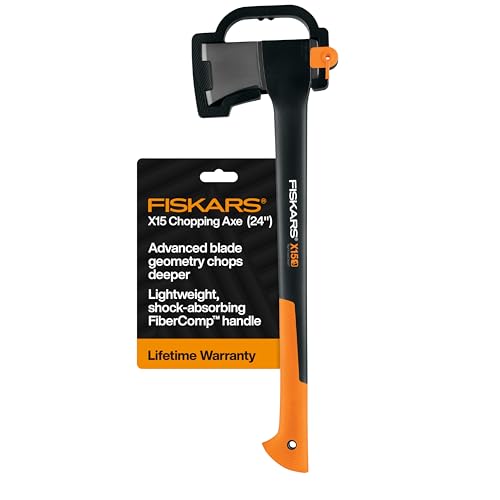
Fiskars X15 Chopping Axe 24″

Fiskars U14 Universal Hatchet 14″

Fiskars X24 Universal Axe 24″
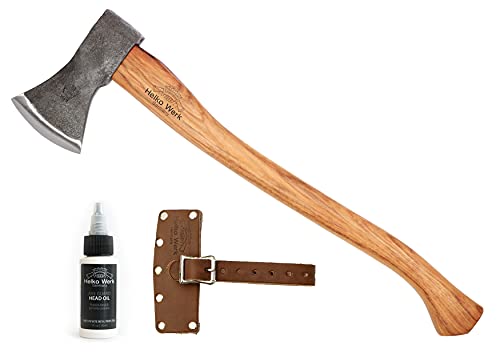
Helko Werk Black Forest Woodworker Axe
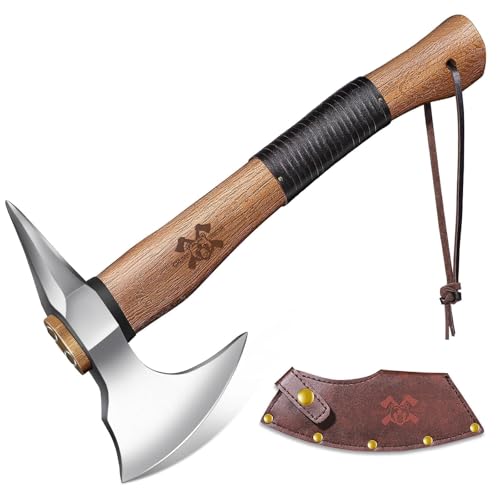
Grumpy Bear 15″ Survival Axe Hatchet

ESTWING Sportsman’s Axe 14″ E24A
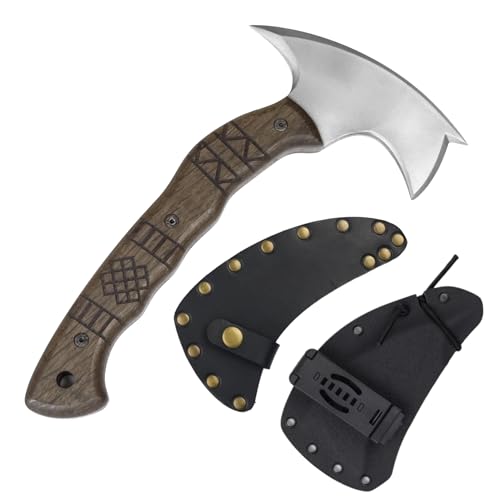
AncientSmithy Tactical Tomahawk Hatchet

Grumpy Bear 11″ Survival Axe Hatchet
A Deeper Look At The Lineup
The 28-inch A-Series is the longest tool on this list, and that length is the point. It gives the swing genuine momentum, which matters when you’re bringing down a small tree or breaking kindling off a thick round. The forged steel head is built for repeated impact, and the composite handle keeps the overall weight manageable for an axe in this size class.
For a backpacker, this is overkill, and for most car campers, it is too. The sweet spot is the homeowner with a wood stove, a few problem trees in the yard, and a long gravel drive that needs clearing after every storm. Compared to the Fiskars X15 below, the extra inches translate into noticeably more swing authority.
The Helpful Details
- 28-inch handle delivers strong swing speed and impact for its weight class
- Forged, low-friction head geometry that drives through wood fiber cleanly
- Composite handle resists weather and seasonal cracking better than raw wood
- Balanced design reduces wrist fatigue during a full afternoon of chopping
Worth Noting
- Too long for short hikers who need a packable one-hander
- Heavier than the mid-size Fiskars X15, so less ideal for a full day on the trail
Key Product Details
Whose Shelf It Belongs On
Homeowners with a wood stove, a small woodlot, or a property that sees regular storm damage will put this axe to work year-round.
Skip It When
Backpackers and through-hikers should reach for the ESTWING Sportsman’s Axe instead, since a 14-inch one-hander is far easier to carry on a long route.
The X15 sits in the middle of Fiskars’ chopping line, and the size is exactly what most people actually need. Twenty-four inches is long enough for real swing power on medium logs, short enough to keep in a truck bed or a garage corner. The PermaHead over-mold design locks the head and handle together, which removes the most common failure point on cheaper axes.
This is the axe you grab for weekend yard work and a Saturday of splitting wood. The lighter, more packable Fiskars U14 is a better fit for trail duty, but the X15 wins on raw chopping authority in the backyard.
Everyday Advantages
- 24-inch handle balances swing power with control for most adults
- PermaHead construction keeps the head secured through heavy use
- Forged steel edge holds up across repeated contact with hardwood
- Light enough to use for a full session without arm strain
Small Caveats
- Not as compact as a one-hand hatchet for hiking
- Lacks a dedicated sheath, so storage in a vehicle needs planning
Right Fit For
Regular firewood splitters and homeowners handling medium to large logs will get the most from this size class.
Consider Something Else When
Day hikers who want a lighter tool should look at the Fiskars U14 Universal Hatchet, which trades swing power for a much shorter pack profile.
The U14 is the shortest Fiskars in this lineup, and it earns its place by being genuinely packable. A 14-inch hatchet fits alongside a tent and a sleeping pad without dominating the load, which is why the format remains popular with weekend backpackers. The RazorEdge blade and ToughCoat plating are designed to glide through wood and resist corrosion on damp trips.
This is not a felling tool, and anyone who treats it like one will be disappointed. For driving tent stakes, processing wrist-thick branches, and splitting kindling for a small fire ring, the U14 handles the work cleanly. It is a one-handed companion, not a two-handed workhorse.
What Makes Sense
- 14-inch profile stows easily in a pack, belt loop, or vehicle cubby
- RazorEdge geometry bites cleanly into kindling and small branches
- ToughCoat plating adds corrosion resistance on wet trips
- Lightweight enough to swing accurately for extended sessions
Some Limits To Know
- Cannot fell even small trees, despite the bold marketing language
- Smaller cutting surface means more hits per log than the X15 or X24
Feature Snapshot
Made For
Backpackers and car campers who need a lightweight, packable hatchet for kindling and campsite tasks.
Look Elsewhere When
You plan to fell saplings or split logs thicker than your wrist. The Fiskars X24 covers that range more comfortably.
The X24 is the modern answer to the older X15, with a thinner, wider forged edge and a Billnäs-engineered balance that is genuinely noticeable on the first swing. The shape is meant to drive deeper per stroke, so fewer hits are needed to reach the same depth on a log. It is also slightly lighter than the 28-inch A-Series, which helps over a long day of work.
For the shopper who wants one axe that handles both backyard tree work and camp duty, the X24 is the most well-rounded pick on this list. It does not replace a dedicated pack hatchet on long routes, but it does replace most general-purpose axes a household might own.
Notable Upsides
- Thin, wide forged edge concentrates force for cleaner, deeper cuts
- Weight distribution is tuned for fast swing speed without losing impact
- 24-inch length works well for most adult users and most tasks
- Composite handle holds up across temperature and humidity swings
Possible Compromises
- Not ideal for backcountry pack carry at 24 inches
- Carries a higher price than the older X15 design for similar tasks
Best Suited To
Homeowners and active campers who want one tool that bridges splitting, limbing, and general chopping.
Where Another Pick Suits Better
Traditionalists who prefer a wood handle and German forging should consider the Helko Werk Black Forest Woodworker Axe.
Helko Werk has been forging axes in the German Rheinland pattern for over a century, and the Black Forest Woodworker carries that heritage in its weight, balance, and finish. The Rheinland head profile is shaped for controlled cutting and detail work, which makes it a favorite among traditional bushcrafters. The hickory handle is the kind you can sand and oil for years of use.
Compared to the composite-handle Fiskars options above, this is a more deliberate tool. It rewards patience and technique, and it shows wear in places where a molded handle would simply crack. For experienced woodsmen, that trade is the whole point.
Reasons It Performs
- Hand-forged German steel head with a Rheinland pattern suited to detail work
- Hickory handle offers a traditional feel and a repairable surface
- Compact head and shorter handle make it useful for shaving and carving
- Built to be re-handled rather than replaced
Where It Is Less Suited
- Wood handle needs oiling and dry storage to stay sound over the long term
- Less swing momentum than the longer Fiskars options for pure splitting
- Costs more than entry-level Fiskars models for a similar size
Quick Facts
Perfect Match For
Experienced woodsmen and traditional bushcrafters who value forging heritage and a wood handle they can maintain themselves.
Reach For A Different Pick When
You mostly need raw splitting power. The Fiskars A-Series 28″ delivers more swing momentum for felling work.
Grumpy Bear’s 15-inch hatchet is the middle sibling between the brand’s packable 11-inch and longer felling tools. The forged high-carbon steel head is the kind that holds an edge well, and the walnut handle gives the tool a warm, classic look that contrasts with all the composite-handle options earlier in this list. The anti-slip grip helps when the handle is wet from rain or sweaty palms.
For car camping and weekend cabin trips, the size strikes a nice balance. It is too long for serious backpacking but short enough to slide into a truck toolbox. The polished blade finish also makes it easier to wipe clean after a session around the fire pit.
Noteworthy Benefits
- Forged high-carbon steel holds an edge through repeated cutting
- Walnut handle looks classic and dampens vibration naturally
- Anti-slip finish helps maintain grip on wet or dusty trips
- Polished blade is easier to clean and inspect for nicks
Details To Watch
- Walnut handle needs occasional oiling to prevent drying in arid climates
- Heavier than the ESTWING Sportsman’s 14-inch for the same general use
Right Fit For
Car campers and bushcraft hobbyists who want a traditional wood handle with a modern carbon-steel head.
Swap It Out When
Backpackers should pick the Grumpy Bear 11″ version, which trims nearly four inches off the carry length.
ESTWING has been forging one-piece steel tools in Illinois for decades, and the Sportsman’s Axe is the hatchet most outdoorsmen picture when they think of a classic American camp axe. The head and handle are forged from a single piece of steel, so there is no wedge, glue, or fitting to loosen over time. The genuine leather grip is sanded and lacquered for a comfortable, secure hold.
The 14-inch length makes it a true one-hander, and the included ballistic nylon sheath protects your pack and your gear. For someone who wants a hatchet that outlasts a few seasons of neglect, the construction is the headline feature.
What Works In Its Favor
- One-piece forged steel construction eliminates the loose-head failure mode
- Genuine leather grip offers a comfortable, time-tested feel
- Ballistic nylon sheath protects other gear during transport
- 14-inch size works equally well for one- or two-hand swings
Practical Considerations
- Steel handle transmits more shock to the hand than wood or composite
- Leather grip needs occasional conditioning to prevent drying out
- Heavier than the Grumpy Bear 15″ for a similar cutting profile
Who Will Love This
Campers and homeowners who want a no-fuss American-made hatchet that can take decades of seasonal use.
Not Your Match When
You specifically want a wood handle. The Grumpy Bear 15″ offers a walnut handle in a similar size class.
The AncientSmithy tomahawk leans into a different style than the other tools here. At roughly 11 inches overall and just under two pounds, it is built to be carried on a belt, in a small bag, or strapped to a kit. The oak handle and tactical-style head are aimed at users who want something more aggressive than a standard camp hatchet, including those building survival or tactical-style loadouts.
That emphasis cuts both ways. The compact form factor is genuinely easy to carry, and the head design handles brush, branches, and shelter-building tasks well. It is not a wood splitter, and shoppers expecting the cutting authority of a 24-inch Fiskars will be underwhelmed. The niche is real, though, and this tool fills it cleanly.
Benefits That Matter
- Compact 11-inch form factor rides well on a belt or in a small pack
- Lightweight design makes it easy to carry on long routes
- Oak handle and tactical head suit brush clearing and shelter work
- Aggressive styling fits survival and tactical-style kits
Where It May Fall Short
- Oak handle needs the same oiling and care as any wood handle
- Not designed for felling even small trees or splitting larger rounds
Built With In Mind
Preparedness-minded shoppers, light packers, and those building a compact survival kit around a tomahawk-style head.
A Better Fit Elsewhere
Car campers who need more chopping authority should reach for the ESTWING Sportsman’s Axe, which has a longer handle and more swing mass.
The 11-inch Grumpy Bear is the smallest, most packable option in this roundup, and it is built with the same forged high-carbon head as the larger 15-inch version. The shorter walnut handle and shock-absorbing design make it easier on the wrist during a day of repetitive cuts, which is exactly what most backpackers do with a hatchet. The anti-slip grip holds steady when the wood is cold and the morning is damp.
It is not a felling tool, and it is not trying to be. For clearing deadfall, breaking down small branches for a fire, and processing kindling at camp, the size is honest. Compared to the AncientSmithy tomahawk, it has a more traditional bushcraft feel; compared to the Fiskars U14, it offers a real wood handle in a similar packable form factor.
Everyday Wins
- 11-inch size is genuinely packable for backcountry trips
- Forged high-carbon head holds an edge across many trips
- Walnut handle absorbs shock for repeated one-hand cuts
- Anti-slip finish improves control in wet or cold conditions
Small Limitations
- Wood handle needs care to avoid drying in low-humidity environments
- Cannot handle logs thicker than small kindling rounds
Technical Highlights
Who Should Grab It
Backpackers and day-trippers who want a compact, traditional-feeling hatchet for kindling and small camp tasks.
Another Choice May Suit
Those who prefer a synthetic one-piece design should consider the ESTWING Sportsman’s Axe for a similar 14-inch profile.
What To Weigh Before Picking A Survival Hatchet
Size, Pack Weight, And How You Carry It
Handle length is the single biggest variable in how a hatchet performs. Tools in the 24 to 28-inch range swing with real authority and are meant for felling, splitting, and yard work, but they take up significant space in a pack or trunk. Tools in the 11 to 14-inch range trade that momentum for portability, and they are the right call when most of your cuts happen at camp rather than on a work site. Think honestly about where the hatchet will live 90% of the time, then pick the size that fits that scenario, not the one you wish you had.
Steel, Edge Retention, And Real Maintenance
Forged high-carbon steel holds an edge well, but it also rusts if you store it damp. Composite and stainless options are more forgiving in wet climates. Either way, a light coat of oil on the head and a dry handle keep the tool working for years. Leather grips need occasional conditioning, and wood handles need a once-a-season rub with linseed or another protectant. None of this is hard, but skipping it is the most common cause of an early replacement.
Handle Material And Field Repairability
A wood handle can be sanded, oiled, and even re-handled if it ever cracks. A composite handle usually cannot be repaired in the field. One-piece steel handles, like the ESTWING’s, are nearly indestructible but transmit more shock to the hand. Each material has its own balance of feel, weight, and longevity, and the right answer depends on whether you value repairability, comfort, or pure toughness more.
Common Shopping Slip Ups And Upgrade Payoff
Mistakes Worth Dodging
Treating a short hatchet as a felling tool is the most common misstep. A 14-inch tool cannot safely bring down even a small tree, and forcing the swing is how handles crack. Another trap is buying on handle length alone without checking that the grip fits your hand. A hatchet that feels clumsy on the first swing will never get better, so handle weight and grip diameter matter as much as the inch count on the spec sheet.
Where The Extra Money Goes
Spending up on this category usually gets you better forging, a more carefully balanced head, and a handle material that is built to last. The Helko Werk option, for example, uses hand-forged German steel and a hickory handle that you can re-handle rather than replace. For shoppers who use a hatchet weekly, that longevity is the real upgrade. For occasional users, a well-made mid-tier tool like the Fiskars X24 covers nearly every task without the cost jump.
Frequently Asked Questions
What size survival hatchet is best for backpacking?
A packable 11 to 14-inch hatchet is the right range for most backpackers. It fits alongside a tent and sleeping pad, and it has enough mass to handle kindling and small camp tasks. Longer tools are too heavy and awkward to carry on multi-day routes.
Can a survival hatchet fell small trees?
Only longer two-hand tools, generally 24 inches and up, can safely fell small trees. Short hatchets are designed for limbing, kindling, and camp use, and treating them as felling tools risks handle damage and poor cuts. Match the tool to the task.
What is the difference between a hatchet and a survival axe?
A hatchet is a small one-hand tool, usually 11 to 18 inches, meant for light camp work. A survival axe is typically a longer two-hand tool designed for felling and heavier splitting. The terms get used loosely, but the size and intended use are the real difference.
Do hatchet handles need maintenance?
Wood and leather handles do. A light coat of oil once or twice a season keeps a wood handle from drying and cracking, and a leather conditioner keeps a leather grip from stiffening. Composite and one-piece steel handles need less care, mostly just a wipe-down and head oiling.
Is high-carbon steel better for hatchet blades?
High-carbon steel generally holds an edge longer than softer stainless options, which is why it is common on forged tools. The trade-off is a bit more care to prevent rust, especially after wet trips. For most outdoor use, the edge retention is worth the small amount of extra maintenance.




