


A reliable T square turns a guessing game into a confident layout. For hobbyists building a weekend shelf, a craftsperson dialing in a workbench, or a contractor setting fence rails, the right tool saves time and rework. The picks below balance material quality, measurement scale, and grip for common shop scenarios, so you can match a tool to the way you actually work, not just the way it looks in a photo.
The Choices Worth Comparing

Swanson S0101 7 Inch Speed Square (Blue)

Matework 7″ + 12″ Combination Square Set

AKNgoes 24″ Precision T Square

Swanson T0118 8″ Speedlite Square

AKNgoes 12″ Precision T Square

AKNgoes 36″ Precision T Square

AKNgoes Cast Aluminum Reference Square

AKNgoes 6″ Scriber Marking Square
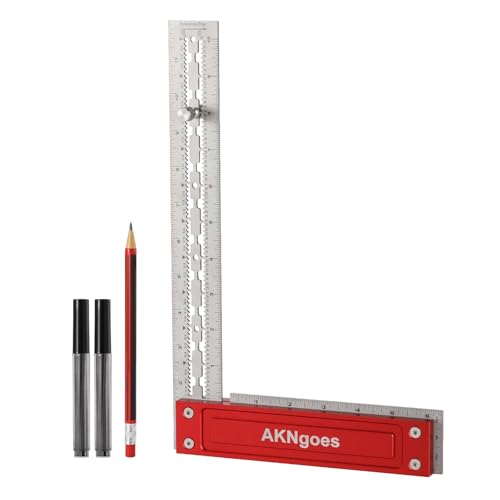
AKNgoes 12″ Scriber Marking Square
Meet The Standout Selections
The 7-inch Swanson S0101 is the kind of layout tool you forget you’re carrying, then suddenly need on every job. Its triangular body slides against a board edge while gradations for common, hip, valley, and jack rafters let you mark rafter cuts without flipping through a book. For framers working on pitched roofs, the built-in markings replace a lot of mental math at the saw.
It doubles as a saw guide for short crosscuts and a quick 45-degree check, so the tool earns its keep well past the framing stage. The blue-painted finish stays readable, and the 1/8-inch spaced scribing notches let you mark a line parallel to an edge without measuring back. Home renovators, deck builders, and hobbyists tackling shed roofs all benefit from its versatility.
What Stands Out
- Rafter gradations reduce mental math on every cut
- Scribing notches speed up parallel marking
- Doubles as a 45-degree check and short saw guide
- Pocket-sized so it lives in a tool belt, not a drawer
- Stamped body holds shape under job-site abuse
Points To Note
- 7-inch reach limits its use on wider boards or sheet stock
- Painted finish may wear with heavy chalk use over time
Feature Snapshot
Right Fit For
Framers, deck builders, and DIYers working on pitched roofs or 2×4-heavy projects who want rafter reference in their pocket.
Look Elsewhere When
You mostly lay out sheet goods or long panels; the AKNgoes 36″ Precision T Square is a better match for that work.
The Matework combo bundle gives you three layout tools for the price most shops pay for one: a 7-inch rafter square, a 12-inch rafter square, and a 12-inch adjustable combination square. The first two handle the pitched-roof work the Swanson S0101 covers, while the larger one extends reach for wider boards. The adjustable square steps in for depth checks, 90-degree transfers, and miter reference.
CNC-machined edges (a milling process where computer-guided cutters shape the metal for tighter tolerances than stamped parts) aim for square corners, so you trust the reference instead of second-guessing it. For a hobbyist just kitting out a bench, the bundle replaces a series of single-purpose purchases. General carpenters, weekend remodelers, and first-year apprentices benefit from carrying one package rather than three loose tools.
The Value In It
- Three tools in one bundle for the cost of a single premium square
- CNC-machined edges target tight 90-degree reference
- Covers rafter work, miter reference, and depth checks
- 7″ and 12″ sizes give you reach options at the bench
Trade-Offs To Consider
- Bundle weight is noticeable on a tool belt during a full day
- Adjustable square’s level vial can lose accuracy if dropped
Whose Shelf It Belongs On
Beginners and hobbyists building a starter kit who want a try square, miter, and protractor in one buy rather than tracking them down separately.
Skip It When
You mainly work with full plywood sheets and need a long reference; the AKNgoes 36″ Precision T Square is built for that scale.
Stepping away from the pocket-sized options, the 24-inch AKNgoes T square brings a true reference edge to longer layouts. The laser-engraved aluminum blade holds its scale on both outer edges, and the solid billet handle with two support lips keeps the tool planted against your work surface, so it doesn’t tip mid-mark. That added stability matters when you’re scribing a line longer than your arm span.
Where the Swanson S0101 is built for tight carpentry, this one targets the table saw sled, crosscut sled, or router table. You flip it, use the factory edge as a fence reference, and check the alignment of your machine. Woodworkers setting up shop fixtures and small-shop hobbyists who need repeatable cuts both find it useful.
A Strong Showing
- 24-inch reach covers boards the 7-inch Swanson S0101 can’t
- Laser-engraved scale resists fade from shop solvents
- Two support lips stop the tool from rocking mid-layout
- Aluminum blade stays flat under repeated clamping
Some Limits To Know
- Less pocket-friendly than the Swanson 7-inch for trim work
- Engraved scale, while durable, may be harder to read in low light than painted marks
Right Fit For
Shop owners dialing in jigs, sleds, and machine fences who want a reference that stays put while they mark or clamp.
Swap It Out When
You mostly work on framing lumber and need rafter gradations; the Swanson S0101 covers that better.
The T0118 takes the basic speed square shape and lightens it up. The body is high-impact composite (a tough plastic blend that holds shape without the weight of metal), which is easier on a tool belt during siding or trim runs. The 1/8-inch spaced notches are still there for scribing, and the center-line guide helps you mark the middle of round stock like dowels or pipe.
Compared to the metal Swanson S0101, this one trades a bit of rigidity for noticeably less weight, a fair swap for overhead work. The beveled edge reads cleaner against a pencil mark, so you don’t lose the line under the tool. Siding installers, trim carpenters, and DIYers doing small repairs around the house find the size and weight easy to live with.
Useful Strengths
- Composite build lightens the load on a full work day
- Center-line guide speeds up round stock layout
- Beveled edge keeps pencil marks visible during the cut
- 1/8-inch notches handle most scribing needs
Worth Noting
- Composite flexes slightly more than stamped steel under heavy pressure
Who Should Grab It
Siding and trim installers who spend hours on a ladder and want a square that disappears in a pouch until needed.
Reach For A Different Pick When
You’re framing a roof and need rafter gradations; the Swanson S0101 carries those markings.
The 12-inch version of the AKNgoes Precision T Square splits the difference between pocket tools and full sheet-stock tools. Its laser-engraved aluminum blade handles most cabinet and furniture layout, while the billet handle keeps the reference flat against your bench. For many hobbyists, this size ends up being the one that lives on the workbench year-round.
The 1-millimeter graduated scale on the outer edges gives finer metric layout than the 36-inch version’s imperial scale, which makes this a good fit for imported hardware and metric-marked jigs. Furniture builders, jewelry box makers, and small-shop woodworkers tackling drawer work benefit from the smaller footprint and metric scale. If your projects live mostly under 24 inches, the 24-inch model may be overkill for daily use.
Advantages To Know
- 12-inch reach fits most drawer and case work
- Millimeter scale pairs well with metric hardware
- Compact enough to live on the bench without crowding tools
Points To Note
- Shorter blade limits its use on full sheet goods
Built With In Mind
Hobbyists and cabinet builders working on casework, drawer boxes, and smaller furniture who need metric scale at the bench.
Consider Something Else When
You break down full plywood sheets; the AKNgoes 36″ Precision T Square gives you the reach to span a 4-foot panel edge.
For cabinet shops and serious hobbyists, the 36-inch AKNgoes T square becomes the layout tool you reach for first. Its 1/32-inch engraved scale on the outer edges handles the fine work of breaking down plywood, while the long blade spans a full sheet edge in a single pass. The billet handle and twin support lips keep the tool planted when the work surface is uneven.
Compared to the 12-inch AKNgoes model, this one is overkill for drawer work but perfect for shop jigs, router table fences, and table saw setup. The longer reference also shines when you need to verify that a freshly cut panel edge is straight before assembly. Cabinetmakers, professional carpenters, and dedicated garage-shop woodworkers all benefit from having a 36-inch reference on hand.
Useful Touches
- 36-inch blade covers a full sheet edge in one pass
- 1/32-inch scale handles fine cabinet layout
- Long reference verifies panel edges before assembly
Some Limits To Know
- Longer blade demands wall or shelf storage space
- Engraved marks can be slower to read than painted lines in low light
Best Suited To
Cabinetmakers and pros who routinely break down sheet goods and want a single reference that spans a full panel.
A Better Fit Elsewhere
You only build small projects under 12 inches; the AKNgoes 12″ Precision T Square keeps things more compact at the bench.
The cast aluminum reference square from AKNgoes steps up from the T-square format into a single-piece machine setup tool. The 6mm-thick anodized blade (aluminum treated with a hard oxide coating that resists scratches and wear) comes from cast tool plate, then gets multiple high-RPM CNC passes for tight tolerances. The result feels closer to a machinist’s tool than a woodworker’s square, and it shows when you set up a table saw or check a fence for square.
The one-piece blade-and-handle design removes a common failure point: the joint where handle meets blade. On long T squares, that joint can loosen over years of clamping pressure. This square side-steps the issue entirely. Woodworkers dialing in stationary tools, machinists, and serious shop owners get the most value from a heavy, stable reference that won’t flex when you push on it.
Where It Excels
- One-piece cast body eliminates handle-joint loosening over time
- 6mm anodized blade resists scratches and shop solvent damage
- Heavy mass sits flat without clamping during machine setup
- CNC-machined edges target tight 90-degree reference for fences
Trade-Offs To Consider
- Heavier than the 24-inch AKNgoes T square for everyday carry
- Cast aluminum costs more than stamped or extruded alternatives
- Surface scratches are inevitable in a busy shop; they don’t affect accuracy but show wear
Feature Snapshot
Who Should Grab It
Shop owners dialing in table saws, router tables, and band saw fences who want a heavy reference that won’t flex or wander.
Skip It When
You need a portable layout tool for trim or framing; the Swanson S0101 lives in a tool belt and handles that work better.
The 6-inch AKNgoes scriber square takes a different angle from the larger T squares. The 301 stainless steel blade (a hard, corrosion-resistant alloy that holds a fine edge) gives you a slim, rigid reference for detail work, and the integrated scribing notches let you mark parallel lines without juggling a separate marking gauge. The compact size fits into an apron pocket, so it tends to stay on hand rather than buried in a drawer.
The trade-off versus the AKNgoes 12″ model is reach. For small joinery, hardware layout, and marking dovetail baselines, the 6-inch size is more controllable and easier to flip in tight spots. Furniture makers, luthiers, and detail-oriented hobbyists benefit most from the compact form. You may find its reach limiting for general cabinet work, where the 12-inch version takes over.
The Upside
- Stainless blade resists rust in humid shop conditions
- Integrated scribing notches replace a separate marking gauge
- 6-inch size flips easily in tight joinery
Honest Caveats
- Stainless shows fingerprints and surface marks under bright light
- Short blade limits utility on wider boards
Who It Suits Best
Detail-oriented woodworkers marking joinery, hardware, and small parts where a compact square beats a full-size T square.
Where Another Pick Suits Better
You need more reach for general shop work; the AKNgoes 12″ Scriber Marking Square is the same tool in a longer format.
The 12-inch AKNgoes scriber square stretches the same stainless-blade concept into a more general-purpose format. The blade’s 301 stainless construction handles daily shop abuse without rusting, and the integrated scribing notches replace a separate marking gauge for parallel lines. For a hobbyist building a tool kit one piece at a time, this square covers more ground than the 6-inch version.
Compared to the aluminum AKNgoes 24″ Precision T Square, this one is lighter and easier to flip, but it lacks the long reference edge for sheet goods. The middle ground of size and weight works well for drawer building, hardware layout, and smaller casework. Cabinet builders, furniture makers, and serious hobbyists benefit from a stainless square that handles both marking and reference duties.
What Works In Its Favor
- 12-inch reach covers drawer and casework layout
- Stainless blade handles shop moisture without rust
- Built-in scribing notches replace a separate marking gauge
Worth Bearing In Mind
- Lacks the long edge for full sheet stock reference
Made For
Hobbyists and small-shop woodworkers who want one square to handle both marking and reference duties without buying two tools.
Consider Something Else When
You mainly work with sheet goods; the AKNgoes 36″ Precision T Square is built for that scale.
What Matters Most Before Choosing T Squares For Woodworking
Scale And Reach For Your Typical Project
The first call is how much reach you actually need. Pocket-sized 7- and 8-inch speed squares handle trim, rafter cuts, and short crosscuts, but they fall short on cabinet casework or sheet goods. Mid-range 12-inch models cover most furniture and drawer work, while 24- and 36-inch squares span board edges and full plywood panels. Match the size to the largest stock you regularly break down, since a too-small square forces awkward repositioning mid-layout.
Body Material And Long-Term Accuracy
Stamped steel is durable but heavy. Cast aluminum and anodized plate stay flat over years of shop heat and humidity, which matters if you check a tool’s truth often. Composite bodies lighten the load for overhead work, though they flex more under heavy pressure. For machine setup, a heavy, single-piece cast tool outlasts a joined T square, where the handle joint can loosen over time.
Marking Scale And Readability
Painted gradations read well in low light but wear with chalk and solvents. Laser-engraved scales stay readable longer, though they can be harder to see in dim shops. Decide whether you work in inches, millimeters, or both, and pick a tool that matches your hardware and jigs. Scribing notches along the edge add real value for parallel lines, since they replace a separate marking gauge.
Ergonomics And Shop Storage
A heavy reference square earns its place on the bench, but a too-heavy tool wears on a tool belt during a full day. Consider how you carry the tool, where it lives between uses, and how often you reach for it on a ladder versus at the bench. The right balance depends more on your daily routine than on the spec sheet.
Key Considerations Across These Picks
Where Shoppers Go Wrong
The most common mistake is buying one square for every job. Pocket squares can’t span a sheet of plywood, and 36-inch references are clumsy for trim cuts. The honest read is that most woodworkers end up with two tools: a pocket size for rafter and trim work, and a longer reference for the bench. Skipping the scribing notches is another quiet miss, since they replace a separate marking gauge and earn their keep on every project.
What The Higher Tier Buys
Premium T squares cost more because the body stays flat under clamping, the edge stays square over years, and the markings survive shop solvents. The AKNgoes cast aluminum reference square is a good example: heavier, anodized, and CNC-machined for tighter tolerances. That upgrade pays off when you set up stationary tools, where a 1/32-inch drift translates into crooked cuts across a whole project. For trim and framing work, the upgrade rarely justifies the cost.
Frequently Asked Questions
What size T square do most woodworkers start with? A 12-inch T square is a common starting point because it covers drawer and casework without overwhelming a small bench.
How do I keep a T square accurate over time? Store it flat or hanging on a wall, wipe off moisture and solvents after use, and check its square against a known reference periodically.
Can a T square replace a combination square? A T square handles layout and reference edges well, but a combination square’s adjustable head covers depth checks and miter work a T square can’t match.
Is aluminum or steel better for a T square? Aluminum stays flat and resists rust, which is why it’s the common choice for precision work, while steel tolerates more rough handling on a job site.
Do I need different T squares for different projects? Most woodworkers end up with at least two: a pocket size for trim and framing, and a longer reference for sheet goods and machine setup.




