


Fine woodworking punishes cheap blades. A tearout on a maple cabinet door or a burn mark on cherry trim means sanding, patching, or starting over, and your blade choice sits right at the center of that. The picks below cover 12-inch blades for sliding miter saws, small-diameter trim blades, and specialty 3-inch cutters for compact cordless saws, so you can match the blade to the cut instead of the other way around.
The Leading Options At A Glance

FOXBC 3 Inch Diamond Cut Off Wheel (3-Pack)

Tenryu SL-305100 12-Inch 100-Tooth Carbide Blade

FOXBC 3 Inch 80T Circular Saw Blade (5-Pack)

FOXBC 3 Inch 24T Carbide Circular Saw Blade (3-Pack)

FOXBC 3 Inch 36T Blade with Diamond Cut-Off (6-Pack)
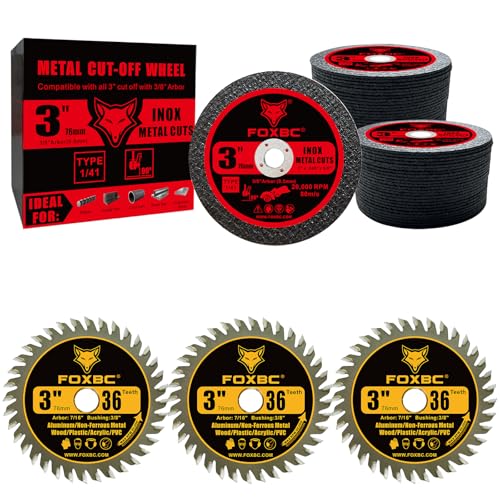
FOXBC 3 Inch 36T Blade with Cut-Off Wheels (6-Pack)

FOXBC 3 Inch Cut-Off Wheels (53-Pack)

FOXBC 3 Inch 36T Carbide Circular Saw Blade (3-Pack)

FOXBC 3 Inch 80T Blade and Cut-Off Bundle (55-Pack)
The Strengths Of Each Pick
This 3-inch diamond cut-off wheel steps in when standard abrasive discs burn through rebar and stainless faster than you can swap them. The electro-plated diamond rim spreads abrasive grains evenly, which keeps cuts straight instead of wandering. For anyone who fabricates small brackets, trims threaded rod, or cuts sheet metal in tight spots, the long life of a diamond edge means fewer blade changes and less downtime.
Compatibility stays simple with a 3/8-inch arbor that matches most 3-inch cut-off saws. Three wheels ship per pack, so you keep spares on hand when one finally wears out.
Practical Pluses
- Diamond rim handles rebar, stainless, and angle iron without constant replacement
- Even abrasive spread keeps cuts straighter on thin stock
- 3/8-inch arbor fits the most common 3-inch cut-off platforms
- Three-wheel pack covers a full weekend of fabrication work
- Dry cutting capability skips coolant setup in the shop
Things To Consider
- Bonded to dry-cutting only, so wet tile work falls outside its lane
- 3-inch reach feels short on thick plate, where stepping up to a larger saw helps
Made For
Metalworkers trimming small-diameter stock and stainless parts who want a long-lasting abrasive that survives repeated cuts.
Where Another Pick Suits Better
For fine finish cuts on hardwood, the Tenryu SL-305100 12-inch 100-tooth blade delivers the cleaner edge you need.
The Tenryu Silencer SL-305100 earns its place on sliding compound miter saws where tearout ruins trim work before it ever leaves the bench. One hundred teeth on a 12-inch plate make a difference you can see on crosscuts in figured maple, walnut, or veneered plywood. A 5-degree rake angle and a thin .110-inch kerf (the width of the cut the blade leaves behind) reduce material waste, which matters when you’re working with expensive hardwood or thin panels.
Owners commonly report that the resin-filled laser slots cut noise and vibration on long ripping passes. The PTFE (polytetrafluoroethylene) coating on the body helps keep sap and pitch from building up during extended sessions.
Useful Strengths
- 100-tooth count leaves a clean edge on hardwoods and veneered panels
- PTFE-coated body reduces pitch buildup during long cuts
- Resin-filled expansion slots lower noise and vibration
- 1-inch arbor suits the most common 12-inch sliding miter platforms
Worth Noting
- 1-inch arbor limits it to larger stationary saws, not portable 12-inch cordless miter saws in some cases
- Single-blade purchase, with no spare included for long projects
Quick Facts
Right Fit For
Cabinetmakers and trim carpenters running a 12-inch sliding miter who need furniture-grade edges without a second pass through the planer.
A Better Fit Elsewhere
For cordless 3-inch trim saws, the FOXBC 3 Inch 24T Carbide Circular Saw Blade (3-Pack) fits the platform more naturally.
Eighty teeth on a 3-inch blade sounds like a lot, but it’s exactly the count that makes small-diameter saws behave like full-size finish blades. This pack targets plywood, OSB (oriented strand board), MDF, veneer, plastic, and vinyl siding, all the materials that punish you with chipping when tooth count drops. For a hobbyist cutting cabinet backs or shop jigs, five blades in the box mean you don’t ration cuts.
The 3/8-inch arbor fits Dremel Ultra-Saws, RotoZip tools, 3-inch Milwaukee 2522-20 saws, Ryobi PSBCS02 One+, DeWalt 3-inch 20V cordless saws, and Worx 20V 3-inch cut-off tools. That broad compatibility takes the guesswork out of fitting a blade to your existing cordless platform.
What Earns Its Place
- High tooth count keeps edges clean on plywood and veneer
- Five-blade value pack suits high-wear trim work
- Works with the most common 3-inch cordless cut-off saws
Trade Offs
- Wood-focused design, so aluminum and metal cutting require a different blade
- 3/8-inch arbor won’t fit 7/16-inch platforms without a separate bushing
Best Suited To
DIYers and cabinet builders cutting plywood and trim who want fewer chips on small cordless saws.
Skip It When
If your projects call for rips in thick stock, step up to the Tenryu SL-305100 12-Inch 100-Tooth Carbide Blade for cleaner feed rates.
Twenty-four teeth on a 3-inch blade is the trim saw’s version of a workhorse. The FOXBC 24T leans into speed over finish, so you rip through wood, plastic, PVC, acrylic, and aluminum without bogging the motor. The ATB tooth grind (Alternate Top Bevel, where teeth alternate between a left and right bevel for a slicing action) helps slices that would otherwise chip out, and the ultra-thin kerf means your 20V cordless saw doesn’t fight back during longer cuts.
A 7/16-inch arbor with a 3/8-inch bushing broadens the fit, covering DeWalt 3-inch 20V, Dremel Saw-Max, RotoZip, Milwaukee 2522-20, Ryobi PSBCS02 One+, Ridgid 18V 3-inch R87547B, and Worx 20V 3-inch cut-off saws. For shop jigs and trim cuts, that range covers most cordless platforms you already own.
Positive Points
- Thin kerf keeps cordless saws from stalling on long cuts
- ATB grind reduces chipping on plywood edges
- Bushing expands fit across the most common 3-inch cordless saws
- Carbide teeth handle abrasive plastics and aluminum sheet
Honest Caveats
- Lower tooth count means rougher edges than the 80T blade in pick 3
- Best on thin stock, less ideal for thick hardwood rips
Feature Snapshot
Who It Suits Best
Tradespeople trimming PVC trim, plastic panels, and aluminum sheet who need fast, clean cuts on small cordless saws.
Not Your Match When
For fine hardwood crosscuts, the Tenryu SL-305100 12-Inch 100-Tooth Carbide Blade gives a noticeably cleaner edge.
This bundle pairs the 36-tooth carbide blade for wood, plastic, PVC, acrylic, and aluminum with a diamond cut-off wheel for rebar, stainless steel, and angle iron. The 36T sits between a fast-rip 24T and a fine-finish 80T, which makes it the everyday choice when you bounce between materials in a single afternoon. For a small shop where one cordless saw handles trim, plumbing, and electrical work, this pack keeps the right blade within reach.
The 7/16-inch arbor with a 3/8-inch bushing matches the same range of 3-inch cordless cut-off saws as the rest of the FOXBC line. Six pieces in the box stretch the value across a busy week of mixed-material work.
Useful Touches
- 36-tooth count balances speed and finish for general shop work
- Bundled diamond wheel covers occasional metal tasks
- Bushing expands fit across multiple 3-inch saw platforms
- Six-piece count absorbs a full project without reordering
Points To Note
- Not specialized, so 80T finish cuts on figured wood still look rougher than dedicated blades
- Two blade types mean more storage space in the drawer
Whose Shelf It Belongs On
Multi-trade remodelers and garage-shop hobbyists who want one purchase that covers wood, plastic, and light metal tasks.
Look Elsewhere When
Cabinet shops focused on hardwood finish work will see cleaner edges from the FOXBC 3 Inch 80T Circular Saw Blade (5-Pack).
If pick 5 is the “balanced” version, this bundle pushes the same idea toward higher volume. The 36T carbide blade keeps doing the wood and plastic work, while the metal cut-off wheels handle rebar, stainless steel, and angle iron. The 3-inch diameter makes sense for anyone who already runs compact 3-inch cut-off saws and wants a steady supply of replacement discs in the workshop drawer.
Three carbide blades plus three metal wheels ship per pack, so you rotate through consumables instead of rationing them. That cuts down on the “I’m out of blades” trip to the hardware store mid-project.
Where It Helps
- Wood and metal wheels together cover most household and small-shop jobs
- Six-pack format suits contractors and remodelers burning through blades
- 3/8-inch arbor matches standard 3-inch cut-off and die grinder tools
Small Caveats
- Same mixed-bundle limits as pick 5, so specialty finish work needs a dedicated blade
- Storage organization matters when you’re rotating six blades at once
Who Should Grab It
Garage-shop hobbyists and light contractors who run multiple 3-inch saws and want a single bulk order that covers wood and metal.
Reach For A Different Pick When
For fine finish work in figured hardwood, the Tenryu SL-305100 12-Inch 100-Tooth Carbide Blade serves you better than any 3-inch option in this list.
When your work is mostly metal, the wood blades in earlier picks just take up space. This 53-pack focuses entirely on metal cutting, with 3-inch cut-off discs at 3/64-inch thickness, paired with three diamond cut-off wheels for the longest runs. The arbor and dimensions match the 3-inch cut-off saws and die grinders that fabricators and auto repair shops already own.
Three diamond wheels and fifty standard abrasive discs in one box make this a long-term supply. For metalworkers, that translates to less time tracking orders and more time at the bench.
Reasons It Performs
- 53-piece count supports high-volume fabrication work
- Includes three diamond wheels for the toughest rebar and stainless cuts
- 3/8-inch arbor fits the most common 3-inch cut-off tools
Where It Is Less Suited
- No wood or plastic blades, so finish carpenters would still need a separate set
- Bulk packaging takes up more shelf space than a 3-pack
Feature Rundown
Perfect Match For
Fabrication shops and auto repair techs running 3-inch cut-off saws daily and burning through metal discs.
Swap It Out When
Cabinetmakers should grab the FOXBC 3 Inch 80T Circular Saw Blade (5-Pack) for a wood-focused setup instead.
The 36T blade in a 3-pack stays focused on wood, plastic, PVC, acrylic, and aluminum, without the diamond wheel getting in the way. High-density tungsten carbide teeth hold an edge on abrasive materials, so plywood and laminate flooring don’t dull the blade after a single project. The 7/16-inch arbor with 3/8-inch bushing mirrors the fit of the other FOXBC carbides, dropping onto Dremel Saw-Max, Ultra-Saws, RotoZip, Milwaukee 2522-20, Ryobi PSBCS02 One+, Ridgid 18V 3-inch R87547B, DeWalt 3-inch 20V, and Worx 20V 3-inch cut-off saws.
For trim carpenters and remodelers running one cordless platform, this three-pack covers a week’s worth of cutbacks and detail work.
Standout Benefits
- Tungsten carbide teeth hold an edge on abrasive laminates
- 3/8-inch bushing expands fit to the most common 3-inch cordless saws
- Three-pack size fits weekly trim work without overspending
- Ultra-thin kerf keeps cut-off saws cutting efficiently on longer passes
Some Limits To Know
- 36T still leaves visible chipping on figured hardwood face grain
- No metal-cutting option in the pack for plumbing or electrical tasks
Built With In Mind
Trim carpenters and remodelers cutting PVC, plastic panels, and aluminum trim who want a wood-focused blade in a small format.
Another Choice May Suit
Fine-furniture builders should pair this pack with the Tenryu SL-305100 12-Inch 100-Tooth Carbide Blade for hardwood crosscuts.
This bundle stacks five 80T finish blades with fifty metal cut-off discs, turning a single order into a full workshop supply. The 80T blades deliver the cleanest cut in the 3-inch FOXBC lineup, which makes them ideal for plywood, OSB, veneer, and plastic trim where chips ruin the look. The cut-off discs then handle the metal side of the same project without swapping tool platforms.
For installers who run 3-inch cut-off saws on cabinets, backsplashes, and light framing, this combination lands on a workbench in one shipment. Compared to pick 3, the bigger pack and the metal discs add scope without much trade-off in cost-per-blade.
Benefits That Matter
- 80T blades give the cleanest 3-inch finish cut in the FOXBC range
- 50 metal discs cover a long stretch of plumbing and electrical trim work
- One shipment handles wood and metal tasks in the same kit
- 3/8-inch arbor matches 3-inch cut-off saws and die grinders
Potential Sticking Points
- 3-inch reach limits it to thinner stock rather than thick plate
- Storage organization matters with 55 pieces rotating through the shop
Spec Overview
Who Will Love This
Installers and remodelers who want plywood-grade finish cuts and metal-cutting discs from a single delivery.
Where A Sibling Pick Shines
Hardwood furniture makers get a noticeably cleaner edge from the Tenryu SL-305100 12-Inch 100-Tooth Carbide Blade on a sliding miter.
What To Weigh Before Choosing Your Next Blade
Tooth Count Drives Finish Quality
A blade’s tooth count (T) is the single biggest factor in cut quality. Blades with 24 to 40 teeth rip through stock quickly but leave rougher edges, while 60 to 100 teeth on a 12-inch plate, or 80 teeth on a 3-inch plate, slow the cut but eliminate most tearout on plywood and figured hardwood. Match the count to the cut, not the material’s marketing copy.
Diameter And Arbor Have To Match Your Saw
A 12-inch blade belongs on a 12-inch saw, and a 3-inch blade belongs on a 3-inch saw, but the arbor (the center hole that mounts to the saw’s spindle) needs the same attention. Most 3-inch cordless cut-off saws use a 3/8-inch or 7/16-inch arbor, and a bushing (a small metal ring that adapts a smaller arbor to a larger spindle) can bridge the difference. Buying a blade without checking the arbor turns into a return trip, so measure the spindle or check the manual first.
Kerf Width Changes Motor Load
Kerf is the width of the slot the blade cuts through the material. A thin kerf (around .110 inch on a 12-inch blade) removes less material, which means your motor sees less load, but it also flexes more in dense hardwood. A standard kerf adds stiffness and stays straighter under pressure, at the cost of a slightly heavier cut. Cordless saws benefit most from thin-kerf designs because their batteries deliver less torque than corded motors.
Coating And Body Material Affect Longevity
PTFE-coated plates shed pitch and sap, which matters when you’re cutting green wood or running a blade for hours. Resin-filled expansion slots cut noise and vibration, and laser-cut bodies stay balanced longer than stamped plates. These features cost more up front, but they stretch the life of the blade on real shop work, where cheap blades dull in a weekend.
Key Considerations Across These Picks
Common Buying Slip Ups
Skipping the arbor check is the most frequent mistake, and it sends a fresh blade straight back to the retailer. Buyers also reach for the highest tooth count on every cut, which slows the cut and burns the motor when rough rips would do the job faster. Picking a single blade for every material is the third trap. Separate wood and metal blades protect both jobs and last longer than a single compromise blade.
Why Top Tier Costs More
Premium blades like the Tenryu SL-305100 command a higher price because of laser-cut bodies, resin-filled slots, and PTFE coatings that extend blade life. For finish work on expensive hardwood, the upgrade pays off by skipping sanding and reducing burn marks. For rough framing, a budget blade cuts the same line, so paying more rarely returns value on those jobs.
Frequently Asked Questions
How Often Should I Replace A Fine Woodworking Blade?
Replace the blade when edges start chipping even after cleaning, or when you see burn marks on cuts that used to come out clean. For shop hobbyists running plywood and hardwood a few hours a week, a quality 80-tooth blade lasts months before that point.
Can I Use One Blade For Both Wood And Metal?
A dedicated wood blade and a dedicated metal blade always outlast a compromise blade. Carbide teeth handle wood, plastic, and aluminum, but steel and rebar chew through them quickly. Diamond wheels work on metal, but a 3-inch diamond cut-off wheel is a poor choice for finish cuts on hardwood.
What Does A Higher Tooth Count Actually Do?
More teeth on a blade means each tooth removes less material, which leaves a smoother edge. The trade-off is a slower cut and more heat, so a 100-tooth blade is best for finish cuts, while a 24-tooth blade handles rough rips.
Do Coatings On The Blade Plate Matter?
PTFE and similar non-stick coatings help the blade shed pitch and resin, which keeps cuts cooler and reduces binding. The coating matters most on long ripping sessions where pitch builds up and slows the cut, and less so on short trim cuts.
Are 3-Inch Blades A Real Option For Fine Work?
For small trim cuts, detail work, and field installations, a 3-inch 80-tooth blade delivers surprising finish quality. For full panels and hardwood rips, a 10-inch or 12-inch blade still gives a better cut, so the 3-inch format complements, rather than replaces, a full-size saw.




