


A push block is one of those unglamorous workshop tools you only think about after a near miss. If you cut sheet goods, narrow rips, or small parts on a table saw, your fingertips spend a lot of time near a spinning blade. A good push block keeps your hands planted firmly on the stock, controls tearout, and fights the kickback that happens when wood pinches the blade. Hobbyists, cabinetmakers, and weekend DIYers all benefit from having at least one or two in the drawer, and the right one depends on what you actually cut.
Your Options, Compared

MICROJIG GRR-RIPPER GR-200 Advanced Adjustable Pushblock

MICROJIG GRR-RIP-BLOCK Smart Push Block GB-1
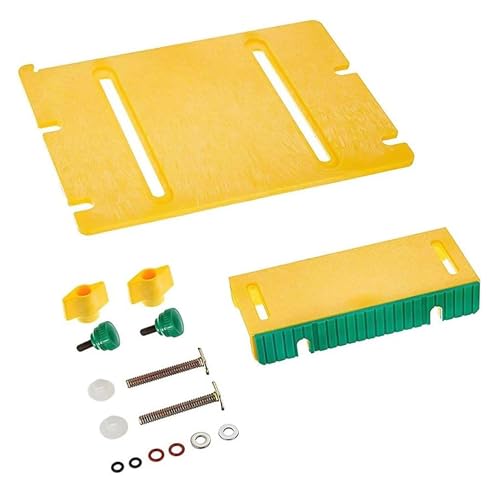
MICROJIG GRR-RIPPER Upgrade Kit GRAK-404

MICROJIG GRR-RIPPER Gravity Heel Kit GRGH-040

Milescraft 3406 GrabberPRO Push Block

POWERTEC Deluxe Push Stick 2PK (71511)

POWERTEC Deluxe Push Stick Max Grip 2PK

POWERTEC Grab Push Block 71794

MICROJIG GRP-3Y Replacement Center Leg
A Breakdown Of The Leading Choices
The MICROJIG GRR-RIPPER GR-200 is the workhorse you see in pro shops for a reason. Its three-leg, adjustable geometry grips the workpiece from above and behind the blade, so you can feed stock through the cut without chasing it down the table. For cabinetmakers ripping narrow strips or breaking down plywood, the GR-200’s stabilizing force feels like having a second pair of hands.
Setup takes a few minutes the first time you dial in the center leg height and feed direction, but once tuned, the block becomes an extension of your grip. The green gripping pads hold firmly on smooth and rough stock alike, and the non-slip base keeps the block planted during aggressive cuts. Owners commonly report that the learning curve pays off fast.
Noteworthy Benefits
- Adjustable three-leg design keeps downward and forward pressure locked in throughout the cut
- Green polymer gripping surface holds well on both slick plywood and rough-sawn lumber
- Compatible with table saws, router tables, jointers, and band saws for workshop-wide use
- Stabilizing action noticeably reduces blade pinch and the kickback risk that comes with it
Honest Caveats
- Carries a real learning curve versus a basic push stick, especially for first-time users
- Takes up more storage room than a simple stick and may not suit very compact workbenches
Feature Card
Who Will Love This
Intermediate to advanced woodworkers who frequently rip narrow or small parts and want one premium block to anchor the workflow.
Look Elsewhere When
The Milescraft 3406 GrabberPRO is a friendlier starting point for someone who wants a push block that works across machines without dialing in as much geometry.
The GRR-RIP-BLOCK GB-1 is a smaller, smarter cousin of the GR-200, built around retractable “smart” heel hooks. Where a traditional push block holds the top of the stock, this one also reaches back and grabs the tail end, which is the part most likely to lift or drift as the cut finishes. For small parts, narrow rips, and detail work, the extra control is genuinely useful.
The hooks deploy and retract as pressure shifts, so you don’t have to think about them mid-cut. The yellow-and-green body stays visible on a busy bench, and the block feels light enough for one-handed feeding. Compared with the GR-200, the GB-1 is more about precision than raw ripping power.
Well-Handled Touches
- Smart heel hooks automatically engage the back of the workpiece at the end of a cut
- Compact body fits comfortably in one hand for small or awkward stock
- Works on table saws, routers, jointers, and band saws without swapping gear
- Hook retraction mid-board keeps the block from catching when you reposition
Things To Consider
- Not the right tool for breaking down full plywood sheets, where the GR-200’s footprint is more stable
- Smart hooks benefit from occasional cleaning of the gripping pads to keep grab consistent
Best Suited To
Woodworkers focused on small parts, trim cuts, and finish rips where control at the tail of the cut matters more than feed force.
A Better Fit Elsewhere
The MICROJIG GRR-RIPPER GR-200 covers a wider ripping workload, including sheet goods, for someone who doesn’t want to switch tools for larger cuts.
The GRAK-404 kit is a targeted upgrade rather than a new tool. Owners of an older MICROJIG GR-100+ push block use it to bring the older model up to GR-200 Pro capability, replacing key wear components and adding the adjustable spacer that defines the current flagship. For someone already invested in the GR-100 platform, this kit is the most cost-conscious way to refresh performance.
The included stabilizing plate, adjustable spacer, and mounting hardware arrive as a complete package, so no extra parts are needed. Installation is straightforward for anyone comfortable with basic hand tools. The honest read is that the kit extends the life of an existing block rather than introducing a new system.
What Helps Most
- Brings an existing GR-100+ up to the current GR-200 Pro performance level
- Comes with stabilizing plate, spacer, and mounting hardware in one box
- Keeps the familiar GR-100+ body and ergonomics that long-time users already know
- Lowers cost versus buying a full new push block for the same end result
Points To Note
- Only useful for someone who already owns a GR-100+; it is not a standalone push block
- Older plastic surfaces may show wear and reduce grip, which the kit does not address
Feature Card
Made For
Existing GR-100+ owners who want modern performance without replacing the body they already know.
Skip It When
A new woodworker without a GR-100+ should start with the GRR-RIPPER GR-200 itself instead of buying an upgrade kit for hardware they don’t have.
The Gravity Heel Kit is a smaller accessory that solves a very specific problem: catching the tail end of a long workpiece right where tearout and blowout usually happen. The gravity-activated heels drop down automatically as you feed the board and hold the back edge firmly against the table, so the cut exits cleanly. For long rips on a table saw or tall edges on a router table, it fills a gap the standard push block leaves open.
The adjustability from zero to about an inch lets you fine-tune the heel height to the stock thickness, and the kit installs onto existing GRR-RIPPER blocks without major modification. Depending on the kinds of cuts you make most, the gravity heel may end up being the upgrade you reach for first.
A Favorable Mix
- Auto-retract design drops the heels exactly when the tail of the board is at risk
- Adjustable range from 0 to roughly 1 inch suits thin plywood through thick slabs
- Useful on table saws, router tables, jointers, and band saws for similar problems
- Reduces tearout at the back of the cut, which is where blowout typically shows up
Where It Is Less Suited
- Requires a compatible GRR-RIPPER base block to function, not a standalone tool
- Adds another moving part that benefits from occasional checks for loose hardware
Right Fit For
Woodworkers already running a GRR-RIPPER who cut long stock and want quieter, cleaner exits without adding a second tool.
Reach For A Different Pick When
The Milescraft 3406 GrabberPRO is a more self-contained option for someone who needs similar tail control without owning the MICROJIG ecosystem first.
The Milescraft 3406 GrabberPRO takes a different approach to the same problem the MICROJIG line addresses. Its multi-leg layout straddles the blade and keeps the block in contact with the workpiece on both sides of the cut, applying inward, downward, and forward pressure all at once. For shops that bounce between a table saw, router table, jointer, and band saw, that single design is convenient.
What stands out is how approachable the GrabberPRO feels compared to fully adjustable systems. You spend less time dialing in geometry and more time cutting, which suits hobbyists who want solid control without a learning curve. The trade-off shows up in fine adjustment, where dedicated rippers will want more knobs to turn.
The Helpful Details
- Multi-leg geometry maintains pressure on both sides of the blade simultaneously
- Multi-machine use on table saws, router tables, jointers, and band saws
- Simpler setup than fully adjustable systems, friendlier for newer woodworkers
- Helps suppress kickback by keeping the workpiece flat and forward through the cut
Possible Compromises
- Fewer fine adjustments than a GR-200 for highly customized ripping setups
- Bulkier than a simple push stick, so it takes up drawer space
Feature Card
Who Should Grab It
Hobbyists and home shop woodworkers who want confident control across multiple machines without diving into adjustable geometry.
Swap It Out When
The MICROJIG GRR-RIP-BLOCK GB-1 is a better fit for small parts and narrow rips, where its smart heel hooks deliver more targeted control.
The POWERTEC 71511 set is a pair of L-shaped push sticks built for the simplest possible workflow. For narrow rips where the fence locks in the angle and you just need to keep your hand clear of the blade, this kind of tool has been the shop standard for decades. The deluxe version adds a more comfortable grip and a slightly heavier build than the cheapest hardware-store sticks.
What you’re getting is a low-cost pair, which matters because push sticks are the kind of accessory that walk off the bench. Having a backup in the drawer is rarely a bad idea, and the 2-pack format means you always have one on hand while the other is being re-tightened or replaced. Power and Hand Tools users tend to keep these clipped to the saw as a permanent safety default.
Good Reasons To Consider
- Simple L-shape is quick to learn and use, even for first-time saw operators
- Two-pack format provides a backup stick and a friend for the bench
- Lightweight enough to keep clipped near the saw as a permanent safety default
- Works across table saws, router tables, band saws, and jointers for everyday cuts
Worth Noting
- Provides less downward pressure than a full push block, so it suits lighter cuts more than heavy ripping
- Plastic body can scuff or chip over years of regular contact with the table
Perfect Match For
Occasional woodworkers and first-time saw owners who need a familiar, low-effort safety tool for narrow rips and trim cuts.
Where A Sibling Pick Shines
The POWERTEC Deluxe Push Stick with Max Grip (71338) is a smarter step up for hobbyists who run more aggressive cuts and want stronger hold.
The 71338 version keeps the familiar L-shape of the standard POWERTEC stick and adds a dual-handle ergonomic layout with a Max Grip surface. The result is a push stick you can lean into during heavier cuts without the block skating across the workpiece. For hobbyists running a busy weekend shop, the upgrade is noticeable without adding much cost.
It works on the same machines as its sibling, including table saws, router tables, band saws, and jointers, so the learning curve is zero. You may find the wider grip takes a little getting used to if you’re used to a single-handle stick, but the trade is more torque and less hand fatigue over long sessions. Owners commonly report that the dual-handle layout shines on tall or thick stock.
Useful Highlights
- Dual-handle ergonomic design spreads pressure across both hands for better leverage
- Max Grip surface helps the stick stay planted on the workpiece during heavier cuts
- Two-pack format means you always have a backup close by
- Works across table saws, router tables, band saws, and jointers
Trade Offs
- Wider handle footprint takes up more hand space than a single-handle stick
- Still a stick, not a full push block, so tearout control on small parts is limited
Whose Shelf It Belongs On
Active hobbyists who cut regularly and want a stick that holds position when the feed gets aggressive.
Consider Something Else When
The Milescraft 3406 GrabberPRO makes more sense for someone stepping up from a stick to a true push block without jumping into a fully adjustable system.
The POWERTEC 71794 Grab Push Block is the most detail-oriented option in the POWERTEC lineup. Its retractable holder, anti-slip pad, and offset handle work together to give you a firm grip on the workpiece without forcing your hand into an awkward angle. For cuts near the blade where every millimeter counts, that combination is the whole point of the tool.
The offset handle keeps knuckles clear of the fence, which is a small thing until you’ve scraped them during a long ripping session. The anti-slip base does a good job of holding smooth plywood, which is where cheaper push blocks tend to slide. The honest read is that this block targets the specific gap between a basic stick and a fully adjustable system like the GR-200.
Points In Its Favor
- Offset handle geometry keeps your hand clear of the fence during narrow rips
- Anti-slip base grips smooth plywood and finished surfaces without skating
- Retractable holder adjusts the hold area to match different workpiece sizes
- Useful on table saws, router tables, band saws, jointers, and fence systems
Where It May Fall Short
- Doesn’t offer the same level of multi-leg support as the Milescraft GrabberPRO for very wide stock
- Anti-slip pad benefits from occasional cleaning of dust and pitch buildup
Feature Card
Built With In Mind
Woodworkers running detailed cuts near the fence who want more hold than a stick but don’t need a full multi-leg system.
Not Your Match When
The MICROJIG GRR-RIPPER GR-200 is the better fit for breaking down large sheet goods, where its three-leg layout offers more stability.
The GRP-3Y is a 1-inch adjustable replacement center leg for any GRR-RIPPER model, not a standalone push block. It exists because the center leg is the part that takes the most abuse: it bears the brunt of the downward force and wears faster than the outer legs. For owners whose existing leg has lost grip or adjustment tension, this is a direct, factory-spec replacement.
The green gripping surface is the same material as the original, so performance after the swap matches the original feel. Cleaning with denatured alcohol keeps the surface sticky, which is a common tip for any GRR-RIPPER part. The honest read is that this is a maintenance item rather than a new tool, and the value depends entirely on whether you already own the system.
Notable Gains
- Direct-fit replacement matches the original GRR-RIPPER center leg dimensions
- Green grip surface restores the hold that a worn leg tends to lose over time
- Easy to clean with denatured alcohol for a quick refresh of grip performance
Some Limits To Know
- Only useful for current GRR-RIPPER owners; it is not a complete push block
- Single-leg replacement does not address wear on outer legs or other worn parts
Feature Card
Who It Suits Best
Owners of an existing GRR-RIPPER whose center leg has lost grip or adjustment feel and want a factory-spec replacement.
Wrong Turns To Avoid
The MICROJIG GRR-RIPPER Upgrade Kit GRAK-404 is a better fit when the whole block needs refreshing, not just a single leg.
What Matters Most Before Choosing Table Saw Push Blocks
Stock Size And Cut Type
The shape and size of the work you cut most often drives almost every other choice. Narrow rips call for a tall, vertical push block or a stick with offset handle geometry, while small parts and detail cuts reward smart heel hooks and compact blocks. Sheet goods and long boards need a multi-leg system that maintains pressure on both sides of the blade.
Grip Surface And Pressure Direction
Push blocks fall into two broad camps: flat stick shapes that hold from above, and multi-leg blocks that apply inward, downward, and forward pressure. Sticks are light, fast, and cheap but tend to skate on smooth stock. Multi-leg blocks cost more and take longer to set up, though they grip better and reduce kickback more reliably.
Compatibility Across Machines
Most push blocks advertise use on table saws, router tables, jointers, and band saws, but the fit isn’t equal. A block tuned for a table saw rip fence may not sit comfortably against a router table fence. Worth thinking about which machine you actually use most, then choosing a block that performs there before worrying about cross-shop use.
Maintenance And Long-Term Wear
Polymer grip pads and plastic bodies pick up dust, pitch, and scuffs over time. Blocks with replaceable parts, like the MICROJIG center leg, last longer in heavy shops. Cheaper sticks often need to be replaced when the surface goes slick, so the long-term cost of a higher-end block is sometimes lower than it looks at the start.
Pitfalls Shoppers Hit And Smart Upgrades
Where Shoppers Go Wrong
The most common mistake is buying a stick for a job that needs a block, or vice versa. Sticks handle narrow rips and trim cuts well, but they slide on smooth plywood and provide almost no protection during heavy ripping. A common trap is also buying the most adjustable block on the market and then never dialing it in, leaving performance on the table.
When Paying More Pays Off
Higher-tier blocks earn their cost through grip force, replaceable parts, and multi-machine flexibility. The upgrade shows up most clearly in tearout reduction, longer service life, and less hand fatigue during long sessions. For shops running a table saw several times a week, the jump from a stick to a multi-leg block is usually the upgrade that pays off fastest.




