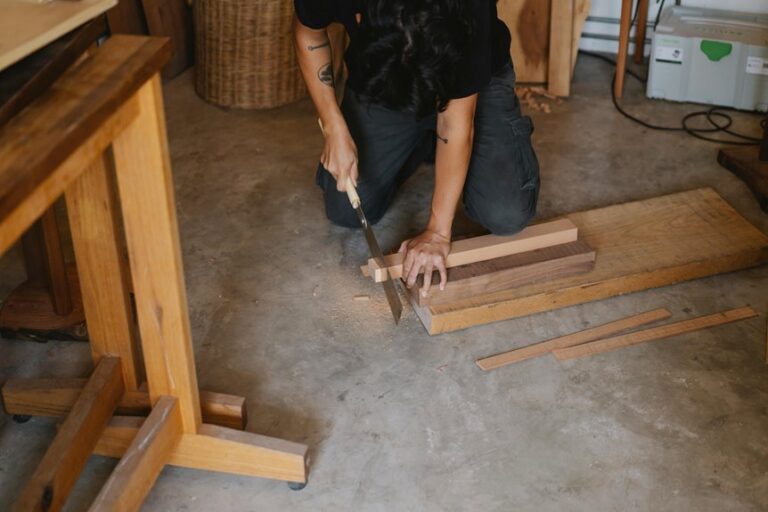
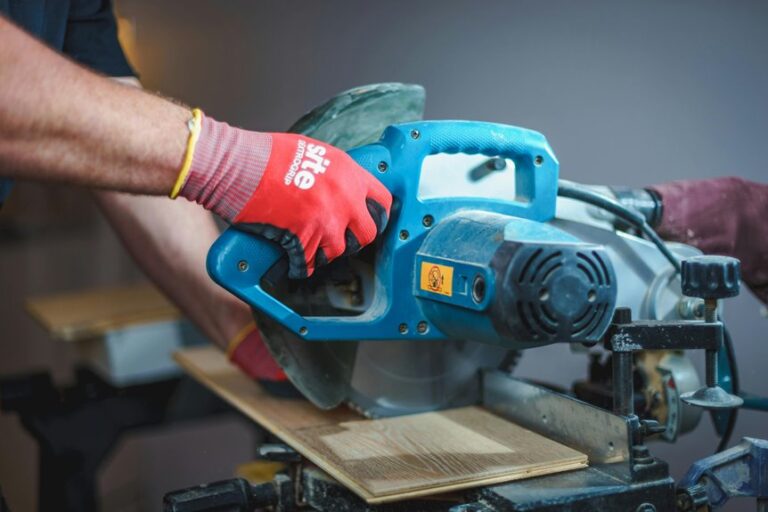
Cabinet making lives and dies at the table saw. A clean rip on a sheet of plywood, a square crosscut on a face frame, a calm push past the blade without chatter or catch: those are the moments that separate a wobbly first build from a tight box that closes flush. Cab builders juggle sheet goods, hardwood edging, and repeatable angles, so the right saw, fence, and accessories change how a shop feels after hour three of a project.
This roundup covers table saws and the gear that helps them behave on a cabinet line. There are portable and jobsite saws for crews who cut on site, accessories that tighten miter work, and push blocks that keep hands out of the danger zone. Each pick is written for a specific kind of maker, from the hobbyist building a wall of built-ins to the trim carpenter running daily rip cuts. Pricing and availability shift often, so check the retailer page for current details.
A Quick View Of The Lineup

GOINGMAKE Table Saw Miter Gauge with Long Extentable Fence from 21 to 38 Inch and Micro Adjust Flip Stop and 13 Angle Stop Holes, Miter Gauge for Table Saw for Crosscut and Miter, Fit 3/8″ x 3/4″ Slot

DEWALT Portable Table Saw with Stand, 8-1/4 inch, up to 48-Degree Angle Cuts (DWE7485WS)

DEWALT 15 Amp 8-1/4 in. Compact Portable Jobsite Table Saw (DWE7485)

Milescraft 3406 GrabberPRO – Push block for Table Saws, Router Tables, Band Saws & Jointers

Circular Saw Blade Storage 10″ 6 Pack Protects Blade Edges and Your Fingers
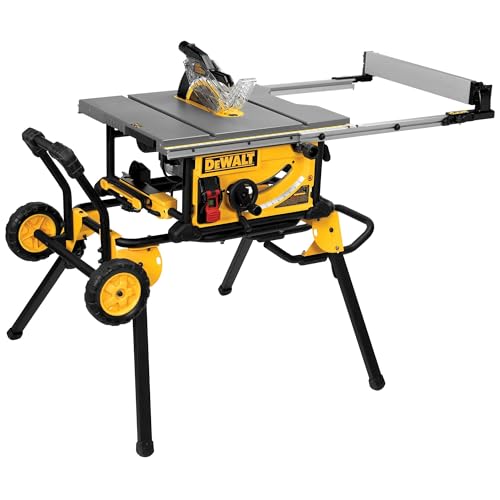
DEWALT Table Saw 10 Inch with Foldable Rolling Table Saw Stand, 15 Amp, 4800 RPM, 32-1/2-Inch Rip Capacity (DWE7491RS)
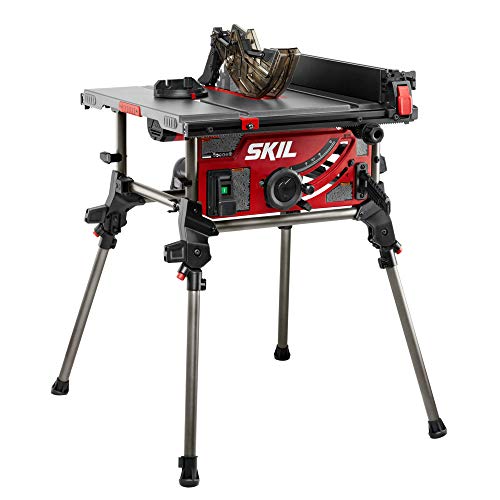
SKIL 15 Amp 10-Inch Jobsite Table Saw with Folding Stand-TS6307-00
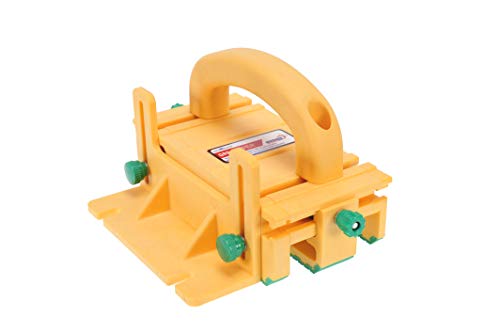
MICROJIG GRR-RIPPER GR-100 3D Table Saw Pushblock, Yellow

GOINGMAKE Table Saw Miter Gauge for Table Saw with Micro Adjust Flip Stop
More On The Choices That Made The List
When a face frame stretches past two feet, a stock miter gauge can feel too short to keep the cut square. The GOINGMAKE gauge solves that by adding an extruded aluminum fence that telescopes from 21 to 38 inches, so longer stock stays registered against a true reference edge instead of a flexing factory bar. For cabinet makers cutting long rails or full-width panels, that extra reach tends to calm the cut.
Thirteen preset angle holes cover the angles a cab builder actually uses, from 0 through 45 and most of the stops in between. Combined with the flip stop, this gauge starts to replace a caliper-and-tape workflow that drags down production. You may find the 3/8″ x 3/4″ T-slot fit matches some saws out of the box, while others may need a small shim for a snug glide.
Good Reasons To Consider
- Telescoping fence extends to 38 inches for long, repeatable crosscuts
- Thirteen angle stops remove guesswork on common miters
- Extruded aluminum body resists flex better than many stock gauges
- Micro-adjust flip stop helps dial in cutoff length on long runs
Honest Caveats
- 3/8″ x 3/4″ slot spec may not match every older saw’s T-track
- Longer reach adds weight at full extension, worth a hand near the end of cut
Right Fit For
Hobbyist cabinet makers who cut long face frame and panel stock and want more fence than a stock gauge offers.
Where Another Pick Suits Better
Cab installers chasing ultra-fine cutoff accuracy will find the GOINGMAKE Miter Gauge with Micro Adjust Flip Stop a tighter stop-focused tool for short, repeated cuts.
For a trim carpenter loading cabinets into a customer’s garage, the DWE7485WS is built to follow the truck. The included folding stand sets up quickly and supports the saw at working height, so cuts on a fridge cabinet or vanity base feel more controlled than balancing on a folding table. The compact frame is the part most crews notice first: it fits in a back seat and walks through a doorway without a fight.
Its rack and pinion fence rails adjust smoothly and stay parallel, which matters when a rip cut runs the full depth of a sheet-good panel. A 15 amp motor at 5800 rpm handles ripping and crosscutting in common cabinet hardwoods, though the 8-1/4 inch blade limits thicker stock compared to the 10 inch DEWALT DWE7491RS later in this list. The power-loss reset is a quiet safety feature that prevents the saw from re-spinning after an outage.
Advantages To Know
- 24.5 inches of rip capacity handles 4-foot sheet goods after a flip
- Rack and pinion fence stays smooth and parallel under load
- Rolling stand folds down for truck-friendly transport
- On-board storage keeps guard, wrenches, and miter gauge together
Trade Offs
- 8-1/4 inch blade tops out on thicker hardwood compared to 10 inch saws
- Stand adds weight and bulk for crews who already own a workstation
- Compact frame means smaller outfeed support for full sheets
Feature Snapshot
Made For
Cabinet installers and trim carpenters who cut on site and want a rolling saw with a built-in stand.
Reach For A Different Pick When
Shop-only makers who never move their saw should consider the DEWALT DWE7491RS for its larger 10 inch blade and 32-1/2 inch rip.
The DWE7485 is the same saw family as the DWE7485WS, but stripped down to a carry-friendly footprint. Without a rolling stand, the saw is lighter, easier to set on a workbench, and a friendlier fit for a one-car garage shop or a basement workshop. Cabinet makers working in tight spaces tend to reach for this one.
You still get the rack and pinion fence, the 15 amp motor, and the on-board storage for guard and wrenches. Power-loss reset is included, which is reassuring on a remodel job where extension cords share circuits with other tools. The trade-off is rip capacity and outfeed support, both of which are tighter than a 10 inch saw on a stand.
Everyday Advantages
- Compact body fits on a workbench or small cabinet shop floor
- Rack and pinion fence offers the same smooth action as the wheeled version
- On-board storage keeps accessories from vanishing mid-project
- Power-loss reset adds a layer of safety on shared circuits
Worth Noting
- No stand means you supply a sturdy bench or table for support
- Smaller blade limits cut depth in thick hardwoods
Best Suited To
Home cabinet makers with limited space who want a jobsite-proven saw on a bench instead of a rolling stand.
Swap It Out When
Anyone needing more rip width for full sheet-good breakdowns will find the DEWALT DWE7491RS a stronger workshop match.
The GrabberPRO earns its name by straddling the blade while keeping the workpiece down and forward. For cabinet makers feeding narrow strips or small panels past a spinning blade, the multi-leg design gives a real point of contact on both sides of the cut, which is exactly the geometry that helps reduce the chance of a grab or kickback.
Its usefulness stretches well past the table saw. The same push block pulls weight on a router table when trimming cabinet door edges, on a jointer for face frames, and on a band saw for resaw cuts. Owners commonly report the rubber feet gripping well on freshly planed stock, though they do wear over time and may need replacement on heavily used shop blocks.
The Practical Payoff
- Multi-leg design grips both sides of a blade for safer narrow rips
- Works across table saws, router tables, jointers, and band saws
- Adjustable stance fits different stock thicknesses
- Solid grip helps with smaller offcut pieces that are hard to push by hand
Points To Keep In Mind
- Rubber feet may wear and need replacement with heavy shop use
- Bulkier than a simple stick for very small trim cuts
Who It Suits Best
Cabinet makers who want one push block to cover the table saw, router table, and jointer instead of buying a separate stick for each machine.
Not Your Match When
Woodworkers who prefer the three-direction pressure of the MICROJIG GRR-RIPPER will find a more dedicated narrow-rip tool in that pick.
A cabinet shop runs through blades. A fine-tooth crosscut for veneer, a 40-tooth general purpose for sheet goods, a thin-kerf for plate joinery, and at least one dado set for cabinet bottoms and shelves. The Tsbelout 6-pack solves the pile of loose blades in a drawer with a soft slip-on cover that fits 10 inch blades and protects both teeth and fingers.
Six covers in a pack means an entire drawer can match, which sounds small until you reach for a blade in a hurry and grab the wrong one. The covers also expose the blade label for quick identification, so swapping between a 60-tooth and an 80-tooth doesn’t require a knife and a flashlight. You may find the fit snug on thicker dado stacks, so thin-kerf and standard plates are the clearest match.
Notable Upsides
- Six-pack keeps an entire blade collection matched and labeled
- Soft edge cover shields teeth from chip-on-chip contact in a drawer
- Exposed label area speeds up blade swaps during a build
- Slip-on fit works for both table saw and miter saw blades
Trade Offs
- Fit may be tight on thick stacked dado blades
- Plastic material is worth watching for cracks if stored in a hot van
Perfect Match For
Cabinet makers cycling through multiple blade types and tired of nicked edges and unlabeled cuts.
Look Elsewhere When
Anyone running only one or two blades in a small hobby shop may not need a six-pack and could pick a single cover instead.
The DWE7491RS is the saw most cabinet pros reach for when a sheet of 3/4 inch plywood hits the bench. Its 32-1/2 inch rip capacity handles a full 4-foot rip without flipping the sheet, which is roughly the difference between two cuts and a half-dozen per panel. For production work, that translates to fewer restocks and cleaner edges.
The 15 amp motor at 4800 rpm chews through hardwood ply and MDF without bogging, and the rolling stand folds down for transport without tools. Tool-free guarding adjustments make blade changes faster on the kind of repeated dado work cabinet boxes require. The saw is heavier than the 8-1/4 inch DEWALT DWE7485, so a one-person shop will feel the difference loading it in.
Key Advantages
- 32-1/2 inch rip capacity rips full 4-foot sheet goods in one pass
- 10 inch blade handles thicker hardwoods and dado work cleanly
- Rolling stand folds for transport and locks solidly when deployed
- Tool-free guard adjustments speed up blade swaps during a build
Practical Considerations
- Heavier than 8-1/4 inch jobsite saws, harder for one person to move
- Larger footprint demands more shop or garage floor space
Feature Rundown
Who Should Grab It
Cabinet makers breaking down full sheets of plywood and MDF on a regular basis who need serious rip width.
A Better Fit Elsewhere
Hobbyists building one or two projects a year may find the lighter DEWALT DWE7485WS easier to live with in a small garage.
The SKIL TS6307-00 is a friendly bridge saw for the home cab builder who wants 10 inch capacity without paying for a contractor-grade machine. The folding legs click out and lock in one motion, so the saw goes from rolling storage to working height in seconds. For a one-person garage shop, that speed matters on a Saturday morning when motivation outlasts coffee.
Its 25-1/2 inch rip capacity covers most cabinet carcass cuts, and the 15 amp motor handles the hardwood ply you’d reach for on a face frame or cabinet side. The dust port elbow helps keep the work area clean, which is a quiet quality-of-life feature when cutting MDF. A 0-45 degree bevel covers the angled cuts most cabinet projects need, though heavy dado work may stress the lighter fence more than a contractor saw would.
Bright Spots
- 10 inch blade capacity at a friendlier price than contractor saws
- Folding stand sets up and breaks down without tools
- 25-1/2 inch rip handles most cabinet carcass breakdowns
- Dust port elbow keeps the work area cleaner during long cuts
Potential Drawbacks
- Lighter fence may flex under heavy dado cuts
- Shorter rip capacity than the DEWALT DWE7491RS for full sheets
Built With In Mind
DIY cabinet makers and weekend woodworkers who want 10 inch cuts in a foldable, garage-friendly package.
Skip It When
Anyone running repeated full-sheet rip cuts will get more capacity from the DEWALT DWE7491RS and its 32-1/2 inch rip.
The GRR-RIPPER is a different kind of tool from a saw. It doesn’t cut, but it changes how a cut feels by applying three-direction pressure: down to hold the workpiece, in to keep it against the fence, and forward to feed it past the blade. Cabinet makers ripping narrow strips for cabinet dividers, louver slats, or thin face-frame stock find that combination of forces turns a stressful cut into a calm one.
For cuts narrower than about 3 inches, where fingers can’t safely approach the blade, the GR-RIPPER becomes almost mandatory. Owners commonly describe the learning curve as short: a few test rips and the pressure points feel natural. You may find the included setup fits most saws out of the box, though a shim or two can help on saws with shallower T-tracks.
Everyday Wins
- Three-direction pressure reduces kickback on narrow rips
- Excellent for strips under 3 inches where hands can’t safely feed
- Sturdy build holds up to daily shop use
- Helpful for matching cuts on a stack of identical pieces
Room For Improvement
- Higher learning curve than a simple push stick
- Some saws may need a thin shim to fit the T-track snugly
Feature Snapshot
Whose Shelf It Belongs On
Cabinet makers regularly cutting narrow strips and thin stock who want better control than a basic push stick offers.
A Better Fit Elsewhere
Woodworkers who need one push block to move between table saw, router table, and jointer will find the Milescraft 3406 GrabberPRO more flexible across machines.
The other GOINGMAKE gauge in this list is built for length; this one is built for fine cutoff tuning. The micro-adjust flip stop moves in small increments and reads through a magnifier, so dialing in a shelf length or a row of identical stiles stops being a tape-measure-and-pray task. For cabinet work that depends on matching cuts, the magnifier alone pays for the tool in saved lumber.
The body supports both square and angled workpieces, which is useful when stops need to read against a mitered face. You may find the adjustment a touch stiff at first, and a few cycles of use smooth it out. For the price tier, the precision of the stop reads better than many stock gauges, and it pairs naturally with a 3/8″ x 3/4″ T-track table saw.
What Helps Most
- Micro-adjust stop supports fine, repeatable cutoff lengths
- Magnified scale reduces misreadings on long production runs
- Works for square and angled workpieces
- Locks firmly to keep settings stable under repeated cuts
Things To Weigh Up
- 3/8″ x 3/4″ T-slot may not fit every saw
- Adjustment knob can feel stiff on the first few uses
Who Will Love This
Cabinet makers who cut rows of identical stiles, shelves, or trim and want a precise stop to keep parts consistent.
Consider Something Else When
Anyone making long, single cuts on oversized stock should look at the GOINGMAKE Miter Gauge with Long Extentable Fence for the longer fence reach instead.
Factors To Consider When Choosing Table Saws For Cabinet Making
Match The Saw To Your Sheet Goods
The biggest decision in a cabinet shop is how often you break down full 4×8 sheets. A 32-1/2 inch rip capacity handles a full 4-foot rip without flipping, which changes the math on every panel. Smaller saws at 24 or 25 inches still work, but expect to flip and recut more, which adds time and chances for error. For an off-site installer who works mostly from pre-cut parts, a compact saw makes more sense than a heavy contractor model.
Blade Size And Motor Power Set The Ceiling
An 8-1/4 inch blade cuts cleanly up to about 2-1/2 inches deep, which covers most cabinet plywood. A 10 inch blade pushes that to 3-1/2 inches, useful for thicker hardwoods, some joinery cuts, and shallow dado work for cabinet bottoms. Pair blade size with motor amperage, because underpowered motors bog on dense hardwood ply and leave burn marks on the edge. A 15 amp motor is the practical floor for serious cabinet work.
Fence Quality Runs Through Every Cut
The fence is the part of the saw you touch most. Rack and pinion fences stay parallel under load and adjust smoothly, which matters when a face frame depends on square cuts. Lighter fences may flex during heavy cuts, and the cut quality drops with the fence. For shop-only builds, fence precision is a real productivity gain.
Accessories Matter As Much As The Saw
A great saw with a bad miter gauge still produces crooked cuts, and a calm cut with no push block is a hand injury waiting to happen. Miter gauges, push blocks, and blade storage aren’t optional extras for cabinet work; they shape how the saw feels after hour three. Budget for a quality miter gauge and a push block before chasing a bigger saw.
Key Considerations Across These Picks
Where Shoppers Go Wrong
A common slip is buying a saw with more rip capacity than the shop can fit, then struggling to move it for every job. The opposite mistake is buying a compact saw to save space and discovering that flipping 4×8 sheets for every cut is exhausting. Measure your space, your vehicle, and the kind of work you actually do, and let that drive the saw choice. Skipping a push block is another common trap, because the saw includes a stick and feels complete until a narrow strip needs to be cut.
Where The Extra Money Goes
Spending more on a table saw usually buys a heavier fence, a more powerful motor, a larger rip capacity, and a stand that rolls and folds. Those features compound: a heavier fence keeps cuts square, a stronger motor avoids burn marks, and a rolling stand removes the friction of setup. For a hobbyist building one project a year, a mid-tier saw delivers most of the value. For anyone running repeated cabinet builds, the upgrade pays for itself in time saved and lumber preserved.
Frequently Asked Questions
What Rip Capacity Do I Need For Cabinet Making?
A 24-1/2 to 25-1/2 inch rip handles most cabinet carcass cuts if you flip a 4×8 sheet once. For full one-pass rips on 4-foot sheet goods, look for 30+ inches of capacity, which a 10 inch jobsite saw with a wide fence typically provides.
Is An 8-1/4 Inch Table Saw Enough For Cabinets?
An 8-1/4 inch saw handles cabinet plywood and most hardwoods used in face frames and small boxes. The 10 inch size is helpful for thicker stock and dado cuts, but for many garage-level cabinet builds, 8-1/4 inches is genuinely enough.
Do I Need A Push Block For Cabinet Cuts?
Push blocks aren’t optional for narrow rips, thin strips, or small offcuts where fingers can’t safely feed the workpiece. A quality push block also helps with consistent pressure on full panels, which improves cut quality. For anyone using a table saw regularly, a push block is a low-cost safety upgrade.
Should I Buy A Jobsite Saw Or A Stationary Saw?
A jobsite saw with a rolling stand fits shops that move, crews that install on site, and tight garages. A stationary cabinet saw is heavier, more precise, and better for production shops. For a one-person cabinet business, a quality jobsite saw is often the more flexible choice.
How Do I Keep Cabinet Sheet Goods Square During A Cut?
Square cuts depend on a parallel fence, a calibrated miter gauge, and consistent feed pressure. A push block helps maintain that pressure through the cut, and a sharp blade with the right tooth count for the material reduces wandering. The combination of these factors, not any single one, keeps a 4×8 sheet square.