A dado cut looks simple, until you run a stack through a saw that wasn’t built for it. The right blade set transforms joinery from a chore into a quick step, while the wrong combination leaves shoulders ragged and bottoms uneven. Woodworkers chasing clean rabbets, sliding drawers, and flush-bottom grooves know that pairing a capable table saw with a proper dado stack matters more than horsepower alone. This roundup covers blades and stacks designed to work with saws ready for dado operations, with options for hobbyists, weekend builders, and small-shop pros tackling cabinetry, shelving, and structural joinery.
The Main Contenders

DEWALT 10-Inch Thin Kerf Table Saw Blade (DW3112)
WEN BL1060 10-Inch 60-Tooth Fine-Finish Saw Blade
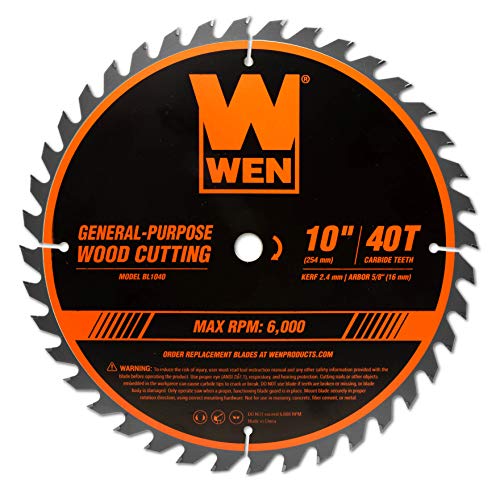
WEN BL1040 10-Inch 40-Tooth Woodworking Saw Blade

Freud LU87R010 10-Inch Heavy-Duty Rip Blade
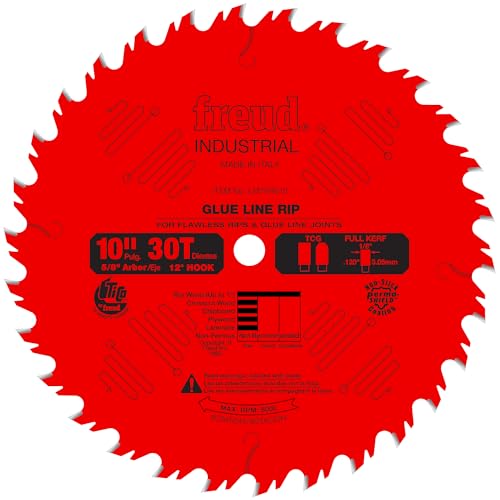
Freud LM74R010 10-Inch Glue Line Ripping Blade

FOXBC 8-Inch Stacking Dado Blade Set, 14-Piece

FOXBC 10-Inch 80-Tooth Ultra Finish Saw Blade

DEWALT DWA11040 10-Inch 40-Tooth Fine Finish Blade

FOXBC 10-Inch Stacking Dado Blade Set, 27-Piece
A Closer Look At Each Pick
DEWALT’s DW3112 sits in a familiar role for hobbyists stepping up from entry-level blades. The 10-inch diameter and 5/8-inch arbor match the standard 10-inch table saws you’ll find in most home shops, while the ATB (alternating top bevel) tooth pattern angles each carbide tip to shear wood cleanly rather than tearing it. The thin kerf removes less material per pass, which helps smaller saws maintain RPM (revolutions per minute) under load and reduces motor strain on corded models with modest amperage.
For a 24-tooth blade, cut quality holds up well on dimensional lumber, framing lumber, and trim work. You may find the 24-tooth count leaves a slightly fuzzy edge on hardwood plywood compared to higher-tooth count blades later in this list, so it’s best viewed as a workhorse rather than a finish blade.
Key Advantages
- Thin kerf reduces motor load on saws under 2 HP
- Standard 5/8-inch arbor fits most 10-inch table saws
- ATB tooth geometry shears wood for cleaner edges than flat grind
- Reasonable price point for a starter replacement blade
Things To Consider
- Only 24 teeth, so finish quality on plywood and veneers is rougher than 40- or 60-tooth options
- Not designed for dado stacks, so groove work needs a dedicated set
Whose Shelf It Belongs On
New table saw owners and weekend builders who need a general-purpose crosscutting blade for framing, decking, and shop setup tasks.
Look Elsewhere When
The WEN BL1060 suits you better when cabinet-grade trim cuts and tearout-free edges matter more than feed speed.
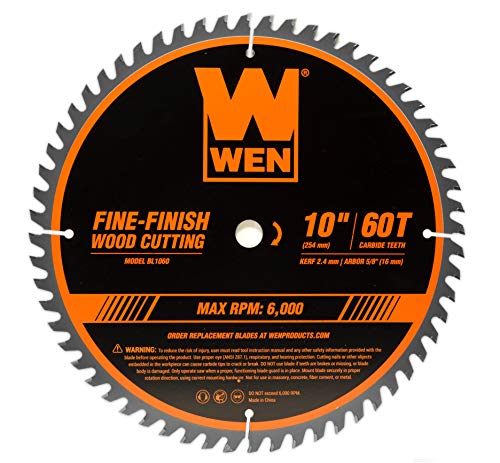
The BL1060 picks up where the DEWALT DW3112 leaves off in terms of finish quality. Sixty carbide-tipped teeth give the blade more cutting edges per inch of rotation, which translates to smaller bites per tooth and a noticeably cleaner edge on hardwood, softwood, and veneered plywood. The standard 5/8-inch arbor makes it a drop-in fit on the same saws that accept the 24-tooth blade, so swapping between rough and finish work is a matter of minutes rather than a tool change.
For trim carpenters and cabinet builders, this blade earns its keep on picture rails, face frames, and small boxes where tearout would mean hand-planing or sanding. The 60-tooth count slows feed rate a bit compared to coarser blades, so it’s not your first choice for ripping thick hardwood.
The Upside
- 60-tooth design minimizes tearout on figured grain and plywood veneers
- Carbide-tipped teeth hold an edge through long production runs
- Direct fit on standard 10-inch table and miter saws with 5/8-inch arbors
Trade Offs
- Higher tooth count means slower feed when ripping thick stock
- Carbide tips require careful handling to avoid chipping on hidden nails or knots
Feature Snapshot
Made For
Trim carpenters, cabinet makers, and hobbyists who prioritize smooth edges on plywood, MDF, and figured hardwood over raw feed speed.
Consider Something Else When
The Freud LU87R010 fits you better when ripping 8/4 hardwood demands a flat-ground tooth pattern built for that exact task.
The BL1040 is the middle child in the WEN trio, and for many small shops, it’s the one that ends up in the saw most of the time. Forty teeth split the difference between aggressive ripping and clean crosscutting, handling rough lumber breakdown and trim cuts with the same blade. The 5/8-inch arbor matches standard 10-inch saws, so installation is straightforward.
Compared to the 60-tooth BL1060, you trade a bit of finish quality for faster feed, which is fair trade when working through sheet goods or long rips. The carbide tips help the blade hold up across mixed materials, though the 40-tooth count still leaves some tearout on highly figured wood that demands a 60- or 80-tooth approach.
Bright Spots
- 40-tooth count balances feed speed and edge quality
- Carbide tips resist dulling on abrasive sheet goods like MDF
- Standard arbor simplifies swapping between miter and table saws
Minor Gripes
- Will not match the polish of 60- or 80-tooth blades on figured veneer
- Single-blide design cannot produce dado widths, so groove work needs a stack
Right Fit For
Shop owners and DIYers who want one blade that handles rips, crosscuts, and trim work without constant swapping.
Another Choice May Suit
The DEWALT DWA11040 suits you better when daily production cutting on a jobsite demands tougher carbide geometry for extended life.
Freud’s LU87R010 commits fully to ripping. Twenty-four flat-ground teeth, each shaped for aggressive feed through thick stock, make this blade the go-to for breaking down 8/4 hardwood, slabs, and dense exotics. The flat grind (rather than ATB) leaves a smoother floor on rip cuts than you might expect from a low tooth count, which is helpful when those rips will become glue-up panels or visible edges.
Like the DEWALT DW3112, this blade is single-purpose. Crosscutting with it will leave rough edges that need sanding. The 5/8-inch arbor fits standard 10-inch saws, and the heavy plate construction keeps the cut stable when pushing wide stock through.
Reasons It Performs
- Flat-ground teeth excel at ripping thick hardwood and softwood
- Heavy plate construction reduces deflection on long cuts
- Standard 5/8-inch arbor fits most 10-inch table saws
Room For Improvement
- Poor crosscut performance; tearout on face grain is common
- Heavier kerf demands more motor power than thin-kerf blades
Technical Sheet
Who It Suits Best
Cabinet makers and furniture builders who regularly rip 6/4 and 8/4 hardwood and want a blade dedicated to that task.
Skip It When
The WEN BL1040 covers you better when a single blade needs to handle both rips and crosscuts on a small-shop saw.
The LM74R010 is a step beyond the LU87R010 for woodworkers obsessed with glue-ready edges. Thirty teeth with a TCG (triple chip grind) configuration cut hard materials efficiently while leaving a flat-bottomed, smooth-walled surface that bonds tightly without jointing. The 5/8-inch arbor fits standard 10-inch table saws, and the premium carbide blend holds an edge through dense material that would dull lesser blades quickly.
For panel glue-ups, edge-to-edge joining, or building butcher block surfaces, this blade replaces the need for a jointer on the ripped edges. It’s not a finish blade for visible faces, so most shops pair it with a separate crosscutting blade rather than trying to make one do both jobs.
Positive Points
- TCG grind produces joint-ready edges straight off the saw
- Premium carbide blend resists wear on dense hardwoods
- 30-tooth count balances feed speed and edge quality for ripping
Honest Caveats
- Specialized for ripping, so crosscutting requires a different blade
- Premium pricing compared to general-purpose 10-inch options
Best Suited To
Furniture makers and cabinet builders running large glue-ups who want to skip the jointer for ripped edges.
Reach For A Different Pick When
The WEN BL1060 fits your shop better when most cuts are crosscuts on plywood and trim rather than long rips on solid stock.
FOXBC’s 8-inch dado set targets saws that don’t accept full 10-inch stacks, like compact benchtop models and some hybrid saws with limited clearance. The set includes two outer blades, five two-wing chippers, and metal shims for fine width adjustments, all stored in a case that keeps the components organized. The 5/8-inch arbor fits the majority of 8-inch table saws on the market, including models from SawStop, Jet, DEWALT, and Bosch listed in the product details.
Dado width adjusts by adding or removing chippers and shims, with the source specifying slot widths from roughly 1/4 inch to 13/16 inch. That’s enough range for most rabbets, dados, and grooves in cabinetry, though the 8-inch diameter caps the maximum cut depth compared to a 10-inch stack.
What Stands Out
- 8-inch design fits compact saws that cannot run 10-inch stacks
- Includes shims for precise width adjustment between standard chipper sizes
- Storage case keeps small components from getting lost in the shop
- 5/8-inch arbor matches most 8-inch table and hybrid saws
Points To Note
- Maximum cut depth is shallower than 10-inch dado sets
- Setup requires patience to achieve flat-bottomed grooves without scoring
Quick Facts
Perfect Match For
Owners of compact and benchtop table saws who want true dado capability without upgrading to a full-size cabinet saw.
Where A Sibling Pick Shines
The FOXBC 10-Inch Stacking Dado Blade Set fits you better when your saw handles full 10-inch stacks and you need a wider adjustment range.
Eighty teeth is a lot for a 10-inch blade, and the FOXBC earns each one. The high tooth count, combined with thin kerf geometry, produces edges that often skip the sanding step entirely on plywood, MDF, and prefinished materials. Tungsten carbide tips resist wear on abrasive sheet goods, so the blade holds its edge through longer runs than steel-only alternatives.
You’ll give up feed speed, since each tooth takes a smaller bite. That trade-off makes sense for finish cuts on visible parts, but ripping 2x material with this blade will feel slow. The 5/8-inch arbor keeps it compatible with the same saws running the other 10-inch options in this roundup.
Everyday Perks
- 80-tooth count produces near-sand-free edges on plywood and veneers
- Thin kerf reduces material waste and motor strain
- Tungsten carbide tips extend service life on abrasive materials
Softer Spots
- Slow feed rate on thick stock compared to lower-tooth-count blades
- Not designed for ripping or heavy production cutting
Who Will Love This
Finish carpenters and cabinet builders cutting plywood, melamine, and veneered panels where edge quality matters more than speed.
Swap It Out When
The WEN BL1040 fits your workflow better when one blade needs to handle mixed rips and crosscuts on a busy jobsite.
DEWALT’s DWA11040 builds on the company’s blade lineup with a focus on tooth geometry that holds up under daily use. Forty carbide teeth handle crosscutting and trim work with cleaner edges than a standard 24-tooth framing blade, while still feeding at a reasonable rate for production work. The 5/8-inch arbor fits the same 10-inch saws targeted by the WEN blades in this roundup.
Where this blade separates from the WEN BL1040 is in carbide formulation and plate stiffness, both of which are emphasized in the product details for longer life. For shops running multiple cuts per day on a jobsite or in a production environment, the extra durability can matter. For occasional weekend use, the WEN will likely perform comparably at a typically lower price.
What Makes Sense
- Optimized tooth geometry balances clean cuts with feed speed
- Carbide tips engineered for extended service life in production settings
- Standard arbor simplifies blade swaps between saws
Practical Considerations
- Priced higher than comparable 40-tooth alternatives
- Single-blade design won’t replace a dedicated dado stack for groove work
Who Should Grab It
Contractors and production shops that need a 40-tooth blade capable of standing up to daily cutting cycles.
A Better Fit Elsewhere
The WEN BL1040 fits you better when hobbyist use patterns don’t justify the premium over value-priced alternatives.
The 10-inch version of FOXBC’s stacking dado set gives full-size table saws the depth and width range that the 8-inch set cannot. The 27-piece count includes two outer blades, five chippers, and a generous 20 shims for fine width adjustments, all stored in a case that prevents the small parts from disappearing in a busy shop. The 1-inch arbor with a 5/8-inch reducing bushing covers both common spindle sizes in the same set.
Width adjustment spans roughly 1/4 inch to 7/8 inch in 1/16-inch increments, which covers standard dados, rabbets, and tenon grooves in cabinetry. The ATB/FT tooth grind handles hardwood and softwood with clean shoulders, though stacking setup always requires a test cut on scrap to confirm the bottom is flat before committing to a workpiece.
Practical Pluses
- 10-inch diameter delivers maximum dado depth for full-size saws
- 20 shims enable precise width tuning in 1/16-inch increments
- 1-inch arbor with 5/8-inch bushing covers both common spindle sizes
- Storage case keeps all 27 components organized
Where It Is Less Suited
- Requires careful setup; poorly tuned stacks leave scorched bottoms
- Not all table saws accept dado stacks, so saw compatibility should be confirmed first
Core Details
Built With In Mind
Cabinet makers and serious hobbyists with full-size table saws who need complete dado capability for joinery and shelving projects.
Not Your Match When
The FOXBC 8-Inch Stacking Dado Blade Set fits you better when your saw is a compact benchtop model that cannot clear a 10-inch stack.
What Matters Most Before Choosing Table Saws For Dado Blades
Confirming Saw Compatibility
Before any blade or stack goes near the spindle, check whether the saw accepts a dado. Many portable and benchtop models have arbors that physically cannot hold the wider stack, and the owner’s manual is the fastest way to confirm. Some saws also need a separate insert or throat plate opening for dado work, which is worth verifying before the first cut.
Matching Tooth Count to the Cut
Tooth count on finishing blades drives a direct trade between feed speed and edge quality. Fewer teeth bite deeper and feed faster, while more teeth shear smaller and leave cleaner edges. Picking the right blade for the cut at hand, rather than forcing one blade to do everything, keeps results consistent and reduces the need for sanding or jointing afterward.
Dado Set Components and Width Range
Stacking dado sets combine outer blades, chippers, and shims to produce a range of widths. More chippers and shims in the kit mean finer adjustment between standard sizes, which matters when joinery calls for non-standard dimensions. The 5/8-inch or 1-inch arbor must match the saw, and a reducing bushing in the kit adds flexibility across saw brands.
Carbide Quality and Blade Longevity
Carbide composition and tip geometry affect how long a blade holds its edge. Higher-density carbide and tighter manufacturing tolerances typically extend service life, though they raise the cost. For production environments with daily cuts, that longevity pays back through fewer blade changes and more consistent results.
Key Considerations Across These Picks
Pitfalls Shoppers Hit
The most common mistake is buying a blade or stack without checking saw compatibility first. A 10-inch stack on a saw that only clears 8 inches is a return waiting to happen. Equally costly is ignoring tooth count, expecting a 24-tooth framing blade to deliver finish-quality cuts on plywood, or assuming a single 40-tooth blade will handle every task in the shop.
Where The Extra Money Goes
Premium blades cost more because of carbide formulation, plate tensioning, and tooth geometry that hold up under heavier use. For a hobbyist running a few cuts per month, that upgrade rarely pays back. For production shops pushing a saw through hundreds of cuts per week, the longer blade life and more consistent results justify the higher upfront cost. The sweet spot depends entirely on how often the saw runs and how much edge quality matters for the finished project.
Frequently Asked Questions
Can any table saw use a dado blade?
No, only saws rated for dado operations can accept a stacking set. Check the owner’s manual for clearance and arbor requirements before buying.
What tooth count is best for plywood?
A 60- or 80-tooth blade minimizes tearout on plywood veneers. The WEN BL1060 and FOXBC 80-tooth options are well-suited for that work.
How wide can a dado cut go?
Stacking sets vary, but common ranges run from 1/4 inch to roughly 13/16 inch on 8-inch sets and up to about 7/8 inch on 10-inch sets.
Do I need a special insert for dado cuts?
Most table saws need a zero-clearance or wider dado insert to support the workpiece around the wider stack. Many saws ship with one, otherwise an aftermarket insert is required.
How do I know when to replace a dado blade?
Replace when cuts start showing scorch marks, tearout returns after jointing, or the bottom of the groove is no longer flat. Carbide can be sharpened a few times before replacement becomes necessary.