


A telescope ladder earns its keep by collapsing down to something you can stash in a hall closet, then extending high enough to reach a vaulted ceiling or a second-story gutter. Most households only need one, and the wrong pick ends up wobbling on a step stool or refusing to retract after a season. This roundup narrows eight current telescope ladders down by reach, capacity, portability, and storage footprint, so the ladder you choose matches the jobs you actually tackle around the house, the garage, and the yard.
The Leading Options At A Glance

Xtend & Climb 770P+ Telescopic Ladder (12.5 FT)

SEEKNEW 12.5 FT A-Frame Telescoping Ladder

SEEKNEW 12.5 FT Telescoping Ladder

SEEKNEW 24.6 FT Pro Telescoping Ladder (Silver)

SEEKNEW 24.6 FT Pro Telescoping Ladder (Black)
SEEKNEW 16.5 FT Telescoping Ladder
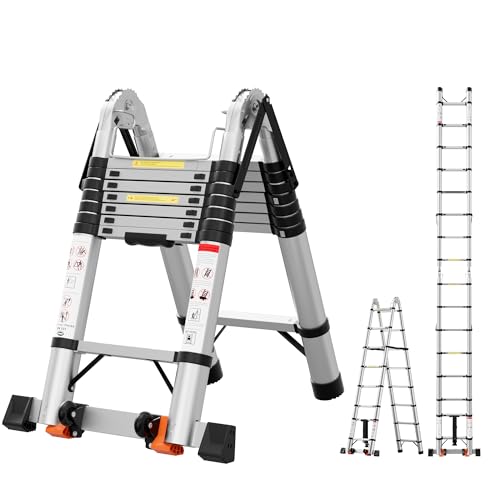
SEEKNEW 16.5 FT A-Frame Telescoping Ladder

SEEKNEW 16.5 FT A-Frame Telescoping Ladder (Black)
What Each Pick Brings To The Table
The 770P+ is the long-standing reference point in this category, and reading the spec sheet explains why it has stuck around. The rungs lock individually as you extend from the bottom up, which means you stop at exactly the height you need instead of locking the whole ladder at once. That single design choice changes how comfortable the ladder feels on a tall job.
For indoor use, the 12.5-foot reach handles cathedral ceilings, second-floor landings, and tall entryways without dragging a full extension ladder through the house. The integrated carry handle keeps the collapsed package close to your side, and owners commonly appreciate the gentle, dampened retraction that prevents pinched fingers at the end of a job.
Positive Takeaways
- Per-rung locking keeps extension flexible for partial-height tasks
- Soft-closure dampening protects fingers during retraction
- Angled thumb release sits in a natural grip position
- Collapses short enough for a hall closet or behind a door
Points To Note
- 250 lb capacity sits below several SEEKNEW competitors at 330 lb
- Reaching the top rungs may feel less stable for users near the published weight limit
Who It Suits Best
Homeowners who want a dependable, well-known telescoping ladder for indoor ceiling and wall work, where refined rung handling matters more than a higher published weight rating.
Where Another Pick Suits Better
Step up to the SEEKNEW 24.6 FT Pro Telescoping Ladder in silver if you regularly work two stories outside, where the higher reach and integrated wheels earn their keep.
Where the Xtend & Climb is a pure lean-to ladder, this SEEKNEW adds the option to stand it as a free-standing A-frame. The A-frame configuration is the right call for ceiling work, since you don’t need a wall behind you, and it holds steady on flat floors without an extra pair of hands bracing the base. For most routine interior jobs, that versatility quietly pays off.
The ladder meets ANSI and EN 131 standards, with a designated no-standing zone at the very top of the extension. In practice, this matters less than it sounds: the top rungs only become relevant when you’re brushing against a tall ceiling, and the safe standing height of around 9.55 feet still handles nearly every room in a typical home.
Where It Delivers
- Two configurations: A-frame and lean-to
- 330 lb capacity handles tools and heavier users
- Compact storage footprint when fully retracted
Worth Noting
- Safe standing height is below the total ladder length, so plan tall jobs accordingly
- A-frame setup takes longer than a simple lean-to extension
Right Fit For
Anyone who paints tall walls, changes high ceiling bulbs, or works in open floor plans where leaning against a wall isn’t always an option.
Look Elsewhere When
Reach is your priority and you never need the A-frame stance, in which case the SEEKNEW 24.6 FT Pro Telescoping Ladder in black offers more height in the same brand family.
This is the lean-to companion to pick 2, and for shoppers who don’t need the A-frame mode, it keeps the same reach and capacity at a tighter price point. If you’ve ever shoved a bulky stepladder into a hall closet and immediately regretted it, the collapsed footprint here reads like a quiet answer: a few inches thick, light enough to carry one-handed.
The 330 lb published capacity gives meaningful headroom for users who don’t want to think about the limit every time they climb. The 9.55-foot safe standing height matches pick 2, so the practical ceiling reach is the same; you’re really choosing between a single-position ladder and a two-position one.
Features That Help
- 330 lb capacity at a more accessible price point
- Slides behind a door or under a bed when fully retracted
- Similar user-facing experience to the brand’s A-frame sibling
Some Limits To Know
- Requires a wall or solid vertical surface to lean against
- Top rungs remain a no-standing zone under the published safety standard
- No wheels or strap included, unlike the 24.6-foot Pro models
Best Suited To
Apartment dwellers, dorm rooms, and small workshops where storage space is the limiting factor and reach beyond 10 feet is rarely needed.
Skip It When
You regularly work on a stair landing or uneven surface where a leaning ladder feels unsafe, in which case the SEEKNEW 16.5 FT A-Frame Telescoping Ladder gives you free-standing stability instead.
Now the conversation shifts to tall-reach work. The 24.6-foot extended length, paired with a safe standing height of roughly 20 feet, puts a second-story gutter or a tall roof edge comfortably within arm’s reach. For context, the 12.5-foot SEEKNEW reviewed above tops out around half of that, so the use cases barely overlap.
The transport design is what makes this ladder manageable despite the height. Integrated wheels, a reinforced carry handle, and an adjustable strap turn a heavy ladder into something you can roll out of a garage and into position without dragging it across a driveway. Collapsed, the whole package measures around 3.9 inches thick, which still slides into a car trunk or a closet corner.
The Value In It
- 24.6-foot total reach covers most two-story residential needs
- 330 lb capacity is generous for a ladder this tall
- Integrated wheels and carry strap ease transport
- Versatile across indoor, outdoor, RV, and jobsite use
Trade Offs
- Heavier than shorter telescoping ladders, even with the wheels
- Top three rungs are a no-standing zone, reducing practical height
Key Advantages
Made For
Homeowners with two-story exteriors, garage roof access, or tall trees, who want a telescoping ladder tall enough to skip renting a full extension ladder.
Reach For A Different Pick When
You mostly work indoors on single-story ceilings, in which case the SEEKNEW 12.5 FT Telescoping Ladder is easier to store and lighter to handle.
Functionally identical to the silver 24.6-foot Pro reviewed just above, this black variant exists for shoppers who want the same reach and transport hardware in a finish that hides scuffs and grit. If your ladder lives in a garage, a truck bed, or a job-site corner, the darker anodized surface is more forgiving over years of use.
The trade-off is purely cosmetic, and the rest of the package is unchanged: 24.6-foot total length, 20.17-foot safe standing height, 330 lb capacity, and the same integrated wheels and strap for transport. If you’re choosing between this and the silver version, think about where the ladder will live when it isn’t extended.
The Case For It
- Same tall reach as the silver Pro variant
- Black anodized finish hides marks from outdoor use
- Wheels and strap included for transport
- Suitable for indoor, outdoor, and RV use
Less Ideal Details
- Darker finish can warm in direct sun during summer jobs
- Heavier than shorter telescoping ladders, even collapsed
Whose Shelf It Belongs On
Contractors, serious DIYers, and homeowners with multi-story exteriors, where the black finish suits garage and truck storage better than a silver coating would.
Swap It Out When
You mostly work indoors where a silver finish blends into a utility closet, in which case the SEEKNEW 16.5 FT Telescoping Ladder offers a friendlier mid-range height.
The 16.5-foot SEEKNEW hits a sweet spot that the line-up otherwise skips. It reaches noticeably higher than the 12.5-foot models, but doesn’t carry the bulk or transport considerations of the 24.6-foot Pro. For most single-story homes with tall eaves, it’s the height that actually fits the job.
The 12.56-foot safe standing height lets you stand comfortably on a higher rung and still reach well overhead, which is where most homeowners feel under-equipped with a short stepladder. Collapsed, it stays compact enough for a closet or a car trunk, with no wheels or strap to manage.
The Helpful Details
- Mid-range reach that fits most single-story exteriors
- 330 lb capacity matches the rest of the brand family
- Compact storage without the bulk of the 24.6-foot Pro
- No wheels or strap to wrestle, just lift and extend
Honest Caveats
- Lean-to design only, no A-frame option
- Top three rungs remain a no-standing zone under the safety standard
Who Should Grab It
Homeowners who need a real step up from a 12-foot ladder but don’t want to commit to a 24-foot workhorse, and who mostly work against a wall or a sturdy gutter line.
A Better Fit Elsewhere
If you work in open spaces without a wall to lean against, swap to the SEEKNEW 16.5 FT A-Frame Telescoping Ladder in silver for free-standing stability.
Take pick 6 and add an A-frame option, and you get this 16.5-foot A-frame. The total reach is the same, the capacity is the same, but the way you stand the ladder changes how confidently you can climb it. For ceiling work in the middle of a room, on a stair landing, or anywhere there’s no wall behind you, the A-frame stance feels immediately steadier.
At 13.55 feet of safe standing height, you can stay a couple of rungs below the very top and still reach a typical 10-foot ceiling comfortably. The ladder meets ANSI and EN 131 standards, with the usual top-rung no-standing zone that defines how high you should actually stand.
Where It Helps
- Two-mode design covers more jobs than a single-position ladder
- Mid-range reach is enough for most residential ceilings
- 330 lb capacity supports heavier users and tool belts
Things To Consider
- A-frame mode requires more floor space to set up
- Top rungs remain a no-standing zone under the safety standard
Feature Card
Perfect Match For
Painters, decorators, and homeowners who often stand the ladder in the middle of a room and need the confidence of a self-supporting base.
Another Choice May Suit
Step up to the SEEKNEW 24.6 FT Pro Telescoping Ladder in silver if you need to clear a two-story gutter line, where 24.6 feet of reach changes the job.
This is the darker-finish counterpart to the silver A-frame reviewed just before it, and the case for choosing it is the same: a black anodized surface forgives garage grime, workshop dust, and the scuffs that come from regular transport. The ladder’s geometry, capacity, and reach are unchanged.
For a workshop or a job-site trailer, the black finish blends in rather than standing out, and the A-frame stance plus 16.5-foot reach covers a wide range of indoor jobs. Setup is straightforward, retraction follows the same top-down sequence as the rest of the SEEKNEW telescoping family, and the 330 lb published capacity gives you a comfortable margin.
Bright Spots
- A-frame mode with 16.5-foot reach for tall interior spaces
- Black finish suits garage and workshop storage
- 330 lb capacity handles tool belts and heavier users
Trade-Offs To Consider
- No wheels or carry strap, unlike the 24.6-foot Pro models
- Top three rungs are a no-standing zone under the standard
Built With In Mind
Workshop users, hobbyists, and homeowners with a shared garage who want a self-supporting ladder that disappears into the background visually until it’s needed.
Where A Sibling Pick Shines
The SEEKNEW 24.6 FT Pro Telescoping Ladder in black is the smarter pick if you also need to clear tall exterior rooflines, since the added height and integrated wheels handle that job better.
How To Pick The Right Telescope Ladder For Your Jobs
Start with the height you actually need to reach, not the height you want to climb. Most residential ceiling and gutter work falls between 9 and 14 feet of standing height, which is exactly where the 12.5-foot and 16.5-foot telescopes on this list live. Reserve the 24.6-foot models for two-story exteriors, tall trees, and rooflines that a shorter ladder genuinely cannot reach.
Match The Ladder To The Surface
A lean-to telescope ladder needs a wall, a gutter, or another vertical surface to brace against. An A-frame configuration stands on its own, which matters on stair landings, in the middle of open floor plans, and anywhere you would otherwise need someone to brace the base. Pick the configuration based on the surfaces in your home, not the configuration you assume is more versatile.
Check The Capacity Number Honestly
A 330 lb published capacity means the ladder is rated for a user and tools up to that combined weight, with a safety margin. Telescopes rated at 250 lb are still safe for many users, but the headroom shrinks fast once you add a tool belt, a paint can, or a basket of supplies. For heavier users or anyone carrying tools up the ladder, a 330 lb rating is the more forgiving choice.
Storage Footprint Matters More Than You Think
A telescope ladder is most useful when it is actually within reach. If it lives in a garage corner behind a snow blower, you’ll borrow the neighbor’s stepladder instead. Measure the space where you plan to store it before you order, and remember that a fully retracted 12.5-foot telescope can fit behind a door while a 24.6-foot model realistically needs a closet floor or a car trunk.
Picking Smart Across These Telescope Ladders
Where Shoppers Go Wrong
The most common mistake is buying a taller ladder than you actually need, then wrestling it out of a closet once and never again. A 24.6-foot telescope is the right tool for a two-story gutter, but it is overkill and a storage headache for changing a hallway bulb. The reverse mistake is buying a compact 12.5-foot model and discovering it cannot reach the eaves of a single-story home with vaulted ceilings. Measure the highest point you actually need to touch, add a few feet of safe standing margin, and choose from there.
When Paying More Pays Off
Higher-tier telescopes in this category earn their premium through transport hardware, finish quality, and reach rather than raw capacity. The 24.6-foot Pro models add integrated wheels, a reinforced carry handle, and an adjustable strap, which transform a heavy ladder into something you can actually move around a property. Taller telescopes also benefit from a no-standing safety zone at the top, so the extra length translates into a genuinely higher safe standing height rather than just a longer collapsed package.
Frequently Asked Questions
How tall of a telescope ladder do most households need?
For typical single-story homes with standard 8 to 10-foot ceilings, a 12.5-foot telescope with roughly 9.5 feet of safe standing height covers nearly every indoor job. Homes with vaulted ceilings or tall eaves usually need a 16.5-foot model. Two-story exteriors generally require a 24-foot reach.
What does “no-standing zone” mean on a telescoping ladder?
The top few rungs on most certified telescope ladders are designated as a no-standing zone to keep your center of gravity low and stable. Standing on those rungs is discouraged even though the ladder is tall enough to reach them. The safe standing height, not the total ladder length, is the number to plan around.
Can a telescope ladder replace a traditional extension ladder?
For many household tasks, a telescope ladder is more practical because it collapses down to a few inches thick and stores in a closet. For heavy-duty work that requires repeated high reaches, like roofing or tree trimming, a traditional extension ladder still has the edge in rigidity and long-term durability.
How do you maintain a telescoping ladder?
Keep the rung channels clean and dry, retract the ladder fully after each use, and store it indoors. Owners commonly report that debris in the rung channels is the most frequent cause of sticky retraction. A light wipe-down before storage is usually enough to keep the locking mechanisms working smoothly.
Is an A-frame telescope ladder safer than a lean-to model?
An A-frame is self-supporting, which removes the need for a wall or a second person to brace the base. A lean-to ladder is perfectly stable when there is a solid vertical surface behind it. Neither is universally safer; the safer choice depends on where you plan to use the ladder.




