


Bringing rough lumber down to a uniform thickness used to mean a trip to a commercial shop. Today, a wide range of benchtop and handheld planers put that capability in your own garage, shop, or even apartment work corner. Whether you’re a hobbyist squaring up reclaimed wood, a DIYer milling project lumber, or a hand-tool traditionalist smoothing drawer fronts, the right planer changes how your projects turn out. The picks below cover electric thickness planers up to 13 inches wide and a few hand planes for fine detail work, all aimed at real-world workshop needs.
A Quick View Of The Lineup

FindBuyTool 13″ Benchtop Thickness Planer with Helical Cutterhead

JORGENSEN No.4 10″ Wood Plane Hand Planer

JORGENSEN No.101 Mini Wood Planer

JORGENSEN No.60-1/2 6-1/4″ Wood Planer

FINDBUYTOOL 13″ Thickness Planer with 2-Speed Feed
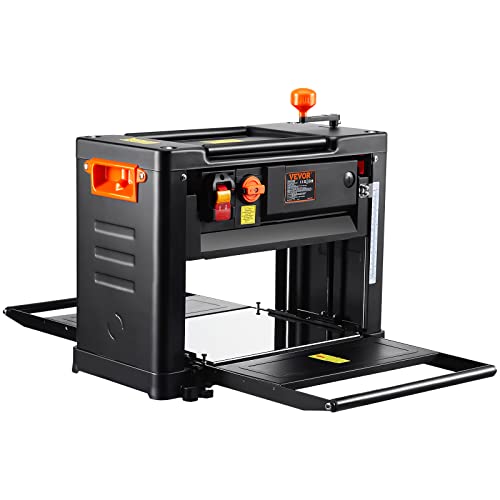
VEVOR Power Benchtop Planer Three-Blade Two-Speed 13″

VEVOR Two-Blade 13″ Benchtop Thickness Planer
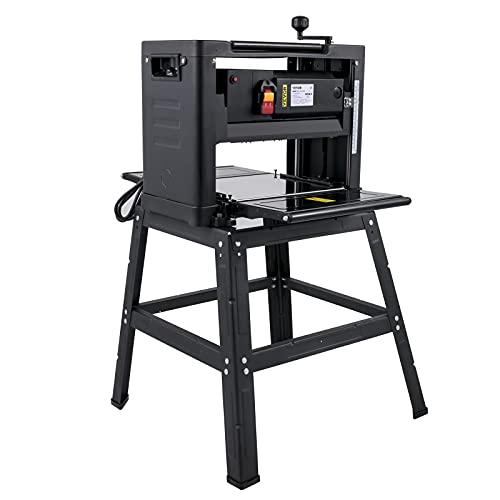
VEVOR 13″ Benchtop Planer with Foldable Stand
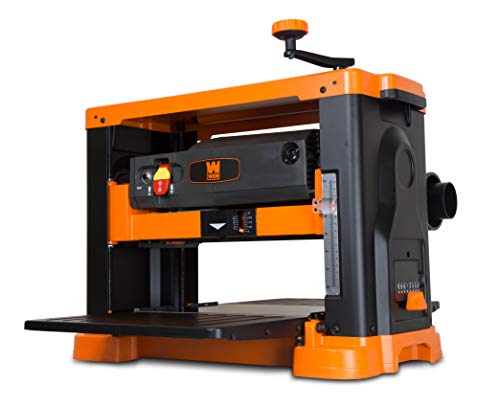
WEN PL1326 13″ Spiral Benchtop Thickness Planer
The Strengths Of Each Pick
This benchtop planer is built around a helical cutterhead (a drum that holds many small square carbide cutters arranged in a spiral, rather than two or three long straight blades), which directly affects both finish quality and noise. In a one-car garage converted to a weekend shop, the 13-inch width handles most furniture-grade lumber without breaking down a board into multiple passes.
The 15-amp motor at 20,000 RPM is well-matched to a small-shop workflow, and unlike the traditional straight-blade machines later in this list, the individual carbide inserts can be rotated or replaced when dull, skipping a sharpening session. You get cleaner tear-out on figured grain, which matters most on hardwoods like walnut or curly maple.
Where It Excels
- Helical cutterhead delivers a noticeably quieter cut than straight-blade designs in the same class.
- 40 individual carbide inserts rotate individually, extending time between blade changes.
- 13-inch capacity covers the bulk of cabinet-grade and furniture-grade boards.
- Finish quality is high enough to skip a pass through a drum sander for many projects.
Points To Keep In Mind
- The benchtop form factor limits board thickness compared to a full-size floor planer.
- Dust collection needs to be set up well, since fine shavings from carbide cutters can clog a basic shop vac quickly.
Key Product Details
Right Fit For
Garage-shop hobbyists milling furniture-grade hardwoods who want a clean finish right off the machine.
Consider Something Else When
Shoppers needing more feed-rate control should look at the FINDBUYTOOL 13″ Thickness Planer with 2-Speed Feed further down the list.
A traditional smoothing plane fills a role no power planer can match: truing edges, easing corners, and dialing in final surface quality by feel. The Jorgensen No.4 is the kind of tool that lives on a bench next to a sharpening station, not in a dust-collecting cabinet. At 10 inches long, it sits in the middle of the hand-plane size range, long enough to level a face but short enough to manage in tight spots.
The ductile iron body absorbs the shock of heavy cuts without flexing, and the O1 tool steel blade sharpens predictably. Compared to the powered options above, this plane trades speed for control, which is exactly the point.
What Stands Out
- 10-inch length strikes a versatile balance between smoothing and jointing work.
- Ductile iron body holds up to years of regular sharpening and adjusting.
- O1 steel blade can be re-sharpened many times, lowering long-term ownership cost.
Worth Noting
- Hand tuning, including flattening the sole and setting the blade, takes patience if you are new to hand planes.
- Not designed to dimension rough lumber the way a power planer does.
Whose Shelf It Belongs On
Traditional woodworkers and anyone building furniture where hand-finished surfaces are part of the appeal.
A Better Fit Elsewhere
If you primarily dimension rough boards quickly, the JORGENSEN No.101 Mini Wood Planer is a smaller, friendlier intro to hand-planing technique.
Mini hand planes are often treated as a secondary purchase, but a quality one earns its spot in the drawer pretty fast. The Jorgensen No.101 handles the fiddly tasks that bigger planes can’t reach: chamfering end grain, fitting hardware recesses, and cleaning up joint lines on small boxes. The compact form factor is the selling point, since the tool is small enough to wrap your hand around for short, controlled passes.
Like its larger No.4 sibling, it uses O1 tool steel for the blade and ductile iron for the body, so the parts that take abuse are built to last. The trade-off is that you cannot dimension lumber with it, and that’s fine, because that is not its job.
A Few Strong Suits
- Small size makes it ideal for detail work and trim fitting.
- Same O1 blade steel as the larger Jorgensen planes, easy to maintain.
- Hand-friendly weight for one-handed operation on small parts.
Trade Offs
- Limited usefulness for surfacing larger panels or boards.
- Requires a flat reference surface to plane against, so pair it with a shooting board for best results.
Made For
Model makers, box builders, and hobbyists trimming joints where a full-size plane is unwieldy.
Look Elsewhere When
You need broader surface smoothing on furniture pieces, in which case the JORGENSEN No.4 10″ Wood Plane is a better fit.
The 6-1/4-inch No.60-1/2 sits in the block-plane category, meaning it works comfortably in one hand and handles end grain and trim cleanup. Block planes are usually the second hand tool a woodworker buys after a utility knife, because the angle of the blade lets you work end grain without blowout.
The size keeps it portable enough to toss in a tool bag for on-site trim work, and the ductile iron body means it survives drops onto a shop floor better than cast aluminum alternatives. Compared to the No.4 above, the trade-off is reach; you simply cannot level a wide panel with it.
Everyday Perks
- Compact 6-1/4-inch body fits in one hand for trim and detail work.
- Ductile iron construction holds up to accidental drops and regular use.
- End-grain friendly blade angle reduces tear-out on cross-grain cuts.
Small Caveats
- Too small to flatten or dimension anything beyond trim and small parts.
- Block planes require a slight learning curve to keep the mouth adjustment correct.
Best Suited To
Hobbyists and finish carpenters who need a portable plane for trim fitting and end-grain cleanup.
Skip It When
You need a primary surfacing tool, since the WEN PL1326 13″ Spiral Benchtop Thickness Planer covers that ground at a different scale entirely.
This is the higher-output sibling of the FindBuyTool planer reviewed above, aimed at small production work rather than weekend hobby use. The 2.5HP motor and dual feed rates (21 FPM for rough dimensioning, 12 FPM for finish cuts) let you match the cut to the task without swapping machines. FPM stands for “feet per minute,” a standard way to describe how fast a planer pulls lumber through its cutterhead.
The 40-insert helical cutterhead is the same architecture as the entry model, but the extra horsepower changes how aggressively you can push it. For a small cabinet shop or a serious hobbyist milling dozens of boards in a session, that headroom matters. Compared to the VEVOR three-blade planer further down, the helical head here trades simpler blade changes for a quieter, cleaner cut.
What Makes Sense
- Two-speed feed lets you optimize between fast stock removal and clean finish passes.
- 2.5HP motor handles sustained cuts in dense hardwoods without stalling.
- 40 carbide inserts can be rotated or replaced individually, avoiding a full cutterhead swap.
Points To Note
- Higher power and added feed gearing add weight compared to a basic single-speed planer.
- Dust port diameter and dust collection setup matter more at higher feed rates, since chip volume increases.
Quick Facts
Who Will Love This
Small-shop operators and serious hobbyists milling project lumber in volume, where feed-rate control changes the workflow.
Reach For A Different Pick When
Smaller garage shops with lighter use may find the FindBuyTool 13″ Benchtop Thickness Planer a simpler, lighter alternative.
VEVOR’s three-blade benchtop planer is built around a wider work surface than most 13-inch machines, with pull-out extensions that bring total bed support to about 35 inches. That extra support pays off when feeding long boards, since a fully supported board reduces snipe (a slight dip in thickness at the very ends of a planed board) at the outfeed end.
The three-knife cutter is a traditional straight-blade design, which is louder than the helical options above but easier to re-sharpen on a standard blade jig. For a shop that already has a grinder and blade setup, this matters. Compared to the two-blade VEVOR model below, the three-knife head puts more cutting edges in contact per pass, which can improve finish on figured wood.
Bright Spots
- Wide bed with extensions supports long boards and reduces snipe.
- Three-knife cutter spreads the cut across more edges, helpful on figured grain.
- Two-speed feed gives flexibility between roughing and finishing passes.
Honest Caveats
- Straight blades dull faster than carbide inserts, especially on hardwoods.
- Heavier and longer than compact benchtop units, so plan your floor space.
Feature Snapshot
The Right Fit
Woodworkers handling long boards regularly who appreciate a stable, extended bed for accurate cuts.
Swap It Out When
Prioritizing finish quality over feed capacity makes the WEN PL1326 13″ Spiral Benchtop Thickness Planer worth a look instead.
The two-blade VEVOR is positioned for DIYers who need a real thickness planer without the cost of a helical cutterhead. The 15-amp, 2000W motor is the same family as the three-blade model above, but the cutterhead design is simpler, which usually translates to a lower entry point.
The 12-inch extended infeeding table is a useful touch on longer boards, though you still want outfeed support for material over three feet. For weekend project work, this planer is a solid match. The honest read is that finish quality on figured hardwoods will not match the helical machines, but on common construction lumber and softwoods it gets the job done.
Where It Delivers
- Accessible price point for first-time planer owners.
- 15-amp motor handles most softwoods and common hardwoods without strain.
- 12-inch extended infeed table helps align longer boards on entry.
Things To Weigh
- Two-blade straight cutter produces more tear-out on figured grain than three-blade or helical designs.
- Blade replacement requires handling two long edges that must be aligned carefully.
Perfect Match For
DIYers and homeowners tackling renovation or shop projects on softwoods and standard lumber dimensions.
Not Your Match When
Finish-quality is the priority, in which case the FindBuyTool 13″ Benchtop Thickness Planer with Helical Cutterhead is a smarter step up.
The defining feature here is the foldable iron stand, which sounds like a small detail until you try to park a 100-pound planer in a one-car garage. The stand lets the machine drop down to a low profile, freeing floor space when it is not in use. For a basement shop or a shared-space workshop, that is a real quality-of-life improvement.
Under the hood, the 15-amp, 2000W motor runs the cutter at 8,000 RPM with a 6 m/min feed rate (about 19.7 feet per minute, comparable to other entry-level 13-inch machines). The double cutter blades are sharpened through a honing process, which the source describes as extending edge life. For someone who plans to set the planer up and break it down repeatedly, the stand is the reason to choose this VEVOR over its siblings.
Features That Help
- Foldable stand reduces the machine’s footprint when stored.
- Iron stand adds rigidity compared to lighter tubular stands.
- Dust exhaust port helps connect to a shop vac for cleaner operation.
Worth Bearing In Mind
- Double cutter blades are a straight-blade design, so tear-out on figured grain is a known limitation.
- The foldable stand adds assembly steps compared to a fixed stand.
Built With In Mind
Shoppers with limited floor space who need a real 13-inch planer that can fold down between sessions.
Where A Sibling Pick Shines
Workshops with a permanent home for the machine may prefer the heavier, more rigid setup of the VEVOR Power Benchtop Planer Three-Blade Two-Speed 13″.
The WEN PL1326 is often the first benchtop planer a hobbyist buys, and for good reason. The spiral cutterhead uses 26 staggered HSS (high-speed steel) blades arranged in a helix around the drum, which behaves like a scaled-down version of the helical designs above at a friendlier cost. The 15-amp motor spins the cutter past 10,000 RPM, and the 26-FPM feed rate is in the right zone for typical project lumber.
Compared to the FindBuyTool helical options earlier in the list, the WEN uses HSS blades instead of carbide inserts, which makes replacement blades cheaper but wears a bit faster on dense hardwoods. For a first planer, that trade-off usually works out, since most beginners are still learning what kinds of wood they will be milling.
Advantages To Know
- Spiral cutterhead with 26 staggered HSS blades produces a clean finish on most woods.
- Beginner-friendly controls and straightforward depth adjustment.
- 13-inch width and 26-FPM feed handle common furniture-grade lumber dimensions.
Some Limits To Know
- HSS blades dull faster than carbide inserts in dense hardwoods like oak or hard maple.
- Finish quality is a step below the carbide-insert helical designs in the FindBuyTool picks above.
At A Glance
Who Should Grab It
First-time planer owners and hobbyists who want a clean-finishing machine without committing to carbide cutterhead pricing.
Another Choice May Suit
For deeper hardwood production work, the FINDBUYTOOL 13″ Thickness Planer with 2-Speed Feed offers more power and longer cutter life.
What Matters Most When Shopping For Thickness Planers Under 400
Cutterhead Style Sets The Tone
The biggest practical difference between planers in this price range is whether the cutterhead uses straight blades, spiral HSS blades, or helical carbide inserts. Straight blades are the loudest and cheapest to re-sharpen, while helical carbide inserts are the quietest and longest-lasting but cost more when you finally rotate or replace them. Pick the architecture that matches how often you will be planing and what kind of wood you tend to run through it.
Capacity Beyond The Headline Number
A 13-inch width rating sounds uniform across this list, but the actual usable capacity varies with board thickness, infeed and outfeed support, and the distance between the cutterhead and bed. Planers with extended tables or pull-out supports handle long boards more confidently, which matters when working on table legs, door stock, or shelving material over three feet. For a small workshop, a shorter bench footprint is sometimes a better trade than maximum width.
Power, Feed Rate, And The Density Of Your Stock
Motor power and feed rate are most relevant to the kind of lumber you mill. A 15-amp motor handles most softwoods and common hardwoods, but sustained cuts in dense figured wood can stall a lighter machine. Variable or two-speed feed lets you slow down for finish passes, which can matter more than peak motor power on a real project.
Hand Planes Still Earn Their Place
The Jorgensen hand planes in this list are not thickness planers in the powered sense, but they cover tasks that a power planer cannot: truing up joinery, easing edges, and refining surfaces by feel. For furniture work, finish carpentry, and any project where a final hand-tuned surface is part of the appeal, a hand plane is a companion tool, not a substitute.
Key Considerations Across These Picks
Where Shoppers Go Wrong
A common mistake is buying on peak motor wattage alone, without considering how the cutterhead style affects finish quality and noise. A 2000W straight-blade planer will feel underwhelming next to a quieter helical machine, even at the same power rating. Another pitfall is underestimating the importance of dust collection; fine shavings from a spiral or helical head can clog a basic shop vac fast, and not every planer ships with an ideal dust port size.
The Upgrade Payoff
The higher-tier machines in this list, the FINDBUYTOOL 2-Speed and the FindBuyTool Helical Cutterhead, earn their premium through cutterhead design and motor headroom rather than capacity. Carbide inserts last longer per dollar than HSS blades on dense hardwoods, and a two-speed feed is the kind of feature that changes how you plan a session, not just how the machine sounds. For shops that will run the planer weekly, that step up is usually worth the cost.
Frequently Asked Questions
How Wide Of A Board Can A 13-Inch Thickness Planer Handle?
A 13-inch thickness planer is rated for boards up to 13 inches wide in a single pass, which covers standard dimensional lumber and most furniture-grade boards. Wider boards require either a bigger machine or working in two passes on a sled.
Is A Helical Cutterhead Worth The Extra Cost?
A helical cutterhead with carbide inserts typically produces a quieter cut and a smoother finish on figured grain, and individual inserts can be rotated when dull. The trade-off is a higher initial price, so it makes the most sense for frequent users or anyone working with figured hardwoods.
Can A Hand Plane Replace A Power Thickness Planer?
A hand plane can refine surfaces, true edges, and adjust joinery, but it cannot dimension rough lumber the way a power planer does. Most woodworkers end up using both: a power planer for bulk material removal and a hand plane for final fit and finish.
What Dust Collection Do These Planers Need?
Most benchtop planers in this category work best when connected to a shop vac or dust collector with a hose matched to the dust port size. Fine shavings from spiral and helical heads clog smaller ports quickly, so a 2.5-inch or larger hose is a practical baseline.
How Often Do The Blades Need Replacing?
Straight blades typically need sharpening every few hours of cutting, while HSS spiral blades last longer and carbide inserts can run for many hours before rotation. Frequency depends on wood density and how much dust and grit the lumber carries.




