


Tig welding demands more from a helmet than stick work ever did. Low-amp arcs on stainless, aluminum, and chromoly mean the lens has to darken fast, stay clear at low brightness, and keep the periphery visible during long, slow passes. A hood that feels fine for a 200-amp MIG session can wash out at 60 amps of Tig, leaving you squinting through a dim, blurry filter.
This list pulls together seven current options worth a look, from no-frills workhorses to feature-rich hoods with integrated lighting. Every pick handles stick and MIG too, so the helmet doubles as a general shop companion. Most auto-darkening filters on the list cover a shade range of about 9 to 13 in the dark state, which sits right in the Tig sweet spot. If you weld daily in a fab shop or tinker in a garage on weekends, the right hood quietly makes every arc easier to read.
An Overview Of The Picks
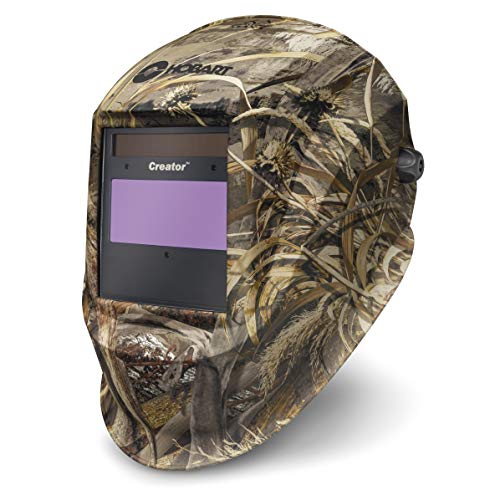
Hobart 770869 Auto-Darkening Welding Helmet

MELOTOUGH Welding Bag for Tools and Helmet

ARCCAPTAIN Auto Darkening Welding Helmet with Light

ARCCAPTAIN Intelligent Auto-Darkening Welding Helmet 180°

ARCCAPTAIN Auto Darkening Welding Helmet Large Viewing Screen
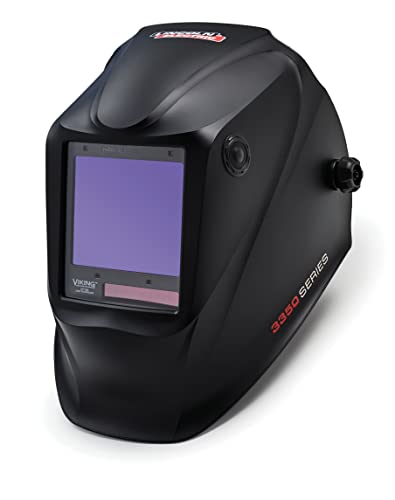
Lincoln Electric K3034-4 VIKING 3350 Welding Helmet

ANDELI Auto Darkening Welding Helmet with Light
A Closer Look At Each Pick
Hobart has long been a trusted name in fab shops, and the 770869 keeps that reputation intact with a no-nonsense hood that focuses on visibility. The polyamide-nylon shell holds up to typical shop abuse, and the wide 7.1-square-inch viewing area gives you more peripheral vision than most budget lids. For hobbyists running stick one day, MIG the next, and occasional low-amp Tig, the platform feels balanced rather than specialized.
Three independent arc sensors help the filter react on out-of-position welds, and a dedicated grind mode keeps the lens light so you can grind without flipping the hood up. If your work moves between thick plate and thin tubing, the flexibility matters.
What Helps Most
- 7.1 sq in viewing window reduces the tunnel-vision feel common on smaller cartridges
- Three arc sensors improve detection when the arc sits to the side, common in Tig root passes
- Grind mode lets you switch to grinding without removing the hood, saving time on fab work
- Polyamide-nylon shell keeps the weight down for long sessions overhead
Worth Noting
- Owners commonly report the headgear adjustments run a touch stiff out of the box
- Lacks the integrated LED lighting found on the ARCCAPTAIN and ANDELI hoods below
Key Product Details
Right Fit For
Garage welders who move between stick, MIG, and Tig and want a reliable, straightforward hood without paying for extras like LED lights or true-color lenses.
Look Elsewhere When
You want integrated lighting for dim shop floors, in which case the ARCCAPTAIN Auto Darkening Welding Helmet with Light is a stronger match.
The MELOTOUGH backpack is the odd one out in a list of helmets, and that’s the point. Mobile welders, field-repair techs, and anyone hauling gear to job sites know the pain of juggling a hood, gloves, leads, and consumables across a parking lot. This bag uses a detachable helmet pouch up top so the hood rides protected without scratching against rod boxes in the main compartment.
Military-grade external fabric shrugs off the kind of scrapes that shred a typical canvas tote, and the cushioned back panel makes a full load tolerable over a long walk. For someone already happy with their current hood, the MELOTOUGH solves a different problem: keeping it all together.
What Stands Out
- Detachable helmet bag keeps the hood’s lens and shell separated from tools and consumables
- Three open pockets plus two flap pockets organize leads, tips, and small parts
- MOLLE strip on the front allows modular attachment of extras like a wire spool pouch
- Cushioned shoulder straps ease the load during long walks across a job site
Trade Offs
- Not a welding helmet itself, so it pairs with another hood on this list rather than replacing one
- Storage capacity targets Tig and MIG consumables; heavy stick electrode boxes may feel tight
Made For
Mobile welders, fab students, and small-shop owners who travel with their gear and need a single organized pack instead of loose totes and buckets.
Swap It Out When
Your work stays in a fixed shop and you primarily need better arc visibility, in which case the Lincoln Electric K3034-4 VIKING 3350 makes more sense as the central purchase.
The first thing you notice about the ARCCAPTAIN with Light is the USB-powered LED mounted on top of the hood. In a basement shop, a dim garage, or a field-repair tent, the difference between fumbling with a headlamp and having illumination built into the helmet is significant. Two brightness levels let you dial in enough light without washing out the arc.
The lens itself uses a roughly 3.94-by-3.66-inch viewing area, which feels generous without being oversized. The faster auto-darkening response helps during low-amp Tig starts, where slow lenses can flash-burn the eyes before the filter catches up.
The Helpful Details
- Built-in LED light with two brightness levels targets shadowed work areas where overhead lighting falls short
- Large viewing screen reduces the eyestrain of tracking a small puddle during long Tig beads
- USB power for the light avoids swapping coin-cell batteries
Some Limits To Know
- The LED arrives uninstalled, so plan a few minutes of setup before first use
- Light adds a small amount of bulk on top of the shell, which you may notice in tight overhead positions
Best Suited To
Welders working in basements, lean-tos, or any space where overhead light can’t reach the joint, especially during detailed Tig work on small parts.
A Better Fit Elsewhere
You mostly weld outdoors in daylight and prioritize color accuracy, in which case the ARCCAPTAIN Intelligent Auto-Darkening Welding Helmet 180° is worth a closer look.
The Intelligent Auto-Darkening Helmet represents ARCCAPTAIN’s push toward a smarter filter. The lens automatically adjusts shade, sensitivity, and delay based on arc brightness, so hopping between a 400-amp stick root pass and a 70-amp Tig fillet happens without reaching for a knob. Shade and delay still offer manual fine-tuning within a range of plus or minus nine levels, which gives you override control when the auto mode misreads an unusual arc.
Three preset modes plus an “all on” option let you tailor the auto behavior to stick, MIG, or Tig individually. The 180° True Color hood name refers to the broader color spectrum visible through the lens, which makes reading puddle movement easier compared to flatter green-tinted filters.
What Pays Off
- Auto-shade adjustment removes the need to manually match the lens to each process, useful in mixed fab shops
- True-color filter gives a more natural view of the puddle and base metal
- Manual fine-tuning keeps experienced welders in control when auto mode misfires
Points To Keep In Mind
- Sensitivity is fixed during smart mode, which can struggle in heavy spatter or unstable arc conditions
- More settings to learn before reaching a comfortable rhythm with the hood
Feature Snapshot
Whose Shelf It Belongs On
Multi-process welders who frequently switch between stick, MIG, and Tig and want the filter to keep up without constant knob adjustments.
Not Your Match When
You only run one process and want maximum optical clarity for long production days, where the Lincoln Electric K3034-4 VIKING 3350 still sets the bar.
The large-viewing-screen variant drops the LED light and the smart auto-shade in favor of a more traditional filter with four arc sensors. That makes it the most approachable pick for someone stepping up from a fixed-shade hood. The roughly 3.94-by-3.66-inch cartridge gives you comfortable peripheral vision without the premium price of a true-color lens.
Four arc sensors respond reliably even when the arc shifts outside the center of the lens, which happens often during out-of-position Tig work. Light state sits at DIN 4, dark state at DIN 5 to 9 or 9 to 13, so the filter covers stick, MIG, and Tig in the same hood.
Useful Touches
- Four arc sensors outperform three-sensor designs on out-of-position welds
- Wide DIN 5-9/9-13 dark range covers stick, MIG, and Tig without swapping hoods
- Large viewing area makes it easier to track the puddle during long beads
Honest Caveats
- Lacks true-color optics, so the puddle view can feel flatter than the ARCCAPTAIN 180° above
- No integrated lighting, so dim shops still need a headlamp or work light
Who Should Grab It
First-time auto-darkening hood shoppers who want a forgiving filter with strong arc detection, without paying extra for lights or smart modes.
Reach For A Different Pick When
You weld in low light often, in which case the ARCCAPTAIN Auto Darkening Welding Helmet with Light is the more practical choice.
Lincoln Electric’s VIKING 3350 sits at the top of the brand’s auto-darkening line, and the headline feature is the 4C lens technology. That refers to the way the filter renders color, producing a more accurate view of the puddle, the base metal, and the arc itself. For production welders reading a weld pool eight hours a day, the optical difference is meaningful, and the 1/1/1/1 clarity rating puts it at the top of the industry scale for blurriness, distortion, shade consistency, and angle dependency.
Extra-large viewing area and a refined headgear system make the 3350 comfortable for long sessions. It costs more than the other picks, but for daily production work the optics earn their keep.
Practical Pluses
- 4C lens technology delivers top-tier color accuracy for puddle reading
- 1/1/1/1 optical clarity rating minimizes distortion across the lens surface
- Extra-large viewing window reduces the tunnel-vision effect on long welds
- Matte-black shell resists glare in bright outdoor work
Factors To Consider
- Higher upfront cost than most picks on this list
- Lens replacement cartridges cost more than generic alternatives
Quick Facts
Perfect Match For
Full-time fab-shop welders and Tig specialists who spend hours under the hood and want the clearest possible view of the puddle.
Consider Something Else When
You’re a weekend hobbyist and the cost outweighs the optical gain, in which case the ARCCAPTAIN large-viewing-screen helmet handles stick, MIG, and Tig adequately.
ANDELI pushes the lighting concept further than ARCCAPTAIN. The helmet ships with two LED lights reaching up to 400 lumens, and a motion sensor mode lets you wave a hand in front of the lens to toggle the lights on or off. For Tig welders in dark shops, that combination removes the headlamp entirely, and the wave-on feature keeps you from smudging a freshly prepped joint while fumbling for a switch.
The internal display adds a digital readout for shade, sensitivity, and delay, so you can see your settings at a glance instead of memorizing knob positions. It’s the most feature-dense hood on this list, and for tech-forward hobbyists that counts for a lot.
A Few Strong Suits
- Dual LEDs at up to 400 lumens outperform single-light designs in dim shops
- Motion sensor activation keeps gloved hands off physical switches mid-weld
- Internal display surfaces current settings without lifting the hood
Less Ideal Details
- Extra electronics add a small amount of weight to the shell
- More features mean more settings to learn before the hood feels intuitive
Core Details
Who It Suits Best
Garage welders who want the latest features, work in variable lighting, and appreciate a digital readout over analog dials.
Where Another Pick Suits Better
You prioritize pure optical clarity and don’t need built-in lighting, in which case the Lincoln Electric K3034-4 VIKING 3350 remains the production-grade standard.
What Matters Most Before Choosing Tig Welding Helmets
A Tig helmet needs to handle low-amp arcs without flashing, give you a clear view of the puddle, and stay comfortable through long sessions. The auto-darkening filter is the heart of the helmet: it uses sensors to detect the arc and darkens the lens in milliseconds. Look for a shade range that includes DIN 9 to 13, which covers the typical Tig operating window. Sensitivity and delay controls let you tune how quickly the lens darkens and how long it stays dark after the arc stops, which helps when tack welding or pulse Tigging.
Lens Quality And Clarity
Optical clarity is rated on a 1/1/1/1 scale, measuring blur, distortion, shade consistency, and angle dependency. Higher-rated lenses cost more but show the puddle more accurately. True-color lenses render a fuller color spectrum than the older green-tinted filters, which makes reading the weld pool easier on stainless and aluminum.
Sensor Count And Coverage
More arc sensors mean the filter catches the arc even when it falls outside the center of the lens. Three sensors handle most hobby work, while four sensors give better coverage for out-of-position welds. If you frequently weld in tight spaces or at odd angles, the extra sensor pays off.
Comfort And Fit
A helmet that pinches or feels front-heavy becomes unbearable after a few hours. Look for adjustable headgear with multiple pivot points, and consider weight: lighter polyamide shells reduce neck strain during overhead work. The Hobart 770869 and the ARCCAPTAIN large-viewing-screen helmet both balance weight and adjustability well.
Lighting And Extras
Integrated LED lights, like those on the ARCCAPTAIN with Light and the ANDELI, make a real difference in dim shops. Motion sensors and digital displays add convenience but also weight. Decide which extras genuinely match your work before paying for features you won’t use.
Key Considerations Across These Picks
Where Shoppers Go Wrong
The most common mistake is buying a hood with a slow auto-darkening response and trying to run low-amp Tig. Flash-burn at 60 amps feels nothing like at 200 amps, and a sluggish filter will punish you. Another pitfall is ignoring the headgear: a great lens on a poorly adjusted harness still ends up tilted and uncomfortable. Take the time to dial in the fit before the first arc. Finally, don’t assume shade range alone tells the whole story. A DIN 9 to 13 hood with poor sensor placement will misfire more than a DIN 5 to 13 hood with four well-positioned sensors.
The Case For Spending Up
Premium helmets like the Lincoln Electric K3034-4 VIKING 3350 cost more, but the optical clarity and color rendering translate directly into less eyestrain over a full shift. If you weld daily, the upgrade pays back in comfort and accuracy. The ARCCAPTAIN Intelligent and the ANDELI sit in the middle tier, adding smart features and lighting that genuinely help in mixed-shop environments. For weekend hobbyists, the price gap may not be worth it, but for production welders the higher tier earns its keep within months.
Frequently Asked Questions
What shade should I use for Tig welding?
Tig typically calls for a DIN 9 to 13 shade depending on amperage, with lower amps needing lighter shades. A good auto-darkening helmet covers this range automatically, but a manual override helps when switching between thick and thin material.
Can I use a Tig helmet for stick and MIG too?
Yes, most auto-darkening helmets handle stick, MIG, and Tig in the same hood. Just check the shade range: DIN 5 to 13 covers all three processes comfortably, while a DIN 9 to 13 range may feel too dark for low-amp work.
How many arc sensors do I need?
Three sensors cover most hobby and light-production work. Four sensors improve detection when the arc sits off-center, which matters for out-of-position welds and tight joints. For overhead Tig, four sensors noticeably reduce missed triggers.
Do I really need a true-color lens?
True-color lenses render a fuller color spectrum than older green-tinted filters, which makes the puddle easier to read on stainless and aluminum. For occasional hobby use, the difference is nice but not critical. For daily production Tig, the reduced eyestrain adds up.
How long do auto-darkening helmets last?
Most auto-darkening cartridges last several years with regular care. Solar-powered units extend battery life, while replaceable-battery models need fresh cells every few months. Store the helmet in a dry place and avoid dropping it to protect the electronics.




