


A fresh tile job, a stubborn porcelain corner, a glass mosaic that cracks if you look at it wrong. The blade under your angle grinder makes or breaks that whole afternoon, and most people learn that lesson the hard way. This roundup matches nine tile cutting blades to the work you’re actually facing, from bathroom remodels to outdoor stone and glass craft projects.
How The Shortlist Stacks Up
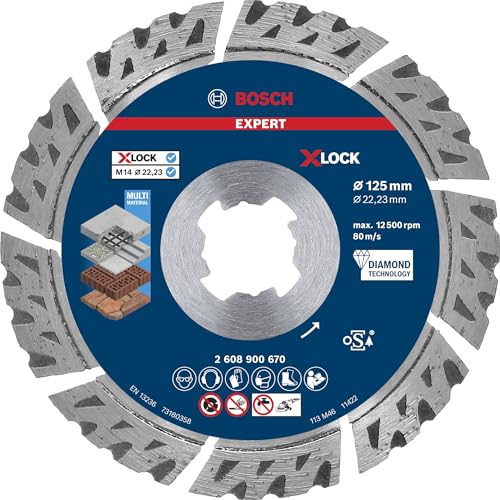
Bosch EXPERT Hard Ceramic Diamond Cutting Disc X-Lock

DEWALT Diamond Blade for Porcelain Tile 4-1/2-Inch (DW4765)

Makita B-69711 5″ Diamond Blade Turbo General Purpose

Makita E-02515 9″ Diamond Blade Segmented General Purpose

FOXBC 4-1/2″ Tile Cutter Diamond Saw Blades 3 Pack

FOXBC 4-1/2″ Tile Glass Cutting Disc 3 Pack
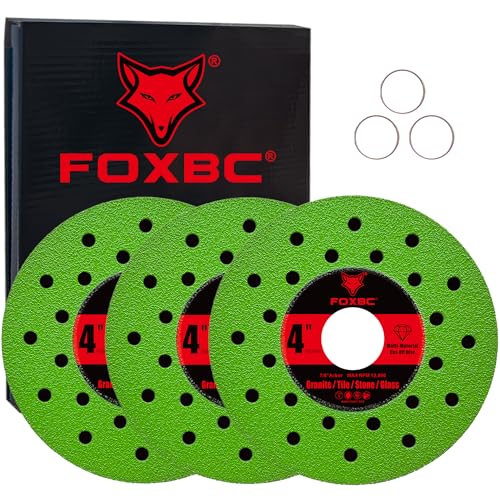
FOXBC 4″ Tile Cutter Diamond Saw Blades 3 Pack

Diamond Granite Blade 6″ Turbo Cutting with Flange

DRILKING 4-1/2″ Tile Cutter Diamond Saw Blade 3 Pack
The Details Behind The Selections
The Bosch EXPERT Hard Ceramic disc slots into the X-Lock system, which means tool-free swaps that don’t leave you fumbling with a wrench mid-cut. On a long day of trimming hard ceramic tile and reinforced concrete, that single design choice earns its keep. It’s a disc built for the kind of work where stopping to change blades costs real time.
Where the EXPERT line earns its reputation is endurance on dense materials that chew through ordinary rims. The hard ceramic focus means it stays productive on the abrasive jobs that wear other blades down fast. It’s a serious tool for serious days, not a casual weekend accessory.
Strong Points
- X-Lock mount enables fast blade changes without wrenches, shaving minutes off every swap on a long day.
- Engineered for hard ceramic tile, brick, roofing tile, and reinforced concrete, covering most masonry jobs in one disc.
- Long-life diamond bond, on most jobsites lasting well past the point where standard rims glaze over and slow down.
- Reliable performance under the heat of repeated dry cuts where cheaper blades lose their edge.
Things To Consider
- X-Lock fitment means it only works with X-Lock tools, so it is not a universal spare for older grinders.
- Single-disc packaging makes it a pricier upfront buy than multi-packs.
- Hard ceramic focus is overkill for softer wall tile where a general-purpose disc would finish just as cleanly.
Quick Facts
Who It Suits Best
Tradespeople and remodelers running X-Lock tools on busy jobs who need one disc that stays sharp through a full day of hard ceramic cuts.
Consider Something Else When
DIYers with a standard arbor grinder should look at the FOXBC multi-packs further down, since those fit older tools and arrive in threes.
The DEWALT DW4765 has been around long enough to build a quiet reputation, and that longevity is part of the appeal. It’s a 4-1/2-inch porcelain-focused blade that handles both wet and dry cutting, which suits the unpredictable pace of bathroom and kitchen remodels. The tensioned steel core keeps wobble in check when you’re running long straight cuts through dense porcelain panels.
Compared to the Bosch X-Lock disc above, this one is the more universal option for anyone with a standard 7/8-inch arbor grinder. The optimized diamond exposure and high concentration mean a steady cut rate without forcing the tool. Indoor remodelers who want one proven blade rather than a wall of options will find it a sensible default.
What Works In Its Favor
- Optimized matrix height exposes fresh diamond for a consistent, fast cut through porcelain.
- High-grade steel core reduces distortion at high temperatures, important for long cuts where cheaper blades warp.
- Tensioned core resists wobble and vibration, which translates to cleaner edges and less fatigue.
- Wet or dry versatility lets you switch between indoor saw setups and quick grinder work.
Points To Note
- Specialized for porcelain, so it underperforms on abrasive materials like concrete block.
- Single blade, no spare, so heavy users wear through it before the project ends.
- Standard 4-1/2-inch size limits cut depth on thick stone slabs.
Spec Overview
Made For
Remodelers and tile installers working on porcelain-heavy bathroom and kitchen projects who want a steady, predictable blade on a standard grinder.
Skip It When
Outdoors concrete and masonry work is a better match for the Makita E-02515 segmented blade, which is built for tougher aggregate.
The Makita 5-inch turbo blade fills the gap between small detail blades and the heavy 9-inch segmented options. The turbo rim design (a continuous rim with a wave pattern, rather than the gaps you see on segmented blades) keeps constant contact with the material, which in most cases produces a noticeably smoother edge than segmented designs. That makes it a good middle-ground for cutting cured concrete, block, and brick without the chipping you’d see on a more aggressive rim.
The 50 percent taller segments are the detail worth paying attention to. They extend the working life of the blade well past the point where shorter segments glaze over, and that means fewer blade changes during a patio or walkway project. If your work splits time between tile and masonry, this is the kind of generalist that holds up under mixed loads.
Bright Spots
- Turbo rim leaves smoother edges on cured concrete and brick, reducing post-cut cleanup.
- Taller 13mm segments extend working life beyond standard rim depths, so the blade stays sharp through longer jobs.
- 5-inch diameter offers more cutting depth than the 4-1/2-inch options above.
- General-purpose bond suits block, brick, and cured concrete, covering the most common masonry materials.
Small Caveats
- Turbo rim is slower on aggressive stock removal than a segmented blade.
- Less specialized for porcelain than the DEWALT DW4765 reviewed earlier.
- Generalist focus means it doesn’t excel at any one extreme material.
Feature Snapshot
Best Suited To
Homeowners and pros tackling mixed masonry work like patios, block walls, and brick repairs where a clean edge matters as much as cutting speed.
A Better Fit Elsewhere
Heavy concrete demolition is a better match for the Makita E-02515 segmented 9-inch blade, which cuts faster and cooler on tougher aggregate.
The Makita E-02515 is the big blade on this list, a 9-inch segmented diamond wheel built for wet or dry cutting on block, brick, and concrete. The segments (the raised diamond sections separated by gullets, or small gaps) pull dust and debris out of the cut as you work, which keeps the blade cooler and lets it grind through aggregate faster. Laser-welded segment joints are the durability story here, since that’s typically the failure point on cheaper blades.
This is a step up from the 5-inch turbo model reviewed above, trading finish quality for cutting speed and depth. You give up the smooth edge of a continuous rim, but for outdoor work, foundation cuts, and patio demolition, speed matters more than polish. You may find the 9-inch size too large for tight bathroom work, which is exactly why the smaller Makita sits above it.
A Strong Showing
- Segmented rim with gullets clears debris fast, keeping the cut cooler under load.
- Laser-welded segments resist the joint failures common on lower-cost diamond blades.
- 9-inch diameter handles deep cuts through thick concrete and masonry in a single pass.
- Works in both wet saw and dry grinder setups, adding flexibility for outdoor jobs.
Honest Caveats
- Segmented edge leaves a rougher cut than turbo or continuous rims.
- 9-inch size requires a larger saw, not a standard 4-1/2-inch angle grinder.
- Overkill for indoor tile work where smaller blades offer better control.
Who Should Grab It
Contractors and serious DIYers running a 9-inch saw for foundation cuts, driveway repairs, and large masonry projects where speed and depth matter.
Where Another Pick Suits Better
Bathroom and kitchen tile installations call for the DEWALT DW4765, which produces cleaner edges on porcelain at a more manageable size.
FOXBC’s 4-1/2-inch multi-material pack lands here as the practical DIY pick, three blades in one box for the price of a single premium disc. The diamond grit rim cuts and grinds porcelain, glass, ceramic, marble, and stone, which is a long list for a value-focused product. The ultra-thin profile reduces the dust cloud that thicker blades throw, and that matters in a garage or basement with no real ventilation.
The 7/8-inch arbor with a 5/8-inch bushing covers most standard grinders out of the box. Compared to the single Bosch X-Lock disc at the top, you trade premium brand consistency for volume and versatility. For weekend remodelers running a single grinder across multiple materials, that trade usually makes sense.
Noteworthy Benefits
- Three blades per pack means you’re unlikely to run out mid-project.
- Multi-material design handles porcelain, glass, ceramic, marble, and stone on one rim.
- Ultra-thin profile reduces material loss and dust, important for indoor tile cuts.
- Works dry or wet, so you can adapt to whatever setup your grinder or saw supports.
Practical Considerations
- Hard ceramic and granite wear these rims faster than the premium single-disc options.
- Bond quality varies more than on a name-brand disc, depending on the specific batch.
- Not ideal as a daily workhorse on commercial jobsites with heavy daily use.
Feature Rundown
Who Will Love This
DIYers tackling a mixed-material remodel who want a few spare rims on hand and don’t need the longest single-blade lifespan.
Reach For A Different Pick When
Daily professional tile cutting favors the DEWALT DW4765, which holds up to repeated porcelain cuts without the variability of a budget pack.
Glass and crystal are where most general-purpose blades crack the workpiece, literally, and this FOXBC disc is built specifically for those fragile materials. The 4-1/2-inch diamond rim runs up to 13,280 RPM, which is fast enough to score glass cleanly without the wandering cuts you get from coarser masonry blades. For crafters, mosaic artists, and the occasional wine-bottle cutter, that focus matters more than raw power.
It also handles ceramic, tile, marble, stone, and even light masonry when the project calls for it. Tuckpointing (raking out old mortar between bricks before repointing) is a job most homeowners don’t expect to do, but this disc covers it. It’s a niche tool that earns its slot on this list because glass work otherwise means buying a specialty saw.
Useful Strengths
- Glass and crystal cutting without the chipping common on masonry blades.
- 13,280 RPM rating supports clean, fast scoring on bottle and tile projects.
- Three-pack format gives crafters spares for ongoing projects.
- Handles tuckpointing and light masonry as a secondary use, expanding the value.
Worth Noting
- Glass-focused bond wears faster on heavy concrete than the multi-material FOXBC pack above.
- High RPM rating means grinder speed settings matter, and not all grinders are dialed to that range.
- Specialty focus makes it the wrong primary blade for general remodeling.
The Right Fit
Crafters, mosaic artists, and homeowners tackling glass tile, bottle craft, and delicate cuts where chipping is the main concern.
Look Elsewhere When
Heavy stone and granite counter work calls for the solidure 6-inch granite blade reviewed further down, which has the segment height and flange for tougher stock.
At 4 inches, this FOXBC pack is the smallest disc on the list, and that smaller diameter is genuinely useful in tight spaces where a 4-1/2-inch blade won’t fit. Inside sink cutouts, around toilet flanges, and in awkward corners, every fraction of an inch counts. The same multi-material bond as the larger FOXBC pack handles porcelain, rock slab, granite, marble, stone, and glass in one rim.
The trade-off is cut depth, which a 4-inch blade simply cannot match. For shallow trim cuts and detail work, that’s fine. For thicker stone slabs, you’d step up to the 6-inch granite blade or the 9-inch Makita. The 7/8-inch arbor with the included 5/8-inch bushing keeps it compatible with most standard grinders, and three blades in a pack soften the blow if one wears out early.
Positive Points
- Compact 4-inch size reaches into tight cutouts where larger blades physically cannot fit.
- Multi-material bond matches porcelain, granite, marble, stone, and glass on a single rim.
- Three-blade pack supports longer projects without a re-order.
- Ultra-thin profile reduces dust and kerf (the width of material removed by the cut), saving tile on expensive stock.
Possible Compromises
- Smaller diameter limits cut depth on thicker slabs and pavers.
- Less efficient than a 4-1/2-inch blade on long straight runs.
- Bond life on dense granite lags behind the specialized granite blade below.
Perfect Match For
Detail-focused tile work in tight spaces, like under-cabinet cuts, sink corners, and small mosaic projects where blade size matters more than depth.
Swap It Out When
Large-format granite or stone slabs deserve the solidure 6-inch turbo granite blade, which has the segment height for fast, clean cuts on dense material.
The solidure 6-inch turbo blade is the specialist pick for granite, hard stone, and pavers, with a 2.6mm segment thickness and 8mm segment height that set it apart from thinner general-purpose discs. The included 5/8-inch-11 flange adapter means it can handle flush cuts, which is the kind of detail that makes a kitchen countertop install go smoothly. Slant protection teeth are a small but welcome touch, preventing the undercut wear that ends a blade early.
Compared to the 5-inch Makita turbo reviewed earlier, this one leans harder into granite and hard paving stone, where the taller segments and chunkier build pay off. You give up some finesse, since 2.6mm segments cut a wider kerf than ultra-thin discs, but for outdoor stone and counter work that trade is exactly right. It’s also a useful bridge between small grinder blades and the 9-inch segmented Makita.
Where It Delivers
- 8mm segment height extends blade life on dense granite and hard stone where shorter rims wear fast.
- Slant protection teeth resist undercut wear, common in abrasive stone work.
- 5/8″-11 flange adapter supports flush cutting, important for counter and trim work.
- Turbo rim balances cutting speed with a finish clean enough for visible edges.
Trade Offs
- Wider 2.6mm kerf removes more material than the ultra-thin multi-material blades.
- Specialized for stone, so it underperforms on porcelain and ceramic tile.
- Single blade in the box, no spare included.
Core Details
Whose Shelf It Belongs On
Homeowners and contractors installing granite counters, stone pavers, and hard tile who need a blade built specifically for dense, abrasive materials.
Not Your Match When
Porcelain tile remodels are a better fit for the DEWALT DW4765, which produces cleaner edges on brittle, dense ceramic.
The DRILKING pack closes the list with a focus on comfort and control, two things that matter more than most people expect during a long indoor cut. The vacuum-brazed diamond grit rim (a manufacturing process that fuses diamond particles directly to the steel core using heat rather than a softer bonding agent) stays sharp through hard porcelain and granite longer than standard bonded discs. The porous rim design reduces heat, noise, and dust, which makes a real difference in a closed room.
The solid steel core cuts vibration, a small detail that adds up over a full day of trim work. It’s the only blade on this list that puts operator comfort as a primary feature, and for indoor jobs where dust and noise are family concerns, that focus has value. Compared to the other 4-1/2-inch packs above, you trade some raw cutting aggression for a quieter, cleaner experience.
Advantages To Know
- Vacuum-brazed diamond rim holds sharpness on hard porcelain longer than bonded alternatives.
- Porous design lowers heat, dust, and noise during cuts, useful for indoor work.
- Solid steel core reduces vibration, which adds control and reduces fatigue.
- Three-blade pack means spares are on hand for long indoor projects.
Less Ideal Details
- Comfort-focused design cuts slower than turbo rims on dense materials.
- Vacuum-brazed rims are harder to re-dress (the process of exposing fresh diamond by abrading the worn surface) than standard bonds.
- Price per blade sits above basic bonded alternatives.
Built With In Mind
Homeowners and pros running long indoor tile jobs where dust, noise, and vibration are real concerns for the people in the house.
Where A Sibling Pick Shines
Faster outdoor masonry work is a better match for the Makita B-69711 5-inch turbo blade, which trades quietness for cutting speed on rough stock.
What To Weigh Before Choosing Tile Cutting Blades
Match the Blade to the Material, Not the Other Way Around
The first decision is the material you’ll cut most. Porcelain and ceramic want a continuous or turbo rim for clean edges, while concrete and brick benefit from segmented designs that clear dust and stay cool. A general-purpose multi-material blade handles a weekend remodel fine, but a daily tile installer will feel the difference a specialized rim makes within an hour of cutting.
Size and Arbor Compatibility Matter More Than People Expect
A 4-1/2-inch blade fits a standard angle grinder, but a 6-inch or 9-inch blade needs a larger saw. The arbor size (the central hole that mounts on the spindle) must match your tool, and most blades ship with a reducing bushing to cover both 7/8-inch and 5/8-inch spindles. Skipping this check is the most common reason a new blade sits in the shop unused.
Dry vs. Wet Cutting Changes the Workflow
Wet cutting extends blade life and controls dust, but it requires a saw with water feed or a steady hand with a spray bottle. Dry cutting is faster and portable, which is why most angle grinder work stays dry. If your work happens indoors or near finished surfaces, dust collection and a blade designed to keep dust down, like the DRILKING pack, are worth the trade-off in cutting speed.
Segment Height Is the Longevity Clue
Taller segments mean more usable diamond before the rim is spent. For occasional DIY use, shorter segments are fine. For anyone cutting tile daily, segment height above 10mm is where longer life starts to justify the higher upfront cost.
Things To Keep In Mind As You Shop
Common Slip-Ups Worth Dodging
The most common mistake is buying a blade sized for the saw, not the material. A segmented 9-inch masonry blade through porcelain sounds productive, but it chips the tile and burns through the bond faster than a continuous-rim blade. Match the rim style to the material first, then the diameter to the saw.
The other trap is chasing the cheapest multi-pack for a project that demands precision. Budget blades vary more batch to batch, and on a visible tile edge, a chipped corner from a worn or uneven rim is hard to hide. Spending up for a name-brand blade on the cuts people will see usually pays for itself.
Where Spending Up Actually Pays Off
Higher-tier blades earn their premium through longer segment life, tighter manufacturing tolerances, and bonds matched to specific materials. For a one-time bathroom remodel, that upgrade is hard to justify. For someone cutting tile every week, the extra life per blade and the cleaner edges across hundreds of cuts add up to real time saved. The upgrade also tends to come with laser-welded segments (fusing the diamond rim to the steel core with a precise laser beam) rather than sintered bonds (pressing the segments onto the core under heat and pressure), which holds up better on harder materials.
Frequently Asked Questions
What size tile cutting blade do I need for a standard angle grinder?
A 4-1/2-inch blade is the standard match for most handheld angle grinders, and the 7/8-inch arbor fits the typical spindle. Larger 6-inch and 9-inch blades need bigger saws, and using them on an undersized grinder is unsafe and ineffective.
Can one blade cut both porcelain tile and concrete?
Multi-material blades like the FOXBC packs handle both in a pinch, but expect shorter blade life and rougher edges than you’d get from a blade matched to the material. For serious work, dedicated blades for porcelain and masonry produce better results.
Wet cutting vs. dry cutting, which is better?
Wet cutting extends blade life and controls dust, making it the standard for tile saws and indoor work. Dry cutting is faster and more portable, which is why angle grinder work usually stays dry, ideally outdoors or with proper dust collection.
How long should a diamond tile blade last?
For DIY use on a typical bathroom remodel, a quality blade should last the entire project. For daily professional cutting, expect to replace blades every few weeks depending on the material, with granite and hard stone wearing blades fastest.
Are higher-priced diamond blades worth the extra cost?
For visible cuts on expensive tile, yes. Premium blades hold their edge longer, cut cleaner, and reduce the chipping that ruins expensive stock. For hidden cuts or rough outdoor work, budget blades usually get the job done.




