


Cutting tile with the wrong blade is a frustrating way to spend a Saturday. Chips along the edge, a wandering cut line, a disc that glows red and smells like burnt powder, these are the small signals that the blade on your angle grinder is the wrong match for the job. The right disc turns a tricky porcelain trim into a clean, controlled pass. This roundup walks through nine angle grinder blades built for tile, stone, glass, and masonry, with honest trade-offs so you can pick the one that fits how you actually work.
The Main Contenders

FOXBC 4-1/2 Inch Cut-Off Wheel Discs (50 Pack)

DEWALT DW4725 Diamond Blade for Masonry
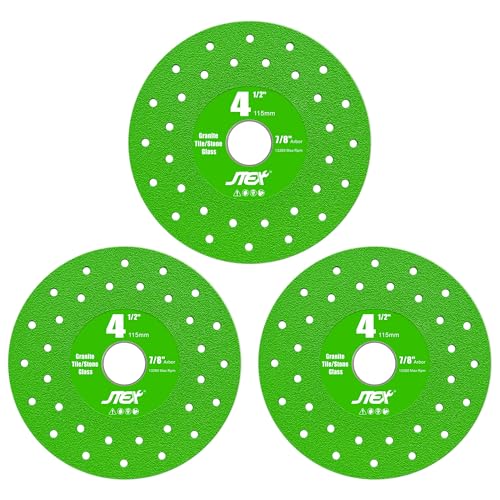
JTEX 4-1/2 Inch Rock Slab Grinding Disc (3-Pack)

FOXBC 4-1/2 Inch Tile Cutter Diamond Saw Blades (3-Pack)

FOXBC 4-1/2 Inch Indestructible Multi-Material Cut-Off Disc (3-Pack)
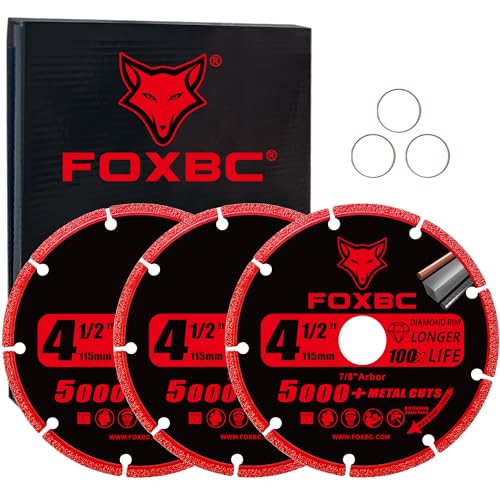
FOXBC 4-1/2 Inch Diamond Cutting Wheel for Metal (3-Pack)

SEESII 4-1/2 Inch Diamond Blade for Tile and Masonry (2-Pack)

FOXBC 4-1/2 Inch Tile and Glass Cutting Disc (3-Pack)

DRILKING 4-1/2 Inch Tile Cutter Diamond Saw Blade (3-Pack)
The Details Behind The Selections
This stack of fifty FOXBC cut-off wheels is built for the kind of person who treats an angle grinder like a daily workhorse. The 0.045-inch thickness keeps the disc slim enough for quick passes, while the 7/8-inch arbor (the central hole that mounts to the grinder spindle) fits the standard 4-1/2-inch grinder most people already own. It is a Type 1 flat disc, which is the shape used for straight, square cuts rather than grinding.
Where this pack earns its place is in shops and garages where metal work is routine. A trim carpenter cutting rebar, a hobbyist slicing thin steel plate, or a homeowner resizing a metal threshold all burn through discs fast. Buying fifty at a time means you stop rationing blades and start treating them as consumables. You may find the bonded abrasive composition works fine for steel but wears quickly on harder stainless, so a specialty diamond blade is still a better tool for tile and stone work.
The Upside
- 0.045-inch thin profile lets you slice quickly without a wide kerf (the width of material removed by the cut).
- 7/8-inch arbor fits most common 4-1/2-inch angle grinders without adapters.
- 50-pack pricing is friendly to high-volume shops that burn through consumables.
- Aluminum oxide abrasive handles steel, stainless, and cast iron in the same session.
Worth Noting
- Bonded abrasive wheels generate heat and sparks, so you will need a face shield and steady water-free ventilation.
- Not suited for porcelain, ceramic, or stone: those materials need a diamond-rim blade like the JTEX disc below.
- Stockpiling 50 wheels means you need dry, flat storage to keep them from warping or absorbing shop moisture.
The Right Fit
Fabricators, welders, and serious DIYers who cut metal every weekend and want a low-cost consumable they don’t have to think about.
Swap It Out When
The JTEX 4-1/2 Inch Rock Slab Grinding Disc is the better match when the workpiece shifts from steel to porcelain or marble, since diamond-grit rims handle brittle materials far more cleanly.
The DEWALT DW4725 has been on shelves long enough to earn a kind of quiet loyalty. It is a continuous-rim diamond blade, which means the cutting edge has no segmented gaps, just a smooth, uninterrupted ring of bonded diamond grit. That geometry produces clean cuts with minimal chipping, which is exactly what you want when trimming a paver or shaving a course of brick.
For homeowners working on a single weekend project, the DW4725 is a sensible anchor. You mount it on a standard 4-1/2-inch grinder, dry-cut your patio stone or backer board, and move on. Depending on your stone’s hardness, you may find the blade runs warm on extended dry passes, so short cuts with breathing room between them are the smarter pattern.
A Few Highlights
- Continuous rim limits chipping on glazed and finished edges.
- Dry-cutting compatibility removes the need to set up a water feed for small jobs.
- 7/8-inch arbor with a stable steel core reduces wobble in handheld use.
Trade Offs
- Continuous rim cuts more slowly than segmented blades, so deep cuts test your patience.
- Dry cutting raises the risk of glazing (the diamond surface smoothing over and losing bite) on long runs without cooling breaks.
Key Attributes
Whose Shelf It Belongs On
Homeowners and remodelers who want a single dependable masonry blade for a kitchen backsplash or a small patio repair.
Look Elsewhere When
The SEESII 4-1/2 Inch Diamond Blade is a stronger match for first-timers who want a segmented rim that forgives heavier pressure and clears debris faster.
The JTEX disc earns its spot for one reason: it is genuinely thin. At roughly 1mm thick, this blade removes very little material beyond the cut line, which is the entire point of working with porcelain or marble. A thin kerf means the piece you keep stays closer to the line you drew, and the piece you throw away stays smaller. That saves tile on a tight job and saves you from over-trimming a costly slab.
Where the JTEX shines is on rock slabs and hard stone, where the brazed (high-heat welded) diamond grit holds up under continuous load. The porous rim design helps vent heat, which is the usual failure point on ultra-thin discs. In our view, this is a specialty tool, not an everyday trim blade. The trade-off for that thinness is that you have to let the disc do the work at low pressure.
Notable Upsides
- 1mm thickness delivers chip-free edges on brittle materials like porcelain and glass.
- Vacuum-brazed diamond bond holds grit through long slab cuts.
- Works on rock, marble, granite, tile, and masonry with the same disc.
Points To Keep In Mind
- Thin profile is unforgiving under side pressure and can flex or shatter if forced.
- Specialty disc costs more per cut than thicker general-purpose blades.
Best Suited To
Stone fabricators, countertop installers, and hobby tile setters who need precise, chip-free cuts on porcelain, marble, or granite.
A Better Fit Elsewhere
The FOXBC 4-1/2 Inch Tile Cutter Diamond Saw Blades handle rougher multi-material work better, since they trade some thinness for tougher bonded construction.
FOXBC’s tile-focused blade sits in the middle of the pack on purpose. It is built as a multi-material cut-off and grinding disc, which means you can swap it on for porcelain trim and keep it on for light edge grinding without changing wheels. For someone running a bathroom remodel, that one-disc versatility removes a step.
The 7/8-inch arbor comes with a 5/8-inch bushing, so the same blade fits grinders with either spindle size. Diamond grit rims tend to run long on tile work, and the bonded construction here holds up across ceramic, marble, and stone in the same session. Depending on how often you swap materials, you may find the rim wears faster on dense granite than on softer ceramic.
What Stands Out
- Dual cut-off and grinding capability means fewer blade changes on mixed jobs.
- Comes with a 5/8-inch bushing for grinders with smaller spindles.
- Compatible with wet and dry cutting depending on shop setup.
Honest Caveats
- Wet/dry versatility is real, but wet cutting is a controlled process that needs water and a stable work surface.
- Heavier than a pure cut-off disc, so extended vertical cuts tire the wrist faster.
Who Should Grab It
Remodelers and tile-setters who routinely move between porcelain, ceramic, and stone in the same day.
Consider Something Else When
The JTEX 4-1/2 Inch Rock Slab Grinding Disc is the smarter pick for thin, chip-free cuts on porcelain slabs where a 1mm kerf matters most.
Where the earlier FOXBC tile blade focuses on stone, this disc goes the other way and tries to do everything. Wood, plastic, metal, ceramic, tile, granite, marble, slate, glass, it claims a long list, and the bonded diamond rim is what makes that possible. For a job-site that switches surfaces without warning, that flexibility is genuinely useful.
The honest read on a multi-material disc is that it is a generalist, not a specialist. It will trim a piece of ceramic tile cleanly and it will saw through a cement backer board without drama, but it won’t match the precision of a dedicated thin-kerf porcelain blade. In most home workshops, that trade-off makes sense: one disc on the grinder, swap as needed, keep moving.
The Good Stuff
- One disc handles wood, plastic, tile, stone, and basic metal cuts.
- 7/8-inch arbor with 5/8-inch bushing fits more grinder models out of the box.
- 3-pack keeps spares on hand for the inevitable mid-job drop.
A Few Limitations
- Generalist design means slower cuts and rougher edges on dense granite compared to dedicated stone blades.
- Glass and crystal work needs water or a slow hand to avoid chipping the rim.
Who It Suits Best
Homeowners and general contractors who run a single grinder on a varied remodel and want one disc to cover most surfaces.
Reach For A Different Pick When
The DEWALT DW4725 Diamond Blade is a better fit on dedicated masonry work where continuous-rim finish quality matters more than material flexibility.
This disc earns its place by being a diamond-rim blade aimed at metal. The electroplated diamond edge is the kind of construction that lasts far longer than a bonded abrasive disc when you are cutting rebar, angle iron, or stainless. The 3-pack format is built for users who go through a few blades a year on metal work and want a stash on the shelf.
Where it fits a metal shop is exactly where the bonded cut-off wheel (Item 1) feels disposable. Diamond is tougher on steel because it stays sharp past the point where aluminum oxide glaze overheats. The honest trade-off is the price per disc, which is higher than a bonded wheel, though the working life more than makes up for it. You may find the rim is overkill for thin sheet metal where a regular cut-off wheel does the job faster.
Good Reasons To Consider
- Diamond rim keeps cutting edge through heavy steel and rebar.
- Electroplated construction distributes the diamond grit evenly for cleaner cuts.
- 3-pack covers long metal jobs without mid-run shopping trips.
Practical Considerations
- Higher upfront cost than bonded abrasive wheels, so it stings on light-duty sheet metal.
- Not designed for porcelain or ceramic tile, so it needs to live next to a separate stone blade.
Feature Card
Perfect Match For
Metal fabricators and serious DIYers cutting rebar, angle iron, or stainless plate on a regular basis.
Skip It When
The FOXBC 4-1/2 Inch Cut-Off Wheel Discs (50 Pack) is the cheaper play for low-volume metal cutting where blade longevity is less critical.
The SEESII disc is a segmented-rim blade, which means the cutting edge has small gaps between diamond sections. Those gaps do two things: they clear debris as the blade cuts, and they let air flow into the cut to cool the diamond bond. For a first-time tile trim, that combo is forgiving. You can lean into the cut a little harder without glazing the rim, and dust clears instead of packing into the kerf.
The 2-pack is sized for occasional rather than constant use, which suits weekend remodelers better than full-time setters. Compared to the DEWALT DW4725, this blade cuts faster but leaves a slightly rougher edge. For a backsplash or a floor under trim, that difference disappears once grout or baseboard covers the cut.
What Pays Off
- Segmented turbo rim clears debris quickly, so the disc stays cooler on extended runs.
- Forgiving on over-eager pressure from first-time users.
- 4-1/2-inch size fits the grinder most DIYers already own.
Points To Weigh
- Segmented rim chips glazed tile edges more than a continuous-rim blade like the DEWALT DW4725.
- 2-pack format means no spare on hand if one disc wears out mid-project.
Quick Technical Notes
Right Fit For
New DIYers tackling their first bathroom floor or kitchen backsplash who want a forgiving blade that won’t punish learning-curve mistakes.
Not Your Match When
The DRILKING 4-1/2 Inch Tile Cutter Diamond Saw Blade suits heavy porcelain or granite work, where its vacuum-brazed bond holds up better under longer cuts.
This FOXBC disc is the one to reach for when glass enters the picture. Wine bottles, tile, crystal, ceramic, and tuckpointing mortar (the grout between bricks or stone that needs cleaning out), the bonded diamond rim handles that whole category. The 7/8-inch arbor with a 4/5-inch bushing opens up compatibility with smaller spindles too.
Cutting glass on an angle grinder is a niche skill, and this blade is built for it. The rim is thin enough to score cleanly and tough enough not to chip under light pressure. The 13,280 max RPM rating sits well above what most handheld grinders produce, so there is headroom for harder materials. Where it is less suited is heavy masonry work where a thicker segmented blade works faster.
Everyday Perks
- Cuts glass, crystal, and wine bottles cleanly when paired with slow, steady pressure.
- 13,280 max RPM rating supports use on high-speed handheld grinders.
- 4/5-inch bushing included for smaller-spindle grinders.
Trade-Offs To Consider
- Glass cutting requires a controlled hand and ideally a water mist to avoid thermal cracking.
- Tuckpointing use wears the rim quickly if you push too hard on cured mortar.
Who It Suits Best
Crafters, bottle artists, and restoration DIYers who work with glass, crystal, and decorative tile.
Where Another Pick Suits Better
The FOXBC 4-1/2 Inch Indestructible Multi-Material Cut-Off Disc is the smarter grab for job-site tile and stone where glass is not part of the day.
The DRILKING blade closes the list on a comfort note. The solid steel core and porous rim design are built to keep vibration, heat, and dust down on long cuts. If you have ever finished a tile job with numb fingers and dusty sinuses, the difference between this and a harsher blade is noticeable within the first few minutes.
The vacuum-brazed diamond bond (where diamond grit is fused to the rim under high heat rather than glued) is the same technology used in the JTEX disc, and it pays off on dense materials like porcelain and granite. For homeowners doing a single shower wall or a kitchen floor, that level of durability is reassuring. You may find the blade feels heavier than a basic cut-off, which is the trade-off for that solid core.
Real-World Strengths
- Vacuum-brazed diamond grit holds sharpness on hard porcelain and granite.
- Porous rim design reduces heat, noise, and airborne dust.
- Solid steel core limits vibration and the breakage risk that comes with it.
Less-Strong Areas
- Heavier feel than thin-kerf blades, so wrist fatigue shows up faster on vertical cuts.
- Comfort-focused build comes at a higher price per disc than entry-level options.
Who Will Love This
Homeowners and remodelers who value a quieter, lower-vibration cut on long porcelain or granite runs.
Another Choice May Suit
The SEESII 4-1/2 Inch Diamond Blade is a faster, lighter option when cut speed matters more than vibration control.
What To Weigh Before Choosing A Tile Grinder Blade
Picking the right blade starts with the material you cut most often. Porcelain and ceramic demand a diamond-rim blade with a thin kerf, because a thick bonded abrasive disc will chip the glaze and wander off the line. Granite and marble need a tougher bond to handle hardness without glazing, and they tolerate either a continuous or segmented rim depending on whether you want a cleaner edge or faster cuts. Glass and crystal are the most demanding: thin, smooth, and best cut slowly with water to control heat.
The arbor size is the next practical filter. Most 4-1/2-inch angle grinders use a 7/8-inch spindle, but smaller grinders and some specialty models use 5/8-inch or 4/5-inch. Bushings included with the blade solve that, and it is worth checking the package before assuming a direct fit. Rim style, continuous versus segmented versus turbo, controls chip behavior and debris clearance more than any other spec, and matching it to your material saves frustration.
Finally, think about volume. A single remodel project needs one or two discs. A tile setter working weekly burns through a 3-pack in a month and benefits from the longer diamond bonds. Bonded abrasive wheels are the cheapest per cut but the shortest-lived, while diamond-rim blades cost more up front and pay you back in working hours saved.
Key Considerations Across These Picks
Pitfalls Shoppers Hit
The most common slip is matching the wrong blade to the material. People grab a metal cut-off wheel for porcelain and wonder why the tile cracks, or pick a segmented masonry blade for a glass bottle and end up with shattered glass. The honest read is that a 4-1/2-inch grinder is happy to mount almost any disc, but the disc itself is only as good as its bond for the material at hand. Check the rim type and the listed compatible materials before mounting, not after the first chip.
When Paying More Pays Off
Higher-tier diamond blades earn their price through bond quality, rim geometry, and vibration control. On dense porcelain, granite, and glass, that engineering shows up as cleaner cuts, longer life, and less fatigue. The upgrade is worth it for anyone cutting those materials regularly, while occasional tile trim on soft ceramic can comfortably stay with a budget blade and still come out looking good.




