


Wet saws, angle grinders, and DIY renos all demand the same thing from a blade: a clean, chip-free edge without bogging down halfway through a tile. The trouble is that not every diamond rim is tuned for porcelain, and not every thin kerf survives a slab of granite. Picking a tile saw blade that matches your material, your tool, and your tolerance for dust makes the difference between a weekend win and a wasted afternoon. This roundup covers nine angle grinder-friendly options across metal, masonry, glass, and ceramic, so renovators, hobbyists, and weekend tile-setters can find a wheel that fits the job and the budget.
A Fast Comparison Of The Options

FOXBC 4-1/2 Inch Cut Off Wheel for Angle Grinder, 50 Pack
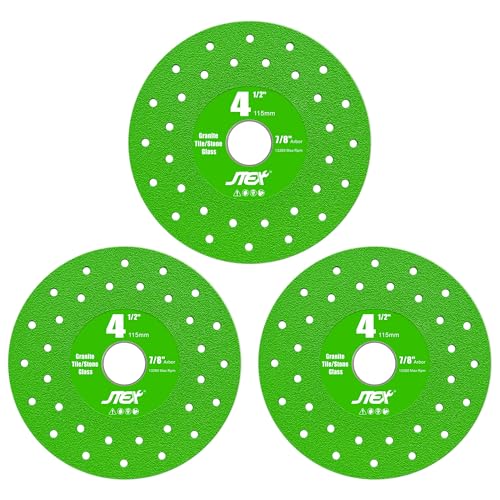
JTEX 4-1/2 Inch Rock Slab Grinding Disc (3-Pack)

FOXBC 4-1/2 Inch Tile Cutter Diamond Saw Blades (3-Pack)

FOXBC 4-1/2 Inch Indestructible Multi-Material Cut Off Disc (3-Pack)
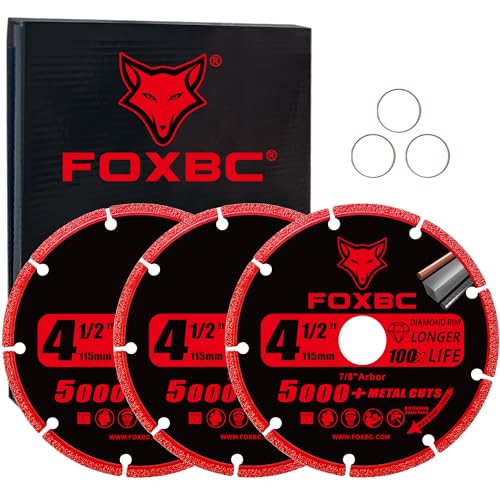
FOXBC 4-1/2 Inch Diamond Cutting Wheel for Metal (3-Pack)

SEESII 4.5 Inch Diamond Blade for Angle Grinder (2-Pack)

FOXBC 4-1/2 Inch Tile Glass Cutting Disc (3-Pack)

DRILKING 4-1/2 Inch Tile Cutter Diamond Saw Blade (3-Pack)
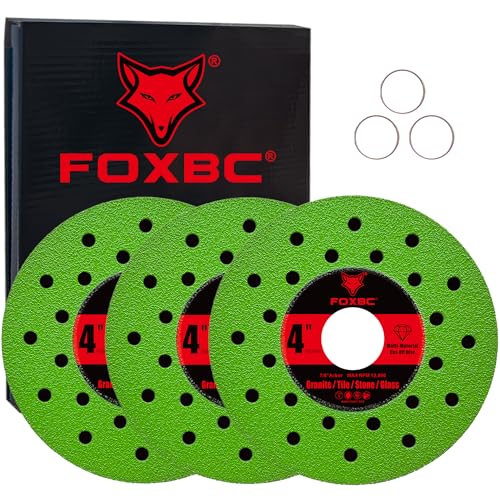
FOXBC 4 Inch Tile Cutter Diamond Saw Blades (3-Pack)
The Picks, Examined More Closely
A 50-pack of cut-off wheels reads like overkill for a one-off bathroom job, but for shops and contractors who burn through abrasive discs by the dozen, that volume is the point. Each FOXBC wheel is a Type 1 flat cut-off disc, 4-1/2 inches in diameter with a 0.045-inch thickness and a 7/8-inch arbor (the central hole that mounts onto the grinder spindle), so it drops onto most standard handheld angle grinders without a bushing.
The aluminum oxide blend suits steel, stainless steel, cast iron, and sheet metal, and the max RPM of 13280 keeps it inside the safe operating window of common 4-1/2-inch grinders. Reinforced construction helps the disc hold up under hand pressure when you’re working flush against a wall or inside a tight chassis. For tile-specific work, this isn’t the right disc, since abrasive wheels chip ceramic and porcelain. Where it earns its place is in the metal shop that needs a steady supply of thin cut-offs ready to go.
Well-Handled Touches
- Fifty discs in one pack means fewer reorders and a lower per-unit cost, useful for high-volume users.
- The 0.045-inch thin profile slices metal cleanly without leaving a wide kerf, the groove left behind by the blade.
- Reinforced build helps the disc survive the heat and pressure of hand-held cutting in tight spaces.
- Works straight out of the box on most 4-1/2-inch angle grinders thanks to a standard 7/8-inch arbor.
Trade Offs
- This is an abrasive metal blade, not a diamond tile saw blade, so it will chip ceramic and porcelain on contact.
- Fifty wheels take up real storage space, and they do degrade over time if humidity hits the stack.
- It is built for straight cuts only, with no grinding or polishing profile on the rim.
Whose Toolbox It Belongs On
Metalworkers, fabrication shops, and mobile welders who burn through abrasive cut-offs weekly.
Reach For A Different Pick When
The FOXBC 4-1/2 Inch Tile Cutter Diamond Saw Blades suit anyone cutting porcelain or ceramic rather than steel.
Cutting a marble slab with a cheap wheel is the fastest way to scorch a surface and burn through a rim in one pass. The JTEX 4-1/2-inch grinding disc is built around a porous body that lets air and dust escape rather than trapping heat against the workpiece. That matters when you’re shaping stone, where thermal load (the buildup of heat in the material) cracks delicate edges and dulls diamond grit fast.
At 1mm thick, the JTEX lands in ultra-thin territory, which keeps the kerf narrow and helps the disc glide through tile without chipping the glaze. Diamond grit is bonded to a high-manganese steel body using a brazing process (a method of fusing the abrasive to the metal with a filler alloy) for a stronger hold, and a 7/8-inch arbor with a bushing ring drops down to 4/5 inch for smaller spindles. The setup handles rock slab, marble, granite, porcelain, masonry, and glass, and the three-pack means you can keep grinding past the first disc without stopping to reorder.
Why It Works Well
- Porous rim channels heat away from the cut, extending blade life on long marble and granite passes.
- Ultra-thin kerf preserves material on visible edges, which matters with patterned porcelain or veined stone.
- The 7/8-inch arbor with a 4/5-inch bushing ring covers both standard and smaller grinder spindles.
- A three-pack spreads the cost across multiple jobs instead of one risky disc.
Worth Noting
- At 1mm thick, the rim is more delicate than thicker masonry blades, so you trade durability for precision.
- Best suited to dry cutting with periodic rest periods to manage heat.
- Stone and tile are listed uses, but metal and wood are not, so this is a specialist wheel rather than a multi-tool.
Who It Suits Best
Hobbyist stoneworkers and remodelers shaping marble, granite, or porcelain slabs on a 4-1/2-inch angle grinder.
Where Another Pick Suits Better
The SEESII 4.5 Inch Diamond Blade is a smarter match for tight trim cuts on porcelain tile where a segmented rim clears debris faster.
Most tile blades do one job: cut. The FOXBC 4-1/2-inch tile cutter blurs that line by combining an ultra-thin cut-off profile with a flat abrasive face for light grinding, so a single disc handles the rough trim and the cleanup pass on a backsplash install. Diamond grit sits on the rim, while the body carries abrasive for shaping edges after the cut.
It runs on a 7/8-inch arbor with a 5/8-inch bushing included, so it fits most 4-1/2-inch angle grinders out of the box. The disc works in both dry and wet setups, which helps when you’re cutting porcelain, where dry runs can overheat the rim quickly. Porcelain, glass, ceramic, marble, and stone are all in the published material list, and the three-pack means a backup is already on the bench when the first one finally wears. Compared to the JTEX above, this FOXBC leans toward versatility over peak precision, since the dual cut-and-grind face adds weight and a slightly thicker kerf than the JTEX’s 1mm profile.
Benefits That Matter
- The cut-and-grind combo cuts the need to swap discs mid-job, saving time on small bathroom and backsplash projects.
- Dry and wet compatibility helps manage dust indoors and heat outdoors during long cuts.
- Includes a 5/8-inch bushing, so it fits grinders with the smaller spindle size.
- Three discs per pack, useful since diamond rims do eventually glaze over on porcelain.
Honest Caveats
- Because it grinds as well as it cuts, the rim is slightly thicker than a pure cut-off disc, which means a wider kerf.
- On dense porcelain, expect the disc to slow down under heavy pressure rather than slice cleanly.
- Wet cutting requires a water source on the jobsite, so dry cutting is the more practical option indoors.
Key Product Details
Best Suited To
DIYers and remodelers trimming porcelain, glass, or marble tile who want one disc to handle both the cut and the edge clean-up.
Not Your Match When
The JTEX 4-1/2 Inch Rock Slab Grinding Disc is a better fit for long shaping runs on granite or marble slabs where a thinner, cooler-cutting rim matters more.
The “indestructible” branding sets a high bar, and the design leans into it with a diamond grit rim bonded to a steel body, sized to take on wood, metal, plastic, cement, ceramic, stone, tile, granite, marble, slate, and glass in succession. For a jobsite where the next material is a surprise, that breadth of compatibility is the real selling point.
The 7/8-inch arbor ships with a 5/8-inch bushing, so the disc mounts to most 4-1/2-inch angle grinders. Dry and wet cutting are both supported, and the three-pack means you can keep working through a worn disc without breaking the workflow. In practice, multi-material blades trade peak performance on any single material for the convenience of not swapping discs, so the cut on dense granite will be slower than a dedicated stone wheel. Compared to the FOXBC Tile Cutter above, this one trades some tile-specific finesse for the ability to drift between substrates on the same disc.
Where It Delivers
- One disc handles wood, metal, tile, stone, and plastic, which simplifies tool bag packing on mixed jobs.
- Dry and wet cutting compatibility adds flexibility for indoor and outdoor use.
- The 5/8-inch bushing covers smaller spindles, a detail that catches people off guard when the wrong arbor shows up.
- Three discs per pack keep a spare on hand for the moment the first one finally gives out.
Possible Compromises
- Being a generalist means slower cuts on dense granite and marble than a dedicated stone wheel.
- Wood cutting with a diamond disc is workable but produces coarse edges that need sanding.
- Worth keeping dry for ceramic and porcelain to avoid glazing the rim, which happens when heat polishes the diamond surface smooth.
Feature Snapshot
Made For
Handypeople and small contractors who move between tile, metal, and wood on the same workday and want one disc that keeps up.
Look Elsewhere When
The FOXBC 4-1/2 Inch Diamond Cutting Wheel for Metal is the right call for shops focused on rebar, angle iron, and stainless steel.
Standard bonded abrasive wheels burn through metal fast, and the FOXBC diamond cutting wheel leans into the long-life side of that equation. An electroplating process (a manufacturing method that deposits a layer of metal onto the disc to hold abrasive particles in place) bonds diamond grit evenly around the rim, so the cutting edge stays consistent cut after cut.
The disc is built for dry cutting of rebar, angle iron, cast iron, stainless steel, alloy steel, aluminum, sheet metal, and various pipe types. The 7/8-inch arbor fits a standard 4-1/2-inch grinder, and the three-pack spreads the cost across multiple heavy cuts. Where the FOXBC Indestructible Multi-Material disc above aims at versatility, this one focuses on metal, trading tile compatibility for sharper, longer-lasting cuts on the kinds of stock that chew through abrasive discs. Anyone running fabrication, plumbing, or structural demo work will get more life per disc here than from a standard bonded wheel.
The Practical Payoff
- Electroplated diamond edge holds its shape across hundreds of cuts on rebar and stainless.
- Targets the metals that destroy standard bonded wheels fastest, including angle iron and cast iron.
- Dry cutting setup means no water source is needed on outdoor or rooftop jobs.
- The three-disc count is right for a single day of heavy demo or fab work.
Small Caveats
- The diamond edge is tuned for metal, so it is the wrong tool for ceramic or porcelain tile.
- On thin sheet metal, expect mild burring that needs a quick deburr pass afterward.
- Higher upfront cost than a basic abrasive wheel, though it usually pays back in longevity.
Right Fit For
Plumbers, fencers, and metal fabricators who want one diamond disc that lasts across rebar, pipe, and angle iron work.
Skip It When
The JTEX 4-1/2 Inch Rock Slab Grinding Disc handles tile and stone shaping far better, so tile-focused renovators should reach for that one instead.
The segmented rim is the part of the SEESII 4.5-inch blade worth understanding, since each segment is a raised block of diamond grit separated by a small gap that clears debris as the wheel turns. On porcelain and ceramic, that clearance keeps the cut cooler and the surface cleaner than a continuous rim, where swarf (the powder and chips produced by cutting) packs against the edge and burns the workpiece.
Two 4-1/2-inch (115mm) blades come per pack, sized for standard handheld angle grinders. The blade is built for tile and masonry, and the segmented design handles the chips that come with cutting porcelain tile or stone trim. Compare that to the JTEX above, which uses a continuous thin rim for chip-free precision: the SEESII gives up a touch of edge cleanliness for faster cutting and better heat management, which is the trade that matters on longer runs or harder porcelain.
Real Benefits
- Segmented rim clears dust and chips efficiently, so cuts run cooler on long porcelain passes.
- Standard 4-1/2-inch (115mm) size fits the most common handheld grinders without adapters.
- Two-pack covers a small bathroom or a single backsplash without reordering.
- Targets tile and masonry, which keeps the diamond bond tuned for abrasive materials.
A Few Limitations
- Segmented rims can leave slightly rougher edges than continuous-rim blades on glazed tile.
- Not designed for metal, so it is a one-trade disc rather than a multi-material option.
- Worth running on dry cuts with cool-down pauses to keep the segments from overheating.
At A Glance
Who Should Grab It
Remodelers and DIYers doing trim cuts on porcelain or ceramic tile who want cleaner edges and faster cutting than a basic continuous rim provides.
Consider Something Else When
The FOXBC 4-1/2 Inch Tile Cutter Diamond Saw Blades suit anyone who also needs to grind edges without swapping to a separate disc.
Glass, crystal, and wine bottles are unforgiving materials, since any sideways pressure or sudden heat spike will crack the workpiece. The FOXBC 4-1/2-inch tile glass cutting disc is built around a thin diamond rim with a max RPM of 13280, sized to keep within the safe speed window of standard handheld angle grinders.
The 7/8-inch arbor comes with a 4/5-inch bushing for smaller spindles, and the material list covers tile, glass, wine bottles, crystal, masonry, and tuckpointing (the process of grinding out and replacing mortar between bricks or tiles). Three discs per pack means spares are on hand when one finally wears thin, and the dry-friendly setup keeps it usable on craft projects where a water feed isn’t practical. Compared to the SEESII above, this FOXBC leans toward delicate materials rather than heavy masonry, so it is the right call for upcycled bottle crafts and small mosaic work rather than full tile installations.
What Stands Out
- Designed for glass, crystal, and ceramic where chip control matters more than raw speed.
- Max RPM of 13280 keeps it within the safe operating range of common 4-1/2-inch grinders.
- 4/5-inch bushing ring adapts the disc to smaller grinder spindles out of the box.
- Three-pack suits craft projects and small decorative cuts where one disc might not finish the job.
Things To Consider
- Thin diamond rims glaze over faster on heavy masonry, so this is a precision tool rather than a brute.
- Glass cutting produces fine dust, so eye and lung protection is non-negotiable.
- Heat builds up quickly on dry cuts, so short passes with cooling breaks keep the rim sharp.
Perfect Match For
Crafters and decorators cutting glass tile, mosaic pieces, and upcycled bottles where a clean edge is the whole point.
A Better Fit Elsewhere
The SEESII 4.5 Inch Diamond Blade is a better match for full tile installations where a segmented rim clears debris on longer cuts.
Tile saws and angle grinders are loud, but a porous rim and a solid steel core do cut some of the harshness out of the cut. The DRILKING 4-1/2-inch tile cutter uses a vacuum-brazed diamond grit rim, where the abrasive is fused to the steel body under vacuum, producing a bond that holds up better than standard sintering on hard materials like porcelain and granite.
The porous design channels dust and air through the body, which lowers operating temperature, cuts noise, and reduces the airborne grit that settles on every surface nearby. A solid steel core keeps the disc stable under load, which matters when the workpiece tries to grab the wheel mid-cut. The three-pack gives a working cushion for full-room tile jobs. Where the JTEX above focuses on heat management for stone, the DRILKING pushes comfort and dust reduction further, making it a strong pick for indoor renovations where neighbors and family notice the noise.
A Few Highlights
- Vacuum-brazed diamond rim holds sharpness longer on porcelain and granite than standard bonded discs.
- Porous body reduces heat, noise, and dust, which matters in enclosed rooms.
- Solid steel core minimizes vibration, so the cut stays straight under load.
- Three-pack suits a full room of tile work without a mid-project reorder.
Points To Keep In Mind
- Dry cutting is the practical option, so long runs need cooling pauses to protect the rim.
- Porous rims can load up on softer materials, so a quick dressing pass (running the blade against an abrasive block to refresh the grit) may be needed.
- Pure metal cutting is outside the wheel’s design, even though the steel core is sturdy.
Who Will Love This
Indoor renovators and apartment dwellers who want a quieter, less dusty cut on porcelain or granite tile.
Swap It Out When
The FOXBC 4-1/2 Inch Tile Glass Cutting Disc handles glass and crystal crafts more cleanly, where the DRILKING’s porous body is overkill.
Most tile saw blades in this roundup are sized for 4-1/2-inch angle grinders, which is the standard handheld size. The FOXBC 4-inch disc steps down to fit smaller and more compact angle grinders, the kind found in craft kits and lighter DIY tools. That smaller diameter also makes the wheel easier to maneuver in tight spots, like behind a vanity or inside a sink cabinet.
The disc combines an ultra-thin cut-off profile with a flat abrasive face for light grinding, similar to the larger FOXBC Tile Cutter above but in a 4-inch form factor. Diamond grit on the rim handles rock slab, cement, ceramic, stone, tile, granite, marble, and glass, and the 7/8-inch arbor ships with a 5/8-inch bushing. Dry and wet cutting are both supported, and the three-pack covers a small project. The trade-off is depth of cut, since a 4-inch wheel doesn’t reach as deep as a 4-1/2-inch, so anything thicker than a standard tile may need a different tool.
Where It Excels
- 4-inch diameter fits smaller, lighter angle grinders that won’t accept a 4-1/2-inch wheel.
- Cut-and-grind combo on a single disc keeps tool changes to a minimum.
- Material list covers rock slab, ceramic, granite, marble, stone, and glass for craft and remodel work.
- 5/8-inch bushing included for grinders with the smaller spindle size.
Factors To Consider
- Smaller diameter means a shallower maximum cut depth, so thick pavers are out of reach.
- Lower blade mass can mean slower cuts on dense granite compared to a 4-1/2-inch wheel.
- Worth checking that your grinder’s RPM rating matches the disc before mounting.
Built With In Mind
Crafters and DIYers with 4-inch angle grinders who need a tile-cutting wheel in a smaller, more maneuverable package.
Where A Sibling Pick Shines
The FOXBC 4-1/2 Inch Tile Cutter Diamond Saw Blades handle thicker tile and stone on a standard 4-1/2-inch grinder with more cutting depth to spare.
What To Weigh Before Buying Tile Saw Blades
Match The Blade To The Material
Porcelain, ceramic, marble, granite, and glass each punish a diamond rim in different ways. Continuous-rim blades deliver the cleanest edge on glazed tile and glass, while segmented rims clear debris faster on masonry and longer runs. A multi-material wheel trades peak performance for flexibility, so dedicated jobs usually cut cleaner with a blade tuned to one substrate.
Size The Disc To Your Grinder
Most handheld angle grinders sold today run 4-1/2-inch wheels, but compact and craft-oriented tools often take 4-inch discs. The arbor size (the central mounting hole) matters just as much, with 7/8 inch as the standard and 5/8 inch common on smaller spindles. Many blades ship with a reducing bushing to cover both, but it is worth checking before mounting so the wheel seats properly.
Balance Lifespan Against Cut Quality
A 50-pack of abrasive cut-offs is the cheap route for metal but the wrong shape for tile. Diamond rims cost more up front, though they last far longer on hard materials and keep their edge through hundreds of cuts. The honest read is that a single diamond blade often replaces dozens of bonded abrasive wheels, so the per-cut cost trends lower over a real project.
Key Considerations Across These Picks
Common Shopping Slip Ups
The most common mistake is reaching for a metal cut-off wheel when the job calls for tile, since abrasive discs chip ceramic and porcelain badly. Another trap is ignoring the arbor size and ending up with a wheel that won’t seat on the spindle. Running a diamond blade dry on dense porcelain without cooling breaks glazes the rim, a process that polishes the diamond surface smooth and ruins the cut.
Where The Extra Money Goes
Premium diamond blades earn their higher price through better bond quality, more even diamond distribution, and rims engineered for heat dissipation. On a single small repair, the upgrade rarely pays back. On a full-room tile install or repeated stone work, the longer blade life, faster cuts, and cleaner edges add up quickly. The honest read is that occasional DIYers do fine with a value-tier multi-material wheel, while frequent users and pros will feel the difference every time they switch discs.
Frequently Asked Questions
Can a tile saw blade cut metal?
Most diamond tile blades can score soft metals like aluminum, but they cut slowly and wear fast on steel. For rebar, angle iron, or stainless steel, a dedicated metal-cutting wheel like the FOXBC 4-1/2 Inch Diamond Cutting Wheel is a better match. Mixing materials with one blade is possible, though performance drops on whichever material the bond was not tuned for.
What’s the difference between a continuous rim and a segmented rim?
A continuous rim is a smooth band of diamond grit that delivers the cleanest edge on glazed tile and glass. A segmented rim uses raised blocks of grit separated by gaps that clear debris as the wheel turns. Segmented rims cut faster and run cooler on masonry, while continuous rims win on precision and chip control for visible edges.
How long does a diamond tile blade typically last?
Lifespan depends on the material being cut, the pressure applied, and whether the blade is used wet or dry. On porcelain with reasonable pressure and cooling breaks, a quality diamond blade can handle hundreds of feet of cuts before the rim wears. Running the same blade hot and dry shortens life dramatically, since the diamonds glaze over and the rim stops cutting.
Do these blades fit a standard 4-1/2-inch angle grinder?
Most blades in this roundup are sized for 4-1/2-inch (115mm) grinders, which is the dominant handheld size. The compact FOXBC 4 Inch Tile Cutter Diamond Saw Blades are the exception, fitting smaller 4-inch grinders. Always confirm the arbor size and included bushings match your tool before mounting, since the wrong fit is both unsafe and hard on the spindle.
Is wet cutting really necessary?
Wet cutting cools the diamond rim, reduces airborne dust, and extends blade life, especially on dense porcelain and granite. Dry cutting is more convenient indoors and on quick trim cuts, though it shortens blade life and produces more fine particulate. For long passes on hard materials, a slow water feed is worth the setup time, while short dry cuts with cooling breaks are usually fine.




