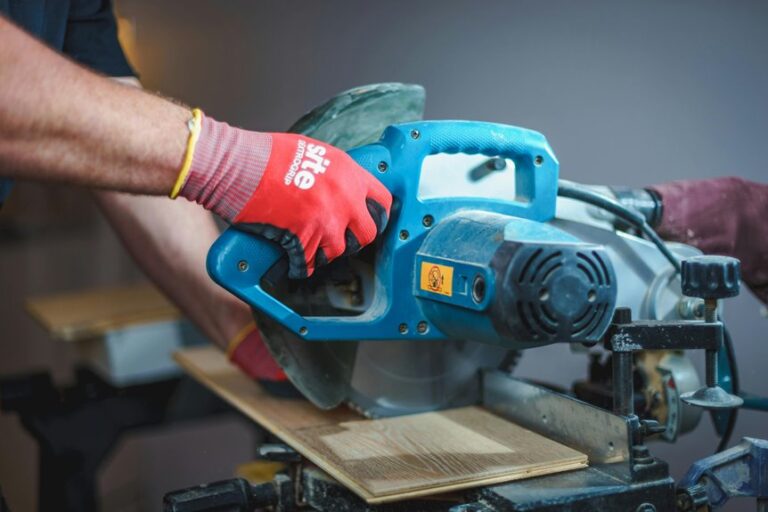
Walk onto a job site mid-renovation and you will see the same truth every time: the difference between a good day and a rough one often comes down to the saw on the stand. A wet tile saw that tracks straight through porcelain without chipping the glaze saves hours of rework and keeps your back from hating you. The seven tools below cover the range pros actually work with, from full-size benchtop wet saws that rip 36-inch tile down the middle, to specialty blades and hole saw sets that handle the cuts a big saw cannot. The lineup mixes heavy hitters with niche problem-solvers, so you can match the tool to the work instead of forcing a one-saw-fits-all setup.
An Overview Of The Picks

REKORI Taurus 3 Tile Shaper Ring Saw
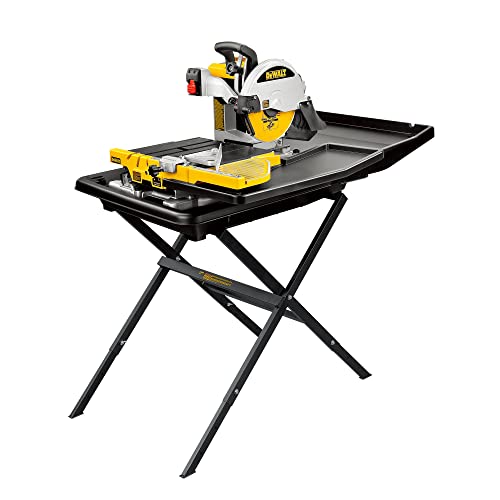
DEWALT 10-Inch Wet Tile Saw D24000S

DEWALT 10-Inch Wet Tile Saw D36000S

DEWALT DWC860W 4-3/8-Inch Masonry Saw

BRSCHNITT 5-Piece Mortar Raking Disc Set
WORKEASE 10-Piece Diamond Hole Saw Set

BRSCHNITT Diamond Cutting Off Wheel Trio
A Deeper Look At The Lineup
The Taurus 3 sits in a different corner of the shop than the rest of this list. A ring saw uses a thin, tensioned diamond blade that rides on a guide, letting you carve curves, plunge cuts, and inside corners that a benchtop wet saw simply cannot reach. Mosaic artists, glass installers, and tile setters who need precise L-cuts in porcelain or ceramic tend to reach for a ring saw because the small footprint fits on a workbench or even a tailgate.
Where the big DEWALT saws below handle long rip cuts across full sheets of tile, the Taurus 3 handles the fiddly work: shaping pool mosaics, cutting notches around plumbing, or detail work on a backsplash where a straight cut would force an ugly grout line. For most production jobs you would still want a primary wet saw, but for the parts of a job that involve curves, the ring saw earns its place.
Everyday Advantages
- Cuts curves and inside corners that no straight-edge saw can match, opening up real design freedom in glass and tile.
- Lightweight and portable enough to set up on a job site, a kitchen counter, or a small studio bench.
- Uses a continuous diamond ring blade that produces clean, chip-free edges on hard materials like porcelain and stone.
- Excellent for mosaic artists and installers who need precision cuts on small, expensive pieces where waste is not an option.
Things To Consider
- Not built for high-volume straight cuts, so contractors doing large tile runs will still need a primary wet saw alongside it.
- The ring blade wears and must be replaced eventually, which adds an ongoing cost worth factoring into ownership.
Who It Suits Best
Specialty tile installers, mosaic artists, and glass workers who need precise curves and intricate detail cuts beyond what a standard wet saw offers.
Consider Something Else When
For high-volume straight rip cuts on big tile, the DEWALT D36000S is the more capable primary station on the bench.
The D24000S has been a job-site fixture for years, and the reason is simple: it just keeps working. The 10-inch blade, 1.5 peak horsepower motor, and integrated stand form a complete cutting station that pulls out of the truck, sets up in minutes, and handles a full day of tile without complaint. Corded 120V power means you trade portability for consistent torque, which is exactly what a pro installer wants when slicing through dense porcelain.
For tile contractors running multiple bathrooms or a kitchen reno each week, the D24000S offers the balance of cut capacity, accuracy, and durability that justifies a real place on the truck. The included stand, water tray system, and XP4 porcelain blade mean the box has everything needed to start cutting once the pump is primed.
Positive Points
- Proven 10-inch wet saw design with a long track record on real job sites and reliable daily performance.
- Comes as a complete package: stand, submersible pump, water trays, and a 10-inch XP4 porcelain blade included.
- 1.5 peak horsepower motor delivers the torque needed to push through dense porcelain and ceramic without bogging down.
- Cart side extension and angle/rip guide simplify accurate miter and rip cuts on longer tile pieces.
Honest Caveats
- At roughly 69 pounds assembled, the saw is heavy and best moved in the truck rather than carried far by hand.
- The 10-inch blade limits maximum rip capacity compared to higher-capacity models, so extra-large tile may need a different approach.
Quick Facts
Right Fit For
Working tile contractors who need a proven, complete cutting station that ships with stand and blade ready to roll on day one.
A Better Fit Elsewhere
For installers regularly ripping 36-inch tile, the DEWALT D36000S offers the higher rip capacity that large-format jobs demand.
The D36000S is the bigger sibling of the D24000S, and the upgrade shows up in pure cut capacity. With 37 inches of rip cut and 18 inches of clearance to the left of the blade, this saw can split a 36-by-36-inch tile down the middle, which matters more and more as large-format porcelain panels keep gaining share in modern installs. The 15-amp motor driving 1,220 MWO keeps the blade cutting true even when pushing through thick material.
Where the D24000S handles a normal bathroom or kitchen comfortably, the D36000S is the saw you bring when the job calls for big tile, long rips, or repeated precision cutting on oversize material. For most pros doing high-end residential or light commercial work, this is the saw that lets you say yes to the jobs the smaller saws cannot handle.
Reasons It Performs
- 37-inch rip capacity means you can halve 36-inch tile without flipping it, a real time-saver on big layouts.
- 15-amp motor with 1,220 MWO provides the muscle needed to keep a 10-inch blade cutting clean through dense porcelain.
- 1/32-inch accuracy over 30 inches gives pro installers the straight, repeatable cuts that tight grout lines demand.
- Plenty of left-of-blade clearance supports wide plank tile up to 8 by 48 inches without awkward repositioning.
Points To Keep In Mind
- Bigger and heavier than the D24000S, so it needs real truck space and a helper to move around the site comfortably.
- Overkill for small repair jobs where a compact saw or grinder would be faster to set up and easier to manage.
Built With In Mind
Pros tackling large-format porcelain, big tile showers, and high-end residential installs where capacity and accuracy drive the schedule.
Look Elsewhere When
For pure curve work in glass or detailed mosaics, the REKORI Taurus 3 ring saw handles shapes no straight saw can match.
The DWC860W is the kind of tool that earns its place in the bag by solving problems the benchtop saws cannot. A handheld 4-3/8-inch wet/dry saw lets you make plunge cuts, notch out door jambs, or trim installed tile without hauling a full wet saw onto the counter. The 10.8-amp motor is sized to push a small diamond blade through granite, porcelain, concrete, and stone, which is exactly the work that pops up after the main tile work is done.
Compared to the larger DEWALT wet saws above, the DWC860W trades capacity for portability. It is the saw you grab when the sink base is already installed and you need to notch a tile for the plumbing, or when a piece of stone trim needs a clean angled cut on the wall. For installers doing finish work and trim cuts, this is the missing tool between the wet saw and the angle grinder.
What Helps Most
- Handheld wet/dry design handles plunge cuts and notches that benchtop saws physically cannot reach in place.
- 10.8-amp motor delivers enough torque to cut granite, porcelain, concrete, and other hard stone materials reliably.
- Continuous rim diamond blade produces chip-free cuts in ceramic and stone, important for finished edges that show.
- 3 cm depth capacity handles most common stone trim and tile thicknesses in a single pass.
Some Limits To Know
- Small blade limits you to short cuts, so long rip work still belongs on the DEWALT D24000S or D36000S.
- Wet cutting requires water management on the work surface, which adds cleanup time on finished walls.
Feature Snapshot
Who Should Grab It
Tile and stone installers who regularly need to make plunge cuts, notches, and trim adjustments on installed material.
Skip It When
For high-volume straight rip cuts in a shop setting, a full-size DEWALT wet saw is the more productive daily driver.
Not every tile-cutting accessory is a saw, and this BRSCHNITT set proves it. The five-piece mortar raking disc set comes in diameters from 30mm to 50mm, all running on a 1/4-inch bore with a 0.7mm blade thickness. Hot-pressed sintered diamond construction means the rims stay sharp across repeated tuckpointing runs, which is where most pros use them. Tuckpointing is the slow business of grinding out old mortar between bricks or stone so fresh grout can be packed in cleanly.
For masons, tile refinishers, and restoration contractors, the value here is in the range of sizes. Having the right diameter on hand means less time spent switching out a single blade and more time actually working. The set ships with two mandrels and a small screwdriver, so it pairs with most standard angle grinders right out of the box.
Useful Touches
- Five assorted diameters cover the most common mortar joint widths without buying blades one at a time.
- Hot-pressed sintered diamond construction aims for long service life under repeated tuckpointing loads.
- Includes both 1/8-inch and 1/4-inch mandrels plus a screwdriver, ready to fit common angle grinder setups.
- 0.7mm blade thickness suits narrow joints, helping avoid accidental chipping on adjacent tile edges.
Trade Offs
- Specialty accessory rather than a standalone saw, so it pairs with a grinder you already own rather than replacing one.
- Smaller diameters can struggle in deep mortar joints, so wide gaps may need a different blade profile.
Perfect Match For
Masons, restoration contractors, and remodelers who regularly grind out mortar joints between tile, brick, or stone.
Reach For A Different Pick When
For cutting full tile sheets rather than cleaning joints, the DEWALT DWC860W masonry saw is the right tool for the job.
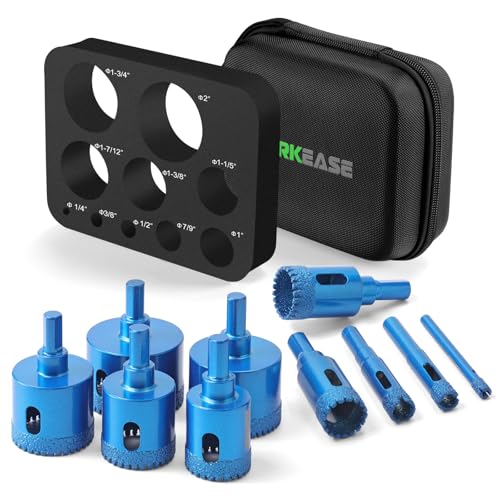
Every tile job eventually needs a hole: for showerheads, faucet valves, supply lines, or toilet flanges. Drilling clean, chip-free holes in finished tile is one of the most stressful parts of the install, and a good diamond hole saw set takes that stress down several notches. The WORKEASE set runs from 6mm to 50mm, covering everything from small valve holes to large drain openings, with a thick diamond coating and brazed steel body for durability.
The included EVA guide jig is a real bonus, since drill bits sliding across glossy tile is the number one reason for chipped, off-center holes. Pair the guide with a slow, steady drill speed and the cuts come out clean enough that escutcheons cover any minor edge variation. For plumbers, glass installers, and tile setters, a set like this earns its place after the first successful install.
Useful Highlights
- Ten sizes from 6mm to 50mm cover most plumbing, electrical, and fixture hole needs in one kit.
- Brazed steel body with thick diamond coating handles tile, glass, and stone up to 1-1/4 inches thick.
- EVA guide jig keeps the bit from wandering on smooth surfaces, dramatically improving first-try accuracy.
- Works dry for quick jobs, and adding water or coolant extends bit life on longer production runs.
Worth Bearing In Mind
- Requires a steady hand and slow drill speed, so the first few holes may take practice to land clean.
- Wet use is recommended on longer runs, so a small spray bottle or sponge on site helps extend bit life.
Feature Rundown
Made For
Plumbers, glass installers, and tile pros who regularly drill clean holes through finished tile for fixtures and fittings.
Swap It Out When
For long straight cuts and rips, the DEWALT D36000S wet saw is the tool the hole saw set complements rather than replaces.
The last pick shifts gears from tile itself to the small cuts around the job that still need to get done. The BRSCHNITT diamond cutting off wheel trio ships three discs in 30mm, 40mm, and 50mm diameters, each 1.6mm thick on a 6mm bore, with a 3mm shank adapter and a small screwdriver. They run on rotary tools and are sized for cutting thin metal, small bolts, and trim work where a full-size cut-off saw is overkill.
For installers and maintenance pros, the value is in having a small, fast way to trim a protruding screw, slice a thin metal strip, or modify a bracket without dragging out a bigger tool. The diamond cutting edge handles light metalwork cleanly, and the small diameter keeps cuts controllable in tight spaces. You probably will not use these every day, but when you need them, nothing else in the bag will do the job as fast.
Real-World Strengths
- Three diameters cover most rotary tool cutting jobs in tile, metal, and trim without swapping tools.
- High diamond concentration and strong base material aim for clean edges and long service life.
- Max speed of 16,000 RPM suits common rotary tools found in most pro tool kits.
- Includes 3mm shank adapter and screwdriver, ready to fit a standard rotary tool out of the package.
Honest Caveats
- 1.6mm thickness is best for light cuts, so heavier stock metal needs a different blade altogether.
- Not a substitute for a full cut-off saw on production metal work, where the small diameter slows you down.
Whose Shelf It Belongs On
Maintenance techs, trim installers, and detail-oriented tile pros who need a small rotary solution for fine cuts on site.
Where A Sibling Pick Shines
For full tile cutting stations and big rips, the DEWALT D24000S handles work the rotary trio is not designed to touch.
What Separates A Pro Tile Saw From The Rest
A tile saw is not just a small circular saw with water attached. The water is doing real work: it cools the diamond blade, washes debris out of the cut, and reduces airborne dust that would otherwise wreck your lungs and the cut quality. Wet saws keep blades cutting true for far longer than dry cutting, which matters when you are paying for diamond tooling.
Motor Power And Blade Size
The two specs that drive capability are motor power and blade diameter. A 10-inch blade on a 1.5 HP motor handles almost any residential tile, while a 15-amp high-torque motor pushing the same 10-inch blade keeps cuts clean when porcelain gets dense. For most pros, the 10-inch platform hits the sweet spot between cut capacity and portability, though going larger means ripping bigger tile without flipping pieces around.
Capacity Versus Portability
Capacity is the headline number on the spec sheet, but it earns its keep on real jobs. Rip capacity around 25 inches handles most bathroom and kitchen tile, while 36-inch-plus capacity is what you need for large-format porcelain panels. The trade-off is weight and footprint: a 37-inch capacity saw takes more truck space and more setup time than a compact 10-inch on a folding stand.
Build Quality And Stand Stability
Stand stability quietly decides whether cuts are accurate or full of chip-out. A wobbly stand flexes during the cut, and the blade deflects just enough to chip porcelain edges. Pro-grade saws pair heavy stands with stiff cart rails and a cutting tray that does not deflect under load. Owners commonly report that the stand matters as much as the saw head itself, especially on long rip cuts.
Key Considerations Across These Picks
Mistakes Worth Dodging
The most common trap is buying a saw that handles one job perfectly while leaving the rest of the work awkward. A compact 7-inch saw feels great in the store and frustrates you the first time a 24-inch tile needs cutting. Equally common is skipping the blade quality: a cheap blade on a great saw still produces chip-out and slows every cut. Match the saw to the largest tile you realistically cut in a week, and pair it with a quality diamond blade suited to porcelain if that is the material you run most.
Where The Extra Money Goes
Higher-tier saws in this category spend the extra cost on three things: rip capacity, motor head, and stand rigidity. A 37-inch capacity saw like the DEWALT D36000S costs more because the frame, rail, and pump system all need to be bigger and stiffer. The trade-off pays off on large-format jobs where the higher saw saves flipping and re-positioning tile. For installers running only standard sizes, the D24000S hits the same daily-driver quality at a more accessible level.
Frequently Asked Questions
What size tile saw do most professionals use?
A 10-inch wet saw is the most common professional platform, since it handles standard porcelain and ceramic tile up to 24 inches with room for diagonal cuts. Larger-format installers step up to high-capacity 10-inch saws with 36-inch-plus rip capacity for the same blade size with a longer rail.
How long does a diamond tile saw blade last?
Diamond blade life depends on material, cut length, and cooling. Cutting porcelain hard tile produces faster wear than softer ceramic, and running the blade dry shortens life dramatically. Owners commonly report months of regular use on quality wet-cutting diamond blades before replacement becomes worthwhile.
Can a wet tile saw cut porcelain without chipping?
Yes, with the right blade. A continuous-rim diamond blade designed for porcelain, paired with adequate water flow and steady feed rate, produces clean edges on porcelain. Skipping water, pushing too hard, or using a segmented blade on glazed porcelain tends to produce chipping.
Do I need a stand for a wet tile saw?
For pros, a stand is essentially mandatory. Proper cutting height saves your back during full-day cutting, and a rigid stand keeps the cut accurate. Portable tabletop saws work for small repair jobs, but daily production work belongs on a saw with a real stand.
What is the difference between a wet saw and a ring saw?
A wet saw uses a flat circular blade on a sliding cart for straight cuts. A ring saw uses a thin, tensioned diamond ring that cuts curves and inside corners. Most pros own a wet saw for primary work and add a ring saw only when curves, mosaics, or detailed glass work shows up on the schedule.