Laying large-format tile without vibration is like pushing a heavy sofa across carpet: the work goes in, but the results fight you. Tile vibration tools settle thinset, push out trapped air, and flatten lippage (uneven tile edges that catch light) so your finished floor reads as one continuous plane instead of a patchwork. This roundup mixes true tile vibrators with the rotary and demolition hammers that often show up on the same job site, so you can see what each one actually does before adding it to your kit.
The Shortlist At A Glance
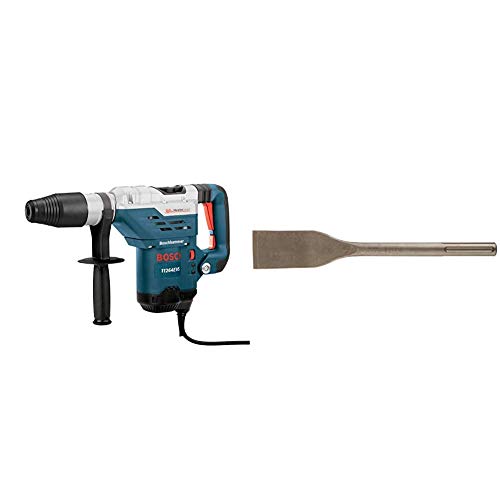
Bosch 11264EVS SDS-Max Combination Hammer Kit

ENEACRO SDS-Max Demolition Jack Hammer 11 Amp

Makita HM1214C 27 lb. AVT Demolition Hammer

Ecarke Cordless Tile Vibration Tool for Milwaukee 18V

Antstone 250mm Suction Tile Vibrator 882lbs

Antstone 220mm Suction Tile Vibrator 441lbs Blue

Antstone 283mm Suction Tile Vibrator 882lbs 2-Battery
Antstone 220mm 441lbs Tile Vibrator 9-Speed

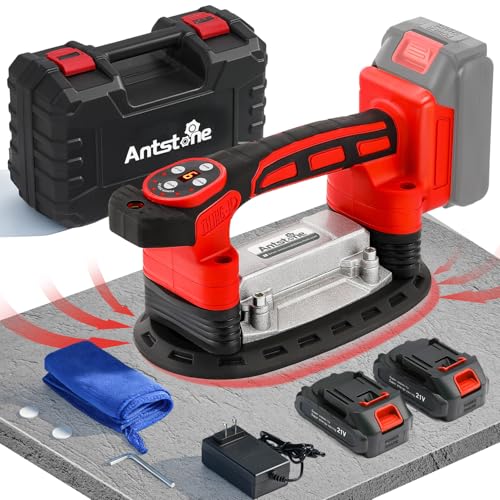
Antstone 250mm 882lbs Tile Vibrator Red 9-Speed
More On The Choices That Made The List
Most tile vibration tools on this list specialize in one job: settling thinset. The Bosch 11264EVS does the opposite. It arrives as a combination rotary hammer paired with a 2-inch by 12-inch SDS-max tile chisel, which lets you core through concrete, drill anchor holes, and pry up old tile without swapping to a second machine. SDS-max is a chunky bit-shank system used on heavy rotary hammers, and the Bosch uses it to deliver serious impact energy.
Where the dedicated tile vibrators later in this roundup handle finishing, the Bosch handles the messy prep work that comes before tile ever touches thinset. Crews that already own SDS-max accessories will appreciate the shared platform. You may find the weight and price excessive for a pure tile-laying job, but on a renovation where the floor has to come out first, having one tool that drills, chisels, and cores saves a lot of truck space.
Reasons It Performs
- Combination hammer adds drilling and coring to plain demolition, replacing two tools on the truck.
- SDS-max shank accepts a wide range of heavy chisels and core bits already common on job sites.
- 13-amp motor with 8.1 ft-lbs of impact energy handles thick concrete and stubborn thinset beds.
- Bundled 2-inch tile chisel is ready for floor removal out of the box.
Points To Keep In Mind
- Heavier than purpose-built tile vibrators, so it tires out wrists during long finishing passes.
- Not a true suction-cup tile leveler, so it cannot flatten large-format panels the way later picks can.
- Owners commonly report dust collection as a separate purchase rather than built in.
Best Suited To
Concrete and tile pros who need one tool to drill, chip, and core across multi-day renovations.
Consider Something Else When
Pick the ENEACRO SDS-Max Demolition Jack Hammer instead when you only need chipping and want a lighter, single-purpose tool.
The ENEACRO trades the Bosch’s drilling versatility for a much friendlier shoulder. At roughly 12.8 pounds, this 11-amp jackhammer focuses on hammer-only operation with adjustable chisel angles, which keeps the controls simple and the learning curve short. The motor is wrapped around heat-resistant copper windings, a detail that matters when you are breaking up a basement slab in summer.
It is not a suction-cup tile vibrator, so treat it as the demolition side of the job rather than the finishing side. Once the old floor is out and the substrate is prepped, you would reach for one of the Antstone vibrators further down the list to actually set the new tile. Used together, they cover the whole tear-out and lay cycle without spending flagship-hammer money.
Strong Points
- Light enough to control with one hand for overhead demo work, depending on your grip strength.
- Single hammer-only mode means fewer switches to learn on a rental or shared tool.
- SDS-max shank matches the chisels many crews already own.
Trade Offs
- No drilling function, so plan on a separate rotary hammer for anchor holes.
- Lower impact energy than the Bosch 11264EVS above, so very thick slabs take longer.
Right Fit For
Homeowners and remodelers doing focused tile and concrete removal without buying a full rotary hammer kit.
Skip It When
Choose the Bosch 11264EVS SDS-Max Combination Hammer Kit instead when you need drilling and coring alongside chiseling.
The Makita HM1214C is the heaviest bare tool in this lineup, and it earns every pound. A 14-amp motor pushes 19 foot-pounds of impact energy into the work, while Makita’s AVT (Anti-Vibration Technology) counterbalance system tames the shake that normally rattles your elbows after an hour of chipping. It also accepts SDS-MAX bits, the same shank standard used on the Bosch 11264EVS covered earlier.
This is a workhorse, not a precision tool. It is built for crews that break up concrete for a living and want a hammer that can run all day without overheating. The constant speed control automatically adds power when the bit loads up, which keeps the chisel moving through rebar and dense aggregate. Homeowners tackling a single bathroom might find the size intimidating, but for a contractor it is a sensible long-term investment.
A Few Highlights
- 19 ft-lbs of impact energy handles the toughest concrete and tile demo jobs.
- AVT counterbalance system reduces hand-arm fatigue during long shifts.
- SDS-MAX bit compatibility opens up a wide catalog of chisels and points.
Worth Bearing In Mind
- 27 pounds of tool is a lot to carry up stairs or into tight bathrooms.
- No drilling mode, so it pairs with a separate rotary hammer for anchor work.
Who Should Grab It
Demolition crews and remodelers running all-day concrete and tile removal on commercial job sites.
Another Choice May Suit
Reach for the ENEACRO SDS-Max Demolition Jack Hammer instead when you want similar chipping capability at roughly half the weight.
Now we move into true tile vibration tools, the kind you press onto freshly laid tile to settle it into thinset. The Ecarke skips the cord entirely, running on Milwaukee M18 batteries that you probably already have on the truck. Models 48-11-1820, 48-11-1822, 48-11-1840, 48-11-1850, 48-11-1852, 48-11-1860, and 48-11-1862 all fit, which is a long list of common packs.
Going cordless changes how the tool feels. There is no generator noise, no cord to drag across wet thinset, and no GFCI (ground-fault circuit interrupter) trip when you accidentally nick the cable. The catch is that you supply the batteries, so this only makes sense if you already live in the Milwaukee ecosystem. For shop owners with a wall of M18 packs, that is a feature, not a problem.
Benefits That Matter
- Cordless freedom lets you reach balconies, shower pans, and remote additions without a generator.
- Compatibility with multiple Milwaukee 18V batteries means shared charging and spares.
- One-hand operation reduces fatigue during long floor installations.
Room For Improvement
- Battery and charger sold separately, so total cost climbs if you are new to Milwaukee.
- Suction-cup surface may need occasional cleaning to maintain grip on dusty tiles.
Perfect Match For
Milwaukee M18 owners who tile in spaces without easy outlet access or on active job sites.
Look Elsewhere When
Pick the Antstone 283mm Suction Tile Vibrator 882lbs 2-Battery instead when you want batteries in the box and a wider working plate.
The first of the Antstone heavy hitters, this 250mm plate vibrator holds up to 882 pounds of suction and spins up to 28,000 RPM across nine speed settings. The auto-lock feature keeps the cup attached without constant handle pressure, so you can concentrate on guiding the tool rather than fighting it. Compared to the Ecarke just above, this model is corded and noticeably stronger on paper.
That extra reach matters most with large-format porcelain, the heavy 24-by-24 and 24-by-48 panels that punish smaller vibrators. A 10-inch plate covers a meaningful slice of those tiles in one pass, which is the difference between finishing a floor in an afternoon and finishing it over a weekend. The honest read is that you give up the Ecarke’s cordless convenience for raw leveling muscle.
Advantages To Know
- 882-pound suction capacity handles oversized porcelain panels without slipping.
- 28,000 RPM top speed with nine settings covers delicate mosaic through heavy stone.
- Auto-lock reduces hand fatigue during multi-hour installations.
Less Ideal Details
- Corded design requires a nearby outlet or extension cord on every job.
- 10-inch plate may overhang narrow strip layouts, so smaller rooms need more repositioning.
Built With In Mind
Tile contractors installing large-format panels on open floor plans where a cord is not a problem.
Reach For A Different Pick When
Pick the Antstone 220mm 441lbs Tile Vibrator 9-Speed instead for smaller rooms and lighter wall tile where the 10-inch plate is overkill.
Drop the plate to 220mm, halve the suction rating to 441 pounds, and you get the Antstone that most homeowners will actually want. The vibration still tops out at 20,000 RPM, and the same nine-speed control lets you dial in the right amount of shake for ceramic, glass, or natural stone. The blue housing is the only cosmetic tell that this is the lighter sibling of the 250mm model above.
At this size the tool feels nimble on shower walls and bathroom floors, where the bigger 10-inch plate can feel like swinging a dinner tray. The trade-off shows up when you load it up with thick 18-inch pavers: it has the speed, but not the suction muscle to hold them flat through every pass. For typical residential tile, the balance is the whole point.
Positive Points
- 9-speed control handles mosaic, ceramic, and most porcelain without swapping tools.
- Smaller 220mm plate reaches tight bathroom and shower layouts comfortably.
- Electric suction engages with one button, so there is no pumping or manual valves.
Some Limits To Know
- 441-pound suction limits very heavy pavers and thick stone slabs.
- Corded operation requires outlet planning on second-story bathrooms.
Whose Shelf It Belongs On
DIYers and remodelers tiling a standard bathroom, kitchen backsplash, or laundry room floor.
Where A Sibling Pick Shines
Step up to the Antstone 250mm 882lbs Tile Vibrator Red 9-Speed when your project centers on large-format panels and you need the extra suction.
The widest plate on this list shows up in the middle of the lineup. The 283mm Antstone covers an 882-pound suction rating at 28,000 RPM, and unlike the other Antstones, it ships with two batteries in the box. That detail matters more than it sounds, because every other cordless option here forces you to source batteries separately.
Color may vary on arrival, with either a classic blue or upgraded green housing showing up at random, but the internal package is identical. With two packs in hand, you can rotate through a full day of tile setting without ever parking the tool to recharge. The honest trade-off is weight: a wider plate plus a battery pack is a heavier tool to hold overhead on wall installations.
Bright Spots
- Bundled batteries eliminate the hidden cost that usually comes with cordless tile tools.
- 283mm plate is the largest here, ideal for sweeping big open rooms quickly.
- 28,000 RPM with 6-speed adjustment covers most residential tile types.
Practical Considerations
- Heavier than the 220mm and 250mm Antstones, so wall work is tiring on long sessions.
- Wide plate may struggle to seat on narrow mosaic or strip-tile layouts.
Quick Facts
Who Will Love This
Full-day tile installers who want the biggest plate and the freedom of cordless power right out of the box.
Not Your Match When
Pick the Antstone 220mm Suction Tile Vibrator 441lbs Blue instead for bathroom-scale work where a smaller plate is easier to position.
Functionally, this looks like the same 220mm Antstone covered earlier, and the spec sheet mostly agrees: 441 pounds of suction, 20,000 RPM, 9 speeds, one-touch grip. The difference is usually found in the price tag, where the no-frills packaging tends to land well below the blue housing version. For first-timers testing the tile vibrator concept, that gap is the whole story.
The trade-off is unproven long-term reliability compared to a slightly fancier sibling. Owners commonly report that the suction cup gasket benefits from a quick wipe-down between sessions to maintain a tight seal. You may find the box contents lean, sometimes without spare gaskets or a storage case, so plan to buy those separately. None of that is a deal-breaker for a single bathroom project.
Positive Takeaways
- Same core 220mm, 9-speed performance as the blue Antstone, often at a friendlier entry point.
- 9-speed range covers most residential tile from mosaic to mid-weight porcelain.
- Light enough for first-time users to learn the technique without burning out their forearm.
A Few Limitations
- 441-pound suction limits heavy pavers and large-format panels.
- Spare gaskets and storage case may need to be purchased separately.
Made For
First-time tile installers and DIYers on a tight budget who want true vibration performance without extras.
A Better Fit Elsewhere
Choose the Antstone 250mm 882lbs Tile Vibrator Red 9-Speed when you want more suction headroom for heavier tile and don’t mind spending a bit more.
Wrapping up the list with the red-housed Antstone, which pairs the 250mm plate and 882-pound suction of the earlier Antstone with the same 9-speed control as the 220mm siblings. The vibration tops out at 28,000 RPM, so you get both the larger working area and the higher top-end speed in one package. Cosmetic color is the only real difference between this and the identically specced blue model.
For bathroom remodels in particular, this is a sweet spot. The 250mm plate covers most shower wall sections without too much repositioning, while the 882-pound suction keeps heavy porcelain panels from drifting while the thinset cures. The honest read is that you are paying a small premium for the red color and a slightly newer SKU (stock-keeping unit), so buy on availability rather than loyalty.
A Few Strong Suits
- 9-speed range gives finer control than the 6-speed wide-plate Antstone covered earlier.
- 250mm plate hits the middle ground between compact 220mm and wide 283mm options.
- 28,000 RPM top speed handles stubborn thinset and heavier panels.
Where It May Fall Short
- Corded design limits reach to wherever an outlet or extension cord can follow.
- Premium positioning may stretch the budget for a one-room project.
Who It Suits Best
Remodelers tiling bathroom walls and floors who want extra speed settings and a mid-size plate.
Swap It Out When
Choose the Antstone 283mm Suction Tile Vibrator 882lbs 2-Battery instead for larger open floor plans where cordless freedom and a wider plate matter more.
What Matters Most Before Choosing Tile Vibration Tools
Match the Tool to the Tile, Not the Other Way Around
The first decision is whether you need a suction-cup vibrator or a demolition/rotary hammer. Tile vibration tools with suction cups settle freshly laid tile, while the hammers in the early part of this list tear out old tile or prep the substrate. Buying a demolition hammer to flatten new porcelain is a waste of impact energy, and buying a finishing vibrator to break up a slab is a recipe for a burnt-out motor.
Understand Suction Capacity and Plate Size
Suction capacity, measured in pounds or kilograms, tells you how heavy a tile the cup can hold flat. A 441-pound rating covers most residential ceramic and porcelain, while 882-pound models handle large-format panels and stone. Plate diameter matters for coverage: a 220mm plate is nimble in showers, while 283mm plates sweep open rooms faster. Most homeowners never need the wide end of the range.
Think About Power Source Early
Corded tile vibrators deliver consistent power and skip battery management, but they need an outlet on every job. Cordless Milwaukee-compatible tools like the Ecarke free you from cords but require M18 batteries you may need to buy separately. Bundled-battery options like the Antstone 283mm solve that problem at the cost of extra weight. Match the power source to where you actually plan to work.
Vibration Speed and Speed Settings
RPM (revolutions per minute) and the number of speed steps control how aggressively the tool shakes the tile. Higher RPM flattens faster but can crack delicate glass or small mosaic, where lower settings give the thinset time to flow. Look for at least six speeds if you mix tile types across a project. Three or four fixed speeds limit flexibility on mixed-material jobs.
Picking The Right Tile Vibration Tool For Your Project
Common Shopping Slip Ups
Many shoppers reach for the highest-RPM model on the page and assume faster equals better. In practice, excessive vibration on small glass mosaic can dislodge individual tiles before the thinset grabs. A second frequent mistake is ignoring plate size: a 283mm plate will not seat properly on a 4-inch backsplash strip, leaving the installer to wrestle the tool into submission. Buyers also underestimate the importance of a clean suction gasket, which is the difference between a firm grip and a tile that drifts mid-cure. Wipe the cup between every few placements and check for nicks that break the seal.
Where The Extra Money Goes
Stepping up to a premium tile vibrator usually buys three things: stronger suction for large-format panels, more speed steps for fine control, and a longer-lasting motor designed for daily use. A weekend warrior tiling one bathroom rarely needs that headroom, but a contractor setting tile four days a week feels the difference by month two. The bundled-battery Antstone sits in the middle, trading some premium motor build for the convenience of two packs in the box. The honest rule: pay for suction capacity and speed control you will actually use, and skip the rest.
Frequently Asked Questions
What is a tile vibration tool used for?
A tile vibration tool settles freshly laid tile into thinset and pushes out trapped air, which improves adhesion and reduces lippage between tiles. It is most valuable on large-format panels where manual pressure leaves high spots.
Do I need a tile vibrator for small ceramic tile?
For 12-by-12 inch or smaller ceramic, a careful hand press and good thinset coverage often produce acceptable results. The tool becomes worth it once you cross into 18-inch or larger tiles, where flatness is harder to achieve by hand.
Can I use a demolition hammer as a tile vibrator?
No. Demolition hammers like the Bosch 11264EVS and Makita HM1214C deliver impact energy in sharp pulses meant to break material, not settle it. Running one across finished tile will crack the surface and dislodge neighbors.
How do I maintain the suction cup on a tile vibrator?
Wipe the rubber gasket with a damp cloth after every few placements to remove thinset dust and debris. Inspect for small nicks or cuts, since those break the seal and cause the cup to slip during use. Store the tool with the cup protected so it does not rest on a sharp edge.
Are cordless tile vibrators powerful enough for large-format tile?
Modern cordless models like the Ecarke and the bundled-battery Antstone 283mm deliver enough suction and RPM for most large-format porcelain. They may run slightly shorter per charge than corded versions, so keeping a spare battery on hand is wise for full-day projects.