


You’re halfway up a step ladder with a drill in one hand and a handful of screws in the other, and the rest of your tools are scattered across the kitchen counter two rooms away. A good homeowner tool belt ends that scramble: hammer on the hip, tape within reach, both hands free for the actual work. The picks below cover casual DIYers, weekend remodelers, and anyone finally tackling that long-postponed punch list.
How The Shortlist Stacks Up

LAUTUS 6-Piece Leather Scaffold Belt, 2″ Wide, Fits 32″–46″
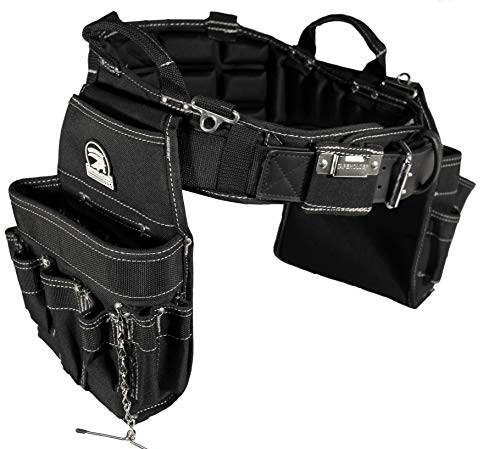
Gatorback B240 Professional Electrician Tool Belt Combo, Medium

WELKINLAND 39-Pocket Tool Belt With Suspenders
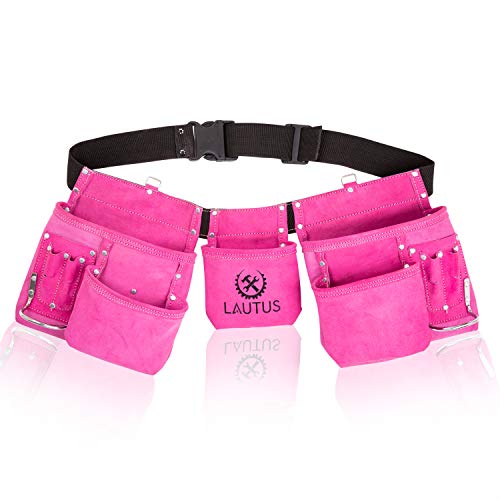
LAUTUS Pink Leather Tool Belt, 11 Pockets, 2 Steel Hammer Holders

LAUTUS Buffalo Leather Tool Belt with Handles

LAUTUS 7-Piece Leather Scaffold Belt, 2″ Wide, Fits 32″–50″
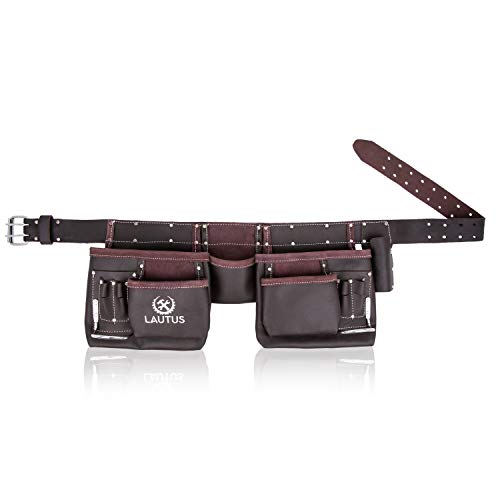
LAUTUS Oil Tanned Leather Tool Belt, 100% Leather

LAUTUS Heavy Duty Top Grain Leather Tool Belt, 18 Pockets

Klein Tools 5425M Cotton/Polyester Tool Belt, Quick-Release
Why These Options Stand Out
Scaffolding work punishes a flimsy belt, which is why the LAUTUS 6-Piece setup leans on oiled tanned leather rather than stitched nylon. The 2-inch strap spreads weight across the hips so a full set of tools doesn’t dig in during a long afternoon on the planks. The five movable holders can be slid to wherever your hand naturally falls, which matters more than people expect when you’re working one-handed overhead.
If you’re painting a two-story exterior or re-shingling a porch roof, the fit range of 32 to 46 inches covers most adults without the buckle biting in. The dark brown finish hides scuffs well, and the leather softens with use rather than cracking. Compared to the Gatorback B240 reviewed below, this is a quieter, more traditional take that trades padded comfort for old-school durability.
Key Advantages
- Oiled tanned leather breaks in and ages well over years of weekend projects.
- Five repositionable holders let you tune pocket placement to your dominant hand.
- 2-inch strap spreads weight across the hips during ladder and scaffold work.
- Built-in slots for level, tape, spanners, and hammer cover the most common reach-arounds.
Things To Consider
- Stiff out of the box, so expect a break-in period before the leather sits comfortably.
- Leather needs occasional conditioning to resist drying out in a hot garage.
Who It Suits Best
Homeowners tackling exterior repairs, painting, and roof work who want a traditional leather belt that lasts years rather than seasons.
Consider Something Else When
Shoppers wanting a softer, ventilated feel for indoor finish work should look at the Gatorback B240 Professional Electrician Tool Belt Combo instead.
The Gatorback B240 is the kind of belt that makes you forget you’re wearing it, which is a quiet win on a six-hour trim or fixture day. The interior ABS lining keeps each pouch rigid, so pouches don’t collapse into sad fabric cups when you reach in. The medium size targets 31 to 35 inch waists, and a breathable back panel helps when the work is happening in a warm attic or unconditioned garage.
The honest read is that this belt tilts toward electricians and finish carpenters, but homeowners benefit from the same organized layout. Pouches for wire strippers, drivers, and a tape clip translate cleanly to anyone installing light fixtures or running cable. Compared to the LAUTUS scaffolding belt above, the Gatorback feels modern, lighter, and more suited to indoor work than scaffold-heavy exterior days.
Useful Touches
- Box-shaped pouches with internal supports stay open and reachable while you work.
- Breathable padding helps on long indoor sessions where heat builds up.
- Rigid bottom lining protects pouches from sharp tools and punctures over time.
- Comfort-oriented design suits homeowners who aren’t used to wearing a heavy rig.
Points To Note
- Medium sizing only fits a narrower waist range than the LAUTUS options.
- More pockets than some DIYers will fill on a typical weekend project.
Key Product Details
Made For
Homeowners running cable, swapping outlets, or installing trim who want a comfortable, organized rig for indoor projects.
Skip It When
If your waist measures above 35 inches or you mostly work on ladders and scaffolding, the LAUTUS 6-Piece Leather Scaffold Belt gives you more reach and a wider fit range.
The WELKINLAND 39-Pocket rig is overkill for changing a faucet, but ideal for a homeowner deep into a deck build or a roof repair weekend. The 39 pockets, twin pouches, hammer holster, and built-in suspenders turn the belt into a wearable workstation. The dual-layer 4.3-inch padded waist strap with breathable lining softens what would otherwise be a punishing load on the lower back.
You may find the harness setup feels more like a contractor’s rig than a quick-grab belt, and that tradeoff is worth thinking about. For multi-day projects where you carry fasteners, drivers, snips, and a chalk line all at once, the suspenders spread the weight across the shoulders. Compared to the LAUTUS scaffolding belts, this one is a better fit for someone who keeps loading more into the bag as the day goes on.
Practical Advantages
- 39 pockets and twin pouches swallow nearly every hand tool a remodel could need.
- Built-in suspenders shift weight off the lower back during long wear.
- 4.3-inch padded waist strap with EVA padding cushions a heavy load.
- Dedicated hammer holster frees up pouch space for drivers and fasteners.
Honest Caveats
- Bulkier than a standard belt, so it can snag in tight crawl spaces.
- More setup time to dial in the suspenders and pouch placement.
- Possibly more belt than a casual DIYer will use on smaller repairs.
Who Should Grab It
Homeowners running a multi-day remodel, framing a shed, or re-roofing a garage who want a rig that carries everything and saves the back.
Look Elsewhere When
For simpler weekend punch-list work, the LAUTUS Heavy Duty Top Grain Leather Tool Belt offers similar capacity in a slimmer, single-strap design.
Most tool belts come in the same brown-to-black range, so the LAUTUS Pink option stands out the moment you clip it on. The genuine leather build keeps the same durability story as the brand’s more neutral models, with 11 pockets and twin steel hammer holders ready for framers, electricians, and DIYers who just want something different. The pink finish can also make the belt easier to spot on a cluttered workbench or in a shared jobsite.
The 2-inch webbing belt with steel buckle holds up to the same abuse as the brand’s other models, so you’re not trading toughness for color. For homeowners who like the look and want a fully functional rig, this is a small but fun departure from the usual. It pairs the same leather quality as the LAUTUS 6-Piece reviewed above, with a layout that leans more toward finish work than scaffold-specific tasks.
What Helps Most
- Same genuine leather build as LAUTUS’s traditional models, just in a fresh color.
- 11 pockets cover most homeowner tool sets without overbuilding the rig.
- Twin steel hammer holders add durability at the most stressed point of the belt.
- Easy to spot on a busy bench or shared shop space.
Small Caveats
- Color is a personal call and won’t appeal to every shopper.
- Leather still needs the same break-in and conditioning as other LAUTUS belts.
Right Fit For
Homeowners who want a fully capable leather belt with a look that stands apart from the usual black and brown options on the shelf.
A Better Fit Elsewhere
For a wider pocket layout and suspenders for long remodel days, the WELKINLAND 39-Pocket Tool Belt is the more practical upgrade.
Buffalo leather is denser and tougher than standard cowhide, and that’s the whole pitch for the LAUTUS Buffalo Leather Tool Belt. The thick hide shrugs off scrapes against deck joists, framing nails, and the rough side of a garage shelf, which is exactly what a long-lived homeowner belt needs. Built-in carry handles make it easy to grab the whole rig off a hook and head to the truck without a juggling act.
You can run a wide waist range on this one, so two adults in the same household can share it without re-sizing. The pocket layout covers the standard mix of tape, drivers, pliers, and a hammer. Compared to the lighter LAUTUS pink model above, this version is heavier, stiffer, and built for the homeowner who wants to buy one belt and stop thinking about it for the next decade.
Where It Helps
- Buffalo leather is denser than standard hide, resisting scuffs and tears.
- Carry handles make it easy to haul the whole rig to the truck or workbench.
- Generous waist range fits most adults in the household.
- Solid pocket layout covers the core homeowner tool kit without bloat.
Factors To Consider
- Heavier than nylon or standard cowhide, so you feel the belt when it’s empty.
- Break-in is longer than softer leather options.
Quick Facts
Whose Shelf It Belongs On
Homeowners who want a one-and-done leather belt that takes abuse, gets handed around the household, and lasts for years.
Reach For A Different Pick When
For a lighter, suspender-supported rig on hot days, the WELKINLAND 39-Pocket Tool Belt With Suspenders is easier on the back.
The 7-Piece version takes the 6-Piece concept and stretches it for bigger jobs. You get an extra tool holder, a wider fit range that reaches 50 inches, and 3.5mm leather that takes punishment on a scaffold plank. The added holder is the real upgrade, since it gives you a slot for a second driver, a chisel, or a square without crowding the hammer and tape slots.
For homeowners above 46 inches or those with a helper who borrows the belt, the wider range solves a problem the smaller 6-Piece can’t. The 3.5mm leather is thicker than the original LAUTUS scaffolding belt reviewed at number one, so it will outlast lighter hides but feel stiffer for the first few uses. The trade-off shows up in the break-in: this is a belt you earn the comfort of, not one that feels nice on day one.
A Few Highlights
- Six tool holders (one more than the 6-Piece) for crowded multi-tool sessions.
- 3.5mm leather is thicker and longer-lasting than lighter hides.
- Wider fit range of 32 to 50 inches covers more body types.
- Standard 2-inch strap spreads weight during ladder and scaffold work.
Practical Considerations
- Slightly stiffer out of the box than the 6-Piece version.
- Larger than necessary for quick indoor jobs like fixture swaps.
Best Suited To
Homeowners with a larger waist, larger hands, or larger projects like deck framing and roof work who want the most loadout in a single belt.
Where A Sibling Pick Shines
For trim and fixture work where you’d rather have a softer, lighter rig, the LAUTUS Oil Tanned Leather Tool Belt at number seven is friendlier on the hips.
Sometimes you don’t need a feature-heavy rig, you need a belt that shows up, holds your tools, and gets out of the way. The LAUTUS Oil Tanned Leather Tool Belt is exactly that, with a classic pouch profile and a 28 to 46 inch fit range that covers most adults. The oil-tanned finish softens faster than the buffalo version reviewed above, so it feels more comfortable in the first few sessions.
The pocket count is generous enough for a basic homeowner kit: hammer, tape, drivers, a small level, and a pouch for fasteners. The trade-off is that it doesn’t have the heavy-duty hardware of the 7-Piece or the suspenders of the WELKINLAND. For everyday repairs, painting touch-ups, and weekend punch lists, this is the most balanced pick in the lineup.
Where It Delivers
- Oil-tanned leather softens faster than thicker buffalo or top-grain options.
- 28 to 46 inch fit range covers the most common homeowner waist sizes.
- Classic pouch layout is intuitive without a learning curve.
- Build quality matches the brand’s reputation for solid leather rigs.
Soft Spots
- Leather needs occasional conditioning, especially in dry climates.
- Fewer specialty holders than the scaffolding-focused models above.
At A Glance
Who Will Love This
DIYers who want a dependable, no-fuss leather belt for general home repair, light remodeling, and weekend projects around the house.
Swap It Out When
If you regularly work on a roof or scaffold where you need a level, spanner, and square on your hip at the same time, the LAUTUS 6-Piece Leather Scaffold Belt has dedicated slots for those tools.
The Heavy Duty Top Grain Leather Tool Belt is the one to reach for when a single weekend has turned into a multi-room remodel. The 4mm thick top grain leather is a step up from standard oil-tanned hides, holding its shape under a full load of drivers, pliers, a speed square, and a tape. Eighteen pockets, twin D-rings, and a tape measure clip make the layout flexible enough for framers, carpenters, and electricians alike.
You may find the heavier leather slows you down on quick indoor tasks where a lighter belt would do. For a homeowner spending two full days on a kitchen tear-out, though, the rigidity is the point. The pocket layout is more versatile than the scaffolding-specific LAUTUS options, so the same belt can switch between framing a wall and finishing a tile backsplash.
Strong Points
- 4mm top grain leather is among the thickest in the LAUTUS lineup.
- 18 pockets give generous organization for varied tool sets.
- Tape measure clip, twin D-rings, and a hammer holder cover the standard carry kit.
- Versatile layout works for framing, electrical, and finish tasks.
Things To Weigh
- Thickest leather in the roundup, so the break-in is the longest.
- Possibly more capacity than a casual DIYer will fill in a single afternoon.
Spec Overview
Perfect Match For
Homeowners running extended remodel projects who want the most rugged, organization-heavy belt in the lineup without moving into a full suspenders rig.
Another Choice May Suit
For shorter sessions where you want padded shoulder support along with capacity, the WELKINLAND 39-Pocket Tool Belt With Suspenders is the easier carry.
The Klein Tools 5425M is a different animal from the leather rigs above: a cotton/polyester webbing belt with a forged quick-release buckle designed for safety-critical situations. The medium size fits 30 to 44 inch waists, which covers most homeowners, and the mildew-resistant webbing handles a sweaty summer day better than leather ever will. The quick-release buckle is a smart touch for anyone working at height where a stuck belt could become a hazard.
It’s a strap-style belt rather than a pouch belt, so you’re pairing it with your own pouches or carrying a small set of tools clipped on. For ladder work, roofing, or a quick swap-out session, the lighter feel and safety buckle are real benefits. Compared to the LAUTUS leather options reviewed above, this is a minimalist pick for homeowners who value agility and quick release over built-in pocket organization.
Useful Highlights
- Forged quick-release buckle adds a layer of safety for ladder and elevated work.
- Cotton/polyester webbing is lighter and cooler than leather on hot days.
- Mildew-resistant blend handles damp storage without rotting.
- 30 to 44 inch fit range covers most homeowner waist sizes.
Room For Improvement
- No built-in pouches, so you pair it with separate holders or tool bags.
- Webbing wears faster than thick leather under heavy abrasion.
Feature Snapshot
Built With In Mind
Homeowners who want a lightweight, safety-focused belt for ladder work, rooftop tasks, and quick repairs where full pouch rigs feel excessive.
Not Your Match When
For built-in organization that holds your hammer, tape, and fasteners in fixed slots, the LAUTUS 6-Piece Leather Scaffold Belt is a more complete carry system.
What To Look For In A Homeowner Tool Belt
Material And Build Quality
Leather belts like the LAUTUS lineup age well and resist abrasion, while cotton/polyester webbing like the Klein 5425M stays cooler and lighter. The trade-off shows up in long-term durability: thick top grain or buffalo leather outlasts webbing, but webbing is friendlier in summer. Match the material to your climate and how often you actually wear the belt.
Fit, Strap Width, And Support
A 2-inch strap spreads weight across the hips better than a narrow belt, and a fit range that includes your actual waist (with a little room) is essential. If you’re carrying more than a few pounds of tools, suspenders like those on the WELKINLAND rig shift load off the lower back. For most homeowners doing weekend projects, a well-fitted single-strap belt is enough, but extended remodelers benefit from suspenders.
Pocket Layout And Specialization
Count the pockets before you buy. General-purpose belts with 10 to 18 pockets cover the average homeowner kit, while scaffolding-specific belts with movable holders suit exterior and roof work. The honest read is that more pockets aren’t always better: a too-large layout can turn into a cluttered tool toss.
Safety And Special Features
For ladder and roof work, a quick-release buckle (like the Klein 5425M) is a small but meaningful safety addition. Box-shaped pouches with rigid liners, breathable back panels, and D-rings for clips and tape are details worth paying for. The right features depend on whether you work mostly indoors, mostly outdoors, or a mix of both.
Smart Shopping Choices For This Category
Wrong Turns To Avoid
A common slip is buying a pro-grade rig with 30-plus pockets when your actual tool count is closer to 10. You end up with a heavy, awkward belt and unused slots. Another trap is choosing a narrow strap that digs in under load, or skipping the waist measurement and ending up with a belt that’s either too loose or pinches at the buckle.
When Paying More Pays Off
Higher-tier leather belts earn their cost through thicker hides, reinforced stitching, and hardware that survives years of weekend projects. The 4mm top grain LAUTUS model is a clear example: it costs more but outlasts lighter hides by years. For homeowners who work through one or two big projects a year, the upgrade is worth it. For once-a-year tool users, a mid-range oil-tanned belt does the job without overpaying.
Frequently Asked Questions
What size tool belt should a homeowner buy?
Measure your waist over the clothes you typically wear while working, then pick a belt whose range includes that number with a little room. Most belts fit a 2 to 4 inch range, and leather will stretch slightly with use.
How many pockets do you actually need on a tool belt?
For typical homeowner work, 8 to 12 pockets cover a hammer, tape, drivers, pliers, and a few fasteners without piling tools in one pouch. Larger remodels benefit from 15 to 20 pockets, while single-task belt-and-pouch setups work for quick jobs.
Is leather or fabric better for a tool belt?
Leather is more durable and ages well, but it needs break-in and occasional conditioning. Fabric webbing is lighter, cooler, and more flexible from day one, but it tends to wear out faster under heavy abrasion.
Can a homeowner tool belt work for both indoor and outdoor projects?
Yes, though a versatile mid-range belt with 10 to 18 pockets, a sturdy strap, and a hammer holder covers both. Homeowners who do mostly ladder or roof work should look for a scaffolding-specific layout.
Do I need suspenders on a tool belt?
Only if you carry heavy loads for long sessions. Suspenders shift weight off the lower back and help during multi-day projects. For short weekend repairs, a well-fitted single-strap belt is usually enough.




