


Working a roofing job means a constant scramble up ladders, across pitches, and around nail guns, snips, and chalk reels. A tool belt that bounces, sags, or pinches your hips turns an eight-hour day into a slow grind. The right setup keeps weight off your back, your hammer where you can grab it, and your fasteners close enough to reach without breaking stride. Roofers tend to want leather where it counts and webbing where flex matters, with pouches that don’t dump their load on a hot, shingled surface. The picks below cover that spread, from full leather rigs built for ironwork and framing to lighter web belts that work with the suspenders you already own. Whether you run a crew, run a one-man repair outfit, or you just bought your first nail bag, one of these will fit your waist and your workload.
A Fast Comparison Of The Options

Klein Tools 5420XL Heavy-Duty Leather Ironworker Belt
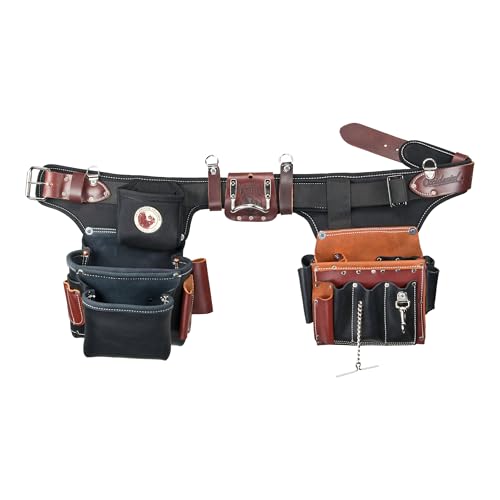
Occidental Leather Industrial Pro Electrician Set
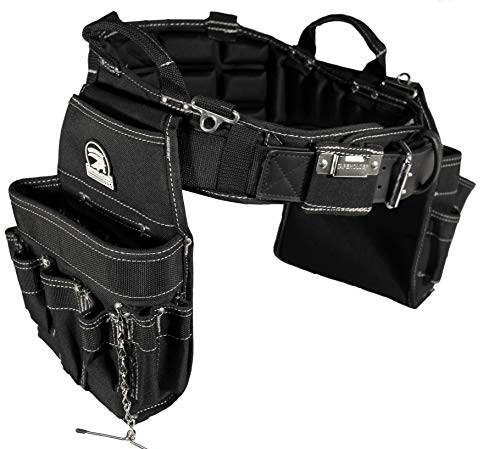
Gatorback B240 Professional Electrician Tool Belt

DEWALT DWST540602 Tool Belt with Suspenders

Makita E-15235 Ultimate Heavy Weight Tool Belt

Klein Tools 5225 Adjustable Electrician Tool Belt

Klein Tools 5705 PowerLine Web Work Belt
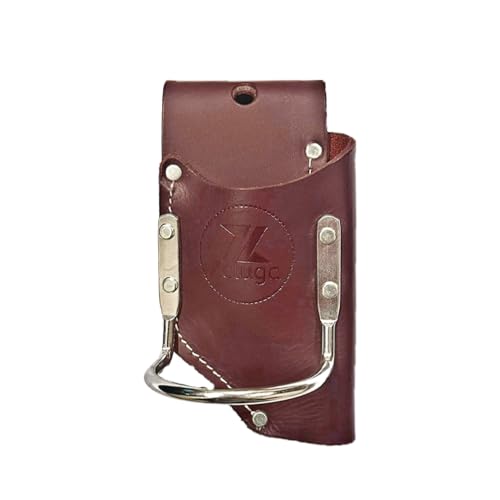
Zeluga 20-422 Leather Hammer and Pliers Holster

Klein Tools 5425M Cotton/Polyester Tool Belt with Quick-Release
Why These Options Stand Out
Full-grain leather work belts don’t get more workmanlike than this Klein 5420XL, and on a busy roofing site the weight of that leather is the point. A 2-inch wide strap spreads load across the hips rather than digging in, and the double-tongue buckle holds the belt steady while you bend, twist, and climb. Roofers running heavy pliers, a hammer, and a tie-wire reel on the same rig will appreciate the dedicated reel strap that lets you swap the reel on and off without untying the whole setup.
Compared to the nylon rigs later in this list, the 5420XL trades a lighter feel for raw durability. The embossed basket-weave patter adds grip under a loaded pouch, and sizing covers waist 44 to 52 inches, which is a real fit range for crew members who wear layers in shoulder seasons. For trades who treat their belt like a piece of equipment rather than an accessory, this one earns its spot near the top of the bag.
Well-Handled Touches
- Full leather construction handles rooftop heat, grit, and abrasion without fraying the way webbing can.
- Dedicated reel strap with its own buckle lets you swap a tie-wire reel in seconds, useful during a long shingle run.
- Double-tongue buckle with keeper stays put under load, reducing the waist-level fidgeting that costs time.
- 2-inch wide profile spreads fastener weight across the hips, so heavier loads stay manageable through a full day.
Things To Consider
- Leather needs occasional conditioning to avoid drying and cracking after months of hot-sun exposure.
- XL sizing tops out at 52 inches, so larger waists will need to size up to a custom cut.
Key Specs
Who It Suits Best
Ironworkers, framers, and roofers who load up with a tie-wire reel and a hammer pouch every day, and who have a waist in the upper XL range.
Consider Something Else When
The Occidental Leather Industrial Pro Electrician Set fits smaller waists from 32 to 40 inches with a fully adjustable system.
The Occidental Leather Industrial Pro is a real working rig, not a starter setup, and it shows in the way the pouches and holders are laid out. The all-leather bag configuration with 31 pockets and tool holders means hand-specific placement, so your dominant hand gets the slots you actually reach for. Roofers doing service work that crosses into electrical, like solar installs or attic rewires, will find the layout translates without thinking.
Where this rig outclasses the Klein 5420XL up top is the adjust-to-fit system, covering pant waist 32 to 40 inches in one belt. The nylon and leather hybrid feels lighter on the hips than a pure leather belt, and the NoSpill tool holders form to each tool over time. For trades who want a single rig that grows with their kit and stays organized shift after shift, the Industrial Pro is the kind of belt you buy once.
Good Reasons To Consider
- Adjust-to-fit range from 32 to 40 inches covers most waist sizes without buying a second belt.
- Hand-specific tool and fastener organization reduces the wasted seconds that add up over a day.
- Leather NoSpill tool holders keep screwdrivers and pliers from sliding out when you bend over a ladder rung.
- Hybrid nylon and leather construction is lighter than full-grain leather but tougher than economy web.
Worth Noting
- Premium pricing reflects the build, and outfitting a crew gets expensive fast.
- 31 pockets can feel like too much real estate for crews running minimal loads.
Feature Card
Made For
Commercial electricians, solar installers, and roofers with waist sizes between 32 and 40 inches who want a high-end rig that holds a wide variety of tools without organizing every morning.
Look Elsewhere When
Roofers who run a heavier fastener load on a full leather belt will prefer the Klein Tools 5420XL Heavy-Duty Leather Ironworker Belt for its 2-inch width and dedicated reel strap.
The Gatorback B240 earns its place here for one reason that matters on a hot shingle roof: it breathes. Where leather rigs can feel like a furnace strap around your waist by mid-afternoon, the B240’s padded, ventilated design moves air across the lower back. For roofers working June through September in direct sun, that comfort difference is the difference between finishing a deck and calling it early.
Box-shaped, sag-resistant pouches keep their form under load, and an internal ABS lining protects the bottom of the pouch from sharp tool points. Medium sizing targets 31 to 35 inch waists, which fits a good slice of working roofers. Compared to the Occidental Industrial Pro above, the Gatorback uses more fabric and less leather, trading some heirloom durability for a noticeably cooler wear.
Points In Its Favor
- Breathable padding cuts sweat buildup during summer roofing shifts.
- Box-shaped pouches with internal ABS lining hold shape and resist punctures from sharp tools.
- Medium size covers 31 to 35 inch waists, a common range for working trades.
- Sag-resistant pouch design keeps fasteners from pooling at the bottom under load.
Trade Offs
- More fabric than leather means a shorter service life under heavy abrasion.
- Limited size range, so larger or smaller waist sizes will need a different configuration.
Quick Facts
Best Suited To
Roofers between 31 and 35 inch waists who work summer shifts in the sun and prioritize airflow and pouch shape over heirloom leather construction.
A Better Fit Elsewhere
Crews who work in colder weather and want full-leather toughness should consider the Klein Tools 5420XL Heavy-Duty Leather Ironworker Belt instead.
The DEWALT DWST540602 goes a different direction than the leather rigs above by leaning into fabric storage, with 25 pockets and integrated suspenders that take weight off the lower back. The included suspenders matter for roofers, who spend a lot of time bending over shingles and ladders, since they redistribute fastener weight from the hips to the shoulders. For a full tear-off day, that swap can save the lower back.
1680 denier fabric with dirt-repellant tarpaulin, reinforced rivets, and double stitching is the kind of construction spec that holds up to shingles, tar, and the kind of weather roofers actually work in. The structured, wide-open pockets speed up reach time, and the high-visibility color options help on busy sites. If the leather rigs above feel like overkill and you want storage plus suspenders in one package, this DEWALT is a strong middle ground.
Practical Pluses
- Integrated suspenders redistribute heavy fastener loads off the hips and lower back.
- 25 pockets cover a wide variety of fasteners, drivers, and small tools in one rig.
- 1680 denier fabric with dirt-repellant tarpaulin stands up to grit, tar, and weather.
- Wide-open structured pockets speed up tool access during repetitive fastening work.
Room For Improvement
- Suspender-integrated rigs can feel bulky under a harness or fall-protection setup.
- One-size design limits precise fit adjustments for slimmer waists.
Who Should Grab It
Crews running high-volume fastener loads who want suspenders built into the belt rather than added on, and who don’t mind the extra bulk over a fall-arrest harness.
Skip It When
Roofers wearing a full fall-protection harness may prefer the lower-profile Makita E-15235 Ultimate Heavy Weight Tool Belt, which is sized and configurable to a wider range of body types.
The Makita E-15235 is built around weight distribution, with up to 40 tool holders and pockets configurable around the waist. The 3L Technology panel system, a triple-layer combination of polyester and foam, adds cushioning without the bulk of a fully padded belt, and the panels can be reshaped to match the load. For roofers running a nailer, batteries, snips, and a coil of fasteners all at once, that configurability avoids the lopsided pull that wrecks your lower back by lunch.
Compared to the DEWALT DWST540602 above, the Makita skips integrated suspenders and instead lets the user dial in the layout they want, which is a cleaner solution for anyone already running a fall-arrest harness. The polypropylene panels are weatherproof and tough, and they keep the belt light despite the heavy-duty rating. If your day is a moving puzzle of different tool loads, the configurability here is hard to beat.
Strong Points
- Up to 40 holders and pockets keep every tool, fastener, and battery within reach.
- Even weight distribution around the waist cuts fatigue on long tear-off and install days.
- Configurable 3L Technology panels reshape to match whatever load you carry that day.
- Weatherproof polypropylene construction handles shingle grit and weather without soaking through.
Honest Caveats
- Custom configuration takes time upfront, and the layout isn’t intuitive out of the box.
- Higher load capacity means you’ll feel the full weight if you skip the dialed-in balance.
Feature Snapshot
Right Fit For
Roofers and framers who carry a heavy, varied load and want to dial in pouch placement once rather than live with a fixed layout.
Another Choice May Suit
Apprentices and crews who want a simpler, one-size setup with suspenders included will find the DEWALT DWST540602 Tool Belt with Suspenders easier to put on and go.
Sometimes the right belt is the one that gets out of the way, and the Klein Tools 5225 fits that role. Polypropylene webbing keeps the strap light, and at 2 inches wide, it spreads load without the weight of a leather rig. For apprentices, DIY roofers, or anyone not ready to drop serious money on a full leather setup, this belt is a sensible way to start carrying tools on the waist instead of in a five-gallon bucket.
The 5225 adjusts to fit waists up to 48 inches and uses a metal buckle for quick release, with corrosion-resistant hardware that handles sweat and weather. It accommodates tunnel loop and slotted tool pouches, so you can pair it with whatever pouch setup you already own. Compared to the Makita E-15235, this is the no-frills option: a strap, a buckle, and that’s it. For many roofers, that’s exactly enough.
Reasons It Performs
- Polypropylene webbing is light enough to wear all day without hip fatigue.
- Adjusts to fit waists up to 48 inches, covering a wide adult range.
- Quick-release metal buckle with corrosion-resistant hardware handles sweaty work conditions.
- Works with tunnel loop and slotted pouches you may already own from another rig.
Points To Note
- Polypropylene webbing doesn’t match the long-term durability of full leather belts.
- Belt only, no pouches included, so factor in the cost of separate pouches.
At A Glance
Whose Shelf It Belongs On
Apprentices, weekend roofers, and budget-conscious pros who already own pouches and just need a solid, light belt strap to wear them on.
Swap It Out When
Roofers who want a fully integrated rig with suspenders and pouches should consider the DEWALT DWST540602 Tool Belt with Suspenders instead.
The Klein 5705 PowerLine sits in the middle ground between the budget 5225 and the premium Occidental Industrial Pro. Heavy-duty 2-inch nylon webbing is a clear step up from basic polypropylene, with extra tensile strength that handles a loaded pouch without stretching out over months of wear. Adjusts to fit waists up to 52 inches, which makes it a fit option for larger-framed crew members who would otherwise need to special-order a belt.
The rugged metal buckle releases quickly when you need to drop the rig in a hurry, and the belt works with Klein’s PowerLine padded suspenders (sold separately) for anyone who wants the load-shifting benefit of suspenders without buying a fully integrated rig. For roofers who want one step up from economy webbing without jumping all the way to leather, the 5705 hits a real sweet spot in build and price.
A Favorable Mix
- 2-inch heavy-duty nylon webbing outlasts basic polypropylene under sustained load.
- Adjusts to fit waists up to 52 inches, the largest range in this lineup.
- Quick-release metal buckle handles fast doffing in tight work situations.
- Compatible with Klein’s PowerLine padded suspenders for an optional load-shifting upgrade.
Small Caveats
- Webbing is tougher than economy but still won’t match full leather for raw lifespan.
- Suspenders are sold separately, adding cost if you want the load-shifting benefit.
Perfect Match For
Roofers with larger waists who want a tougher-than-basic web belt that pairs with optional suspenders and stands up to daily rooftop use.
Reach For A Different Pick When
Roofers who want a fully integrated suspenders-and-pouches setup out of the box should consider the DEWALT DWST540602 Tool Belt with Suspenders.
Not every roofing job needs a full pouch rig. For quick repair calls, attic inspections, or small patch work where you’re carrying a hammer, a pair of pliers, and maybe a utility knife, the Zeluga 20-422 is a lean leather holster that clips to a belt up to 3 inches wide. Heavy-duty leather with riveted reinforcements gives it the same abuse tolerance as the full rigs above, just in a much smaller package.
The 2-in-1 design uses a hammer loop plus a pocket for screwdrivers, utility knives, or pliers, which covers the most common residential repair tools. Where the Occidental Industrial Pro or the Makita E-15235 are built for full-day crew work, the Zeluga fits the solo handyman or a roofer on a fast patch job. If your old belt is already fine and you just need a place to hang a hammer, this is the most efficient way to get there.
Advantages To Know
- 2-in-1 holster combines a hammer loop with a pocket for pliers, screwdrivers, or utility knives.
- Heavy-duty leather with riveted reinforcements handles daily rooftop use.
- Clips onto belts up to 3 inches wide, so it pairs with most work belts you already own.
- Minimalist design keeps weight low for fast, short-duration repair work.
A Few Limitations
- Limited storage means it’s not a substitute for a full pouch rig on a tear-off day.
- Single tool category, so you may need to add pouches for fasteners or drivers.
Built With In Mind
Solo roofers and handymen doing quick repair calls, small patch jobs, or attic inspections where carrying a full rig is overkill.
Where Another Pick Suits Better
Roofers running a full fastener and tool load on a tear-off day will be better served by the Occidental Leather Industrial Pro Electrician Set with its 31 pockets and holders.
The 5425M earns its place in this list for one feature that matters more on a roof than on almost any other job site: a forged, quick-release buckle that pops the belt free in an emergency. If you work over water, around grain elevators, or any elevated situation where a snagged belt becomes a real hazard, that quick-release is a safety feature, not a convenience. The cotton/polyester webbing is mildew-resistant, which is a quiet but real benefit for roofers who sweat through their gear daily.
Medium sizing covers 30 to 44 inch waists, which is the broadest range on any belt in this lineup, so it fits a wider variety of crew members than most. Worn over the user’s harness rather than under it, the 5425M keeps the belt where you can actually reach it during a fall-arrest scenario. For safety-focused roofers and ironworkers, the quick-release buckle alone justifies the price over a standard web belt.
The Good Stuff
- Forged quick-release buckle frees the wearer fast in snagging or fall emergencies.
- Mildew-resistant cotton/polyester webbing handles sweat and weather without rotting.
- 30 to 44 inch waist range fits a wider variety of crew members than most belts.
- Worn over a harness so the belt stays accessible during fall-arrest situations.
Potential Drawbacks
- Quick-release buckle is heavier than standard buckles and adds slight bulk at the hip.
- Must be worn over a harness, so the layering takes some getting used to.
Who Will Love This
Roofers, ironworkers, and framer crews who work at height and want a belt that releases fast in an emergency, with a wide sizing range for crew outfitting.
Not Your Match When
Roofers who want a fully integrated rig with pouches and suspenders built in will get more value from the DEWALT DWST540602 Tool Belt with Suspenders.
What To Look For In A Roofing Tool Belt
A roofing belt earns its keep by staying put, spreading weight, and not getting in the way. The first decision is material, since leather and webbing offer very different experiences on a hot roof. Leather, like the Klein 5420XL or the Occidental Industrial Pro, holds up to abrasion, looks better with age, and is what most old-school roofers still reach for. Webbing belts, like the Klein 5225 or 5705, are lighter, dry faster, and cost less, which matters for apprentices or anyone outgrowing their setup.
Waist sizing and adjustability matter more than most shoppers think. Roofing clothes change with the season, and a belt that fits in January may feel tight in July. Adjust-to-fit systems, like the one on the Occidental Industrial Pro, accommodate a range of waist sizes without re-buying. The 5425M’s 30 to 44 inch range and the 5420XL’s 44 to 52 inch range both cover a real slice of working trades.
Pouch layout drives daily efficiency. A roofer running a nailer and a coil of fasteners needs different pockets than a service roofer carrying snips and a chalk reel. Look for hand-specific layouts, box-shaped pouches that hold their form under load, and enough slots for the tools you actually carry, not the ones the marketing photos show. The Makita E-15235 stands out for configurability, while the Occidental Industrial Pro excels at fixed, hand-specific organization.
Suspenders and weight distribution matter for long days. A full pouch rig can easily exceed 15 pounds, and that load on the lower back adds up by mid-afternoon. Suspenders, like those built into the DEWALT DWST540602, shift weight to the shoulders and reduce fatigue. For roofers already wearing a fall-arrest harness, a simpler belt without integrated suspenders, like the Klein 5705, often works better.
Safety features belong on any elevated-work belt. A quick-release buckle, like the one on the Klein 5425M, is a real feature for roofers working at height, where a snagged belt is more than an inconvenience. The trade-off is bulk at the hip, but most safety-focused roofers find the trade worth making.
Key Considerations Across These Picks
Mistakes Worth Dodging
Buying the heaviest-duty rig before you know what you’ll actually carry is a common first-time mistake. New roofers often reach for premium leather belts, like the Occidental Industrial Pro, and end up wearing a 4-pound strap for a load that a lightweight web belt handles fine. Match the rig to the workload, not the other way around.
Another common slip is ignoring waist sizing. Belts sized over clothing rather than over a bare waist run large, and a too-tight belt by mid-summer can cut a shift short. Adjustable systems and over-clothing ranges are worth prioritizing if you wear layers through shoulder seasons.
Why Top Tier Costs More
Premium roofing belts cost more because the materials and construction earn it. Full-grain leather, hand-specific tool holders, and USA-built construction, all features in the Occidental Industrial Pro, take more time and material to produce. The payoff is a rig that holds up to daily abuse for years rather than months.
The upgrade makes sense for full-time roofers running a heavy, varied load every day. For weekend repairs, occasional patch work, or apprenticeship years, the value tier (Klein 5225 or 5705) covers the same tool-carrying job without the premium price.
Frequently Asked Questions
What size tool belt should you wear for roofing?
Most roofing belts are sized over clothing, so a belt marked 36 inches fits a roughly 32 to 34 inch bare waist. Adjust-to-fit systems like the Occidental Industrial Pro cover 32 to 40 inches in one belt, which is the most forgiving option if your weight or layers change with the seasons.
Is leather or webbing better for a roofing tool belt?
Leather belts, like the Klein 5420XL, last longer under heavy abrasion and look better with age, but they run heavier and need occasional conditioning. Webbing belts, like the Klein 5705, are lighter, dry faster after rain, and cost less, which suits apprentices and lighter-duty work.
Do roofing tool belts need suspenders?
Suspenders help when a full pouch rig exceeds 10 to 15 pounds, since they shift weight from the lower back to the shoulders. Integrated-suspender rigs like the DEWALT DWST540602 suit crew work, while a separate suspender system like Klein’s PowerLine works with any belt.
How many pockets do you actually need?
For most residential roofing, 10 to 15 pockets cover a hammer, snips, a chalk reel, a utility knife, and a couple of drivers. Larger crews running fasteners and a nailer may want 20 to 30 pockets, while a single hammer-and-pliers holster like the Zeluga 20-422 covers quick repair calls.
Can a tool belt fit over a fall-arrest harness?
Yes, but the belt needs to be worn over the harness to stay accessible, which is the design intent behind the Klein 5425M. Suspender-integrated rigs tend to layer awkwardly with harnesses, so simpler belts usually work better in that setup.




