


Working tradespeople tend to know within the first hour on site whether their gear is helping or fighting them. Tool vests, pouches, and magnetic holders sit in that awkward middle ground: easy to underestimate until you’re climbing a ladder one-handed and wishing your screwdriver wasn’t buried under a coil of wire. The picks below cover the everyday trade scenarios where carrying comfort, quick access, and basic visibility all matter at once. There’s no single right answer here, only the right fit for the way you actually work.
The Leading Options At A Glance

MELOTOUGH Electrician Tool Bag Service Open Top

MELOTOUGH Electrician Tool Bag HVAC Hard Bottom

MELOTOUGH Electrician Tool Pouch Service Tech Hard Bottom
MELOTOUGH Small Electrician Tool Pouch Hard Bottom

Ergodyne GloWear Reflective Safety Vest

VAYAGARDEN Magnetic Tool Belt Clip Holder
MagMaster Original Magnetic Tool Holder

Strauss Men’s Cargo Work Pants e.s.Motion 2020
Inside Each Recommended Option
Open-top tote bags earn their place in service trucks more than on the body, and this MELOTOUGH leans into that role. The molded hard bottom keeps the bag upright on a tailgate or a dusty garage floor, so pliers, wire strippers, and a multimeter stay visible instead of buried.
Compared to the smaller pouches later in this list, this bag trades belt comfort for raw carry volume. You get a wide mouth, internal compartments, and the kind of structure that survives being kicked across a slab.
The Case For It
- Stands upright on its own, even when partially loaded.
- Open top means you can grab the right tool by feel in low light.
- Hard shell base keeps tools off wet concrete and dirt.
- Carries enough for a full day’s residential service run.
Trade-Offs To Consider
- Too bulky for overhead ceiling work or ladder climbs.
- Open-top design means small parts can shift around on rough roads.
Feature Snapshot
Made For
Service techs who park at one site for hours and need their whole kit visible at a glance.
A Better Fit Elsewhere
Climbers and trim-out electricians get more from the smaller MELOTOUGH Electrician Tool Pouch Service Tech Hard Bottom, since belt carry beats shoulder carry overhead.
The HVAC-flavored sibling of the first pick shares the same hard base and 1680D shell, so it survives the same drops and puddles. Where it differs is the internal layout, which is tuned for techs who split their day between copper, controls, and basic wiring.
In practice, that means room for a manifold gauge, a couple of drivers, and a small wire tester without everything tangling at the bottom. The hard floor still protects the gear from garage grime.
The Value In It
- Same rugged 1680D shell as the service-truck bag.
- Internal layout suits gauges, drivers, and testers side by side.
- Stands upright on a flat workspace.
- Useful for techs who cross between electrical and HVAC service.
Soft Spots
- Heavier than a pure electrical pouch once fully packed.
- Limited padding for delicate meters.
Quick Facts
Best Suited To
Multi-trade techs who carry a small HVAC kit alongside a basic electrical loadout.
Where Another Pick Suits Better
Residential wire-only electricians will find the smaller MELOTOUGH Electrician Tool Pouch Service Tech Hard Bottom easier on the hips.
Slip this pouch on a belt and the day feels different: tools sit where you expect them, the molded floor keeps the shape even when half loaded, and there’s room for a driver, a tester, and a coil of wire nuts without a second thought.
Unlike the open-top tote above, this is built to move with you. The 1680D shell and reinforced rivets do the quiet work of surviving years of belt-on-ladder contact.
Noteworthy Benefits
- Hugs the hip without sagging, even on long service days.
- Hard base keeps pointed tools from punching through.
- Loop panel for morale patches adds a bit of crew identity.
- Pocket layout tuned for screwdrivers, pliers, and a multimeter.
Points To Keep In Mind
- Single pouch means you still need a second bag for larger tools.
- Belt not included, so plan for a sturdy work belt to match.
Right Fit For
Full-time residential and light commercial electricians who want their core tools on the body, not in the truck.
Skip It When
You mostly work on ladders with one hand free, in which case the MagMaster Original Magnetic Tool Holder is a smarter add-on than a full pouch.
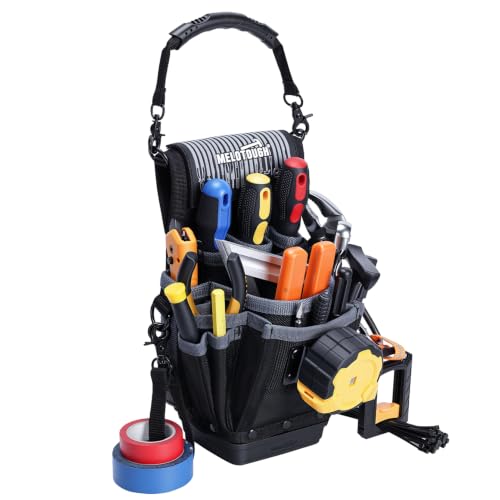
Apprentices and trim-out electricians tend to carry less, and this smaller pouch respects that. You get the same 1680D build and hard base as the larger sibling, just trimmed down to a few essentials: a driver, a stripper, a few wire nuts.
For overhead work, that lighter load keeps the belt from pulling sideways when you reach up. It’s the kind of pouch you forget you’re wearing until you need a tool.
Real-World Strengths
- Comfortable on a tool belt for full shifts overhead.
- Same hard shell and reinforced rivets as bigger MELOTOUGH pouches.
- Keeps a small kit organized without bulk.
Where It May Fall Short
- Limited capacity for service trucks that carry bulky gear.
- Not enough room for a hammer and a larger drill driver together.
- Loop panel takes up pocket space some users would rather have.
Who Should Grab It
First-year apprentices, finish electricians, and anyone who learned the hard way that a heavy belt wrecks a shoulder by lunch.
Reach For A Different Pick When
You want more reach, in which case the larger MELOTOUGH Electrician Tool Pouch Service Tech Hard Bottom is the upgrade that still stays belt-friendly.
A hi-vis vest isn’t a tool carrier in the traditional sense, but on a roadside service call or a dim basement, it’s the layer that keeps you working safely. The Ergodyne GloWear trades bulk for breathable mesh, which matters when summer hits a rewire job.
It layers cleanly over a tool belt, so the pouches above still ride at the hips without pinching. For utility work near traffic or open lots, that visibility is the difference between a near miss and a bad day.
A Strong Showing
- Reflective trim pops in headlights and low-light job sites.
- Mesh body breathes better than solid hi-vis coats.
- Sits over a tool belt without riding up at the shoulders.
- Simple pull-on design, no moving parts to fail.
Worth Noting
- No pockets for tools, so it’s a complement, not a replacement, for a pouch.
- Not insulated, so cold-weather work calls for a heavier layer.
Spec Overview
Perfect Match For
Electricians pulling service calls near roadways, parking lots, or active construction zones.
Where A Sibling Pick Shines
For pure tool carry without the safety layer, the MELOTOUGH Small Electrician Tool Pouch Hard Bottom is the lighter everyday option.
Magnetic belt clips change the rhythm of a service call: drop a driver on the magnet, hear it catch, keep moving. The VAYAGARDEN clip uses a neodymium magnet (a rare-earth magnet far stronger than standard ferrite types) inside a full-metal housing, so it survives drops better than plastic-bodied alternatives.
For techs who already run a tool belt or pouch, this clips on as an extra holster for the tool you reach for most. Think of it as an add-on rather than a system on its own.
Positive Takeaways
- Strong neodymium magnet holds drivers and small pliers securely.
- Metal body handles drops better than plastic holsters.
- Clips onto belts, pockets, or tool bags without a special mount.
- Frees a hand faster than digging through a pouch.
Honest Caveats
- Won’t hold non-ferrous tools like aluminum drivers or brass fittings.
- Add-on rather than a standalone carry system.
Whose Shelf It Belongs On
Existing belt-rig owners who want a faster grab-and-go spot for the tool they reach for 50 times a day.
Look Elsewhere When
You need a fuller carry system from scratch, in which case the MELOTOUGH Electrician Tool Pouch Service Tech Hard Bottom covers more ground.
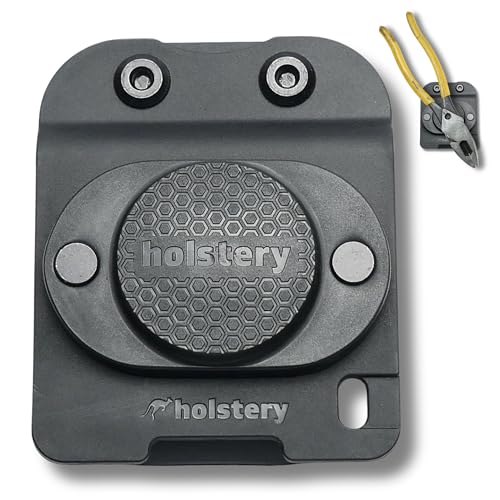
MagMaster leans into the heavier end of magnetic carry. Where most belt clips top out at a screwdriver, this one is rated for chunkier tools like hammers and large pliers, which matters for demo work where you’re cycling through heavier hand tools all day.
The clip mounts to a belt, a pocket, or a tool bag, so you can move it between setups. For remodel electricians pulling old boxes, that kind of flexibility is the point.
A Few Strong Suits
- Handles heavier tools than most magnetic belt clips.
- Clips onto belts, pockets, and tool bags interchangeably.
- Solid for demo and remodel work where tools change fast.
- Single-piece design with no small parts to lose on site.
Points To Note
- Adds noticeable weight to a belt when loaded with heavy tools.
- Won’t grip non-magnetic materials like aluminum or plastic.
Feature Rundown
Who Will Love This
Remodel and demo electricians who swap heavy tools every few minutes and need a fast landing spot.
Swap It Out When
Your day leans toward trim-out and small parts, where the lighter VAYAGARDEN Magnetic Tool Belt Clip Holder is easier on the hips.
Cargo work pants are the unsung layer of a tool carry system. The Strauss e.s.Motion 2020 puts real pockets where you actually want them, so a tape, a marker, and a screwdriver ride on the body without a separate belt rig.
For electricians who climb ladders all day, having core tools spread across sturdy thigh and hip pockets takes pressure off the lower back. They also pair naturally with the pouches above, since a cargo pocket can hold what doesn’t fit on the belt.
A Few Highlights
- Multiple cargo pockets spread the load across the thigh.
- Work-pant cut allows knee bending without pulling at the waist.
- Useful as a base layer under a tool belt or on lighter days solo.
Smaller Limits
- Not a stand-in for a structured tool pouch on heavy days.
Built With In Mind
Climbers and apprentices who want a base layer that handles tools without a full belt setup.
Not Your Match When
You carry heavier hand tools that need a hard base, in which case the MELOTOUGH Electrician Tool Pouch Service Tech Hard Bottom earns its place on the belt.
What Matters Most Before Choosing Tool Vests For Electricians
Pouch Style Versus Vest Style
A traditional tool vest wraps around the torso with pockets front and back, useful for crews who want even weight distribution. Most electricians, though, lean toward belt pouches and magnetic add-ons because they stay out of the way on ladders. Pick the layout that matches your most common work position, not the catalog photo.
Capacity Versus Hip Load
More pockets sound great until you spend eight hours climbing with them. Pouches with 15 to 20 well-placed slots handle most days; anything overstuffed becomes a hip problem. Trim the load to what you actually reach for in a typical hour.
Material And Base Construction
1680D ballistic fabric (a heavy denier weave originally developed for luggage and military packs) shrugs off scrapes and moisture better than lighter canvas. A molded hard bottom is the difference between tools resting on clean plastic or sitting in whatever puddle you set the bag in. Both features show up in the picks above and are worth their weight on real job sites.
Visibility And Safety Layers
Hi-vis gear doesn’t carry tools, but on a roadside or a dim basement it belongs in the kit. Layering a vest over your pouch setup keeps both safety and carry working at the same time without one fighting the other.
Key Considerations Across These Picks
Common Shopping Slip Ups
The easiest mistake is buying a pouch sized for a journeyman when you’re still building a kit. Oversized bags stay half empty, sag at the belt, and encourage you to haul tools you’ll never use. A smaller, harder-working pouch often beats a large one for first-year electricians. Another trap is ignoring the belt itself: even the best pouch pulls uncomfortably on a flimsy belt, so pair your gear with a proper work belt rated for the weight.
What The Higher Tier Buys
Premium pouches earn their keep through base construction, rivet placement, and fabric weight. The difference shows up after a year of daily use, where cheaper shells pill, seams loosen, and bases crack. If you climb or kneel on concrete often, spending up on a 1680D shell with a molded hard bottom pays off in how the bag still looks and feels at month twelve. For lighter or occasional use, mid-range options hold up just fine.
Frequently Asked Questions
What style of tool carry works best for ladder work?
Belt-mounted pouches and magnetic clips keep weight low and centered, which helps on tall ladders. Full vests shift the load to the shoulders, which can fatigue you faster on long climbs.
How many pockets do most electricians actually need?
A mid-sized pouch with 15 to 20 well-placed slots covers the average residential service call. More than that tends to fill with tools you rarely reach for.
Is a magnetic tool holder safe around live electrical work?
Magnetic holders themselves don’t conduct, but metal tools held against a live panel can. Keep the magnet on the belt side, away from energized parts, and use insulated drivers for the work itself.
Can a hi-vis vest be worn over a tool belt comfortably?
Yes, mesh-style vests like the Ergodyne GloWear are cut to layer over a belt without riding up at the shoulders. Heavy insulated coats tend to bunch, so mesh is the better pairing.
Do work pants really replace a tool pouch?
Not entirely, but cargo work pants like the Strauss e.s.Motion 2020 cover quick-grab tools like a tape and marker. Heavier drivers and pliers still ride better in a dedicated pouch.




