A clean, well-stocked kit makes every job feel more manageable, from marking a single cut to framing an entire room. The right mix of levels, squares, and specialty hand tools turns a stack of lumber into something that actually fits together. This guide focuses on time-tested hand tools that carpenters, framers, and serious DIYers reach for daily. Each pick earns its place through durable construction, real-world usability, and the kind of precision that pays off across thousands of cuts.
Your Options, Compared

Klein Tools 935AB4V 6-Inch Magnetic Torpedo Level

ESTWING E30 Rock Pick 22oz with Leather Grip

RIDGID Aluminum Straight Pipe Wrenches 18 & 14-Inch

SWANSON S0101 7-Inch Speed Square (Blue)

SWANSON SW1201K Speed Square Value Pack with Blue Book

Mayhew MA60150 3-Piece Ladyfoot Pry Bar Set
PORSWISH Carpenter Woodworking Measuring Tape (Grandpa Gift)

Matework 3-Piece Combination Square Set 7″ and 12″

SK Tools 7635 9″ Straight Tip Lock Ring Pliers
Taking A Closer Look At The Options
Six inches of level feels small until you spend a day bending conduit in a tight electrical room, where a full-size level simply won’t reach. The 935AB4V solves that problem with a V-groove machined into the bottom, which cradles rounded stock and pipe without sliding. A thumb-screw on the side lets you clamp the level to a piece of conduit, so you can read 0/30/45/90-degree angles while the material rotates under load.
Unlike the larger framing squares and wrenches later in this list, this tool is built for one specific job: staying attached to metal while you work. The high-visibility orange body also tends to stay findable on cluttered job sites, which any carpenter who has lost a level in sawdust will appreciate.
Benefits That Matter
- Patented magnet track holds rare-earth magnets securely so they don’t drop out mid-job
- Thumb-screw attachment keeps the level locked to conduit during bending, freeing both hands for the work
- Multiple vial readings (0/30/45/90) cover the angles an electrician or carpenter actually uses on the jobsite
- Compact 6-inch body fits in a back pocket or tool belt pouch, ready to grab between layout steps
Honest Caveats
- The pocketable size means it can’t substitute for a 24-inch or 48-inch level on long runs of cabinetry or flooring
- Owners commonly report that the bright orange finish scuffs visibly after months in a crowded tool bag
Quick Facts
Right Fit For
Electricians, HVAC installers, and carpenters who frequently bend conduit or work around steel framing where a magnetized reference point saves real time.
Consider Something Else When
You mostly need long-run leveling for cabinetry or deck framing, in which case a longer beam level outclasses this 6-inch pocket model.
Most carpenter kits are full of tools that measure, mark, and cut, but very few deal with the messy side of the job: breaking up concrete, splitting demoed framing, or driving a star bit into stubborn lumber. The ESTWING E30 fills that gap with a 22-ounce head that pairs a square striking face with a pointed tip on the other end. The pointed end is what makes it useful for cracking stone, brick, or tile without needing a separate masonry hammer.
The leather grip is a quiet detail that earns attention over a long day. Unlike rubberized handles that harden in the cold, real leather softens with use and tends to stay comfortable during repeated strikes. The one-piece forged steel construction also means there is no separate head to work loose, which is a common failure point on cheaper rock hammers.
Useful Highlights
- One-piece forged steel design resists head separation, a typical weak point on riveted hammers
- Square face doubles as a chisel driver when paired with a star bit or masonry bit
- Pointed tip breaks concrete, mortar, and tile efficiently without a dedicated masonry tool
- Genuine leather grip conforms to the hand and holds up to weather better than some synthetic options
Trade-Offs
- At 22 ounces, the head is heavier than a standard framing hammer, so it is not ideal for finish nailing or trim work
- The pointed tip requires care around finished surfaces, as it can punch through siding or drywall by accident
Made For
Carpenters, masons, and rockhounds who regularly work on demo, hardscape, or stone-cutting projects and need one hammer that does both jobs.
Look Elsewhere When
You mainly drive finish nails or hang trim, where a lighter finishing hammer is the better everyday companion.
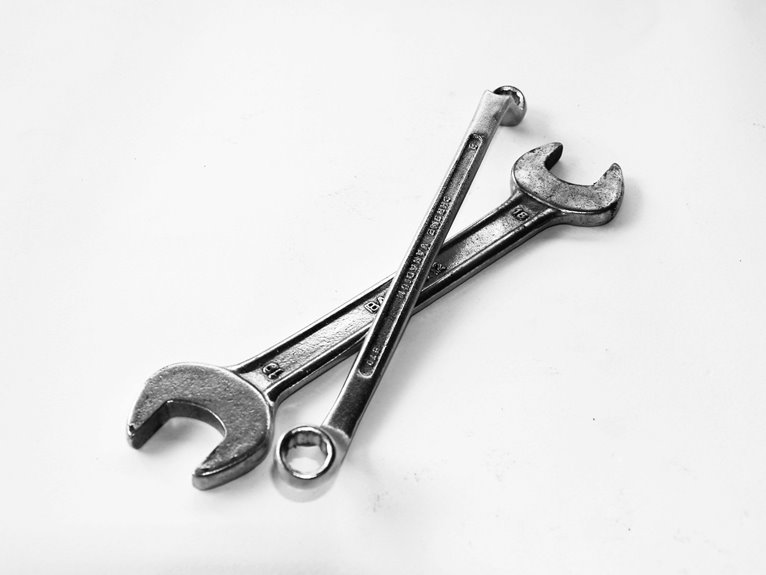
Pipe work shows up in almost every carpentry job, whether that means hooking up a utility sink in a basement shop or threading a new gas line into a workshop. Aluminum-body straight pipe wrenches make those tasks more manageable because they shed roughly a third of the weight of a comparable cast-iron wrench. The 18-inch and 14-inch pair covers the most common residential pipe diameters, with the longer wrench handling 2-1/2-inch pipe and the shorter one working in tighter stub-outs.
Full-floating forged alloy steel hook jaws give the grip the bite needed to turn threaded fittings without slipping, and the replaceable hook-jaw, heel-jaw, and spring assemblies mean a worn wrench doesn’t end up in the trash. Self-cleaning threads on the adjustment knob also resist packing with job-site grit, so the wrench keeps adjusting smoothly long after cheaper units seize up.
The Upside
- Aluminum construction lightens the load during overhead work and long rough-in days
- Replaceable hook jaws, heel jaws, and springs extend the wrench’s working life well past the warranty period
- Self-cleaning adjustment threads shed sawdust, drywall mud, and pipe dope without jamming
- Two-size bundle handles both main line work and tight under-sink fittings
Points To Keep In Mind
- Aluminum costs more upfront than cast iron, so the bundle is a noticeable investment for hobbyists
- The 18-inch length is overkill for small trim or fixture work where a 10-inch wrench is more practical
Feature Snapshot
Whose Shelf It Belongs On
Plumbers, HVAC techs, and remodelers who regularly work on threaded pipe and want lighter wrenches that still hold up to daily use.
Swap It Out When
You only need occasional fixture adjustments, in which case a single adjustable wrench or smaller 10-inch pipe wrench covers most household tasks.
The 7-inch speed square is one of those rare tools that almost every carpenter in North America owns, and the SWANSON S0101 is the original. Its L-shaped body doubles as a saw guide, a 90-degree try square, and a quick protractor for rafter layout. The blue-painted finish stands out on a stack of lumber, which sounds trivial until you’ve tried to spot a silver or black square against fresh-cut pine.
Graduations along the fence cover common, hip, valley, and jack rafter cuts, so you can mark a complete roof without flipping to a reference book. That built-in chart is one reason this square has stayed on belts for decades, even as cheaper lookalikes keep appearing on the market.
What Stands Out
- Single-piece stamped steel resists bending under saw pressure better than budget composites
- Integrated rafter tables let you step off cuts without a separate framing calculator
- Compact 7-inch profile hooks on a tool belt without dragging on the ground when crouching
- Acts as a circular saw guide for clean crosscuts on plywood and dimensional lumber
Worth Bearing In Mind
- Paint can wear off the body over years of heavy use, exposing bare steel that will need a wipe-down to prevent surface rust
- The 7-inch size is great for 2x lumber but short for sheet-good layout, where the larger Big 12 in Pick 5 is more efficient
Best Suited To
Framers and remodelers who want one square that handles rafters, stair stringers, and quick crosscut guides without switching tools.
Reach For A Different Pick When
You frequently lay out sheets of plywood or long stair stringers, where the SWANSON SW1201K Value Pack with the larger Big 12 makes more sense.
Pairing the classic 7-inch S0101 with the larger Big 12 gives a carpenter two complementary squares in one bundle. The 7-inch handles tight framing around studs and joists, while the Big 12 covers sheet goods, long stair stringers, and out-of-square corner checks. Both share the same fence-style design, so once you learn the feel of one, the other is intuitive.
The included Blue Book is a pocket-sized reference that explains common, hip, valley, and jack rafter cuts in plain language. For newer carpenters still learning roof geometry, that little booklet is often what tips the scales toward this bundle over the standalone S0101.
Practical Advantages
- Two squares cover both small framing and large layout work without buying them separately
- Blue Book reference explains rafter math in plain terms for apprentices and DIYers
- Big 12 doubles as a saw guide and out-of-square corner check across wider spans
- Bundle pricing typically undercuts buying the two squares individually
Small Caveats
- Big 12 is bulkier in a tool belt and may ride better in a bucket or on a bench
- Bundle ships without a layout bar, so step-off rafter cuts require a separate tool or chalk line
Perfect Match For
Beginners and remodelers who want a complete framing layout kit in one purchase, especially those tackling a first roof or stair build.
Skip It When
You already own the S0101, where a single Matework 3-piece combination set in Pick 8 covers broader layout needs.
Standard wrecking bars are great for big demo, but they often tear up finished trim or fail to fit between tight components. The Mayhew 3-Piece Ladyfoot Set solves that with slender shafts (1/2, 5/8, and 3/4 inch) and a rocking head that lets you lever in confined spaces. The pointed end handles alignment duty, while the curved heel gives controlled lift without crushing wood fibers.
Solid forged heads give these bars more backbone than flat stamped bars, and the black-oxide finish helps protect against the rust that comes from sweaty hands and damp lumber yards. For trim removal, deck board extraction, or HVAC panel work, they hit a sweet spot the heavier crowbar-shaped bars miss.
Strong Points
- Three progressively larger sizes fit tasks from trim pull to deck board removal
- Rocking head pivots in tight pockets where a flat bar cannot reach
- Pointed end doubles as an alignment tool for door jambs and cabinet face frames
- Black-oxide finish provides noticeable rust resistance during outdoor work
Room For Improvement
- Smaller sizes flex more than a heavy wrecking bar when prying large framing members
- Black-oxide coating can wear through at the grip area after years of heavy shop use
Feature Snapshot
Who Will Love This
Finish carpenters, remodelers, and HVAC techs who routinely pull trim, lift panels, or align tight joinery without damaging the surrounding materials.
A Better Fit Elsewhere
You mainly frame walls and need heavier leverage, in which case a full-size 36-inch wrecking bar will out-muscle this slim set.
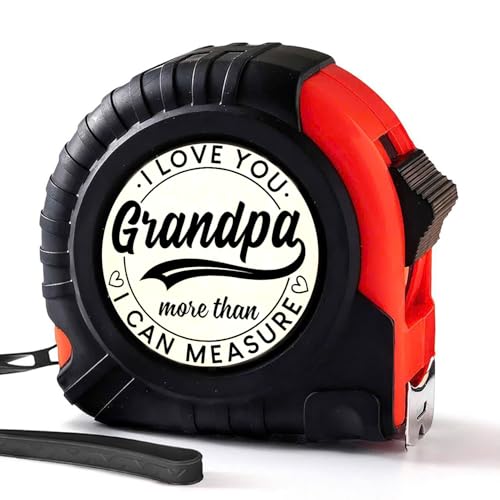
Most tape measures lean on bright yellow, black, or red housings with little personality. The PORSWISH tape leans the other way with a wood-print front panel and a sentimental inscription, which is why it tends to land in gift baskets rather than professional toolbelts. As an actual measuring tool it still pulls out, locks, and retracts, so a hobbyist grandpa gets a tool he can use rather than a display piece.
The trade-off is honest: a printed plastic shell is more about presentation than abuse tolerance, and a daily framing crew will chew through it faster than a contractor-grade tape. Treat it as a workshop or garage tool for occasional projects, and it holds up nicely.
Standout Benefits
- Wood-print panel and engraved-style message give it genuine gifting appeal
- Standard retractable tape design remains usable for hobby layouts and DIY builds
- Lightweight plastic body sits comfortably in a kitchen drawer or hobby bench
Possible Compromises
- Plastic shell and printed graphics show wear faster than a rubberized contractor tape
- Less impact protection at the hook, so a drop onto concrete can bend the tang
Made For
Grandchildren shopping for a hobbyist carpenter or woodworker who would enjoy a sentimental tool they can actually use around the house.
Consider Something Else When
The recipient is a working framer, in which case a heavier contractor tape with a reinforced hook is the more practical gift.
Speed squares are brilliant for rafter work, but they cannot transfer a measurement the way a sliding combination square can. The Matework 3-Piece Set includes 7-inch and 12-inch rafter squares plus a 12-inch adjustable combination square, so you can mark a depth, set a 45-degree miter, and check a 90-degree joint with one kit. The combination square’s sliding head locks down with a solid-feeling thumbscrew, which is the kind of detail you notice after using cheaper stamped versions.
Compared with the SWANSON speed squares above, this set leans toward fine woodworking and cabinetry rather than rough framing. CNC-machined edges on the squares help keep the 90-degree reference honest, which matters when you are checking joinery on a face frame or a drawer.
The Case For It
- Three-piece set replaces a try square, miter square, protractor, saw guide, and depth gauge in one purchase
- Sliding combination square transfers measurements directly onto a workpiece for joinery work
- CNC-machined edges hold true 90-degree angles better than stamped alternatives
- Useful across carpentry, framing, and roofing layouts without switching tool sets
Some Limits To Know
- Not a substitute for the rafter-specific graduations on a SWANSON speed square
- Sliding head benefits from occasional cleaning to keep the lock smooth in dusty shops
Key Product Details
Who Should Grab It
Woodworkers and trim carpenters who want one layout kit that handles both rafter math and precision joinery checks.
Not Your Match When
You focus on rough framing and only need fast rafter layout, where the SWANSON SW1201K Value Pack stays simpler.
Lock-ring pliers, also called snap-ring pliers, are the tool you reach for when a retaining ring decides to fight back. The SK 7635 uses a compound-hinge design that multiplies hand pressure at the tip, so removing stubborn external rings takes less squeeze than with a basic plier. The straight tip configuration suits external rings, while the 1.75-inch capacity covers the larger retaining rings found on heavier equipment bearings.
Made in the USA from tool steel with comfortable grips, this is the kind of plier that disappears into a drawer and comes out years later still working. For carpenters who also maintain shop tools, compressors, or vehicle bearings, it earns a place in the same drawer as the screwdrivers and chisels.
Everyday Advantages
- Compound action boosts tip pressure, reducing hand fatigue on stubborn rings
- 1.75-inch capacity handles larger retaining rings on bearings and equipment
- USA-built construction supports long-term durability over imported alternatives
- Comfortable grips hold up to daily shop and field use
Less-Strong Areas
- Straight tip configuration suits external rings only, so internal rings require a different plier
- Specialty use case means casual DIYers may not reach for it often enough to justify a dedicated slot
Right Fit For
Mechanics, equipment techs, and carpenters who maintain their own power tools, compressors, and shop machinery with retaining-ring hardware.
Another Choice May Suit
You rarely disassemble anything with snap rings, where a quality adjustable plier set covers more routine work.
What To Weigh Before Buying Carpentry Hand Tools
Hand tools live or die by feel, balance, and how they hold tolerances after years of use. Start by matching each tool to the work you actually do most, not the rarest task on your list.
Material and construction matter more than brand badges in this category. Stamped steel and plastic-bodied tools can be fine for occasional use, but for daily framing or shop work, forged steel, machined edges, and replaceable wear parts pay back their cost quickly. A level with a replaceable vial, a square with a re-zeroable fence, and a wrench with replaceable jaws can outlast several cheaper tools.
Ergonomics also deserve attention. A 22-ounce rock pick feels great for an hour of demo but punishing during trim work, while a thin ladyfoot bar is wonderful on baseboards but flexes on framing. For most carpenters, the honest answer is owning a small, well-chosen mix that covers each job rather than one tool that tries to do everything.
Finally, think about storage and transport. A 7-inch speed square rides on a belt, a Big 12 lives in a bucket, and a 3-piece combination set stays on a bench. Picking tools that fit the way you work keeps the kit from migrating to the back of a drawer.
Key Considerations Across These Picks
Common Buying Slip Ups
A frequent mistake is buying a single “do-everything” tool and expecting it to replace three or four purpose-built options. A combination square set can cover most layout work, but it does not give you a rafter table, and a single torpedo level cannot stand in for a 4-foot beam. Think of the picks in this list as a curated kit, not a competition.
Another trap is choosing the cheapest version of a heavily used tool. Squares that lose their 90, levels with loose vials, and pry bars with bent tips cost more in ruined work than they save at the register. If a tool lives in your hand every day, spend on the version that holds tolerance.
Where The Extra Money Goes
Higher-tier hand tools usually show their value in three places: tighter tolerances, replaceable wear parts, and better materials. The RIDGID aluminum wrenches, for example, are lighter than cast iron and feature field-replaceable jaws, which spreads the cost across years rather than treating the wrench as disposable. The Matework combination squares use CNC-machined edges that hold 90-degree references longer than stamped alternatives.
The premium tier also tends to offer better grips, more consistent finishes, and tighter quality control. For shop-based woodworkers, that translates into measurements you can trust and tools that stay comfortable through long days.
Frequently Asked Questions
What Is The Most Important Tool For A Beginning Carpenter?
A 7-inch speed square is the single most versatile tool a new carpenter can own. It covers rafter layout, acts as a saw guide, and replaces several specialty tools in one pocket-sized package.
Do I Need Both A Speed Square And A Combination Square?
Yes, for most carpenters. Speed squares excel at quick rafter math and saw guides, while combination squares transfer measurements and check 90-degree joinery with more precision.
Are Aluminum Pipe Wrenches As Strong As Cast Iron?
Aluminum wrenches are slightly less strong in absolute terms but significantly lighter, and they still exceed the strength needed for residential and light commercial pipe work.
How Do I Keep Squares Accurate Over Time?
Avoid dropping them on concrete, store them flat or hanging rather than loose in a bucket, and check their 90 against a known reference like a machinist square once a year.
Is A Rock Pick Necessary For General Carpentry?
It is not essential for finish trim, but for carpenters who do any demo, hardscape, or masonry-tied framing, a rock pick earns its place quickly.