A rough seam on a synthetic lawn is the kind of detail that quietly ruins the whole look. The right blade and the right staples turn that wobbly edge into a clean, almost invisible join, and the difference shows the moment you stand back. Homeowners laying a small patch, contractors finishing a 500-square-foot install, and pet owners swapping in a porch mat all run into the same reality: turf doesn’t forgive sloppy cuts. This lineup pairs a purpose-built turf cutter with the securing staples and a finished turf mat that round out a real install. You’ll find honest strengths, fair caveats, and a buying guide grounded in the way these tools actually perform in the dirt.
The Essentials At A Glance
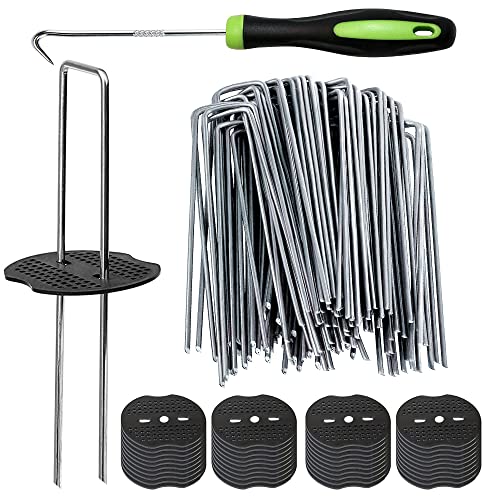
Bakulyor 6 Inch Garden Stakes 50-Pack + Gaskets

Finderomend 6″ 8-Gauge Galvanized Landscape Staples 100-Pack

Weidear Artificial Grass Thick Turf 3 ft x 5 ft

GardenMate 6″ U-Shaped Steel Garden Pegs 50-Pack

TOPOWN Artificial Turf Cutter
Why These Options Stand Out
The Bakulyor kit lands as a thoughtful middle-ground pick for a first-time synthetic lawn. You get 50 U-shaped 11-gauge stakes cut to a 6-inch length, paired with 50 gaskets that spread pressure across the turf backing. Once a fresh seam is in place, the gaskets keep the head of the pin from sinking or tearing through the material, which is a small detail that pays off in the long run. For a 200 to 300 square foot backyard patch, this count usually lands close to right without forcing a second order.
Galvanized steel means the pins hold up through rainy weeks and freeze-thaw cycles, so the install stays anchored without rust bleeding onto the turf. The trade-off is that 11-gauge wire is solid but not the thickest option in this roundup, so dense clay or rocky soil may need a starter pilot hole.
The Upside
- Gasket pairings cushion the turf against pin heads, reducing visible dimples on the finished surface
- 6-inch length reaches past the turf backing into compacted sub-base for a firm hold
- Galvanized coating resists rust in wet climates and around pet areas
- 11-gauge wire strikes a balance between drive-in ease and holding strength
Things To Consider
- 50 pins may run short for installs above 300 square feet, so larger projects often need a backup pack
- Rocky or heavily compacted soil can bend the tips without a pilot hole
Key Specs
Who Should Grab It
First-time DIYers laying turf in a mid-size backyard who want a balanced kit that handles seams and edges without a learning curve.
Look Elsewhere When
Contractors handling large commercial jobs will find the Finderomend 100-Pack a better match for higher pin volume and thicker wire demands.
The Finderomend pack earns its slot by stretching well past the standard landscape staple. Each pin is built from 8-gauge steel, a step up from the typical 11-gauge offering, with a 46-degree beveled edge that bites into soil without a hammer fight. Across a 100-count pack, the volume suits larger yards, side-yard turf strips, or any project that calls for a perimeter pin every 6 to 8 inches. The beveled cut is a thoughtful touch you don’t always see at this size.
Galvanized steel keeps the pins serviceable through multiple seasons, though the heavier wire does take a firmer hand on install day. The trade-off shows up when the soil is shallow or full of roots, because that thicker shaft can be a workout to drive flush.
Well-Handled Touches
- 8-gauge wire holds firm in loose or sandy base material where thinner pins pull out
- 46-degree beveled tip reduces push-in effort and helps on harder ground
- 100-pin count covers large turf fields, multi-zone yards, and full perimeter installs
- Galvanized finish stands up to irrigation overspray and pet traffic
Worth Noting
- Thicker wire requires a heavier hammer or mallet for flush seating
- No gaskets included, so heads sit closer to the turf surface and may need careful placement to avoid visible bumps
Whose Shelf It Belongs On
Installers and serious DIYers working on large synthetic-lawn projects who need the volume and the muscle of a thicker pin.
Swap It Out When
Homeowners laying a small 100-square-foot patch will find the Bakulyor 6 Inch Garden Stakes 50-Pack easier to drive and a better fit for the project size.
Not every project calls for a roll and a seam. The Weidear mat is a pre-cut 3 by 5 foot piece of finished turf with a 1.38-inch pile height, four-tone color blend, and a rubber-backed drainage system already built in. It drops onto a balcony, a dog run corner, or a small patio without any cutting at all. Pet owners in particular appreciate the high-density construction and the PE plus PP blend that holds up to claws without matting down overnight.
Drainage holes across the rubber back let water pass through and let the surface dry quickly after a rinse, which matters for households with active dogs. The mat is sold as a finished surface, not a material to cut, so anyone planning a full-lawn install should treat it as a complement to the TOPOWN cutter, not a replacement.
Features That Help
- 1.38-inch pile height gives a lush, full look without the flat appearance of thinner turf
- PE and PP blade blend resists matting from pet traffic and stays soft underfoot
- Built-in drainage holes channel water through the rubber backing to prevent puddles
- Four-tone color blend reads like a natural lawn in both shaded and sunny spots
Honest Caveats
- 3 by 5 foot size limits the mat to small zones rather than full-yard coverage
- Pre-finished mat means no seam work, so it doesn’t serve installs that need shaped cuts
The Right Fit
Pet owners and apartment dwellers who want a low-maintenance green zone they can hose off, with no seaming or cutting required.
A Better Fit Elsewhere
Homeowners shaping a full lawn with curves and seams will find the TOPOWN Artificial Turf Cutter the more useful tool for that kind of work.
GardenMate leans into the multi-season side of the equation. These are ungalvanized steel pegs cut to 150mm with a 2.9mm wire thickness, a clean trapezoidal profile, and beveled tips that pierce weed fabric, netting, and turf backing without a fight. The shape and the steel make them a favorite for landscapers who pull pegs at the end of a season and reuse them the next year. For turf specifically, they pull double duty holding down edges and securing the seam tape underneath.
The ungalvanized finish means these will patina over time, so anyone installing near visible stonework should plan around that surface change. In return, the bare steel bends predictably and grips soil a little tighter than smooth galvanized wire.
Notable Upsides
- 2.9mm steel wire holds its shape under repeated removal and reinstallation across seasons
- Trapezoidal profile bites into soil and resists pulling out under foot traffic
- Beveled tips pierce weed fabric and turf backing with minimal effort
- Versatile across weed fabric, fleece, netting, and ground cover staples
Points To Keep In Mind
- Ungalvanized steel will develop surface rust over time, which can stain light-colored stone
- No gaskets included, so heads sit on top of the turf surface
Key Specs
Made For
Landscapers and hands-on homeowners who want reusable, multi-purpose pegs that survive season after season of install and pull.
Reach For A Different Pick When
Anyone wanting a rust-free surface near a pool deck or light stone will find the Bakulyor 6 Inch Garden Stakes 50-Pack the better match.
The TOPOWN cutter is the one tool in this lineup actually built to cut synthetic turf. Where a utility knife frays the backing and a pair of scissors chews through the pile, this tool is designed specifically for artificial grass with a guiding attachment for straight runs and an accessory for circular cuts. That dual-mode design handles the two most demanding parts of an install: a clean seam between two rolls and a precise curve around a planter or sprinkler head. It’s the kind of specialty tool that pays for itself the first time you avoid a wasted roll.
For DIYers planning anything beyond a small patch, the cutter replaces the trial-and-error of freehand cutting with a guided cut you can repeat. The trade-off is that this is a single-purpose tool, so anyone laying a pre-finished mat like the Weidear won’t get full use out of it.
The Helpful Details
- Dedicated turf blade design cuts through backing without fraying the edges
- Guiding attachment keeps straight seams consistent across a full roll width
- Circular cutting accessory handles sprinkler heads, posts, and curved borders
- Dual cutting mode covers the two most common install shapes in one tool
Room For Improvement
- Single-purpose design has limited value for shoppers only laying a pre-cut mat
- Accessories add storage bulk compared to a simple utility knife approach
Key Specs
Best Suited To
DIYers and contractors shaping full synthetic lawns with seams, curves, and obstacles who want clean, repeatable cuts without blade drift.
Consider Something Else When
Shoppers only need a finished mat for a balcony will find the Weidear Artificial Grass Thick Turf 3 ft x 5 ft a more direct path, since no cutting is required.
What Matters Most Before Choosing Tools For Cutting Artificial Turf
Match The Tool To The Cut Type
The shape of your project decides which tools earn their place. Straight seams between two rolls call for a guided line cutter like the TOPOWN, while curves around posts and heads need an accessory that pivots. For perimeter edges along a fence or border, a utility knife still handles short runs, but a dedicated tool keeps the backing from fraying on longer stretches. Anyone laying less than 50 square feet of pre-cut mat can skip specialty cutters entirely.
Pin Gauge And Length Drive Hold Quality
Staple gauge, the thickness of the steel wire, and length together decide whether a pin stays put. 11-gauge wire (around 2.9mm) covers most residential installs, while 8-gauge wire suits sandy or loose base material where thinner pins pull free. Length matters too, because a 6-inch pin reaches past the turf backing into the compacted base, while shorter pins only grip the top layer. For pet runs and high-traffic zones, stepping up gauge pays off over time.
Plan For Finishes And Drainage
Galvanized coatings resist rust in wet climates and around pools, while ungalvanized steel develops a patina that can stain light stone. A rubber backing with drainage holes, like the Weidear mat, keeps water moving through the surface instead of pooling on top. Think about the install setting before committing, because a finish that works in a backyard may not be the right call next to a light concrete pad.
Count Pins Before You Order
Most turf installs need one pin every 6 to 8 inches along seams and edges. Measure your total seam length and add 10 percent for waste before choosing a pack size. The 50-count kits cover small to mid-size projects, while 100-count packs serve full yards and multi-zone installs. Running out mid-project is the most common avoidable delay, so size up if the math is close.
Key Considerations Across These Picks
Pitfalls Shoppers Hit
Underestimating pin count is the most common miss, since a 200-square-foot install often needs more staples than the first estimate suggests. Skipping the gasket step is another quiet mistake, because unprotected pin heads can dimple the turf over time. Freehand cutting without a guide leads to wavy seams that show from across the yard, and choosing ungalvanized pins near a pool deck leaves rust marks that won’t rinse off.
What The Higher Tier Buys
Specialty turf cutters cost more than a basic utility knife because the blade profile is shaped to avoid fraying the backing, and the guide keeps seams straight across a full roll. Thicker-gauge staples carry a small premium over standard 11-gauge wire, and the upgrade shows up in holding power on loose or sandy base material. Pre-finished turf mats with built-in drainage cost more per square foot than bulk rolls, and the difference goes into the backing system, the pile density, and the color blending that reads as natural.
Frequently Asked Questions
What blade actually cuts artificial turf cleanly?
A dedicated turf cutter or a fresh, sharp utility blade designed for synthetic backing gives the cleanest cut. Dull utility blades tend to fray the backing and snag the pile along the seam.
How many landscape staples does a typical turf install need?
Plan on one staple every 6 to 8 inches along seams and edges, plus extras for curves and corners. Measure the total seam length and add 10 percent to cover the realistic count.
Can artificial turf be cut with regular scissors?
Scissors work for small detail cuts but chew through pile on longer runs. A guided cutter or a sharp utility knife delivers straighter, cleaner seams on full-length cuts.
Do landscape staples rust through artificial turf?
Galvanized staples resist rust for years in most climates, while ungalvanized steel develops surface rust over time. Near light stone or a pool deck, galvanized pins are the safer pick.
Is pre-finished turf mat easier than cutting rolls?
A pre-finished mat skips cutting, seaming, and pinning entirely, which makes it the easier path for small zones like balconies, patios, and dog runs. Full-yard installs still benefit from bulk rolls and a dedicated cutter.