Whether you’re building a school diorama, prototyping a packaging insert, or trimming insulation panels in the garage, foam board rewards the right blade and punishes the wrong one. Standard kitchen scissors crush the foam core. A dull utility blade tears the paper facing and leaves ragged edges. The right tool gives you a slice so clean it almost feels like a workshop, not a craft table. Below are eight picks that cover the spectrum: snap-off knives for crisp straight lines, hot-wire cutters for sculptural curves, and a scissor option for quick snips.
An Overview Of The Picks

OLFA 18mm Heavy-Duty Utility Knife (L-1)

OLFA 9mm Stainless Steel Graphics Knife (SAC-1)

CANARY Cardboard Cutter with Non-Stick Blade

X-ACTO Compression Basic Knife Set
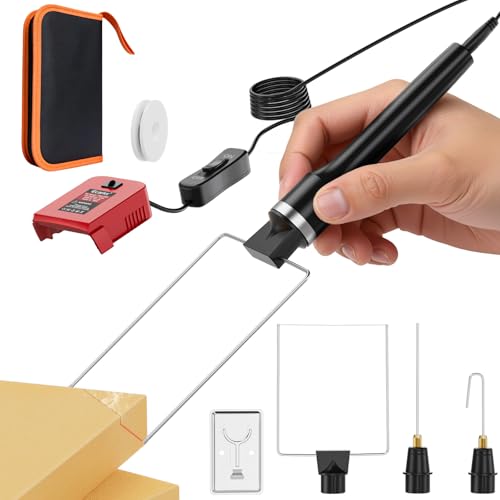
Ecarke 3-in-1 Foam Cutter (Milwaukee 18V)
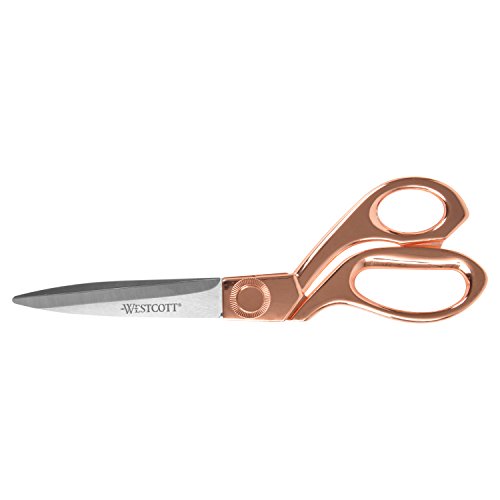
Westcott 16968 8-Inch Rose Gold Scissors

Ecarke 3-in-1 Foam Cutter (AC/DC, DeWalt 20V)
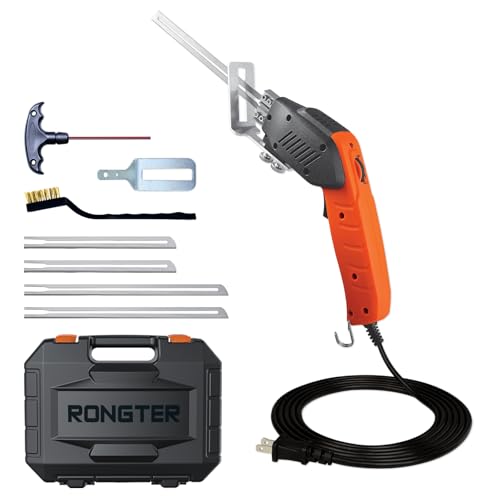
RONGTER 200W Air-Cooled Hot Knife Foam Cutter
Why These Options Stand Out
The OLFA L-1 is the workhorse you reach for when a foam-board score line has to travel the full length of a 4×8 panel without wandering. Its 18mm snap-off blade carries eight fresh segments, so you keep cutting while other knives are headed to the sharpener. The high-impact ABS handle gives your hand real leverage on deeper passes.
Compared to the slim graphics knife below, this one is built for force, not finesse. Sign makers, insulation installers, and diorama builders who cut lots of 5mm and 10mm foam will appreciate how the ratchet lock holds the blade steady mid-stroke.
Useful Touches
- Eight snap-off segments keep a fresh edge on hand
- Ratchet lock holds position through long, deep cuts
- Sturdy ABS handle reduces hand fatigue on bigger jobs
- Wide 18mm blade resists flexing across long scores
Worth Noting
- Bulkier than 9mm options, so detailed work feels clumsy
- Snap-off segments create small sharp scraps that need cleanup
Feature Snapshot
Made For
Sign shops, model makers, and anyone cutting full sheets of 5mm or thicker foam board on a regular basis.
Look Elsewhere When
You’re doing tight detail cuts on thin board, where the OLFA 9mm Stainless Steel Graphics Knife (SAC-1) feels far more controlled.
When the foam board is 3mm poster stock and the cuts are window-trim fine, the SAC-1 earns its place. The 9mm carbon tool steel blade has seven snap-off segments, and the stainless steel handle shrugs off glue, solvent, and humidity from a classroom art room. The auto-lock holds the blade exactly where you set it, so you can pivot into a corner without it drifting.
Think of it as the scalpel to the L-1’s cleaver. Pick this when the project rewards clean corners over deep penetration.
Positive Points
- Slim stainless handle improves visibility at the cut line
- Auto-lock keeps blade depth consistent across cuts
- Resists corrosion from adhesives and craft solvents
- Lightweight enough for long detailing sessions
Trade Offs
- Not ideal for deep, full-thickness scores on dense board
- Pocket clip is handy but easy to catch on fabric
Right Fit For
Graphic designers, illustrators, and crafters cutting stencils or window-mount artwork on thin foam board.
Skip It When
You’re slicing thick 10mm insulation panels, where the OLFA 18mm Heavy-Duty Utility Knife (L-1) handles the depth much better.
The CANARY cutter is a 7.5″ Japanese-style blade with a serrated edge and a non-stick coating. It’s designed to slide through corrugated cardboard without grabbing adhesive tape, but that same slick coating makes it surprisingly capable on foam board. The double-serrated edge scores a clean line without crushing the foam core.
It’s not a precision tool, so think of it as the everyday opener for craft-room projects, shipping areas, and small studios. For most casual foam-board users, this hits a sweet spot of price and capability.
Advantages To Know
- Non-stick coating resists glue and tape residue
- Double-serrated edge grips slick foam facings
- Lightweight polypropylene handle is easy to grip
- Doubles as a box and package opener
Small Caveats
- Serrations leave a slightly rougher edge than a straight blade
- Not suited for fine detail or thin poster board cuts
Best Suited To
Home offices, mailrooms, and casual crafters who want one tool for both foam board and cardboard.
Reach For A Different Pick When
You need precise, straight cuts, where the OLFA 9mm Stainless Steel Graphics Knife (SAC-1) gives cleaner results.
Three knives, thirteen blades, and a soft compression case. The X-ACTO Basic Knife Set is the classic hobby bundle, and the brand lists foam board as a supported material alongside wood, paper, plastic, and cloth. That range makes it a good starter if your projects don’t stay in one medium for long.
For most crafters, the included case keeps things organized in a shared space. The swap-out blade system is the real time-saver: pull one blade, click in another, and you’re back to work.
Everyday Wins
- Multiple blade types cover foam, paper, and light wood
- Compression case keeps pieces together between sessions
- Good value if you don’t already own a precision knife
Where It Is Less Suited
- Plastic handles feel lighter than all-metal options
- Heavy production work wears through included blades fast
Who Should Grab It
Hobbyists and students who need a versatile starter set without buying individual knives.
Where Another Pick Suits Better
You’re doing long, heavy sessions on dense foam board, where the OLFA 18mm Heavy-Duty Utility Knife (L-1) holds up better.
A hot-wire foam cutter that runs on your existing Milwaukee 18V battery. Ecarke ships three interchangeable heads: one for sculpting, one for trimming, and one for larger passes. The tool reaches around 750°F at the tip, which melts cleanly through EPS, XPS, and similar foam boards without the dust and tearing a knife can cause.
If your shop already runs Milwaukee batteries, this slots in without a new charger or platform. The USB-A and USB-C ports are a thoughtful touch for keeping other devices topped up on a long job.
Standout Benefits
- Uses batteries you likely already own
- Three heads handle detail and bulk work
- Hot-wire action seals edges as it cuts
- Works away from outlets on real job sites
Possible Compromises
- No battery or wall adapter included in the box
- Hot tip means ventilation matters in small rooms
Quick Facts
Who Will Love This
Tradespeople and serious hobbyists already invested in the Milwaukee M18 system.
Not Your Match When
You don’t own a Milwaukee battery, in which case the RONGTER 200W Air-Cooled Hot Knife is the simpler plug-in option.
Sometimes a project calls for a pair of scissors, and the Westcott 16968 is one of the better general-purpose pairs you can keep in a craft drawer. The 8-inch stainless steel blades and rose gold finish look at home on a desk, and the company rates the blades for foam, paper, and poster board. The longer blade gives smoother travel on long curves than a 6-inch pair.
For thin foam board and quick cuts, this is the low-fuss option. You’re not scoring straight factory edges, but you’re also not dragging out a knife and mat.
Notable Upsides
- 8-inch length handles long, sweeping cuts
- Stainless steel resists rust in humid craft spaces
- Comfortable handles for casual, frequent use
What To Weigh
- Not the right choice for thick foam board
- Edge control is looser than a snap-off knife
Whose Shelf It Belongs On
Classroom teachers, casual home crafters, and parents helping with school projects.
Where A Sibling Pick Shines
You’re after precise, straight lines, where the OLFA 18mm Heavy-Duty Utility Knife (L-1) outperforms any scissor.
The other Ecarke 3-in-1 takes a different approach to power. It supports both AC wall power and DeWalt 20V batteries, which is helpful for users who don’t want to commit to one platform. The three interchangeable heads mirror the Milwaukee version, so you can sculpt, trim, or push through wider stock with the same body.
For mixed environments, a workshop with outlets and a job site without, this one is the easier sell. It also covers a common stumbling point: switching from corded sessions to outdoor demos without buying two tools.
A Few Highlights
- Dual power: AC outlet or DeWalt 20V battery
- Three heads cover detail and bulk cuts
- Works indoors and on remote job sites
Things To Watch
- Battery sold separately if you go cordless
- Hot-wire tip demands care around kids and pets
Feature Rundown
Built With In Mind
Workshop owners and contractors who need one tool that works plugged in or on a battery platform.
Swap It Out When
You already run Milwaukee batteries, where the Ecarke Milwaukee 18V version integrates more cleanly.
The RONGTER 200W is the bench tool. Its active fan keeps the body cool during long sessions, with continuous run times that suit bigger projects. The adjustable knob dials in temperature and power so you can match the heat to softer EPS or denser XPS foam board without scorching.
For a hobbyist this is overkill, but for a small shop cutting foam packaging or signage every day, the air-cooled design pays off. You get cleaner edges, less fatigue, and longer tool life per session.
Everyday Advantages
- 200W output handles dense foam without bogging down
- Built-in fan supports long continuous cuts
- Adjustable temperature for varied foam types
Less Ideal Details
- Corded design limits where you can use it
- Larger body than battery-powered alternatives
Key Specs
Perfect Match For
Small studios, packaging shops, and serious hobbyists cutting foam board in volume.
A Better Fit Elsewhere
You need cordless freedom on a job site, where the Ecarke 3-in-1 DeWalt 20V version travels better.
Picking The Right Cutter For Your Foam Board Projects
Start with the thickness of the board. Anything under 5mm usually scores cleanly with a sharp 9mm snap-off blade, so the OLFA 9mm Stainless Steel Graphics Knife (SAC-1) is plenty. Board in the 5mm to 10mm range benefits from a wider 18mm blade like the OLFA 18mm Heavy-Duty Utility Knife (L-1), which resists flexing on long passes. Beyond 10mm, a hot-wire tool becomes the smarter choice because the heat seals the cut edge instead of crushing the foam core.
Think about the curve of the cut. Straight lines and rectangular panels are knife territory. Sculpted shapes, bevels, and tight radii are hot-wire territory, because a heated wire slides through foam without tearing the facing paper. The Ecarke 3-in-1 and RONGTER 200W are good examples of tools built for that sculptural work.
Consider the environment. A classroom or shared craft space rewards quiet, simple tools without cords or batteries. A workshop with an outlet and a dust collector welcomes a 200W hot knife that can run for an hour at a time. A job site without power calls for a battery-compatible cutter like the Ecarke DeWalt 20V or Milwaukee 18V versions.
Match the tool to the user. Beginners tend to do well with a knife set like the X-ACTO Compression Basic Kit, which comes with multiple blade shapes and a case. Experienced sign makers usually prefer a single, high-quality utility knife with a ratchet lock. Power-tool users gravitate toward the hot-wire options once they understand the basics of foam density and temperature.
Smart Spending Across The Category
Mistakes Worth Dodging
Buying a generic box cutter and assuming it will handle foam board is a common trap. Standard blades are short, dull quickly on foam’s paper facing, and flex in deep cuts, which leaves ragged edges. A dedicated utility knife with a snap-off blade solves both problems in one tool.
Another slip is choosing a hot-wire cutter without checking the power source. Battery-only models are great for the road but useless if you don’t own that battery platform. AC-only models are fine for workshops but awkward on ladders or remote sites. The Ecarke AC/DC dual-power design covers both situations in one tool.
When Paying More Pays Off
Higher-tier foam cutters earn their cost in three places: longer continuous run times, adjustable temperature, and better heat dissipation. The RONGTER 200W Air-Cooled Hot Knife, for example, uses an active fan to support extended sessions, and that matters if you’re cutting foam packaging for hours. The adjustable knob also lets you tune heat to softer or denser foam, which reduces burn marks and extends blade life.
Frequently Asked Questions
Can I cut foam board with regular scissors?
Thin foam board under 3mm can be cut with heavy-duty scissors like the Westcott 16968, but anything thicker crushes the foam core and leaves ragged edges. A snap-off utility knife gives cleaner results on standard board.
What is the best blade type for foam board?
A sharp, snap-off blade is the most versatile option. The snap-off design lets you expose a fresh edge without changing the whole blade, which keeps cuts clean through long sessions.
Is a hot wire cutter better than a knife?
Hot-wire cutters win for curved or sculptural cuts, and they seal the edge as they melt through. Snap-off knives win for straight lines, long scores, and projects where you need to control depth precisely.
How thick of foam board can a utility knife cut?
Most 9mm and 18mm utility knives handle foam board up to about 10mm in a single pass. For thicker insulation panels, multiple passes or a hot-wire tool is more efficient.
Do I need a special blade for foam board?
A standard utility blade works for most foam board, but blades designed for graphics or craft use tend to stay sharper longer. Snap-off designs in 9mm and 18mm widths cover the majority of hobby and shop work.